
从马铃薯地开始的球茎生意
Royal Van Zanten 是荷兰最老的球茎公司之一,起步于 1862 年。**创始人 Gerrit Veldhuyzen van Zanten 当时在 Hillegom 的「Zanderij van Six」租地,在马铃薯旁边搭起了球茎的种植**——他看出球茎在全球市场里的前途,比土豆大得多。1897 年公司在希勒霍姆买下地皮安顿下来,也就是后来扎根的地方。
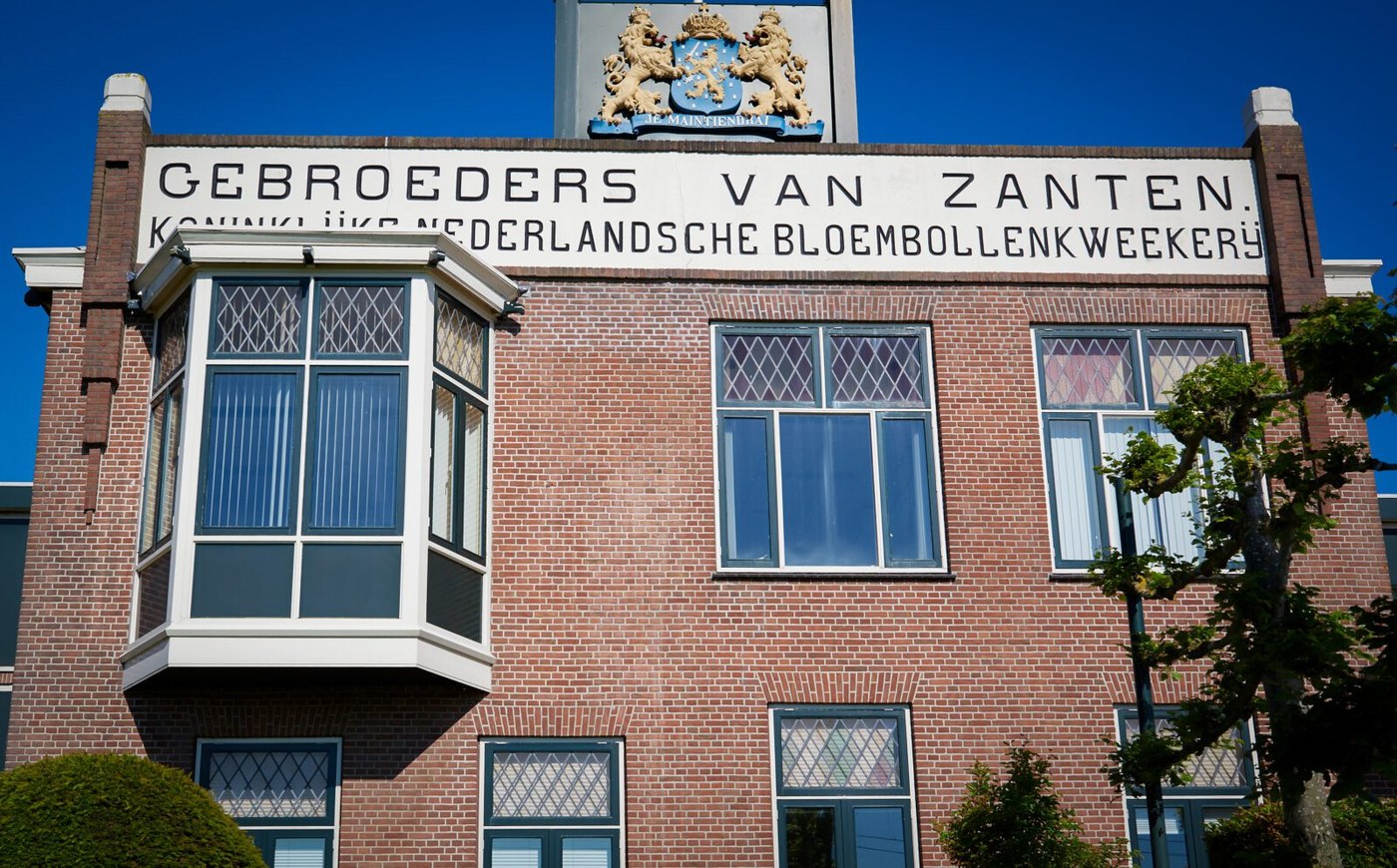
1901 年,公司获授「Koninklijk」称号,**这个皇家头衔一直用到今天**。1911 年现在这座主楼在 Hillegom 建成,**那面镶着荷兰王室徽章和荷兰语皇家格言「Je Maintiendrai」的老墙至今还立在那里**,山墙上是「GEBROEDERS VAN ZANTEN — KONINKLIJKE NEDERLANDSCHE BLOEMBOLLENKWEKERIJ」的旧招牌。哪怕在 Haarlem 到 Leiden 的火车上天天经过的希勒霍姆人,也都认得这个地标。
这家公司接下来的一个多世纪几乎一直在扩张。1900 年老 Gerrit 退出,两个儿子 Jan 和小 Gerrit 以「Gebroeders Van Zanten」之名接手,1912 年扩到 60 公顷以上;1926 年四个儿子入伙,到 1937 年家族里已经出了第九位董事。1959 年,Kees Veldhuyzen van Zanten 通过一家全资子公司把菊花作为全年产品引入荷兰,六十到七十年代新建了生产插穗的温室,育种也开始出成果。
1983 年是国际化的转折点:公司在 Aalsmeer 建了专门做六出花育种的实体,球茎、植物和插穗的出口铺到二十来个国家,南北半球都有。1991 年「Gebroeders van Zanten」和「Van Zanten Chrysanthemum」合并成「Koninklijke Van Zanten」,当年就扩出一座 16,000 平方米的温室用于栽培、生根和六出花品种研究;1993 年在希勒霍姆打下第一根桩,筹建现代化的球茎处理与加工中心。
1997 年前后是扩张和收购的密集期,同时在南非开始生产菊花插穗,公司还进了 Elsevier 百强榜第 82 位。2001 年,公司把 31 个自有风格和商号全部收掉,正式把「Royal Van Zanten」作为统一品牌推出。2006 年通过收购 Cleangrow、后来的 Sunfield 和 CBA,菊花品种开始独家供应;前一年公司主动停掉了仙客来、骨彩花和凤仙花这几条线,为的是把精力收拢到切花菊、盆栽菊、 aster、celosia 和 multiflora 上。2009 年又收进了 John de Jong 的 bouvardia 品种。
2016 年满 150 周年时,公司还把业务铺到了中国、印度、马来西亚和埃塞俄比亚。**但也就是在这前后,公司的所有权结构变了。**
2026 年 5 月,球茎这一支要关门了
2025 年 10 月 15 日,公司自己发布了一条消息:**Van Zanten Flowerbulbs 将在 2026 年 5 月底在 Hillegom 正式关门**。
关门的是希勒霍姆的球茎业务。这 164 年里,它做成了国际球茎业里的头部玩家——创新型的百合球茎育种者与种植者,第三块业务是出口百合和郁金香球茎并配上其他夏季货品。消息里有一句写得让人心里一沉的话:这是最后一次在希勒霍姆的仓库收进、检查、加工和打包百合球茎。一月开始员工分批道别,最后一批人在 5 月 31 日离开,此后就永久关门。
球茎业务的总经理 Klaas Jan Vijn 解释了原因。三年前他们就在问「怎么把 Van Zanten Flowerbulbs 继续做下去」,最初的设想是把公司整体卖掉,结果太复杂,于是 Nimbus 决定拆开分批卖。
拆分已经进行了一轮。**今年早些时候,百合育种业务被希勒霍姆的 Hobaho 接手**;**10 月 1 日起,百合贸易和新西兰的种植基地卖给了 Poeldijk 的 Onings Holland Flowerbulbs**。郁金香贸易还在谈,公司希望短期内能公布结果。
希勒霍姆那 11.5 公顷的地也在挂牌出售,其中 15,000 平方米是温室、超过 20,000 平方米是建筑,**由 Lisse 的 Mens Makelaars 代理**。Klaas Jan Vijn 说,**他预计这处 Hillegom 的房产能在 2026 年 5 月前完成出售**。
员工方面,2025 年夏天四十多名员工得知了公司即将终止的消息。育种部门的人随业务一起去了 Hobaho,部分商务岗位的员工将转往 Onings 服务。同年 11 月 2 日,**Hillegom 的 CSW 集团旗下 Tuberbulb Export 接手了 Van Zanten Flowerbulbs「夏季货品」贸易部分,从 2026 年收获季开始**——这笔交易既扩大了 Tuberbulb Export 的体量,也补强了他们在郁金香、尤其是郁金香催花上的专长,**整个有经验的团队也跟着一起过去**。
交易方自己也说得很明白:这笔买卖让 Van Zanten Flowerbulbs 164 年积累下来的知识和经验得以保留,**继续为市场和后代所用**。
一分为二的两家公司
回头看 2018 年那笔交易,拆分是早就埋下的伏笔。
2018 年,投资公司 Nimbus 从 Veldhuyzen van Zanten 家族手中买下了 Royal Van Zanten 的股份。Nimbus 的做法是买下有改进潜力的公司,最终目标是再转手卖掉。刚接手时,**投资方先把公司进一步拆成 Van Zanten Breeding(里森豪特)和 Van Zanten Flowerbulbs(希勒霍姆)两家——办法是把两处不同公司名下的不动产分开归置——这样两家公司就各自可以单独出售**。
这个架构在 2018 年是投资方为将来转手做的准备,八年后成了拆分的依据。Nimbus 自己的投资组合页至今仍挂着 Royal Van Zanten,介绍它是从 150 多年历史里长出来的园艺行业领头企业,产品涵盖切花(菊花、六出花)、球茎,以及盆栽植物用的插穗(aster、celosia)。
需要分清的是今天的两个主体。Van Zanten Flowerbulbs 正在关停,2026 年 5 月底结束。Van Zanten Breeding 继续存在,是今天的 Royal Van Zanten——做切花和盆栽植物的育种与销售,员工超过 1,000 人,在荷兰、乌干达、南非、哥伦比亚和新西兰都有生产与繁殖基地。
换句话说,**这是一家把「种球茎」那一支卖掉、把「育切花苗」那一支留下来的公司**。旧文里把它写成「提供各类植物、园艺工具、土壤改良产品以及相关的技术咨询服务」的园艺服务机构——这从来不是它的样子:它既不卖园艺工具,也不卖土壤改良剂,它做的是育种和种苗。
留下来的那半在做什么
Van Zanten Breeding 的产品线分切花和盆栽两块。切花有六出花、菊、bouvardia、statice(另一处写作 limonium)和 lavendel;盆栽有 aster、celosia、菊和 multiflora。2026 年的新推品种名单里能看出方向:Charmelia® Alba、Mount® Jeff Rosa、Tiara® Jade Violet、Tiara® Onyx Purple、Tiara® Quartz White、Tiara® Topaz Pink、Bonita Orange、Bonita Sunny、Florentina™、Yellow Cap、Fabienne、Fabienne Sweet。
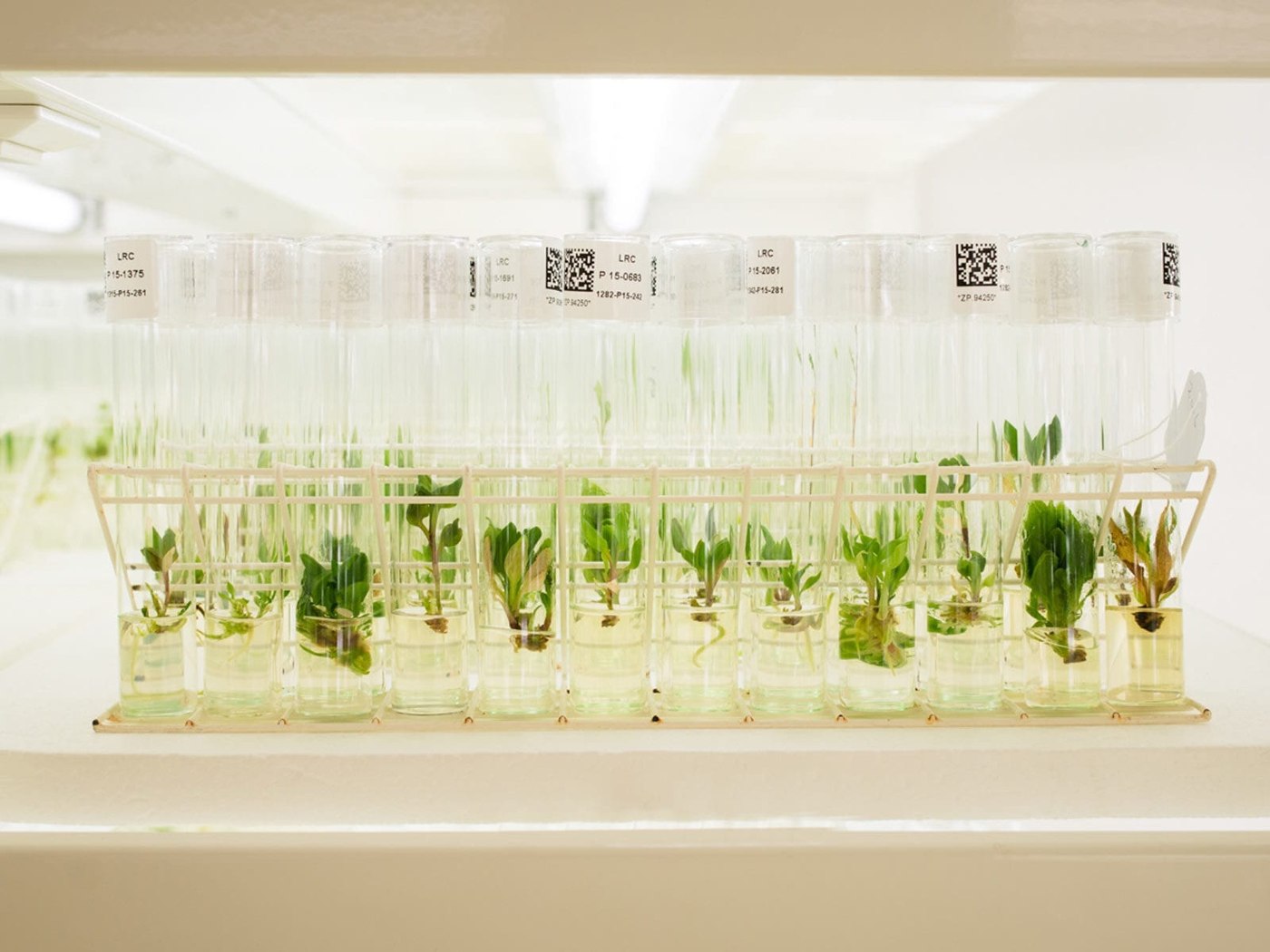
育种这块的技术路线写得很具体。研究人员从现代实验室出发,用 DNA 技术、LED 试验和最新方法,去改进育种、储藏、质量控制和后续开发的每一个环节。育种方向上重点是品种更新、株型、耐存放性、抗病性,以及适应高效和自动化生产的栽培要求。品种来源是「高品质的起始材料」——花茎强健、产量好、价格可靠的那种。公司自己的说法是:160 多年来推出了大量成功且获奖的品种,从独特的 Charmelia® 系列、纯白的 Organza 到醒目的 Celosia Hot Topic。
实验室之外是一张全球网络。**总部兼育种与销售在里森豪特**,生产基地分布在乌干达(坎帕拉邮包区、穆科诺与瓦基索两地)、南非(布里茨,专注组织培养)、哥伦比亚(安蒂奥基亚省)。生产和销售靠的是各国代理与销售顾问。
公司在「可持续」一节里把话说明白了:「我们在乎,所以我们行动。」——每天改进一点,让自己变得更可持续;创造平等的增长机会,争取卓越;彼此尊重,也尊重彼此和这颗行星;我们对自己的未来和后代负责。
具体挑了联合国可持续发展目标里的六个。**目标 3 健康与福祉**:为每个人提供好的工作环境,关注 1,000 多名员工的长期健康。**目标 6 清洁饮水与卫生**:为驻地周边的人提供清洁饮用水,并优化用水量。**目标 8 体面工作与经济增长**:平等对待员工,投资教育与培训,着眼可持续增长。**目标 12 负责任消费和生产**:育出更可持续生产的品种,减少并改进自身运营与生产的影响。**目标 13 气候行动**:让员工和日常工作一起行动,抵消并减少二氧化碳排放。**目标 17 促进目标实现的伙伴关系**:**客户就是伙伴**,一起推动整个生产链的可持续。
接下来要去的两个展会
公司近期的日程排得很满。2026 年 11 月 4 日至 6 日在 Aalsmeer 的 Vijfhuizen 办 IFTF 花卉贸易展,11 月 27 日至 29 日在那不勒斯的 Flora Expo 参展。在此之前,6 月 3 日的 FlowerTrials® 2026「Inspiration Days」夏季—秋季场把整个育种世界聚到了一起;4 月 30 日发布的新闻则是 Astronova® 在市场导入成功之后迈出的下一步。
公司也在持续招人,职位挂在里森豪特,包括客服商务专员和种植技术员。公司在招工页面引用了几位员工的说法,**实验室负责人 Wim Rook 说他在里森豪特的实验室和一支研究团队一起工作,通过质量控制、新的发芽技术和 DNA 研究来改良品种**;育种员 Dave Geerlings 说公司给了他去进修并成为育种员的机会;**乌干达穆科诺的团队负责人 Jamada Bwambale 说自己在唐菖蒲部门做了几年,之后转进百合育种部门已经三年**;**财务经理 Pieter Huys 说「我们热爱幸福、花和植物——这是一门让人感觉良好的生意」**。
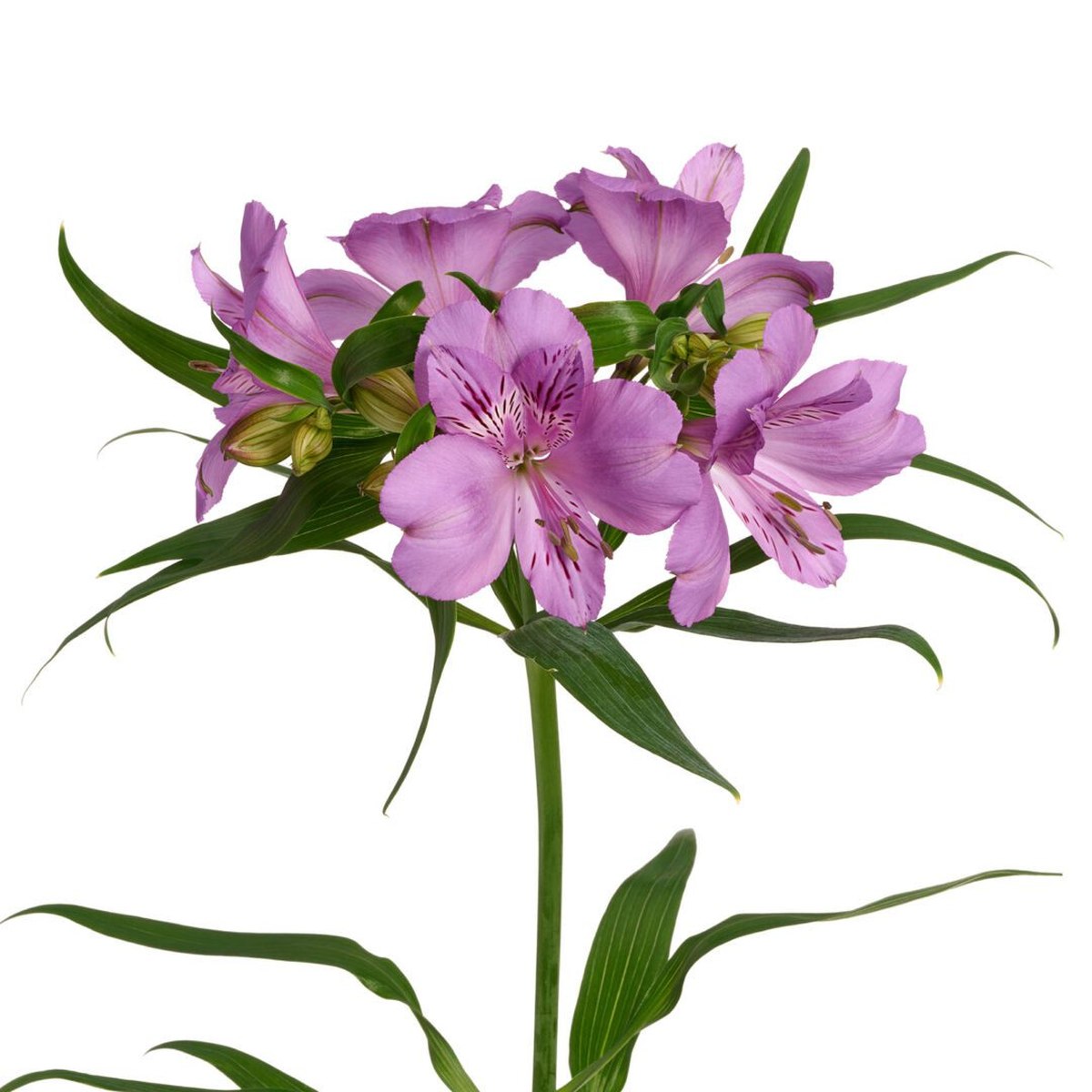
A bulb business that began in a potato field
Royal Van Zanten is one of the oldest bulb companies in the Netherlands, and it started in 1862. Founder Gerrit Veldhuyzen van Zanten took a plot on the “Zanderij van Six” at Hillegom and started growing flower bulbs alongside his potatoes — he had the foresight to see that bulbs had a much bigger future on the world market than potatoes did. In 1897 the company bought land in Hillegom and settled there, which is where it has been rooted ever since.
The company was granted the “Koninklijk” designation in 1901, and this royal title is still used today. The present main site in Hillegom was built in 1911, and the facade carrying the Dutch royal coat of arms and the Dutch royal motto “Je Maintiendrai” still stands there today, above the old painted sign reading “GEBROEDERS VAN ZANTEN — KONINKLIJKE NEDERLANDSCHE BLOEMBOLLENKWEKERIJ”. Even regular train travellers on the Haarlem–Leiden route recognise the landmark.
What followed was close to a century and a half of expansion. In 1900 old Gerrit retired and his sons Jan and Gerrit jr carried on as “Gebroeders Van Zanten”, extending to more than 60 hectares by 1912; the four sons joined in 1926, and by 1937 the family had produced its ninth director. In 1959 Kees Veldhuyzen van Zanten introduced the chrysanthemum as a year-round product in the Netherlands through a wholly-owned subsidiary, and through the sixties and seventies new greenhouses went up for cutting production while the breeding began to bear fruit.
1983 was the turning point for going international: a new company in Aalsmeer devoted to alstroemeria propagation, and exports of bulbs, plants and cuttings spread to some twenty countries across both hemispheres. In 1991 “Gebroeders van Zanten” and “Van Zanten Chrysanthemum” merged into “Koninklijke Van Zanten” and immediately added a 16,000 m² greenhouse for growing, rooting and alstroemeria research; in 1993 the first pile was driven in Hillegom for a modern bulb handling and processing complex.
The late nineties were a period of fast expansion and acquisitions, with chrysanthemum cutting production starting in South Africa and the company reaching number 82 in the Elsevier top 100. In 2001 the 31 house styles and trade names were all dropped and “Royal Van Zanten” was launched as a single brand. In 2006, through the acquisitions of Cleangrow and later Sunfield and CBA, chrysanthemum varieties came to be marketed exclusively; the year before, cyclamen, osteospermum and impatiens were discontinued to keep the focus on cut and pot chrysanthemum, aster, celosia and multiflora. In 2009 the bouvardia range of John de Jong was added.
At 150 years in 2016 the company was still opening markets in China, India, Malaysia and Ethiopia. But it was around this time that the ownership structure changed.
The bulb arm closes in May 2026
On 15 October 2025 the company itself announced that Van Zanten Flowerbulbs will permanently close its doors in Hillegom at the end of May 2026.
What is closing is the bulb business in Hillegom. Over 164 years it grew into one of the top international players in the bulb trade — an innovative lily bulb breeder and grower, with a third leg in exporting lily and tulip bulbs supplemented with other summer goods. One line in the announcement carries particular weight: this is the last time lily bulbs will be received, inspected, processed and packed in the warehouse in Hillegom. From January, colleagues say goodbye in phases; the last ones leave on 31 May, and then the doors close for good.
The managing director of the bulb division, Klaas Jan Vijn, explained why. Three years ago they asked how Van Zanten Flowerbulbs could be continued. The starting point was to sell the company as a whole, but that proved too complex, so Nimbus decided to sell it in parts.
The breakup is already well under way. Earlier this year the lily breeding business was taken over by Hobaho in Hillegom, and from 1 October the lily trade and the nursery in New Zealand were sold to Onings Holland Flowerbulbs in Poeldijk. The tulip trade was still under discussion, with a sale expected to be announced shortly.
The 11.5 hectares of land in Hillegom are also up for sale, with 15,000 m² of greenhouses and over 20,000 m² of built-up area, marketed by Mens Makelaars of Lisse. Klaas Jan Vijn said he expects the sale of the Hillegom property to be completed before May 2026.
As for staff, the forty-odd employees were told in the summer of 2025 that the business would end. Those in breeding moved across to Hobaho, and a number of commercial staff will join Onings. On 2 November the same year, Tuberbulb Export B.V., part of the CSW Group in Hillegom, took over the “summer goods” trading activities of Van Zanten Flowerbulbs from the 2026 harvest onwards — a deal that grows Tuberbulb Export in volume and strengthens its specialist knowledge of tulips, including tulip forcing, with the experienced team going with it.
The parties involved put it plainly: the deal keeps the knowledge and experience built up over 164 years by Van Zanten Flowerbulbs intact, available to the market and to future generations.
Two companies from one
Looking back at the 2018 transaction, the split was planted from the start.
In 2018 the investment company Nimbus bought the shares in Royal Van Zanten from the Veldhuyzen van Zanten family. Nimbus buys companies with improvement potential, with the eventual aim of selling them on again. On taking over, the investor split the company further into Van Zanten Breeding at Rijsenhout and Van Zanten Flowerbulbs at Hillegom — by placing the real estate with the two different companies — so that each could be sold separately.
That structure, put in place in 2018 as preparation for a future sale, became the basis of the breakup eight years later. Nimbus still lists Royal Van Zanten in its own portfolio, describing it as a leading player in ornamental horticulture that grew out of a history of more than 150 years, with a portfolio covering cut flowers such as chrysanthemums and alstroemeria, lily bulbs, and cuttings for pot plants such as aster and celosia.
The two entities need to be kept apart. Van Zanten Flowerbulbs is closing, ending in May 2026. Van Zanten Breeding continues, and is Royal Van Zanten today — breeding and selling cut flowers and pot plants, with more than 1,000 employees and production and propagation sites in the Netherlands, Uganda, South Africa, Colombia and New Zealand.
In other words, this is a company that sold off its bulb-growing arm and kept its flower-cutting seedling business. The old article described it as a horticultural service company offering all kinds of plants, garden tools, soil improvers and related technical consulting services. That was never what it was: it sells neither garden tools nor soil improvers. It does breeding and young plant production.
What the half that remains actually does
Van Zanten Breeding’s range splits into cut flowers and pot plants. The cut flower side covers alstroemeria, chrysanthemum, bouvardia, statice (given elsewhere as limonium) and lavendel; the pot side covers aster, celosia, chrysanthemum and multiflora. The 2026 introductions show the direction: Charmelia® Alba, Mount® Jeff Rosa, Tiara® Jade Violet, Tiara® Onyx Purple, Tiara® Quartz White, Tiara® Topaz Pink, Bonita Orange, Bonita Sunny, Florentina™, Yellow Cap, Fabienne and Fabienne Sweet.
The technical approach to breeding is spelled out. Their researchers work from a modern laboratory with DNA techniques, LED trials and the latest methods to improve and optimise every stage of selection, storage, quality control and further development. The breeding priorities are renewal, appearance, vase life, disease resistance, and suitability for efficient and automated production. The starting material is what the company calls high quality — strong flowers and plants, good yields and a reliable price. Their own summary of the breeding record: over 160 years of successful, award-winning introductions, from the distinctive Charmelia® varieties and the snow-white Organza to the eye-catching Celosia Hot Topic.
Beyond the laboratory there is a global network. Breeding and sales sit at Rijsenhout, with production at locations in Uganda (Kampala, and Mukono and Wakiso), South Africa (Brits, for tissue culture) and Colombia (Antioquia), and the whole thing is served by agents and sales advisers in various countries.
On sustainability the company states it plainly: “We care, so we act” — improving every day to become more sustainable, creating equal opportunities for growth and striving for excellence, respecting each other and each other and the planet, and taking responsibility for our own future and that of future generations.
Six of the UN Sustainable Development Goals are picked out. Goal 3, health and wellbeing: a good working environment for everyone, with attention to the long-term health of more than 1,000 employees. Goal 6, clean water and sanitation: making clean drinking water available to people around the sites, and optimising water consumption. Goal 8, decent work and economic growth: treating all employees equally, investing in education and training, and focusing on sustainable growth. Goal 12, responsible consumption and production: breeding varieties for more sustainable production, and reducing and improving the impact of operations and production. Goal 13, climate action: colleagues and daily work activating together to compensate for and reduce CO₂ emissions. Goal 17, partnerships for the goals: customers are partners, working together to make the production chain more sustainable.
Two trade fairs coming up
The diary is busy. IFTF at Vijfhuizen, Aalsmeer, from 4 to 6 November 2026, and Flora Expo in Naples from 27 to 29 November 2026. Before that, the Inspiration Days Summer–Autumn of FlowerTrials® 2026 on 3 June brought the whole breeding world together, and the news of 30 April was Astronova® taking the next step following a successful market introduction.
The company is also hiring, with vacancies at Rijsenhout including a customer service commercial employee and a cultivation specialist. Its recruitment page quotes a few people who work there. Wim Rook, Head of Laboratory, said that at the lab in Rijsenhout he works with a team of researchers on improving varieties by means of quality controls, new germination techniques and DNA research; breeder Dave Geerlings said the company gave him the chance to take courses and qualify as a breeder; Jamada Bwambale, Team Leader in Mukono, Uganda, said that after a few years in the gladiolus department he has now been working in the lily breeding department for three years; and Pieter Huys, Manager Finance in Uganda, said “we are passionate about happiness, flowers and plants are a ‘feel-good-business'”.
相关文章:
 荷兰 百合日给百合企业带来强大的推动力
 荷兰 图伦花卉球茎公司 M. Thoolen Flowerbulbs – 荷兰百年球茎出口商
 荷兰 斯滕沃登球茎 C. Steenvoorden – 荷兰覆盖五十余国的球茎出口商
 荷兰Van Haaster – Nevada花卉球茎公司
 荷兰 Beekenkamp 园艺集团 – 面向全球园艺产业的综合集团
 日本 国華園 kokkaen – 菊花专业公司发展为园艺综合企业
 荷兰 Stuifbergen花卉球茎出口公司 – 专业园艺服务机构
 荷兰Van den Bos花卉球茎公司 – 对于专业的花卉种植者和进口商业来说,”荷兰Van den Bos花卉球茎公司”是从事百合、小苍兰及马
发表回复