
从南荷兰省的家族生意做起
这家公司叫 Van den Bos Flowerbulbs,一九四六年开在荷兰南荷兰省的 Westland 地区,起步时是家族生意,如今做的是百合、小苍兰和马蹄莲三种球茎的出口。公司形式是 B.V.,荷兰的私人有限责任公司。
总部在 Honselersdijk,挨着全球最大的花卉拍卖市场 Royal FloraHolland,周边集中着荷兰主要的球茎育种公司和种植户。公司的说法是业务遍及四大洲,客户超过六十个国家;不过几本产品目录里的说法是六大洲。
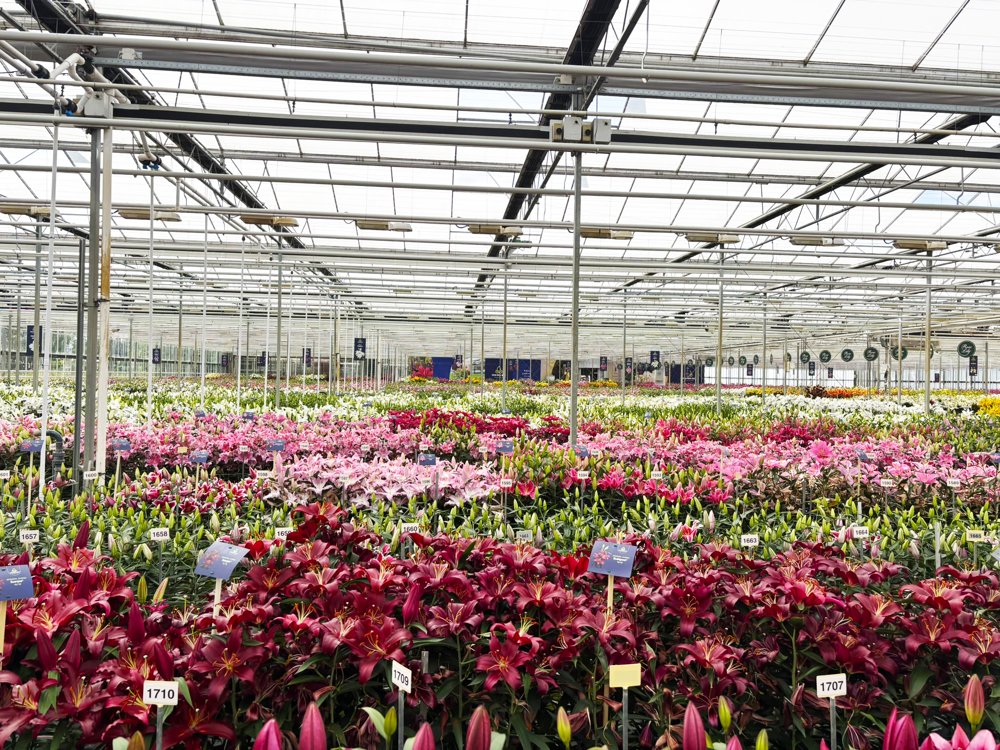
品类分切花和盆栽两条线。百合这一块,公司是重瓣百合 ROSELILY 的独家出口商。小苍兰和马蹄莲走的是自己握住独家或半独家品种的路子:小苍兰种球南北两个半球都自己种,马蹄莲的贮藏、预处理和出口由公司自己做。
南北两个半球都种,全年不断货
货源横跨南北两个半球,两边都有种植基地,因此全年都能供货,品质也稳定。切花小苍兰的目录里说得更直接:一年四季都拿得到新鲜的种植材料。
品种总数上,公司网站写的是五百多个,2025 年 5 月出的那本切花百合目录写的是七百多个。口径不一样,不必互相校正。
今年公司正好八十岁,站上的标志换成了八十周年的样式。他们的活动里也包括荷兰百合日,2026 年这一届的开幕第一次放在 Honselersdijk 的场地办,十四年来的头一回。
目录里的名字,一个一个数
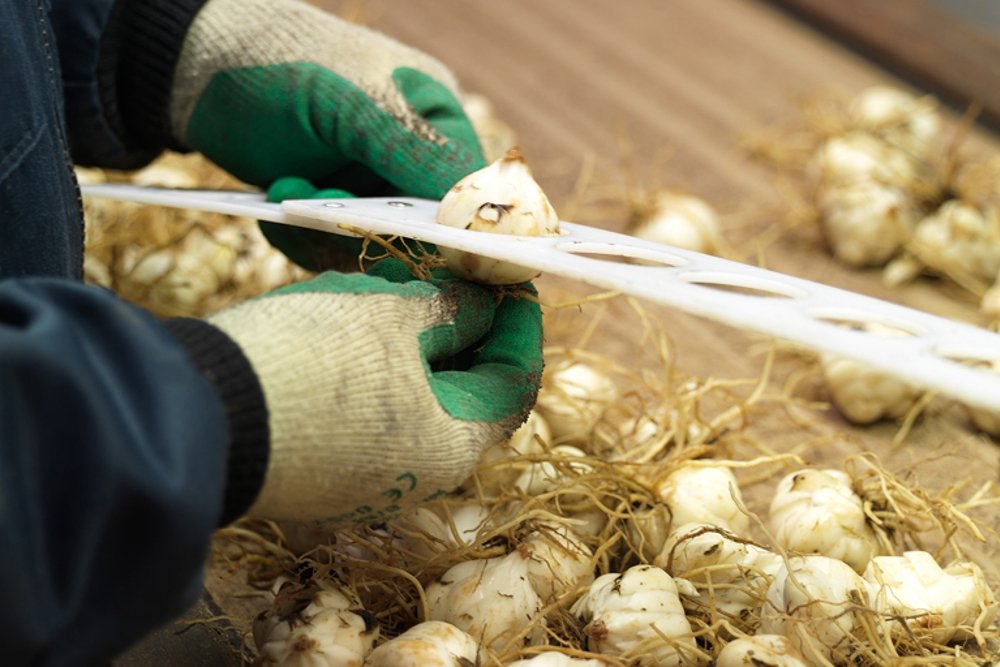
站上现成的五本目录都能下载,把里面印出来的名字逐个数下来,一共四百二十一条。切花百合目录三百零一条:ROSELILY 系列八十六个,东方系与 OT 杂交一百零四个,亚洲系与 LA 杂交八十一个,TA 杂交十一个,重瓣 LA 十五个,长花与 LO 杂交四个。
切花小苍兰五十二个,分单花十九、重瓣二十一和海滩型十二。海滩型主打耐热,不必给土降温,生长周期也更短,适合气候偏暖的地方。盆栽小苍兰二十三个,Nano 系列十六个,Lovely 系列七个:Nano 株型天生矮,不用喷矮壮素,催花大约七十天,茎长三十到四十厘米,花苞五到七个;Lovely 催花大约九十天,茎长四十到五十五厘米,花苞七到九个。
马蹄莲切花目录二十八个,盆栽目录二十五个,两本里有八个名字重名,合并后四十五个。切花那本按茎长、花朵大小和生长速度分级,盆栽那本标的是生长习性、叶上有没有斑点、要不要用矮壮素。
到货之后的每一道关
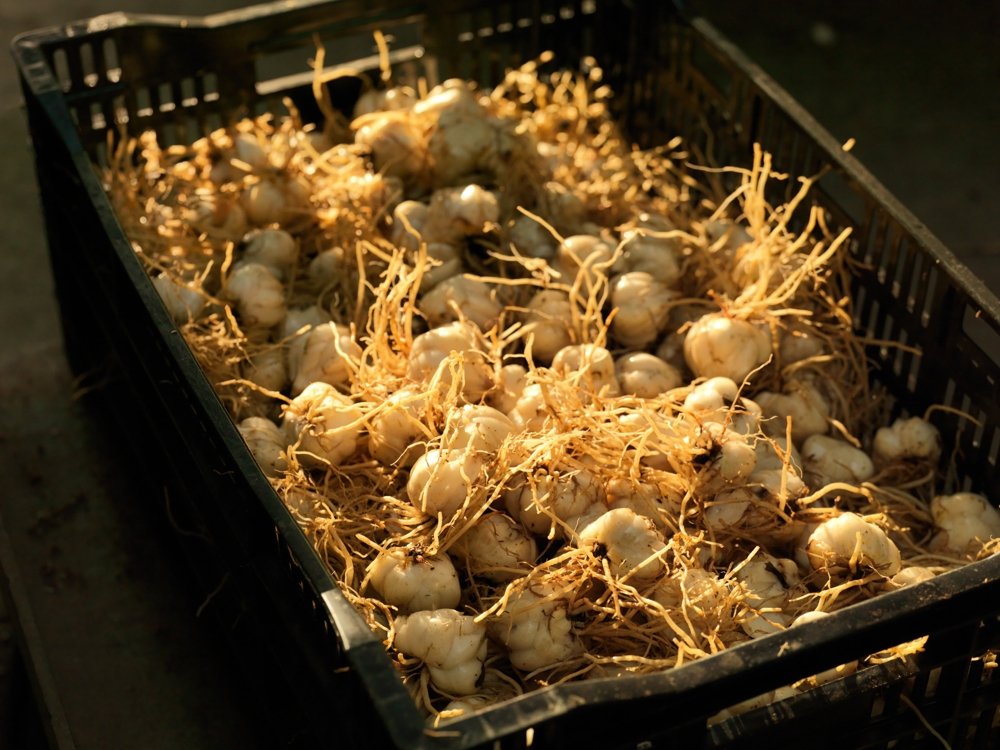
种球和球茎到厂先由质量团队逐批检查。合格的百合种球要冲洗、消毒、装箱,然后冷冻存进控温冷库;储存期间每天盯温度、湿度和糖分,每一批还要在专门的试验温室里试种,质量人员全程看着长势。
小苍兰球茎走的是另一套流程:分选、晾干、装进通风箱,再送进准备室催根,发货前做最后一次检查,客户可以通过门户网站查到自己预留的批次。
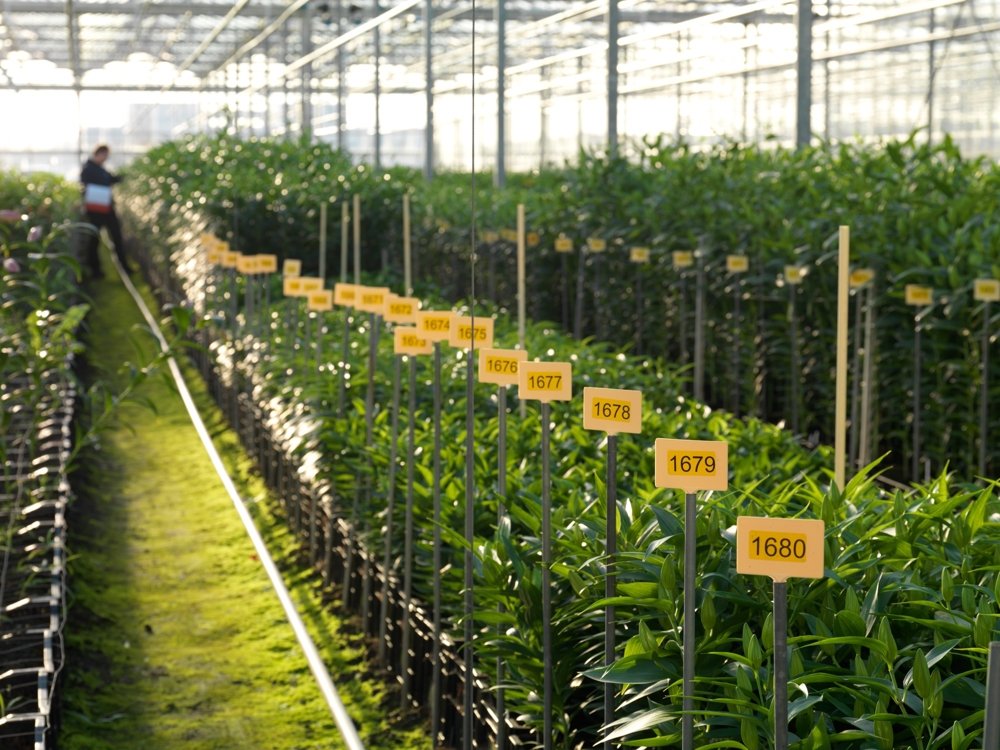
客户经理会定期到种植户的地里看长势,给出针对当地气候的建议。发货之外,栽培支持也是他们的正经业务。
五个国家的办公室,和对接的人
公司在五个国家有办公室:荷兰、美国、加拿大、澳大利亚和智利。美国和加拿大由 Flamingo Holland 承接,澳大利亚是 Van den Bos Australia,智利是 Southern Bulbs。美国办公室在加州 Vista,加拿大在安大略省 Norwich,澳大利亚在维多利亚州 Silvan,智利在 Puyehue。
2025 年 10 月的切花小苍兰目录末尾列着对接人:总部是 Daan Vermeer,销售与产品经理 Niels Drughorn,销售经理 Adri Duyvestijn,亚洲与中东由 Ali Alizadeh 负责,南美是 Veronika Paessler;德国和波兰另有代理,分别是 Harald Gölz 和 Damian Doniak、Andrzej Bembenista。
招聘页上挂着实习生培养、初级国际销售经理和质量保证专员等岗位。实习生的安排是在销售、采购和物流几个部门之间轮岗,结束时直接转为正式员工。
A family business in the Westland
Van den Bos Flowerbulbs started in 1946 as a family business in the Westland region of the Dutch province of South Holland. Today it exports flower bulbs of three crops: lilies, freesia and calla. The company is registered as a B.V., the Dutch private limited company.
Headquarters sit in Honselersdijk, right next to Royal FloraHolland, the world’s largest flower auction, with most of the country’s bulb breeders and growers close by. The company says it operates on four continents and serves customers in more than 60 countries, though several of its product catalogues put the figure at six continents.
The range is split into a cut flower line and a pot plant line. For lilies, the company is the exclusive exporter of ROSELILY, the double-flowered lily range. Freesia and calla run on varieties it holds exclusively or semi-exclusively: freesia corms are grown in both the Northern and the Southern hemisphere, while the storage, preparation and export of calla tubers are done in house.
Two hemispheres, all year round
Bulbs come from both the Northern and the Southern hemisphere, so the company can offer planting material all year and keep quality steady. The cut freesia catalogue puts it plainly: fresh, high quality planting material is available in every season.
On the total number of varieties, the company website says more than 500, while the cut lily catalogue published in May 2025 says more than 700. The two figures are not reconciled, and there is no need to force them into agreement.
The company turned 80 this year, and the site now carries an anniversary version of the logo. Dutch Lily Days is one of its events: in 2026 the official opening was held at the Honselersdijk site for the first time in fourteen years.
Counting the names in the catalogues
Five catalogues are available for download, and counting the variety names printed in them gives 421 entries in total. The cut lily catalogue holds 301 of them: 86 ROSELILY names, 104 Oriental and OT hybrids, 81 Asiatic and LA hybrids, 11 TA hybrids, 15 Double LA hybrids and 4 Longiflorum and LO hybrids.
The cut freesia catalogue lists 52: 19 single flowers, 21 doubles and 12 beach types. The beach types are the heat tolerant ones, needing no soil cooling and running a shorter crop cycle, which suits warmer climates. The pot freesia catalogue lists 23, split into 16 Nano types and 7 Lovely types. Nano plants are genetically short and need no growth regulator, forcing takes about 70 days with stems of 30 to 40 cm and five to seven buds; Lovely types force in about 90 days with stems of 40 to 55 cm and seven to nine buds.
The cut calla catalogue lists 28 and the pot calla catalogue 25, with eight names appearing in both, giving 45 distinct names. The cut catalogue grades by stem length, flower size and production speed; the pot catalogue records growth habit, whether the foliage is speckled and how much growth regulator is needed.
What happens after the bulbs arrive
Incoming bulbs and corms are inspected batch by batch by the quality team. Approved lily bulbs are rinsed where needed, disinfected, packed into crates, then frozen and held in controlled cooling cells. Temperature, humidity and sugar levels are checked daily during storage, and every batch is also trial grown in a dedicated greenhouse with quality staff watching the growth.
Freesia corms follow a different route: they are sorted, dried, packed into ventilated crates and moved to a preparation cell where rooting starts before shipment. A final inspection happens just before the order goes out, and customers can follow their reserved batches through the company portal.
Account managers visit growers in the field regularly and advise on the crop in their local climate. Cultivation support is a real part of the job, not just logistics.
Offices in five countries, and who to talk to
The company has offices in five countries: the Netherlands, the United States, Canada, Australia and Chile. Flamingo Holland covers the United States and Canada, Van den Bos Australia runs the Australian office, and Southern Bulbs is the Chilean partner. The US office is in Vista, California, the Canadian one in Norwich, Ontario, the Australian office in Silvan, Victoria, and the Chilean one in Puyehue.
The contact list at the back of the cut freesia catalogue, dated October 2025, names the people: Daan Vermeer at the head office, Niels Drughorn as sales and product manager, Adri Duyvestijn as sales manager, Ali Alizadeh for Asia and the Middle East and Veronika Paessler for South America. Germany and Poland are covered by agents, Harald Gölz and, for Poland, Damian Doniak and Andrzej Bembenista.
The careers pages list a traineeship, a junior international sales manager and a quality assurance employee. Trainees rotate through sales, procurement and logistics before being offered a permanent post.
相关文章:
 荷兰 范哈斯特‑内瓦达花卉球茎 Van Haaster‑Nevada – 350 余种球茎的出口商
 荷兰 博特球茎花卉公司 Bot Flowerbulbs – 北荷兰球茎预处理全球出口商
 荷兰 赞博花卉球茎 Zabo Plant – 数百个品种销往北美亚洲欧洲
 荷兰 斯图伊夫卑尔根花卉球茎出口公司 Stuifbergen Flowerbulbs Export B.V. – 1800 余个品种的出口商
 荷兰 德克船长球茎花卉出口公司 Derck Schipper B.V. – 球茎出口覆盖欧洲内外
 荷兰 弗莱特与登汉百合苗圃 Vletter & Den Haan – 全球百合育种市场领导者
 荷兰 瑞洛克花卉球茎 Ruigrok Flowerbulbs – 450 余种球茎的出口农场
 荷兰 百合公司 Lily Company B.V. – 北荷兰百合球茎育种与全球出口商
发表回复