
协会概况
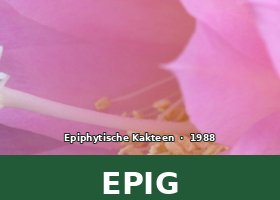
EPIG(Interessengemeinschaft Epiphytische Kakteen)是 1988 年由德国仙人掌协会 DKG 前主席 Kurt Petersen 在德国发起的附生仙人掌兴趣社区,现约有 150 名个人会员,绝大多数来自德国、瑞士、奥地利等德语区,约 12% 来自非德语国家,部分植物园以团体身份或由其负责人代表加入。协会作为一个非法人社团(nicht eingetragener Verein)独立运营,同时挂靠在 DKG 名下作为专题工作组,会员身份不要求先加入 DKG。EPIG 的研究对象涵盖三大类群:附生生长的野生种、附生仙人掌栽培种(Epikakteen)和节段型仙人掌(Gliederkakteen,含 Schlumbergera、Rhipsalis、Hatiora 等属)。
学术期刊《EPIG》
期刊《EPIG》(ISSN 2364-4486)由协会自 1989 年起出版,是目前全球范围内唯一专门面向附生仙人掌的学术与栽培期刊,每年约出版两期,每期平均 40 至 44 页,全彩印刷,使用高质量铜版纸(Kunstdruckpapier)。内容覆盖新发现物种的描述、原产地野外考察报告、栽培技巧、属级专著配图,以及会员培育的优秀杂交种介绍。2006 年起各期均有公开的索引文件(Indexdateien),会员和访客可直接在线浏览或免费下载;创刊号到 2005 年的早期合订本以 DVD 形式提供(25 欧元含欧洲境内邮费或 30 美元发往海外,U 盘版本另加 2 欧元或 2 美元)。Schlumbergera 与 Rhipsalidopsis 两属的物种与杂交种数据库也已经在协会网站上对外公开。
年会与学术交流
EPIG 的年会(Jahrestreffen)通常为期三天,地点每年在德语区内轮换,议程以专业讲座(Fachvorträge)为主,辅以会员之间的经验交流、稀有植物与种子的现场交换,以及对当地一家植物园的参观导览。2020 年第 30 届原定 5 月在 Burgstädt bei Chemnitz 举行,因疫情取消后改在 2021 年 9 月 3 日至 5 日同地补办;2020 年 8 月 22 日至 23 日另在图林根州 Bad Berka 召开过一次为期两天的理事工作会议(Gremientreffen);2019 年第 29 届年会在康斯坦茨与苏黎世两地联合举办(4 月 25 日至 28 日,跨越德国与瑞士边境);2023 至 2026 年的多届年会安排已发布在协会的 aktuelles 页面。
种子分发与图像库
EPIG 的 Saatgutverteilung(种子分发)是会员服务中较为活跃的一项:协会定期维护一份 Angebotsliste(可索取种子清单),会员可申请交换附生仙人掌各类野生种和杂交种的种子,分发清单和具体流程均在 aktuelles 页面公布。图像库(Bildergalerien)按属名编排,涵盖 17 个野生属——Aporocactus、Disocactus、Deamia、Epiphyllum、Hatiora、Kimnachia、Lepismium、Lymanbensonia、Pfeiffera、Pseudorhipsalis、Rhipsalidopsis、Rhipsalis、Schlumbergera、Selenicereus、Strophocactus、Weberocereus;杂交种部分单独列出 Aporophyllum、Epikakteen、Rhipsalidopsis 杂交种、Schlumbergera 杂交种以及其他属杂交种,每一类下都汇集了对应的栽培照片,便于会员比对品种特征。
栽培要点
协会在 Kultur 页面给出了针对附生仙人掌的通用栽培要点:基质需要腐殖质丰富且排水良好的混合土,市售好品质花土可混入最多 50% 的火山浮石(Bims)或火山砾(Lavagrus),必要时再加珍珠岩(Perlite)或硅藻土(Kieselgur),换盆周期一般 2 至 3 年一次;浇水推荐无钙水(如雨水),生长期(5 月至 9 月及夏季高温时段)每周大量给水,冬季休眠期相应减量,基质忌讳完全干透但更忌积水(低温或休眠期积水是附生仙人掌烂根的最常见原因)。施肥方面,强健生长种类(如 Epikakteen)在 5 月至 9 月生长季每两周施一次均衡氮磷钾肥料;生长缓慢或株型较小的种类(如 Schlumbergera、Hatiora)应使用磷钾偏高、氮偏低的开花植物肥料;9 月至 10 月底每月施 1 至 2 次无氮的磷钾肥;12 月至次年 3 月或 4 月完全停止施肥。
About the community
EPIG, the Interessengemeinschaft Epiphytische Kakteen, is a German interest community for epiphytic cacti founded in 1988 by Kurt Petersen, former president of the Deutsche Kakteen-Gesellschaft (DKG). The community has roughly 150 individual members, most of them based in German-speaking countries (Germany, Switzerland, Austria) and about 12% in non-German-speaking regions; a handful of botanical gardens are represented either as institutional members or through their directors. EPIG operates as a nicht eingetragener Verein (an unincorporated club) and also functions as a working group within the DKG, with no requirement to hold DKG membership. Its scope covers three broad groups: epiphytically growing wild species, the classic Epikakteen hybrids, and the segmented cacti (Gliederkakteen, including Schlumbergera, Rhipsalis, Hatiora and similar genera).
The EPIG journal
The journal EPIG (ISSN 2364-4486) has been published since 1989 and is the only periodical worldwide dedicated specifically to epiphytic cacti. It appears irregularly, usually about twice a year, with each issue running 40 to 44 full-colour pages printed on coated art paper (Kunstdruckpapier). Content covers newly described species, field reports from native habitats, cultivation advice, genus-level monographs with photographs, and features on outstanding hybrids produced by members such as Kurt Petersen and Rudolf Heßing-Herick. Issue-level index files (Indexdateien) have been available online since 2006 and are free to download; the early run from 1989 to 2005 is offered as a digitised DVD for €25 (shipping within Europe included) or US$30 (overseas), with a USB-stick version available for an additional €2 / US$2. The Schlumbergera and Rhipsalidopsis species and hybrid databases are also publicly accessible through the community’s website.
Annual meetings and exchange
EPIG holds an annual meeting (Jahrestreffen), usually lasting three days, with the venue rotating between different cities in the German-speaking region. The programme mixes specialist talks (Fachvorträge), informal exchange among growers, an on-site trade in rare plants and seed, and a guided tour of a local botanical garden. The 30th Jahrestreffen, originally scheduled for 21–24 May 2020 in Burgstädt bei Chemnitz, was cancelled because of the pandemic and made up for on 3–5 September 2021 in the same city; between these two dates, on 22–23 August 2020, the EPIG board held a two-day Gremientreffen in Bad Berka, Thuringia. The 29th meeting ran from 25 to 28 April 2019 in Konstanz and Zürich, crossing the German–Swiss border. Subsequent meetings covering 2023 to 2026 are listed on the aktuelles page of the community website.
Seed distribution and image galleries
Seed distribution (Saatgutverteilung) is one of the more active member services: the community maintains an Angebotsliste — a current list of available seed lots — published on the aktuelles page, and members can request seed of wild species and hybrids of epiphytic cacti through it. The image galleries (Bildergalerien) are organised by genus and cover seventeen wild genera — Aporocactus, Disocactus, Deamia, Epiphyllum, Hatiora, Kimnachia, Lepismium, Lymanbensonia, Pfeiffera, Pseudorhipsalis, Rhipsalidopsis, Rhipsalis, Schlumbergera, Selenicereus, Strophocactus, and Weberocereus. Hybrid material is filed separately under Aporophyllum, Epikakteen, Rhipsalidopsis hybrids, Schlumbergera hybrids, and hybrids of other genera, with each section collecting cultivation photos that help members compare varieties side by side.
Cultivation notes
The community’s Kultur page lays out a general cultivation guide for epiphytic cacti: the substrate should be humus-rich and free-draining — a good commercial potting mix amended with up to 50% pumice (Bims), lava grit (Lavagrus), and, if needed, perlite or diatomaceous earth (Kieselgur) works for almost all species and cultivars, with repotting typically needed every two to three years. Water should be calcium-free, ideally rainwater; during the growing season from May through September (and in hot summer spells) the plants need generous weekly watering, reduced during the winter rest — the substrate should never dry out completely, but it must never sit in standing water, as waterlogging, especially in cool conditions or during dormancy, is the most common cause of root rot in epiphytic cacti. Fertilising follows the same rhythm: vigorous growers such as Epikakteen benefit from a balanced N-P-K feed every two weeks through May-to-September; slower-growing or compact species including Schlumbergera and Hatiora prefer a bloom-plant fertiliser with phosphorus and potassium higher than nitrogen; from September to late October switch to a nitrogen-free P-K feed once or twice a month, and stop fertilising entirely from December through March or April.



发表回复