
从一八八二年算起的家族球茎生意
这是一家做批发的公司,把荷兰的花球和多年生植物直接运到美国。荷兰那边的基地落在南荷兰省福尔豪特,正处在球茎产区的中心,和产区里最好的种植户有直接往来,新出的品种和品质上的行情从市场那边第一时间就传到他们手里。
家里做球茎生意已经超过四代,最早从一八八二年算起。站方把自己称作“荷兰切花与复活节盆栽第一”,这话是他们自己的说法。走量最大的还是切花和盆栽这两条线,客户主要是专业种植户。同族在荷兰还另有一家专做出口的 L. Rotteveel & Zonen Export B.V.,早年的照片就拍在老址萨瑟海姆。
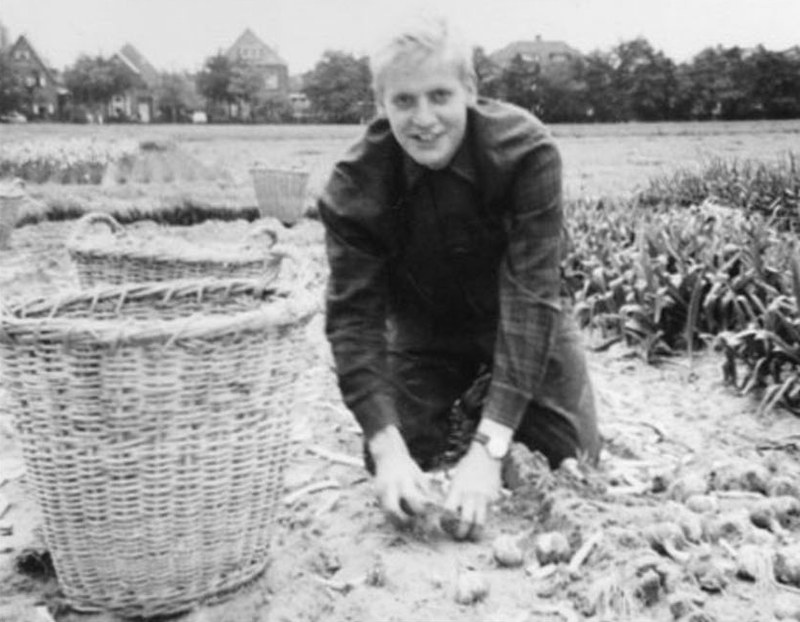
六十年代的老照片还留着:Pete Rotteveel 蹲在水仙地里挖球,柳条编的采收筐在田里排成一排。
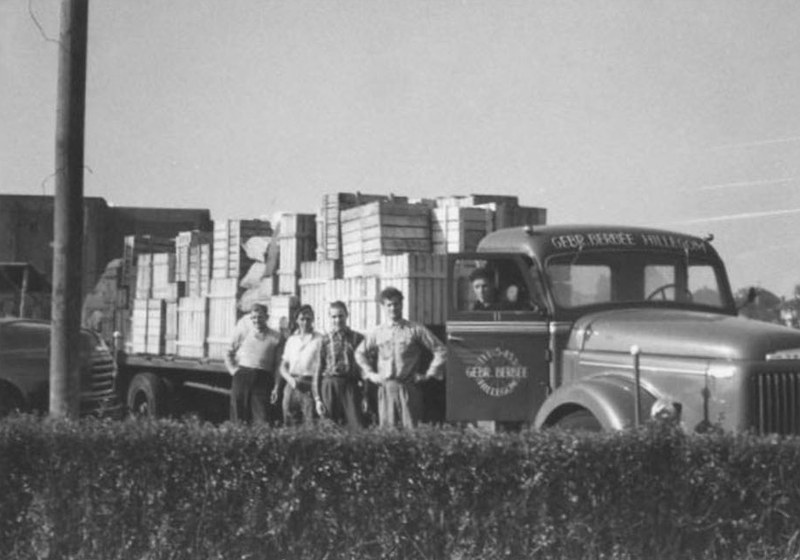
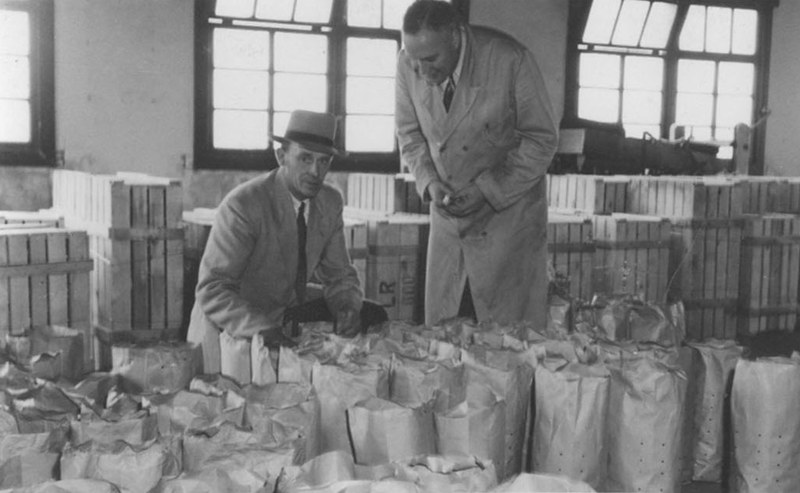
另一张老照片是六十年代初的装车现场:球茎装在木箱里,堆得比车帮还高,准备运到鹿特丹港。车门上刷着 GEBR. ROTTEVEEL & ZONEN 和萨瑟海姆的字样,是当年家族在萨瑟海姆做出口时留下的。
两个人撑起来的美国生意
美国这一头主要是 Pete J. Rotteveel 和 Ben van Egmond 两个人。Pete 念完园艺一类的专业后二十一岁就开始自己跑客户,父亲在五十年代把他派到美国做球茎销售;到今天他还在挨家挨户走访种植户,把种球的门道讲给他们听。
Ben 一九九五年加入公司,在这一行干了二十五年以上,十四岁起就在作坊里打包、清理球茎,二零零五年大学毕业后来做全职,如今是公司的合伙人。仓库落在宾夕法尼亚州,货从这里发往美国本土各州。
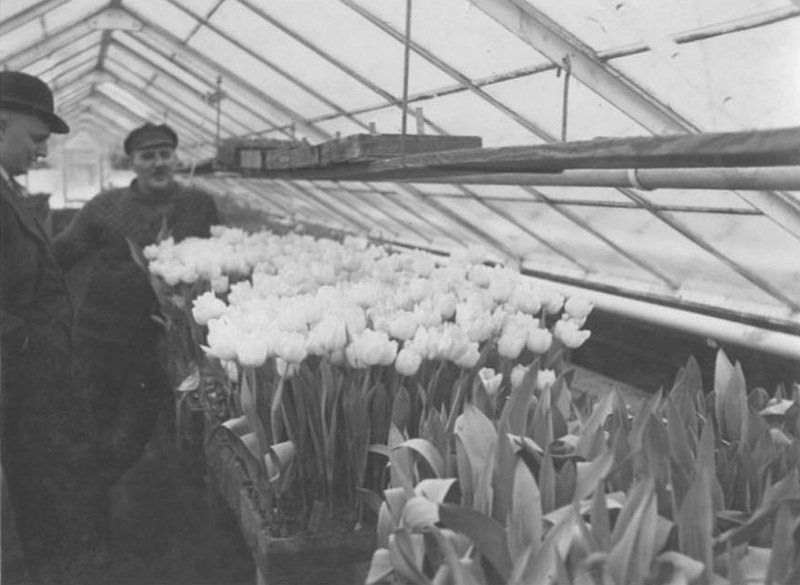
五十年代初,Jan Rotteveel 已经走访到宾夕法尼亚州的温室种植户那里。
五条批发线,各有各的用法
切花和温室盆栽是两个最硬的方向。切花那边挑的是室内外都能种的品种;盆栽那边专注复活节花盆,从秋天下地种球到春天起盆,整个流程可以带着客户一步步走,五十多年来他们常年在生长期里去看客户。
花园中心这条线做零售包装,给独立花园中心和五金店的预包装花球备了四种装法:展示盒、木质展示箱、小份零售包、装量更大的亚麻袋。木箱能堆成金字塔形,箱面贴条码标签,每箱附一张塑封海报,箱子回收之后还能改作他用。
电商和邮购做了五十多年,近十年需求明显往网上挪,给出的承诺是百分之百的成活保证和准时交货。景观工程线供给正式花园和市政项目的大批量用球,只供最大规格的球茎。
两百多个品种和下单方式
网站上的筛选分颜色、花期、光照、抗鹿和球根类型五项,品种页可以按用途一步步缩小范围。站点地图里一共收着两百二十一个品种页,各条批发线上列出的数量不一样:切花一百零六个、温室盆栽一百二十三个、花园中心一百五十四个、电商与邮购二百二十个、景观二百一十六个,同一个品种常常同时出现在好几条线上。
下单走的是报价而不是直接付款:放大看图,按报价键填数量,填完购物车提交一份询价,公司回邮件确认。清单上没有的品种也可以直接联系,小批量和特殊搭配的定制同样接。
零售端另有 2020 年秋季目录,PDF 文件共五十六页,郁金香分十四个组别,从单早花、凯旋、达尔文杂交到鹦鹉、百合型都有;水仙、番红花、风信子、朱顶红、鸢尾、葱属另有章节,还有专供零售商的预包装专页和十月交货专页。目录引言说公司在荷兰有自有农场和包装场地,而现在的网站介绍只提位于产区的运营基地和与种植户的直接联系。
检验、发货和退换条款
球茎在荷兰先经美国农业部检验,拿到质量证明再装进温控集装箱发到美国。发货季从八月开始(另一个页面写的是九月),一直排到十月底,按北美各地气候卡着种植时间出货,只发美国本土相连的四十八个州,不发阿拉斯加、夏威夷和关岛。
批发最低订单量是 250 美元,运费和手续费按订单金额的百分之十固定收取。下单之后要改,得在发货前十四天之前提出;要取消则提前四周以上,另付二十五美元手续费;对品质有异议要在收到货七天内提出。条款里还写明球茎全部来自栽培,不取自野外。
A Family Bulb Business Going Back to 1882
This is a wholesaler: it ships Dutch flower bulbs and perennials straight to the United States. The Dutch base sits in Voorhout, right in the middle of the bulb-growing district, with direct ties to the best growers there, so new varieties and quality news travel from the market to them quickly.
The family has been in the bulb business for more than four generations, going back to 1882. The company calls itself the number one specialist in cut flowers and Easter pot forcing from Holland, and that is their own claim. Bulk volume comes from cut flowers and pot plants, sold mainly to professional growers. A sister company, L. Rotteveel & Zonen Export B.V., handles export from the Netherlands, and the old photographs were taken at the family’s former home in Sassenheim.
The photographs from the 1960s are still there: Pete Rotteveel digging up daffodils in a field, with wicker harvesting baskets lined up along the rows.
Another photograph shows the loading yard in the early 1960s: bulbs packed in wooden crates, stacked higher than the sides of the truck, on their way to the port of Rotterdam. The livery on the door reads GEBR. ROTTEVEEL & ZONEN with Sassenheim below it, the family firm that handled export from Sassenheim back then.
Two People Run The American Business
The American side rests mainly on Pete J. Rotteveel and Ben van Egmond. Pete finished his studies in horticulture and started visiting customers at 21; his father sent him to the United States for bulb sales in the 1950s, and he still goes from grower to grower, passing on what he knows about growing bulbs.
Ben joined the company in 1995 after more than twenty-five years in the trade. He started at fourteen, packing and cleaning bulbs, and came back full time after graduating from college in 2005; he is now a co-owner. The warehouse is in Pennsylvania, and orders ship from there to the mainland states.
In the early 1950s Jan Rotteveel was already visiting greenhouse growers in Pennsylvania.
Five Wholesale Channels, Each With Its Own Use
Cut flowers and greenhouse pot plants are the two strongest lines. The cut flower list is made up of varieties that work both indoors and outdoors; the pot plant side concentrates on Easter plants and will walk customers through the whole process, from planting in autumn to a pot of flowers in spring, and has been visiting growers during the growing season for more than fifty years.
The garden centre line packs for retail. Pre-packed bulbs for independent garden centres and hardware stores come in four packings: display boxes, wooden display crates, small retail packs and larger linen bags. The wooden crates stack in a pyramid, carry barcoded labels, and each crate includes a laminated poster; they are sturdy enough to be used again afterwards.
E-commerce and mail order have been running for more than fifty years, and in the last decade demand has clearly moved online; the company promises a hundred per cent grow guarantee and delivery on time. The landscaping line supplies formal gardens and municipal projects with bulk plantings, and sells only top size bulbs chosen for how evenly they come into flower.
More Than Two Hundred Varieties, And How Ordering Works
The site filters by colour, bloom time, light, deer resistance and bulb type, and variety pages narrow down by use. Its sitemap holds two hundred and twenty-one variety pages, and the numbers differ per channel: one hundred and six for cut flowers, one hundred and twenty-three for pot plants, one hundred and fifty-four for garden centres, two hundred and twenty for e-commerce and mail order, two hundred and sixteen for landscaping, with the same variety often listed on several channels.
Ordering runs through a quotation rather than a checkout: enlarge the picture, press the quotation button, fill in the quantity, and send the request from the cart; the company replies by email. Varieties that are not listed can be requested directly, since they also handle small quantities and custom orders.
Retailers get a separate autumn catalogue; the 2020 PDF runs to fifty-six pages and splits tulips into fourteen groups, from single early, triumph and Darwin hybrid to parrot and lilyflowering, with separate chapters for narcissus, crocus, hyacinths, amaryllis, iris and allium, plus a prepacked section for retailers and an October delivery section. Its introduction says the company has its own farms and packing facilities in Holland, while the current website only speaks of an operating base in the bulb district and direct ties to growers.
Inspection, Shipping And The Fine Print
The bulbs are inspected by the USDA in Holland, and only travel to the United States once they have a quality certificate, packed into temperature controlled containers. The shipping season starts in August (another page says September) and runs to the end of October, timed to the planting window in each part of North America. They ship only to the forty-eight contiguous states, not to Alaska, Hawaii or Guam.
The minimum wholesale order is 250 dollars, and shipping and handling is a flat ten per cent of the order. Changes have to be made at least fourteen days before shipping, cancellations need four weeks notice plus a twenty-five dollar fee, and quality claims must be raised within seven days of arrival. The terms also state that the bulbs are cultivated, never taken from the wild.
相关文章:
 荷兰 罗特费尔父子球茎出口公司 L. Rotteveel & Zonen Export B.V. – 南荷兰球茎出口遍及欧美
 荷兰 韦斯特贝克花卉球茎公司 Westerbeek Bulb Company B.V. – 北美百年球茎出口商
 荷兰 种球市场 Holland Bulb Market B.V. – 荷兰球茎出口遍及六十多国
 美国 荷兰球根农场Holland Bulb Farms – 是一家美国在线花卉球根和园艺产品零售商,网站域名带有”Holland”字样表明其产
 荷兰 斯图伊夫卑尔根花卉球茎出口公司 Stuifbergen Flowerbulbs Export B.V. – 1800 余个品种的出口商
 荷兰 瑞洛克花卉球茎 Ruigrok Flowerbulbs – 450 余种球茎的出口农场
 荷兰 范登博斯花卉球茎 Van den Bos Flowerbulbs – 500 余种球茎的出口商
 荷兰 弗里林克父子出口公司 A. Frijlink & Zonen Export B.V. – 荷兰球茎出口遍及全球
发表回复