
一家从球茎处理做起的老家族企业
Nord Lommerse 是荷兰希勒姆的一家家族企业,1929 年起就在南荷兰省的球茎区做花球茎生意,公司的自我说法是「a passionate family-owned business since 1929」。从最初的小家庭作坊做起,如今产品销往四十五个以上国家。它们的球茎出现在世界各地:给全球的花卉生产者供货,也用在中国的公园和美国的活动现场。到第三代手里,公司换了负责人,但做活的手艺没变。
公司的主营是把郁金香球茎处理成半成品再供应给专业种植者,处理环节与自家的苗圃和育种合作方一起推进。除郁金香外,还出口风信子、水仙、葡萄风信子、番红花和百合的球茎。这里的客户是切花和盆栽的专业生产农场,不是零售园艺店;能把栽培技术指导一直跟到种植户手里,是他们留住客户的根本。
公司有两处地点,主厂区在希勒姆,另外在安娜保洛娜有一处自己的苗圃。固定员工十八人,忙季再加季节工。公司在招聘页上写得很直白:如果家族企业的氛围对你合适,又想看看球茎行业怎么运转,这里可能有合适的岗位。
育种、处理和分级都在自己手里
公司在育种、栽培、处理和出口这整条链上都参与,凭多年经验清楚每一道工序需要什么。目标是拿到性状更好的品种:花好看、抗病、产量高、催花表现好。做法是全程自控,从育种、种植一直到处理和发货,因此品质稳定,失败率低。
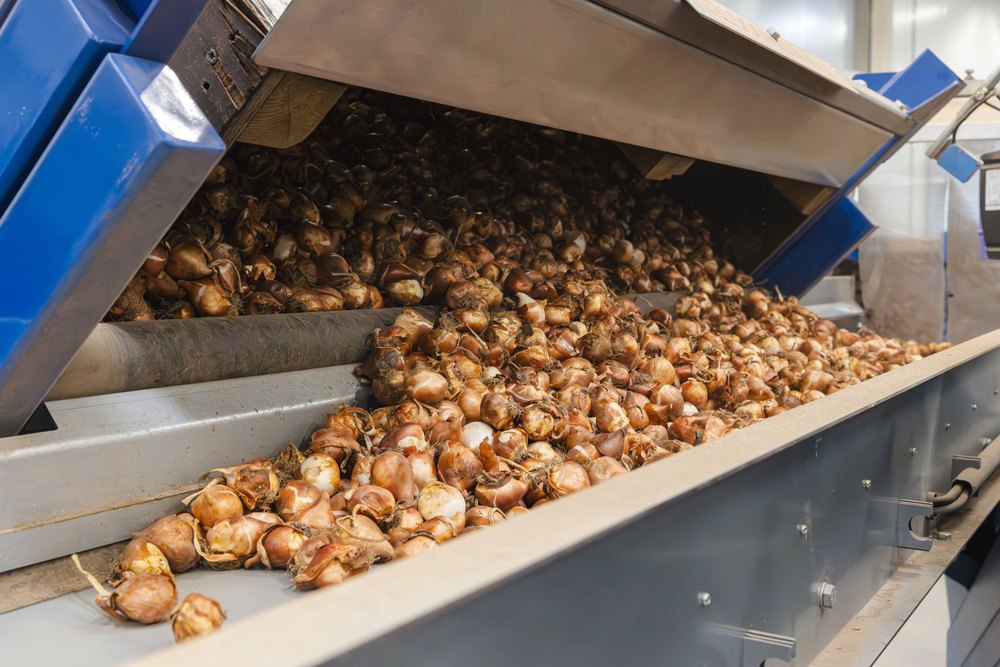
球茎在荷兰种出来,那里的土壤和气候适合种球茎。公司跟一批荷兰种植户紧密合作,也会去查看他们的做法,所以球茎经历过什么心里有数。收获之后处理立刻开始,在希勒姆和安娜保洛娜的场地进行。球茎一到先逐批检查有无异常和病害,把健康的挑出来;接着清洗、剥皮、分级、挑选、计数一次做完,再进恒温库储存。每批的检查结果都记在质量报告里,每一批有独立编号,客户随时能查到自己那批球茎的特性。
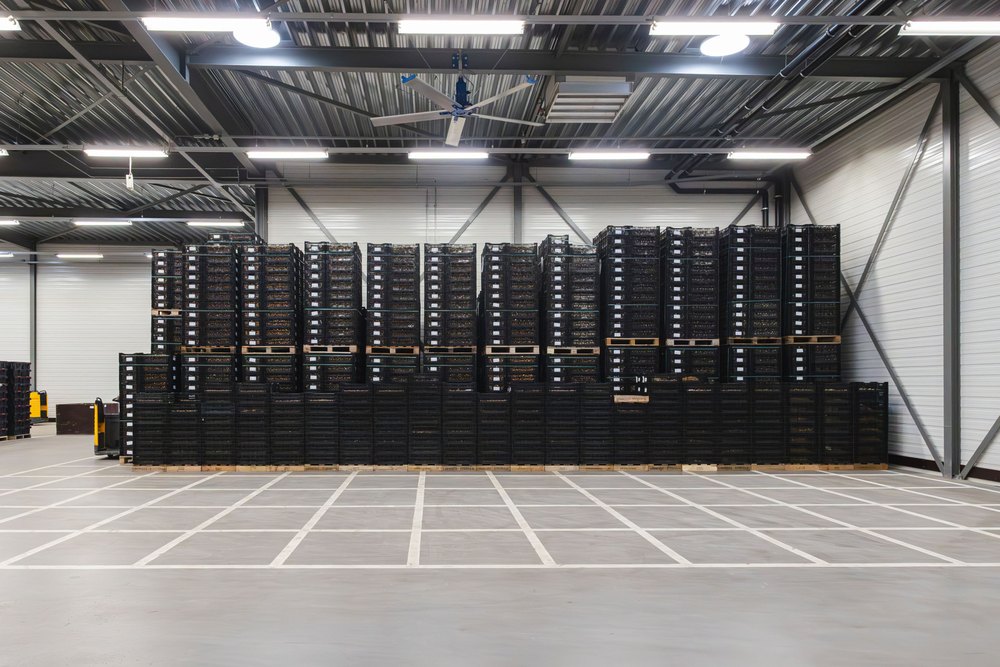
温度处理是决定上市节奏的一环。现代恒温库里持续做质量检查,把球茎送到该有的温度,让催花者能在想要的时间点开出荷花或盆栽。温度和湿度都严格控制,新风由电脑控制的设备不断循环。技术人员会做阶段检测,看球茎生长点的发育阶段,据此为这一批制定专门的催花时间表。
自育品种和行业协作
育种上公司是 Remarkable Tulips 合作体的一员,这是一个专做郁金香培育、催花和销售的联盟,重点是开发新的专属品种;Markglory Hyacinths 在风信子市场做同样的事。通过这些合作,公司参与新品种的选育,从育种一直到把全年按计划供应的球茎交到催花者手里,全程握在自己手上。公司的固定员工十八人,忙季再补季节工,凭自有处理线、对球茎的深入了解和高自动化的结构,可以随季节快速调整节奏,大批量供货也不成问题。
公司也是 Royal Anthos 的成员。这是球茎行业的行业协会,代表全球贸易公司的利益,由对行业知之甚深的经营者推动,和其他会员公司一起优化高质量球茎的销售。公司强调自己提供的不是单纯的货,而是半成品球茎加上配套的栽培指导,这是它和客户长期绑在一起的原因。它的座右铭是「A deal is a deal」,多年的经营换来的客户群,靠的是信任、互相尊重和双赢。
可持续这一块做到了什么程度
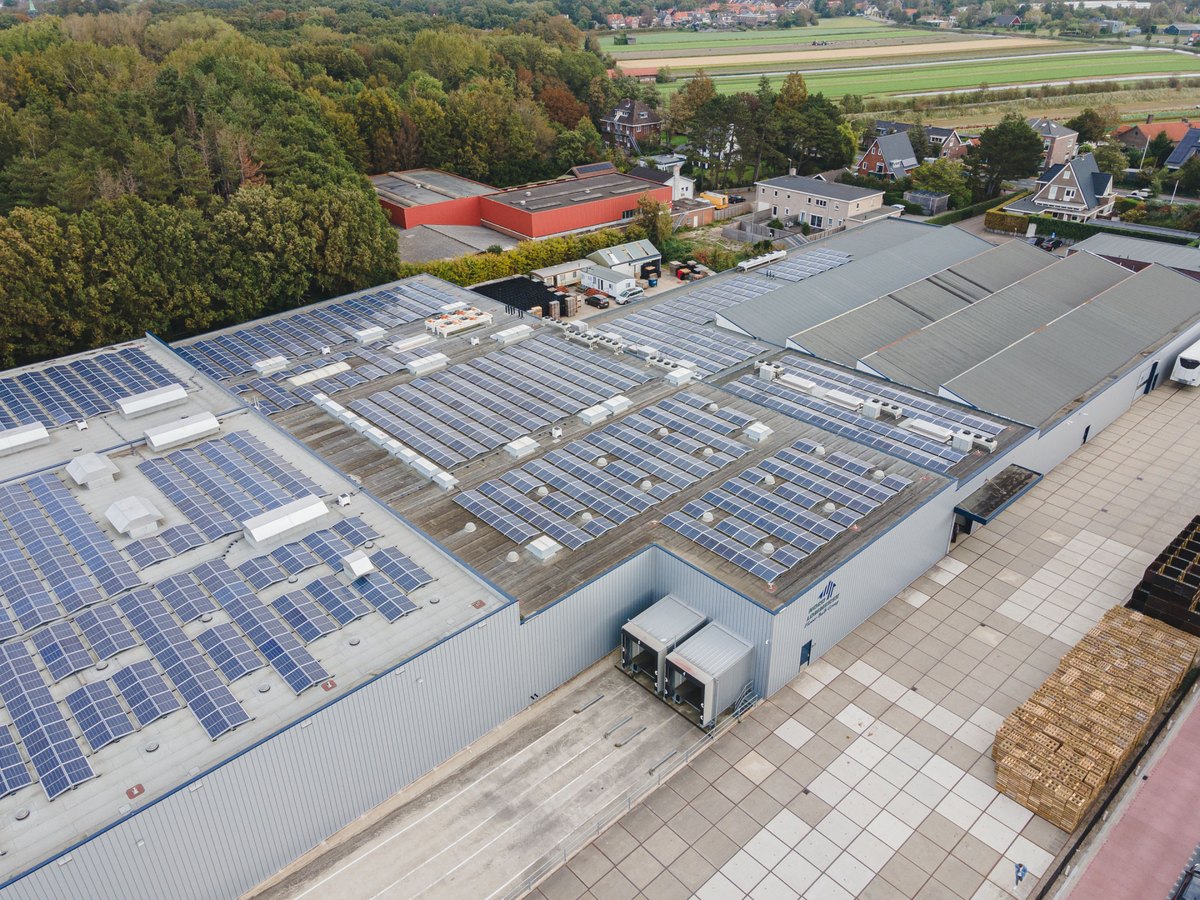
公司有 MPS 认证,目标是让整个行业更可持续,同时把自然之美留给下一代。栽培环节尽量用自然方法和生态原则,保住生物多样性、改善土壤,收割时也尽量少扰动环境。仓库里尽量用自然光,这对员工的工作状态和采光都有好处,也省下白天的用电。公司在自家建筑屋顶上铺了一片规模不小的太阳能板,一共两千二百块,制冷和烘干所需的能源差不多有一半由自己发出来的电承担。
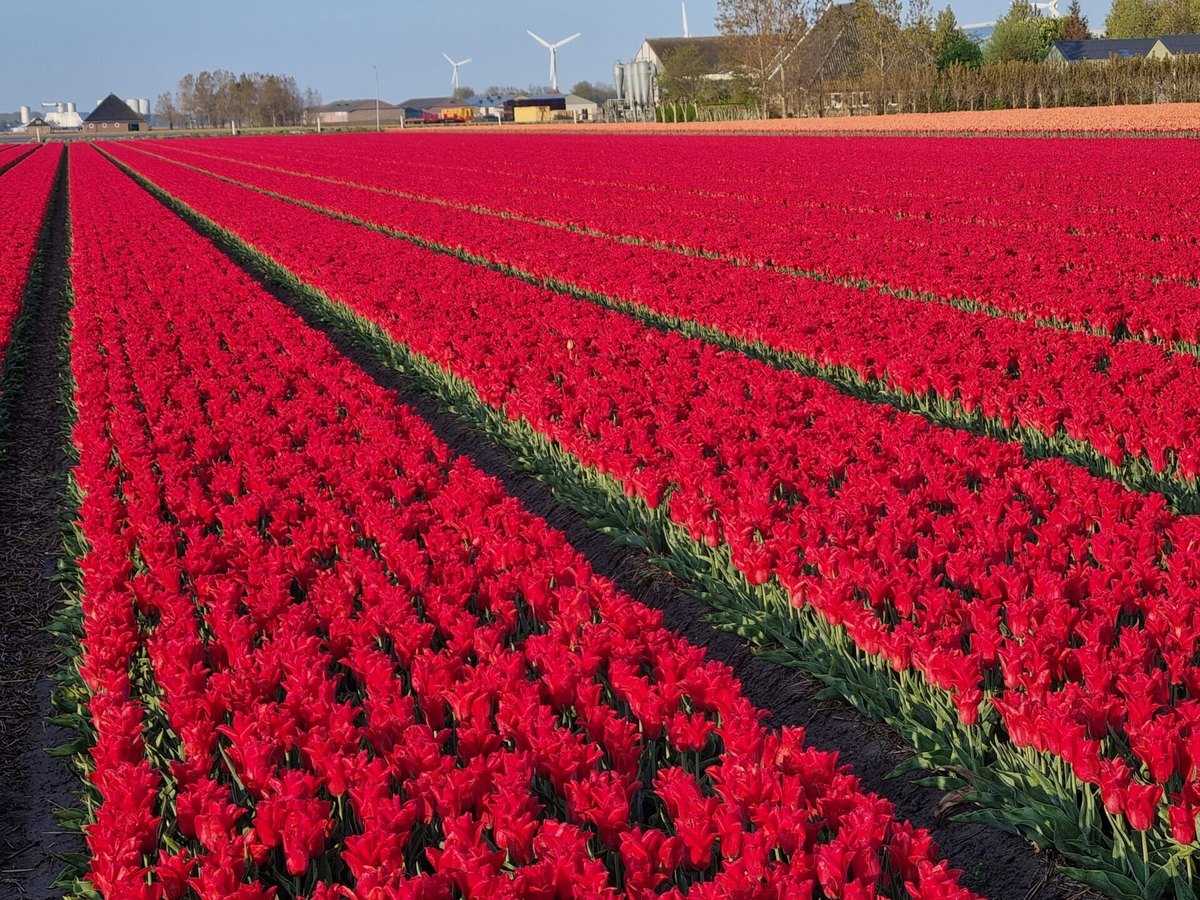
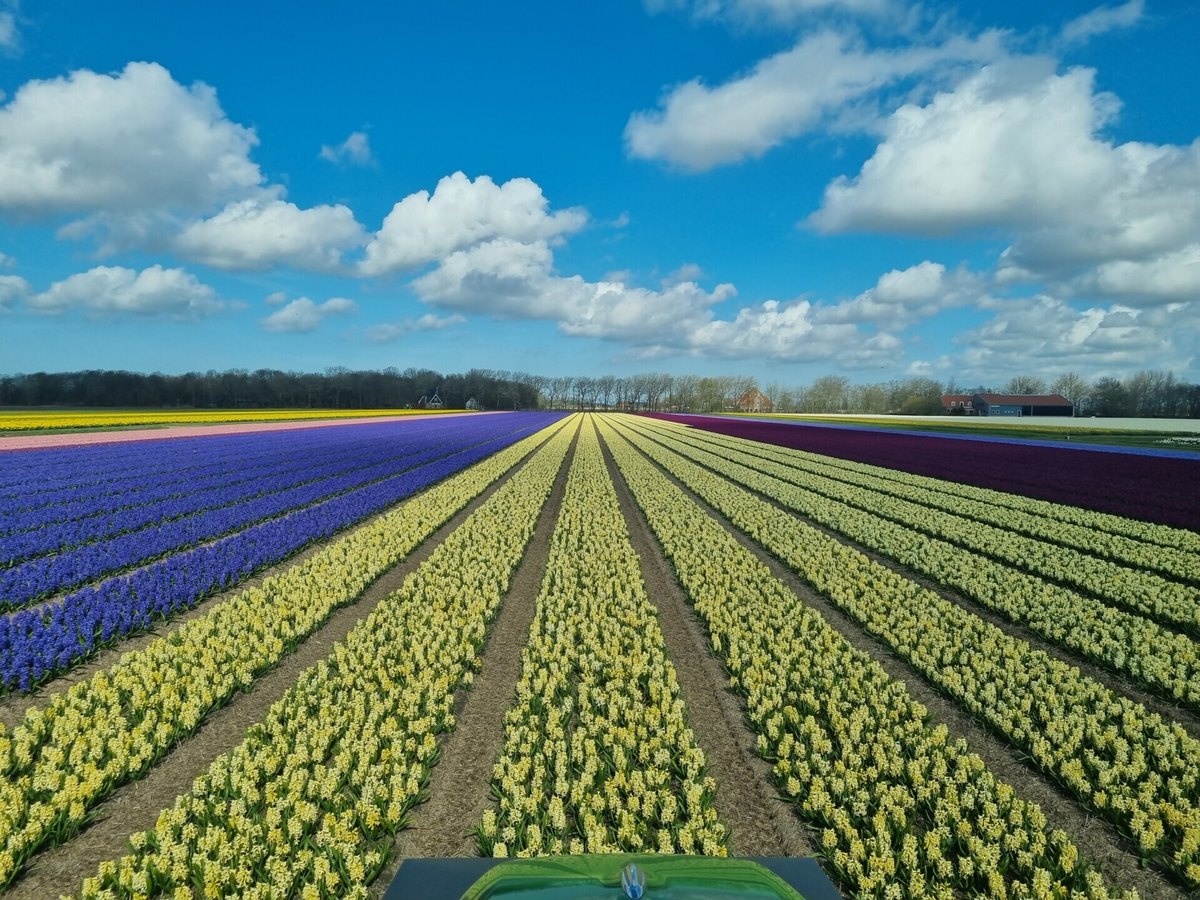
公司的地里种着成片的球根花卉,红色郁金香田一望无际,远处能看见风力发电机和农舍;同一片区域里还有紫蓝色和淡黄色相间的花带,按笔直的行列一直排到地平线。这些田块既是产量来源,也是荷兰球茎区景观的一部分——每年三月,公司在这里办郁金香交易展(Tulip Trade Event),开放参观各品种并接待来访者;展会之后还有一场「Pluk voor kindergeluk」的采摘活动,为加纳的儿童公益机构筹款。
卖的是哪几类球茎
产品线按属分列:Tulipa 郁金香、Lilium 百合、Narcissus 水仙、Crocus 番红花、Gladiolus 唐菖蒲、Muscari 葡萄风信子、Hyacinthus 风信子。以郁金香和风信花的品类宽度见长,公司的说法是无论土培催花还是水培催花,都能按客户的具体要求给出经过妥善处理的合适品类。除了切花和盆栽生产者的常用品种,也供应各类观赏和园艺用途的球茎。
对种植者来说,球茎到手之后才是真正的开始。催花讲的是温度和时间的配合,不同品种的休眠与解除休眠处理不同,同一品种不同批次的球茎也可能需要不同的方案。公司为每批球茎做质量报告并指定催花时间表,目的就是让催花者少走弯路、提高成功率。公司自己的说法是:他们的球茎成功率特别高,失败率有限,而这套做法靠的是从育种到种植、处理、发货的全流程自控加上对球茎本身的了解。
A family bulb business built on treatment
Nord Lommerse is a Dutch family business based in Hillegom, in the Bulb Region of the province of South Holland, and describes itself as a passionate family-owned business since 1929. What began as a small family operation now sells in more than 45 countries. Their bulbs are used worldwide, from flower producers to parks in China and events in America. The third generation has taken over the helm, with the same passion and excellence for the craft.
The main focus is treating tulip bulbs, in collaboration with an affiliated nursery and breeding partnership. The company supplies professional cut flower and potted plant producers with very high-quality flower bulbs, and alongside tulips it exports hyacinth, daffodil, muscari, crocus and lily bulbs. These are growers and professional operations rather than retail hobbyists, and product guidance in the form of cultivation support is the basis for a long-term relationship with them.
There are two locations: the main site in Hillegom and a nursery of their own at Anna Paulowna. The permanent team numbers eighteen, supplemented by seasonal employees during the busy season. The recruitment page puts it plainly: if the spirit and culture of a family business suit you, and you are curious to see how things work in the bulb sector, a job here might be right for you.
Breeding, treatment and grading in their own hands
The company is active throughout the entire process of breeding, cultivation, treatment and export, and knows exactly what is required at every stage. The aim is varieties with improved characteristics, meaning bulbs that look stunning, resist disease, crop well and force easily. Because the whole chain is under their own control, from breeding and growing to treating and shipping, they can guarantee a consistently high quality with a high success rate and a limited failure rate.
The bulbs are grown in the Netherlands, where the soil and climate suit them. The company works in close collaboration with the best Dutch growers and monitors their methods, so it knows exactly what happens to the bulbs. Immediately after harvesting, the treatment process starts at the premises in Hillegom and Anna Paulowna. As the bulbs arrive, the harvest is meticulously checked for abnormalities and diseases and the healthy ones are separated off. Cleaning, peeling, sorting, selecting and counting then follow in one pass, before the bulbs are stored in the climatic chambers. Every finding is written down in a quality report, and each batch is given a unique number so customers always know the characteristics of what they have bought.
Temperature treatment is what sets the timing. In modern climatic chambers the bulbs are brought to the right temperature with continuous quality checks, so the forcer can produce a cut flower or potted plant at exactly the desired moment. Temperature and humidity are both carefully controlled, with fresh air continuously circulated by computer-controlled equipment. Specialists carry out a stage test, looking at the developmental stage of the growing point, and a forcing schedule is then drawn up for that particular batch.
Breeding its own varieties and working with the trade
On breeding, the company is a partner in Remarkable Tulips, a grouping of companies that grow, force and market tulips with a focus on creating new exclusive varieties; Markglory Hyacinths does the same for the hyacinth market. Through these partnerships the company takes part in developing new varieties, and the result is complete control from breeding through to delivering year-round programmed flower bulbs for professional bulb forcers. With in-house treatment, thorough knowledge of the bulbs and a highly automated structure, it is very flexible, can quickly change gears with the seasons and can supply large amounts on request.
The company is also affiliated with Royal Anthos, a trade association for the flower bulb sector that represents the interests of trading companies worldwide and is driven by entrepreneurs with extensive knowledge of the trade. Nord Lommerse works together with other member companies to optimise sales of high-quality flower bulbs. What it offers is not simply stock but flower bulbs as semi-finished products, supplied together with cultivation support, and that is the basis of the long-term relationship. The motto is A deal is a deal, and the loyal clientele built up over the years rests on trust, mutual respect and shared success.
What sustainability means in practice
The company is MPS certified and is committed to working with MPS to make the sector more sustainable, aiming to embody a sustainable model in which the beauty of nature can take centre stage and be preserved for future generations. Natural methods and ecological principles are used during cultivation wherever possible, to preserve biodiversity and improve soil quality, and harvesting is done with minimal disturbance to the natural environment. In the halls the company uses daylight where it can, which reduces daytime power consumption and also makes for a healthier, more productive working environment for staff. On top of its own building it has constructed a large solar park for its cooling and drying energy needs: 2,200 solar panels let it generate almost half of its own energy.
The company grows bulb flowers in fields, with a red tulip field running to the horizon, wind turbines and farm buildings beyond it, and neighbouring bands of violet-blue and pale yellow flowers laid out in straight rows. These fields are both a source of production and part of the landscape of the Dutch bulb region, and each March the company hosts the Tulip Trade Event there, opening its doors so visitors can see the varieties it works with and get to know the company. After the trade event comes Pluk voor kindergeluk, a picking day that raises money for a children’s charity working in Ghana.
Which bulbs they sell
The product range is listed by genus: Tulipa, Lilium, Narcissus, Crocus, Gladiolus, Muscari and Hyacinthus. They are known above all for the breadth of their tulip and hyacinth assortment, and have plenty of experience across different countries and growing regions. Whether the forcing is in potting soil or in water, they can supply the right assortment with optimal treatment based on customer-specific requirements. Alongside the varieties professional growers rely on, they also ship bulbs for ornamental and horticultural use.
For the grower, the real work starts once the bulbs arrive. Forcing is a matter of matching temperature to timing, since varieties differ in dormancy and in how they are brought out of it, and even the same variety can need a different approach from one batch to the next. The quality report and the forcing schedule for each batch are meant to give the forcer fewer dead ends and a better chance of success. The claim is a particularly high success rate and a limited failure rate, and it rests on control of the whole chain from breeding to delivery combined with what the company knows about the bulbs themselves.
相关文章:
 荷兰 霍普曼 P. Hopman – 荷兰百年球茎出口商
 荷兰Van den Bos花卉球茎公司 – 对于专业的花卉种植者和进口商业来说,”荷兰Van den Bos花卉球茎公司”是从事百合、小苍兰及马
 荷兰 普林斯球茎 Prins Bulbs – 面向英国零售的家族出口商
 荷兰 阿克球茎花卉公司 P. Aker – 荷兰百年球茎出口商
 荷兰 范哈斯特‑内瓦达花卉球茎 Van Haaster‑Nevada – 350 余种球茎的出口商
 美国 ROOZENGAARDE & TULIPS 球根苗圃 – 荷兰家族四百年球茎批发与展示花园
 美国 Van Engelen 球茎批发公司 – 专营可展览级荷兰球茎的批发商
 荷兰 范·哈斯特球茎 Van Haaster – 荷兰百年球茎种植与出口企业
发表回复