

从 2002 年起做花球茎出口
AMSONIA 是一家花球茎出口公司,2002 年成立,办公和仓库在北荷兰的蒂特延霍恩(Tuitjenhorn),邮寄地址在瓦尔门豪森(Warmenhuizen),都在球茎区一带。公司自我定位就一句话:自 2002 年起保证质量。产品线覆盖郁金香、百合、鸢尾、唐菖蒲、番红花、风信子和水仙七个属。除球茎外也供应各种花卉的幼苗和种苗,其中做得多的是紫罗兰(Eustoma)、一品红、仙客来、杜鹃和菊花,另外还与各尺寸的树木和灌木苗圃有稳定合作,比如杜松、松和侧柏。
公司的说法是,品质要靠长期和客户保持直接往来才守得住,所以生意里技术指导占的比重不小:选哪个品种、怎么储存、怎么运输、怎么种、怎么采收、怎么卖都管。跟 AMSONIA 合作包含的内容写在服务页上:随时能问到的技术支持、有竞争力的价格、按客户情况灵活安排的付款方式、专家免费上门拜访和产品目录,另外还提供栽培辅助材料和机械。
七个属分别卖什么
这七个属不是随便挑的,它们正好是全球球茎种植里占种植面积约九成的门类,荷兰是最大的产地。所以一个做球茎的公司如果只盯一两个属,天花板很快就到了;把七个属都做起来,客户要凑一季的花才不用再开第二个口子,这是 AMSONIA 一直做全品类的原因。
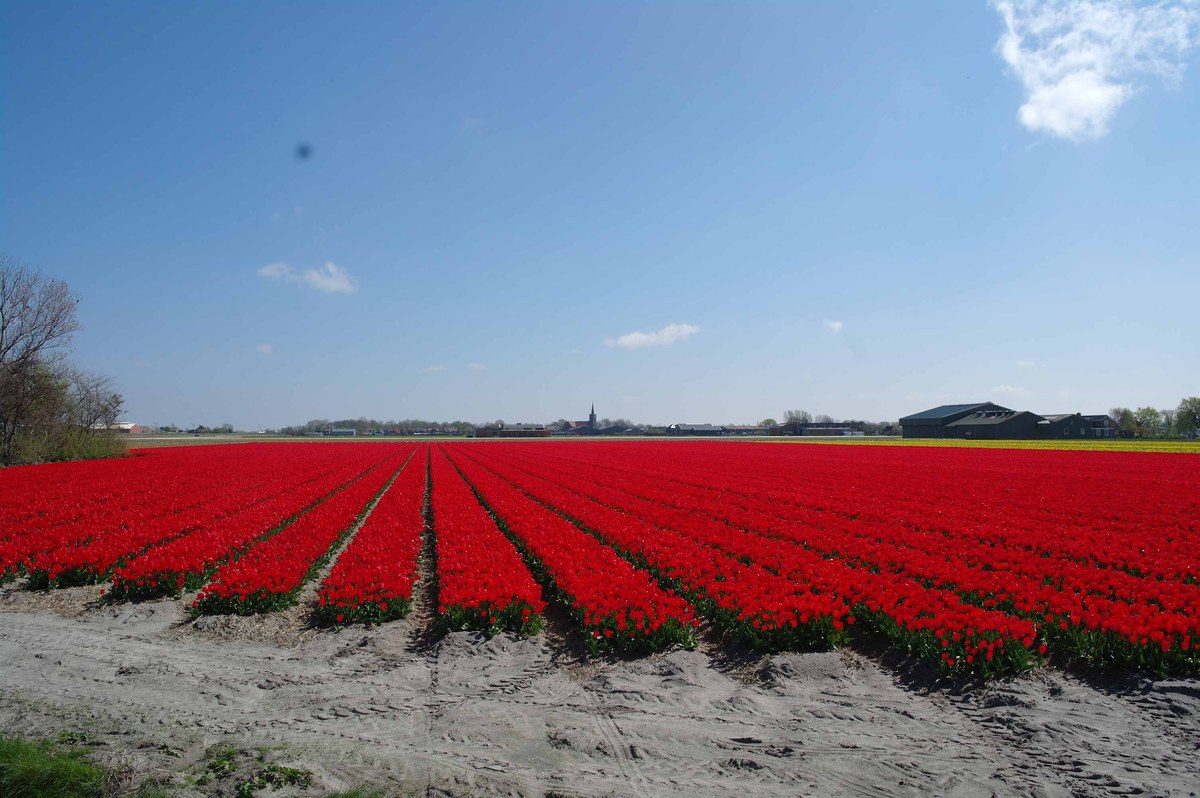
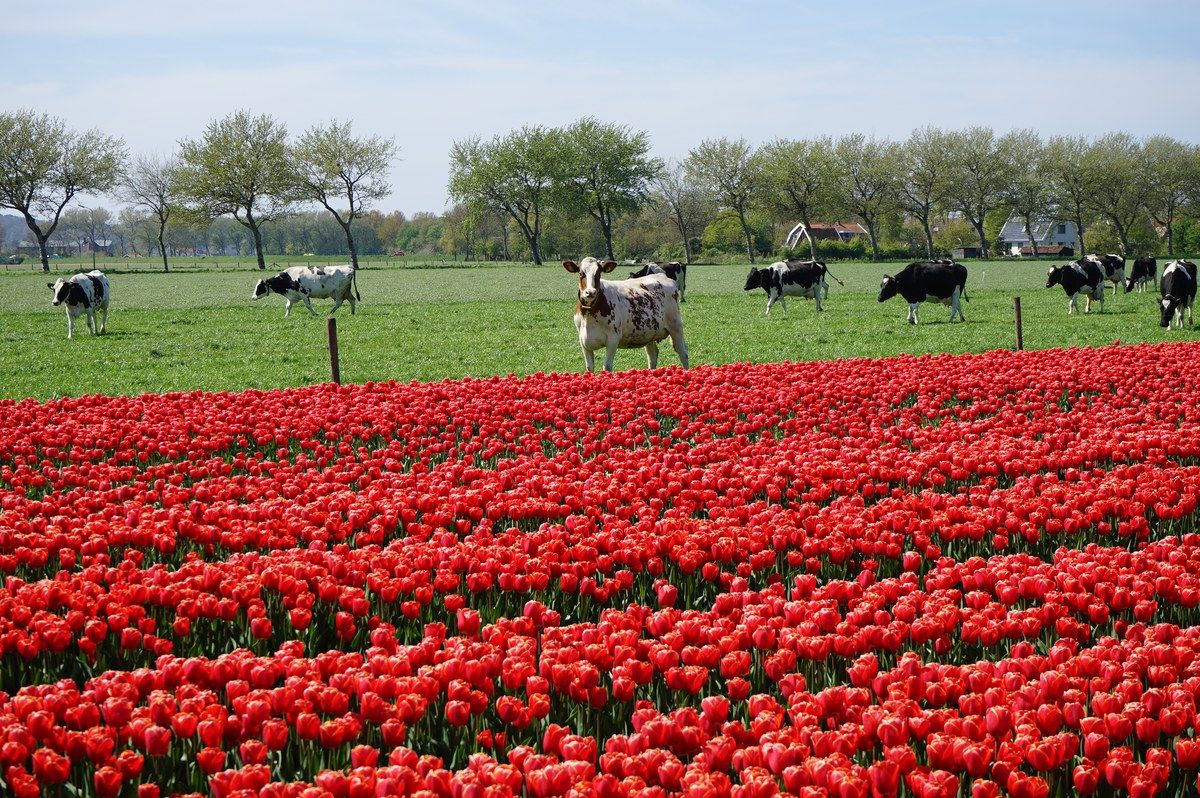
郁金香是最大的一块,页面上分单瓣、重瓣、鹦鹉和 miscellaneous 几个方向,Ad Rem、Alibi、Anita、Annamar、Apricot Beauty 这些常见名都在列。百合分得更细,按类型分 Asiatics(亚洲种)、Orientals(东方种)、Longiflorum、LA 杂交、LO 杂交、OA 杂交、Pot Orientals、Pot Asiatics、Double Oriental 和 Tigrinum。百合这一行的说明里提到,1990 年之前商业品种只有寥寥几种,之后育种一下子铺开,现在全球已有六百多个品种,荷兰的球茎种植面积超过三千公顷。
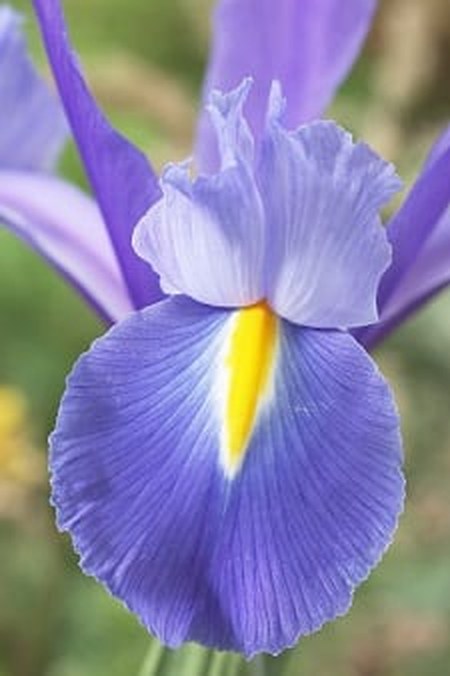
水仙主要推适合温室催花做切花的品种,盆栽则以 TETE A TENTE 为代表。鸢尾的当家品种是深蓝色的 BLUE MAGIC,最常见的规格是 10/+,一箱平均装七百个球茎。唐菖蒲做成夏季切花用,也有人种在花园里。番红花这边只做少量品种,主攻大规格、也能盆栽催花的那一类;番红花是世界上栽培最古老的球茎作物之一,可以追溯到四千多年前,古代希腊和埃及为染色、香料和药用生产番红花。风信子的花色以蓝为特色,此外还有紫、粉、红、白、黄。鸢尾的名字来自梵高的《鸢尾花》,他那幅画 1987 年以五千四百万澳元成交。
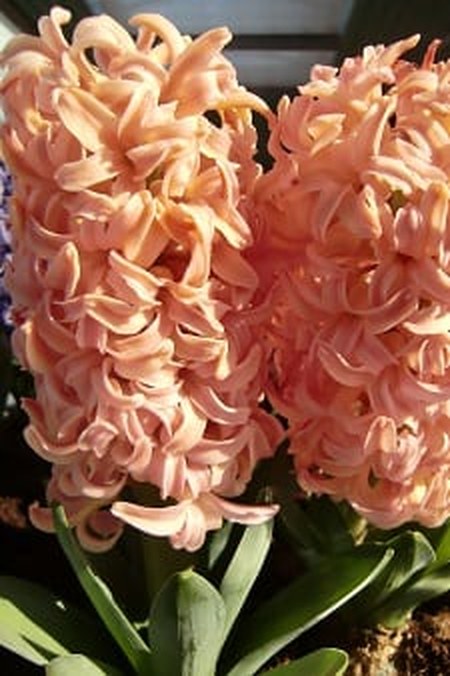
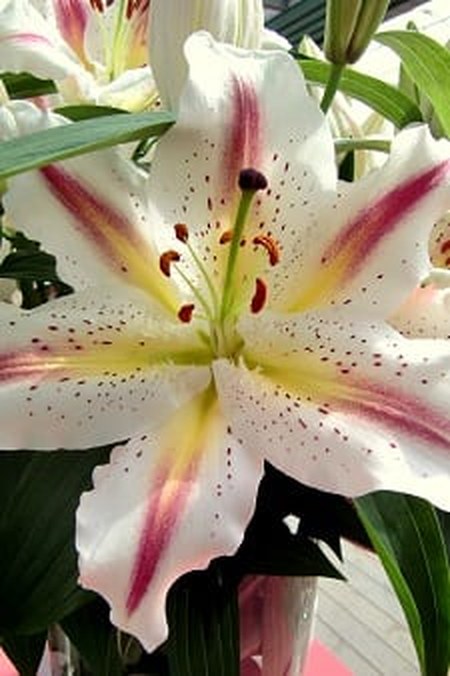
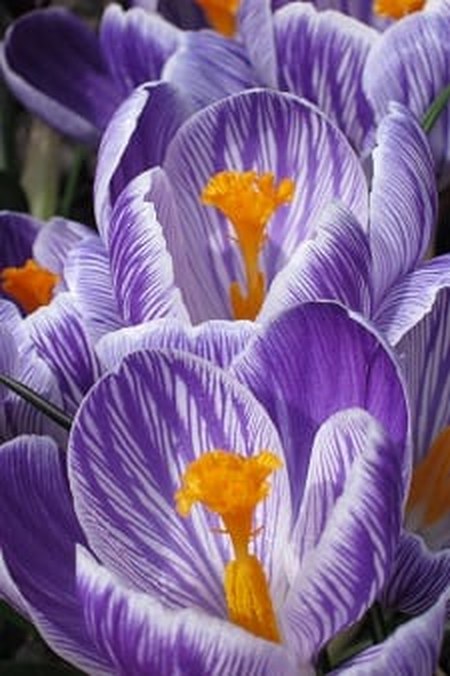
产品页上的品种图都是实拍,郁金香 Anita 是粉紫色重瓣,百合有带粉红条纹的白花和红白相间的类型,鸢尾 Discovery 是紫蓝色配黄色斑纹,番红花 Pickwick 是紫白条纹配橙色花药,风信子是粉桃色密集花序。图片分辨率不高,但花的特征看得清。
温度和湿度是怎么控的
球茎采收后是活的,需要不断的新鲜空气,所以公司的做法写得很具体:采收完立刻进通风良好的冷库,温度保持在 17 到 20 摄氏度,湿度任何时候都要盯着,干储期间不超过百分之七十五。冷库里每个托盘之间至少留二十厘米空隙,托盘顶到冷库顶至少留一米五,都是为了让空气能循环起来。
催花是另一套温度逻辑。球茎在 17-20 摄氏度存着,发根的理想温度是球体位置的 9 摄氏度,这一步要两到三周;发根完成后温室温度可以往上提。如果按 5 摄氏度冷藏完直接种进温室,建议把球根底部的外皮去掉,好让它在土里更快扎根。温室湿度要维持在 65% 到 85% 之间并每天测量,暖冬里湿度容易过高,会掉花苞、倒伏、叶子出问题,冷冬里又可能太低。公司也不建议用热风 heater 加热温室,因为它开关时温湿度变化太大。冷藏期长短和温室温度直接决定花的品质:冷藏时间长,生长快、花茎长但花苞小;冷藏时间短则长得慢、花茎短但花苞大;温室温度越高长得越快但品质越往下走。
乙烯是另一个要紧的东西。球茎受镰刀菌侵染会释放这种气体,浓度一高会让中间的芽掉光,鹦鹉型郁金香对这个尤其敏感,个大球茎也比小球茎敏感,不同品种也不一样。装运环节如果安排在八九月,运输要用温控车保持 17-20 摄氏度并良好通风。
分级、包装和装箱
郁金香六月中旬到七月底采收,采完仔细清泥、分级、点数再装箱。箱内数量按规格分:10/11 规格一箱一千个,11/12 一箱七百五十个,12/+ 一箱五百个,14/+ 一箱四百个。箱子和运费都不便宜,所以公司会尽量在保证空气流通的前提下把箱子装满,实际数量会随品种和球形调整。箱子尺寸是 60×40×23 厘米,一个托盘能放 40 到 45 箱,托盘本身是 100×120 厘米。水仙用同样的箱型,托盘同样是 40 到 45 箱;唐菖蒲用 60×40×19 厘米的箱子,一个托盘能放 55 到 60 箱,也可以装网袋再装箱。
如果客户要的是已经冷藏处理好的球茎,下单时要说明。公司会先把球茎按 17-20 摄氏度存着,到约定日期再转到另一个 5-9 摄氏度的冷库里做准备。这一步要和销售对接人好好协调。
质检和出口流程
质检分几次做:收获后一次,储存过程中一次,装运前一次,靠高精度机器加上产品专员的人工判断。植物和种苗到公司先检查,再在合适的条件下存到发运。所有出库的货都由荷兰植物检疫机构检验,每批产品配一张质量证书。公司投了不少钱建新的气候房,温度、湿度、通风和循环都能按需要调。
运输是质量最容易掉链子的环节,所以公司要求用温控车,多数客户自己安排运力,装货时公司会盯着,也会跟司机交代。到货后客户要做好准备接货;如果想在当地再存一段时间,条件得跟 AMSONIA 商量着来。下单流程公司写成了八步:选品种和数量,一到两天内收到形式发票,谈妥付款条件后备货,注明希望到货时间,说明运输方式和所需单据,自行安排运输的车辆要符合质量要求,把自己的种植计划跟公司对接以便随时提供建议,货发出后如果和协议有出入及时反馈。
Exporting flower bulbs since 2002
AMSONIA is a flower bulb exporting company that started in 2002, with its office and warehouse in Tuitjenhorn in North Holland and its postal address in Warmenhuizen, both in the bulb region. Its own summary of the business is one line: guaranteed quality since 2002. The range covers seven genera: Tulipa, Lilium, Iris, Gladiolus, Crocus, Hyacinthus and Narcissus. Alongside bulbs the company also supplies young plants and seedlings of various flower crops, with Lisianthus (Eustoma), Poinsettia, Cyclamen, Azalea and Chrysanthemum among the popular lines, plus regular contact with nurseries of trees and shrubs in all sizes, such as Juniperus, Pinus and Thuja.
The company takes the view that quality can only be held by staying in direct contact with customers over many years, which is why technical guidance carries so much weight in the business: variety choice, storing, transport, growing, harvesting and selling are all covered. Working with AMSONIA includes the highest quality plant material, technical support at all times, competitive prices, a flexible way of payments based on each individual customer, free visits and support from their specialists, free product catalogues, and consultancy on crop-supporting materials and machines.
What the seven genera cover
These seven genera are not an arbitrary selection: they account for roughly ninety percent of the area planted with ornamental geophytes worldwide, and the Netherlands is the largest producer. A bulb company that covers only one or two genera hits its ceiling quickly, and a customer assembling a full season of flowers does not want to open a second supplier. That is the logic behind AMSONIA carrying the whole range.
Tulips are the largest group, split on the site into single, double, parrot and miscellaneous directions, with names such as Ad Rem, Alibi, Anita, Annamar and Apricot Beauty among the list. Liliums are broken down more finely, by type: Asiatics, Orientals, Longiflorum, LA hybrids, LO hybrids, OA hybrids, Pot Orientals, Pot Asiatics, Double Oriental and Tigrinum. The lilium page notes that before 1990 there were only a handful of commercial varieties, that breeding has since taken off in a big way, and that there are now more than 600 varieties worldwide while bulb growing in Holland covers over 3,000 hectares.
For narcissus the company concentrates on varieties that force well as a cut flower under glass, with TETE A TETE the leading pot variety. Iris is led by the dark blue BLUE MAGIC, where the most popular size is 10/+ and one box holds around 700 bulbs. Gladiolus is grown as a genuine summer cut flower, though plenty of people plant it in a garden. Crocus is a limited line, focused on the large-sized types that can also be forced in pots; crocus is probably the oldest bulb crop in cultivation, with a history going back more than 4,000 years, and ancient Greek and Egyptian cultures produced saffron for yellow paint, as an aphrodisiac, a perfume and a medicine. Hyacinthus is noted for the pure blue found in nature, with purple, pink, red, white and yellow as the other main colours. The iris takes its fame from Van Gogh’s painting, which was sold in 1987 for AU$ 54 million at a time when the artist had almost nothing to live on.
The variety photographs on the product pages are real shots: the tulip Anita is a pink-purple double, the liliums include a white one streaked pink and a red-and-white type, the iris Discovery is violet-blue with a yellow marking, the crocus Pickwick is purple and white striped with orange anthers, and the hyacinth is a dense peach-pink spike. The resolution is modest, but the characteristics of each flower are clear.
How temperature and humidity are held
Bulbs are alive after harvest and need a constant supply of fresh air, so the company is specific about it: they go straight into well-ventilated coolers at 17 to 20 °C, humidity is watched at all times and must not exceed 75 percent during dry storage. Each pallet needs at least 20 cm of clear space around it, and at least 1.5 metres between the roof of the cooler and the top of the pallet, all to keep air moving.
Forcing runs on a different set of temperatures. Bulbs are held at 17-20 °C, and the ideal temperature for rooting is 9 °C at bulb level, which takes two to three weeks; once roots have formed the greenhouse temperature can go up. If bulbs are cooled at 5 °C and planted straight into the greenhouse, the advice is to take the skin off the bottom of the bulb so it roots into the soil faster. Greenhouse humidity should stay between 65 and 85 percent and be measured daily: in warm winters it can climb too high, leading to bud drop, toppling and leaf problems, while in cold winters it can drop very low. The company also advises against hot air heaters, since switching them on and off causes large swings in humidity and temperature that lead to problems with the flowers and leaves. Length of cooling and greenhouse temperature decide the final quality: longer cooling gives faster growth with longer stems and smaller buds, shorter cooling gives slower growth with shorter stems and bigger buds, higher greenhouse temperatures give faster growth with less quality, and lower temperatures give slower growth with better quality.
Ethylene is the other thing to watch. Bulbs attacked by fusarium produce this gas, and high concentrations make the central sprout abort; parrot tulips are especially sensitive to it, larger bulbs are more sensitive than smaller ones, and it differs by variety. When bulbs are shipped in August or September the transport needs temperature-controlled trucks at 17-20 °C with good ventilation.
Grading, packing and box counts
Tulips are harvested from the middle of June to the end of July, and after lifting the bulbs are carefully cleaned, graded and counted into boxes. The count per box depends on the size: size 10/11 is 1,000 bulbs per box, 11/12 is 750, 12/+ is 500 and 14/+ is 400. Boxes and transport are expensive, so the company always tries to put as many bulbs into a box as possible without losing proper circulation and ventilation, and the stated amounts may therefore vary with variety and shape. Boxes are 60 x 40 x 23 cm and one pallet holds 40 to 45 boxes, with pallets at 100 x 120 cm. Narcissus uses the same box format with 40 to 45 boxes per pallet. Gladiolus is packed in 60 x 40 x 19 cm boxes, where one pallet takes 55 to 60 boxes, and it can also be shipped in netlon bags, either loose or inside boxes.
If a customer wants bulbs that have had the full cooling period applied, that has to be indicated when the order is placed. The bulbs are first stored at 17-20 °C and then, on the agreed date, moved to another cooler at 5-9 °C to prepare them for flowering. This needs careful coordination with the sales contact at AMSONIA.
Quality control and how an order runs
Quality control happens several times: right after harvesting, during storage, and just before shipping, using high-tech machines alongside the personal judgement of one of the product specialists. Plants and seedlings are checked on arrival and stored under the right conditions until transport. Everything that goes out is checked by the Dutch phytosanitary organisation, which issues a quality certificate for each product. The company has invested in very modern climate rooms running on the latest technology, so that temperature, humidity, ventilation and circulation can all be controlled as needed.
Transport is where quality is most easily lost, so the company insists on reliable partners with modern temperature-controlled trucks; most customers arrange the transport themselves or contract trucks to collect from the warehouse. On arrival the customer needs to be ready to take the goods in, and if they want to extend the storage period on their own site the conditions should be coordinated with AMSONIA. The company sets out ordering in eight steps: select the types, varieties and amounts; receive a proforma invoice within one to two days; have the order prepared once the proforma and payment terms are agreed; state clearly when the goods are wanted; say which way of transport and which documents are needed; make sure a self-organised transport meets the required quality standards; connect the company to your growing plans so it can advise where needed; and after the goods have left, report back if anything did not arrive as agreed, with the receiving site ready and its storage conditions good enough for a longer storage period, or its greenhouse and workers ready if the bulbs are to be planted straight away.
相关文章:
 荷兰 霍普曼 P. Hopman – 荷兰百年球茎出口商
 荷兰Van den Bos花卉球茎公司 – 对于专业的花卉种植者和进口商业来说,”荷兰Van den Bos花卉球茎公司”是从事百合、小苍兰及马
 荷兰 斯滕沃登球茎 C. Steenvoorden – 荷兰覆盖五十余国的球茎出口商
 荷兰 诺德隆默斯 Nord Lommerse – 球茎处理与全球供应商
 荷兰 阿克球茎花卉公司 P. Aker – 荷兰百年球茎出口商
 荷兰 普林斯球茎 Prins Bulbs – 面向英国零售的家族出口商
 荷兰 维斯特 C.J.M. Vester – 荷兰球茎出口与处理商
 美国 容易种植的鳞茎植物苗圃 – 种苗生产与销售
发表回复