
从 1895 年起的家族生意
博特球茎花卉公司 Bot Flowerbulbs 的源头在 1895 年前后,Pieter Bot 在北荷兰安代克开了一家园艺公司,最初的种植计划是蔬菜和种子。1927 年,他的三个儿子 Gerrit、Klaas 和 Evert 组建 Gebr. Bot,改种郁金香和番红花,种子这一摊就此停下。三十年代末,唐菖蒲和风信子被写进种植计划。
五十年代开始种鸢尾球茎,蔬菜越种越少,球茎面积一度长到 22 公顷;风信子在五十年代初退出,唐菖蒲在 1960 年前后也退了场。六十年代末,兄弟几个开始自己做鸢尾预处理。七十年代公司彻底不再种植,三年时间从种植商变成了贸易与预处理商。
预处理是他们的看家本领
如今这家公司不再自己下地种球,卖的是处理好的成品。1992 年起启动鸢尾杂交育种计划,新品种推出前先在自有温室反复测试,1994 到 2004 年间在这里育成一批以河流命名的鸢尾,其中最有名的是 Tigris。同一时期公司按 ISO 9001 标准建起质量体系,1998 年通过认证。
预处理这件事最讲经验,产品线收得越窄,手里攒下的门道越多,因此能全年不断货。质量也从前一道工序开始:先定标准,再亲自到田里验货,每一批进货都登记建档,一直跟到开花,不同批次之间还要横向比较。选球、验货、定级、分装都自己动手,卖出去之后也陪着客户走完整个种植季。
目录里能数出多少品种
英文站的品种目录可以直接数:切花百合 590 个品种,郁金香 629 个,唐菖蒲 234 个,鸢尾 20 个。此外还有盆栽百合、庭院百合、水仙和芍药,杂项里能看到洋桔梗、风信子和蛇鞭菊等几个品类。
这些名字大多按上市时间或用途排列,像 Alchemilla、Galanthus 这样的老牌品种年年都在清单上。荷兰百合日主办方在参展介绍里写明,公司把球茎卖到全球 40 个国家,品种以百合、郁金香、鸢尾、唐菖蒲和芍药为主。
温度和仓储里的功夫
百合十月到十二月采收,进场先按质量、大小和数量验收,出口前清洗并自动装填介质,再送进冷库。要在零度以上充分冷藏之后才能冷冻,冷冻的时机有一部分取决于球茎的含糖量,冻好之后就能存放一整年。
鸢尾八月采收,进场验收后进 30 度的暖库保存,可以全年存放,再按客户要的种植日期做温度处理,同一批货也能供应给别的出口商。郁金香要先暖处理到 G 期,再在冷库里模拟冬季低温让花茎伸长;温室里保持 9 度生根,至少要三周。5 度全地栽培的郁金香从十一月底开到三月初,9 度全地栽培的从十二月初开到四月初。
展会、出口和新仓库
荷兰百合日从开办起就是这家公司的固定节目,六月的开放周里,来访者能在展示温室看到所有进货批次的状态。2017 年起公司又加上了夏季栽培,花期落在十一月的第一周。每年有一部分花会送到费赫伊曾的 IFTF 展台上,2017 年三月起还参加了郁金香贸易展。
出口由一支会多种语言的小团队分头负责,美洲与西班牙、东欧、哥伦比亚、亚洲与中东各有人盯,总经理是 Evert Bot。近年公司又新建了第二批仓库,把储藏环节按更严格的标准重新做了一遍。此外在温室里做的球茎试验一直没有停过,目的就是把品质再往上推。
A Family Business Since 1895
Bot Flowerbulbs traces back to around 1895, when Pieter Bot started a market gardening company in Andijk, North Holland, growing vegetables and seed. In 1927 his three sons Gerrit, Klaas and Evert formed Gebr. Bot and switched to tulips and crocuses, dropping the seed crop. Gladiolus and hyacinth were added to the cultivation programme at the end of the 1930s.
Iris bulbs started in the 1950s and vegetables were wound down, taking the bulb area to 22 hectares. Hyacinth left the plan in the early 1950s and gladiolus around 1960. In the late 1960s the brothers began preparing iris themselves. In the 1970s they stopped growing bulbs altogether, and over three years turned from a grower into a trading and preparation company.
Preparation Is the Core Skill
The company no longer grows bulbs itself; what it sells is product that has already been prepared. A hybridising programme for iris began in 1992, with new selections tested extensively in the company greenhouse before they are introduced, and between 1994 and 2004 a set of irises named after rivers was bred there, the best known being Tigris. A quality management system was set up to the ISO 9001 standard during the same period, and Gebr. Bot was certified in 1998.
Preparation is a matter of experience, and the narrower the product range, the more know-how can be built up, which is what allows year-round supply. Quality starts at the source: standards are set first, then the bulbs are checked in the field, every purchased batch is registered and followed right through to flowering, and different batches are compared against each other. Selection, checking, grading and packing are all done in house, and the company stays with the customer through the whole growing season.
What the Assortment Covers
The English assortments can be counted directly: 590 cut lily varieties, 629 tulips, 234 gladioli and 20 irises. On top of that come pot lilies, garden lilies, daffodils and peonies, with lisianthus, hyacinthus and liatris among the other products.
Many of the names are organised around flowering time or use, and older varieties such as Alchemilla and Galanthus appear on the list year after year. The Dutch Lily Days exhibitor page states that the company ships bulbs to 40 countries worldwide, with lilies, tulips, irises, gladioli and peony as the main lines.
Temperature and Storage Know-How
Lily bulbs are lifted from October to December, checked on arrival for quality, size and count, washed and packed automatically in substrate for export, then cooled. They need enough chilling above zero before they can be frozen, and the sugar content of the bulb partly determines when freezing happens; once frozen they can be stored for a full year.
Iris bulbs are lifted in August, checked on receipt and put into warm storage at 30 degrees, where they can be kept all year round, then given a temperature treatment for whatever planting date the customer has in mind. Prepared iris can also be supplied to other exporters. Tulips take a warm treatment first to bring them to stage G, followed by cold treatment in a cooling cell to simulate winter cold and stretch the stems; in the greenhouse they are held at 9 degrees to root, which takes at least three weeks. Tulips forced at 5 degrees in open ground flower from the end of November to the beginning of March, and those at 9 degrees from the beginning of December to the beginning of April.
Shows, Exports and New Warehouses
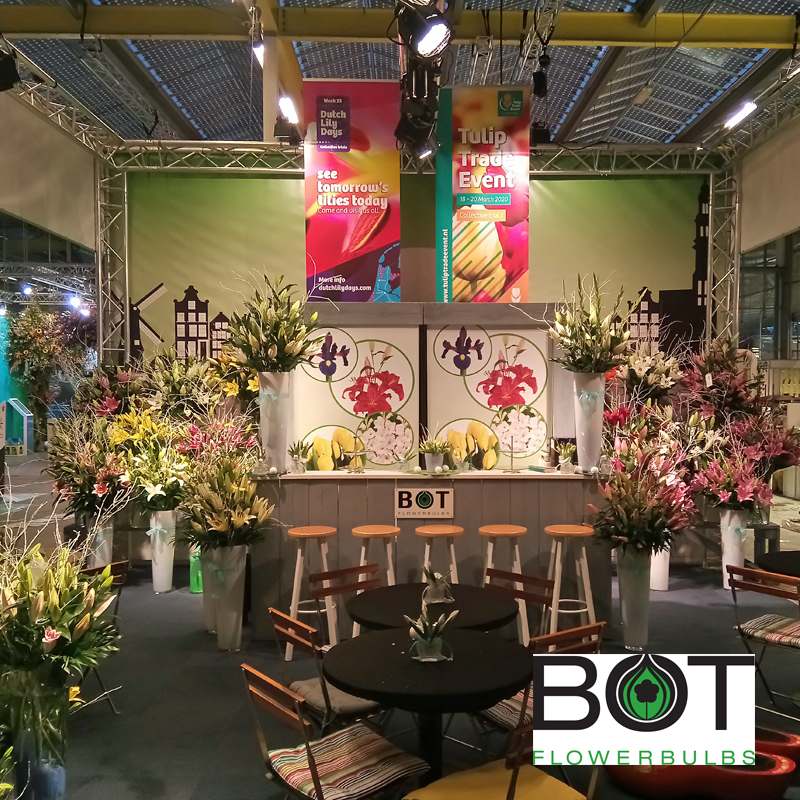
The Dutch Lily Days have been a fixture for the company since the event began, and during the open week in June visitors can see the condition of every purchased batch in the show greenhouse. Summer planting was added in 2017, flowering around the first week of November. A share of the flowers is shown every year on the IFTF stand in Vijfhuizen, and the company has taken part in the Tulip Trade Event since March 2017.
Export is handled by a small team working in several languages, with responsibility split across the Americas and Spain, Eastern Europe, Colombia, and Asia and the Middle East, under general director Evert Bot. A second phase of warehouses has been built in recent years, rebuilding the storage side to a stricter standard. Trials with flower bulbs in the greenhouse have continued throughout, all aimed at pushing quality further.
相关文章:
 荷兰 斯滕沃登球茎 C. Steenvoorden – 荷兰覆盖五十余国的球茎出口商
 荷兰 阿姆索尼亚 AMSONIA – 荷兰球茎出口与栽培支持
 荷兰Van den Bos花卉球茎公司 – 对于专业的花卉种植者和进口商业来说,”荷兰Van den Bos花卉球茎公司”是从事百合、小苍兰及马
 荷兰 阿克球茎花卉公司 P. Aker – 荷兰百年球茎出口商
 荷兰Van Haaster – Nevada花卉球茎公司
 荷兰 霍普曼 P. Hopman – 荷兰百年球茎出口商
 美国 容易种植的鳞茎植物苗圃 – 种苗生产与销售
 荷兰 鲁斯郁金香公司 Reus Holland – 年产两千多万枝切花供应商
发表回复