

从种蔬菜开始的家族球茎生意
Jan de Wit en Zonen B.V. 是一家荷兰家族企业,1922 年由 Jan de Wit 在北荷兰省的博芬卡尔斯佩尔创办。公司最初种的是蔬菜和马铃薯,1925 年才加上郁金香和鸢尾,种球慢慢成了唯一的重心。
1952 年,创始人的七个儿子全部进入公司。1957 年公司从博芬卡尔斯佩尔迁到恩克赫伊曾,一直到现在还在那里。1995 年第三代接手,如今创始人的九位孙子各管一块业务,曾孙也有几位在公司里上班。
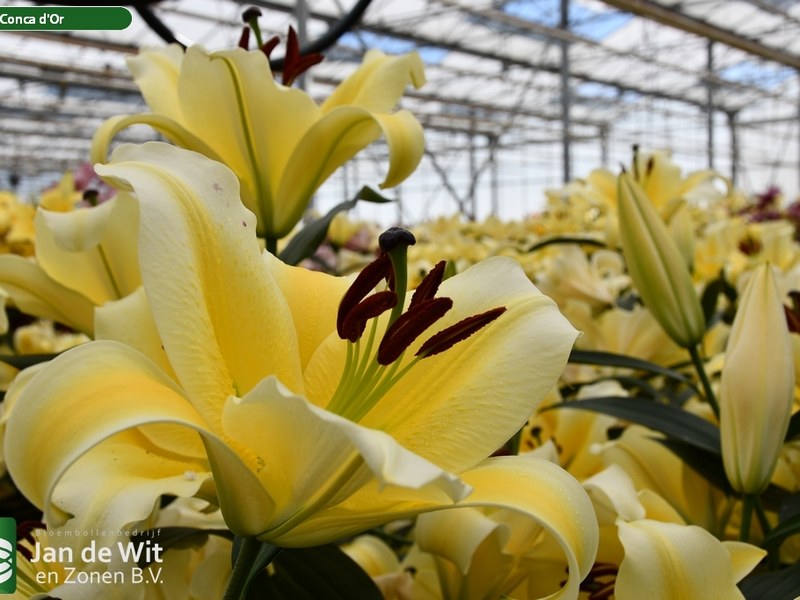
公司做的是种球的出口和处理,另有一块育种业务。产品以郁金香和百合为主,也供应风信子、鸢尾、朱顶红、番红花、葡萄风信子、葱属和洋水仙。公司只做商业市场,不直接供货给个人消费者。
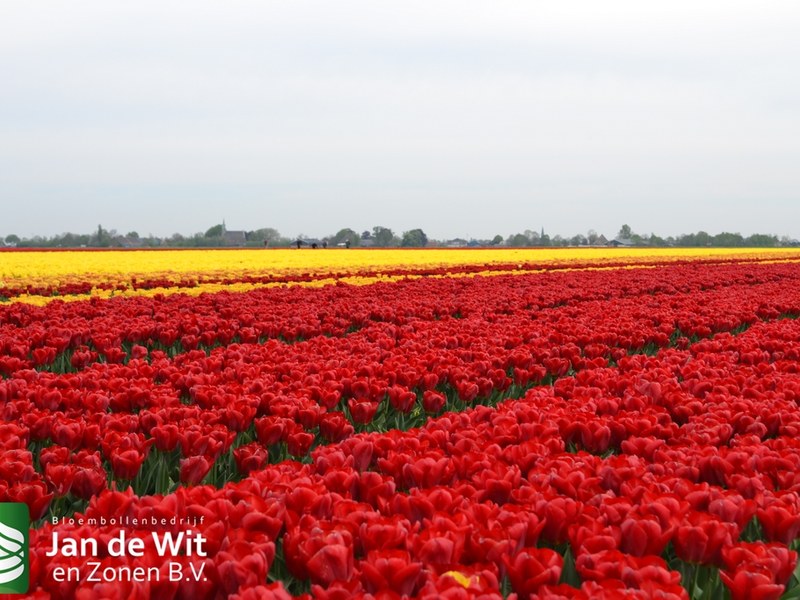
二十五间以上处理室,按花期安排发货
公司有 25 间以上的处理室,温度按品种和客户的要求设定。种球在这里冷藏和催花,同一个品种可以按圣诞节、春节、情人节、复活节或者三八妇女节的上市时间分批安排。计算用的是自己的一套系统:每个批次的种球都要取样,在显微镜下看球内的小花有没有完全长成,达到标准就把日期记进批次记录系统,最早可能的开花日期和所需的冷藏处理都从这条记录里推出来。
郁金香进冷库前要先走一段暖期,让花芽在球里长成,公司把这一段加热叫做花芽分化后阶段。直接种在温室棚土里的种球给 5 度冷藏,温室保持 9 度让郁金香扎根,这一步至少要三周;根扎稳以后升到 18 度,三到四周开花。装在土或水的托盘里、放进生根室的种球给 9 度冷藏。
库肯霍夫官方参展,花展上拿过几个奖
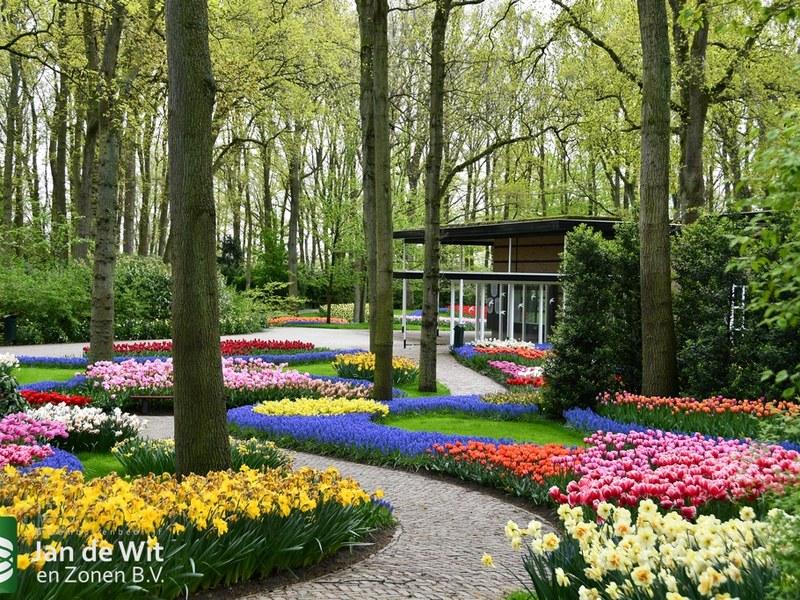
2008 年起,公司是库肯霍夫公园郁金香展的官方参展商。公园占地 32 公顷,每季展示七百多万株郁金香、水仙、风信子、番红花、百合等球根花卉,一年的参观人数在一百万上下,这些数字说的是公园本身,不是公司的地块。公司自己的花还在兹瓦格迪克试验花园每年二月办的交易展上展出。
公司在花展上的名字出现得更早。1933 年,Jan de Wit 是西弗里斯鲜花节(后来改叫荷兰花卉节)的创办人之一,这是每年二月举办的大型年度花展,公司前后参加过七十五届,2013 年那届是最后一届。1979 年公司第一次拿到银船奖,1992 年第一次拿到银郁金香奖,这两项分别是整体花卉布置和郁金香布置的一等奖。
世界园艺博览会每十年办一届,公司是少数参加过全部六届的企业之一。1960 年那届是公司第一次接触日本客户,1972 年那届的最佳郁金香新品金奖由朱莉安娜女王亲自颁奖。1993 年公司参加了在北京办的第三届中国花卉博览会,1997 年又参加在上海办的第四届,那一届的郁金香种球由公司提供并种在园里。
种球销往二十多个国家和地区
出口从 1951 年开始,第一批种球发往德国和瑞典。1962 年打开日本市场,1974 年做到芬兰,1984 年第一批郁金香种球运到中国,1989 年和 1990 年又先后做到台湾和挪威。2006 年开始向俄罗斯出口,如今种球销往二十多个国家和地区。
文件和植检事务都在公司内部处理:报关手续、原产地证、植检证书(走 CLIENT Export 系统)以及国际付款需要的文件都由公司自己安排。运输则和专门做球茎的货代公司长期合作,陆运、水运和空运都能安排。
1997 年,公司因为成功把郁金香品种介绍到中国,拿到中国贸易商奖,颁奖的是经济部副部长。2015 年,公司成了首家通过 CLIENT Export 拿到植物检疫出口证书的花卉种球企业。2023 年,凭着在日本市场多年的经营,公司拿到 Deshima 商业奖的成熟企业类别。
自有苗圃在二零二三年停下
公司在西弗里斯兰的粘土上种了几十年种球,苗圃面积大约 40 公顷。自家有地,品种和品质才把得住,栽培上的本事也是这么攒下来的。1965 年公司在安娜波罗纳另设了一家制作公司,那边的农场在 2020 年关掉。2023 年,自有苗圃这块业务整体停下,种球改为向长期合作的种植户收购,之前的经验仍然用在选种和种植指导上。
公司 2003 年拿到 MPS-A 环保认证,2010 年拿到荷兰海关的 AEO 认证,2008 年成为郁金香育种者协会 Tuliko 的成员。六十年代引进的蓝魔鸢尾至今仍是公司最重要的鸢尾品种。2022 年公司办了一百周年,同时得到国王威廉-亚历山大授予的荷兰王室御用资格。
A Family Bulb Business That Began With Vegetables
Jan de Wit en Zonen B.V. is a Dutch family business, founded by Jan de Wit in 1922 in Bovenkarspel, in the province of North Holland. The company grew vegetables and potatoes at first and added tulips and irises in 1925, after which flower bulbs slowly became the only focus.
All seven of the founder’s sons joined the company in 1952. In 1957 it moved from Bovenkarspel to Enkhuizen, where it still is. The third generation took over in 1995; nine grandsons of the founder now each run part of the business, and several great-grandsons work there too.
The company exports and prepares flower bulbs and also runs a breeding programme. Tulips and lilies are the main lines, joined by hyacinths, irises, hippeastrum, crocuses, muscari, alliums and daffodils. It works only in the commercial market and does not supply bulbs directly to consumers.
More Than Twenty-Five Treatment Rooms, Bulbs Timed to the Flowering Date
The company has more than 25 treatment rooms, with the temperature set to suit the variety and the customer’s order. Bulbs are cooled and forced there, so one variety can be scheduled for Christmas, Chinese New Year, Valentine’s Day, Easter or International Women’s Day. The calculation runs on the company’s own system: samples of every stock are examined under a microscope to see whether the small flower inside the bulb has fully formed, and once it has, the date goes into the stock record system. The earliest possible flowering date and the cooling treatment needed are worked out from that record.
Tulips go through a warm period before cold storage so that the flower can develop inside the bulb; the company calls this heated stage Stage G. Bulbs planted straight into the border soil of a greenhouse get a 5 degree cooling treatment, and the greenhouse is kept at 9 degrees so the tulips can root, which takes at least three weeks. Once rooted, the temperature rises to 18 degrees and they flower three to four weeks later. Bulbs planted in trays of soil or water and put in a rooting room get a 9 degree cooling treatment.
An Official Exhibitor at Keukenhof and Several Prizes at Flower Shows
Since 2008 the company has been an official exhibitor at the tulip show of the Keukenhof. The park covers 32 hectares and shows more than seven million tulips, daffodils, hyacinths, crocuses, lilies and other bulbous flowers each season, drawing around a million visitors a year; those figures describe the park, not the company’s own land. The company’s flowers are also shown at the annual trade exhibition held every February at the experimental garden in Zwaagdijk.
The company’s name appeared at flower shows much earlier. In 1933 Jan de Wit was one of the founders of the Westfriese Flora, later known as the Holland Food and Flower Festival, a large annual show held every February; the company took part in seventy-five editions of it, the last one in 2013. It won the Silver Boat for the first time in 1979 and the Silver Tulip for the first time in 1992, the first prizes for the overall flower arrangement and for the tulip arrangement.
The world horticultural exhibition is held every ten years, and the company is one of the few that took part in all six editions. Its first contact with a Japanese customer came at the 1960 edition, and at the 1972 edition the gold medal for the best new tulip assortment was handed out by Queen Juliana. The company took part in the third China National Flower Fair in Beijing in 1993 and the fourth one in Shanghai in 1997, supplying the tulip bulbs that were planted in the park that year.
Bulbs Sold to More Than Twenty Countries
Export began in 1951, with the first bulbs sent to Germany and Sweden. Japan opened in 1962, Finland in 1974 and the first tulip bulbs reached China in 1984; Taiwan and Norway followed in 1989 and 1990. Russia was added in 2006, and bulbs now go to more than twenty countries and regions.
Documents and phytosanitary paperwork are handled inside the company: customs formalities, certificates of origin, phytosanitary certificates through the CLIENT Export system and the paperwork needed for international payments are all arranged in house. Shipping is placed in the hands of forwarders that specialise in flower bulbs, by road, by water or by air.
In 1997 the company received the China Traders Award for successfully introducing tulips to China, handed out by the Vice Minister of Economy. In 2015 it became the first flower bulb company to obtain a phytosanitary export certificate through CLIENT Export. In 2023 its long-standing business in Japan earned it the Deshima Business Award in the category for well-established companies.
The Own Nursery Closed in 2023
For decades the company grew bulbs on clay soil in West Friesland, on a nursery of about 40 hectares. Owning the land gave it a direct hold on variety and quality, and its growing know-how was built up there. A separate production company was set up at Anna Paulowna in 1965, and that farm closed in 2020. In 2023 the own nursery business was wound up altogether; bulbs are now bought from growers it has worked with for years, while the experience gained is still used in selection and growing advice.
The company obtained MPS-A environmental certification in 2003, AEO status from Dutch customs in 2010 and became a member of the tulip breeding association Tuliko in 2008. The iris Blue Magic, introduced in the 1960s, is still the most important iris variety it grows. In 2022 the company marked its hundredth anniversary and was granted the title By Appointment to the Court of the Netherlands by King Willem-Alexander.
相关文章:
 荷兰 韦耶尔斯父子球茎 C.S. Weijers & Zonen – 上千种球根认证批发商
 荷兰 罗特费尔父子球茎出口公司 L. Rotteveel & Zonen Export B.V. – 南荷兰球茎出口遍及欧美
 荷兰 弗里林克父子出口公司 A. Frijlink & Zonen Export B.V. – 荷兰球茎出口遍及全球
 荷兰 博特球茎花卉公司 Bot Flowerbulbs – 北荷兰球茎预处理全球出口商
 荷兰 德克船长球茎花卉出口公司 Derck Schipper B.V. – 球茎出口覆盖欧洲内外
 荷兰 阿克球茎花卉公司 P. Aker – 荷兰百年球茎出口商
 荷兰 范登堡‑维德加尔花卉球茎公司 Vandenberg‑Verdegaal – 覆盖北美、欧洲与中国球茎出口
 荷兰 马维里奇 Maveridge – 荷兰球茎育种与出口遍及南北半球
发表回复