
一家从祖父辈开始的郁金香球茎农场
Stengs & Leijten 是 Jochem Stengs 和 Peter Leijten 的公司,两人是来自东北圩田(Noordoostpolder)的表兄弟。公司专门做郁金香球茎的种植与加工,两人还在贸易上另有一番生意,与东欧国家的多家企业保持着不错的往来。
两人都是真正意义上的郁金香世家出身。1950 年,两家的祖父就开始种郁金香;老一辈把手艺传给了儿子,儿子们又照样传给了 Jochem 和 Peter。**但他们自己的公司不是 1950 年开的,而是 2006 年**——那一年他们有 9 公顷地、6 个郁金香品种。公司的标题栏至今写着「自 1950 年起的郁金香种植者」,指的是家族这门手艺的起点,不是公司成立的年份。
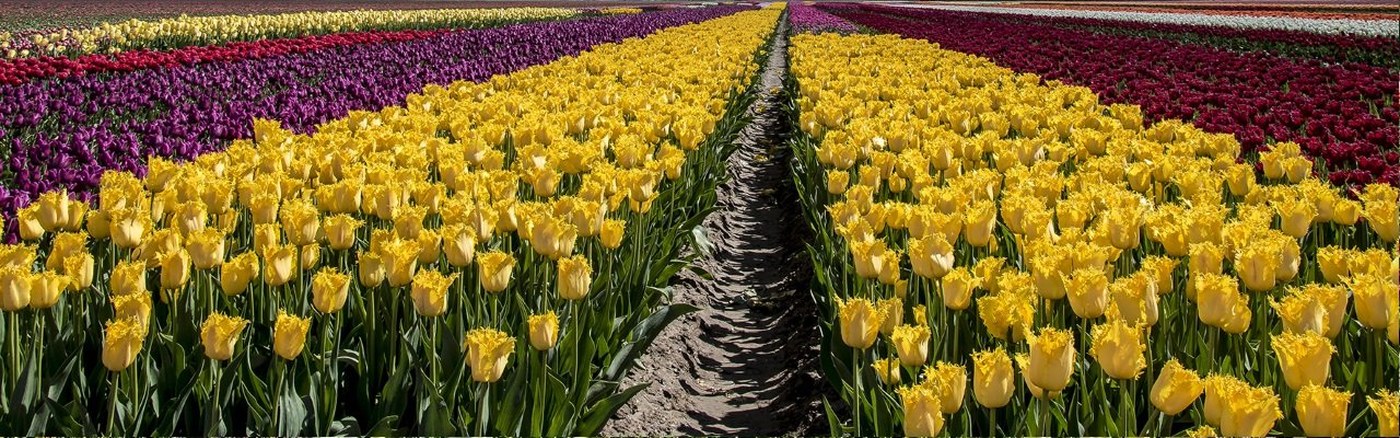
如今公司在东北圩田有两个基地,一个在 Ens,一个在 Espel。公司自己的介绍写的是「约 100 公顷」,固定员工四名。行业媒体 2026 年 1 月报道时给的是更大的数字:125 公顷、75 个品种。**这两个口径都对不上号,一个来自企业站上,一个来自行业新闻,且后者晚一年多,本篇把两个数都列出并标明出处。**
这 100 多公顷并不全是老品种,也有相当一部分种的是新品种。公司介绍自己靠的是一套现代化机械和东北圩田肥沃的土壤,目标是交出品质最好的球茎。它把两件事看得很重:一是不断琢磨怎么更新和改良自己的品种清单,二是跟土地所有者、委托种植方和采购方保持良好关系。
需要说明的是,企业站上公开了完整的街道地址、邮编、办公电话和邮箱。本站不转录这些内容,想联系请直接访问公司站。
31 个在售品种与 Remarkable Tulips 的关系
公司站上的品种清单有 31 个品种,从 Alison Bradley、Bullit、Carpe Diem、Columbus、Crossover、Dreamer、Energy for All、Franciscus、Icoon、Ingens,到 Jumbo Pink、Mondiano、Novi Sun、Nyenrode、Ogene、Phantom、Polestar、Purple Lady、Ready、Rebellious Yellow、Renegade、Royal Virgin、Siesta、Spirit、Strong Gold、Tineke van der Meer、Tresor。清单下方写明:如果要找的品种没列出来,直接联系他们——靠着与同行的关系,大部分品种都能拿到。
这 31 个里有 12 个同时出现在 Remarkable Tulips 的名录上:Crossover、Dreamer、Energy4All、Franciscus、Mondiano、Nyenrode、Ogene、Phantom、Polestar、Ready、Rebellious Yellow、Spirit。Remarkable Tulips 是荷兰的郁金香育种与推广合作组织,1996 年成立,由一批专做郁金香种植、催花和营销的知名企业组成,自己育成的品种包括 Denmark、Choice、Red Label 和 Triple A。它的独家育种方是位于 Lisse 的 Hobaho 观赏花卉试验中心,那家在球根育种上做了三十多年;选种标准看催花表现、长势、抗病性、花苞颜色和叶片位置,所有品种都要在早期阶段就经过催花特性、生长和病害敏感性的大量测试,还要靠不断交流种植与催花经验、再加上瓶插寿命测试来保品质。
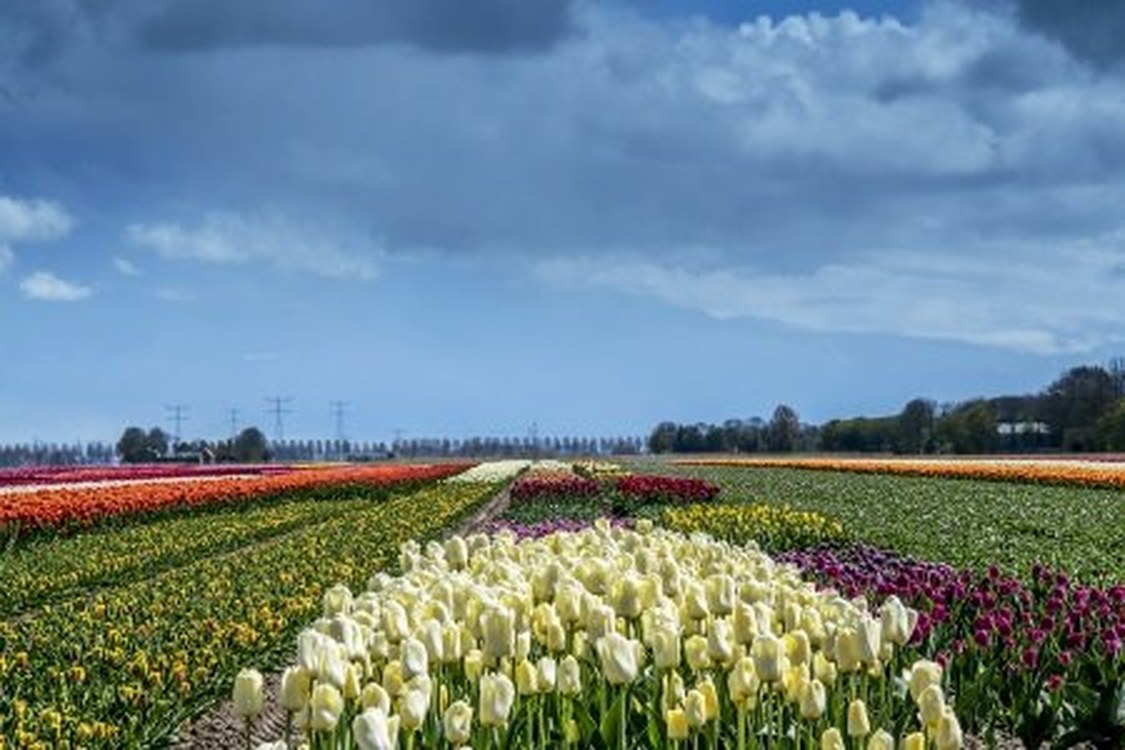
Remarkable Tulips 名录上登记着 96 个带注册商标标志的品种。公司自己的站上列的是 31 个具体品种名,这个差别未必是矛盾——企业站通常只展示主推品种,行业报道里的数字则可能涵盖全部在种或曾经种过的品种。
合同种植与东欧出口
公司分两条腿走路。一条是自营的常规种植与加工,另一条是为客户做合同种植——**合同种植的范围不只是郁金香,还包括风信子和葡萄风信子**,而且种植和收获后的加工都可以一并交给他们做。合同种植页上列出的条件很实在:可以在较宽的轮作范围内安排种植;沙土、壤土和黏土都能种;标准床宽 1.80 米并配双层网系统;有充足的灌溉水可保障;收获后有加工处理能力。
出口是另一条线,站上写的是「自成立以来,Stengs & Leijten 就向东欧的催花企业供应郁金香球茎」。Jochem 和 Peter 把自己在这方面的经验分享给这些企业,其中包括俄罗斯和波兰的公司——他们帮着客户选对品种、优化催花结果。公司从自己的货场发出品质过硬的球茎,同时代办所需的出口单据。
要说清楚的是,**「东欧市场」是公司自己站上的表述,范围和规模没有公开数字**。可以确定的是俄罗斯和波兰这两个国家的催花企业是它的客户;至于出口量占公司业务的多大比例,站上没有说明,这里不做推测。
Tulipsgreen:不做化学的那块地
2019 年,两人在传统公司之外另起了一个牌子叫 Tulipsgreen,种有机郁金香球茎。他们的理由说得很直白:他们认为现有的种植体系从长远看不够可持续,而关于作物保护的公共讨论绕不过去,与其等着被讨论,不如主动往前站一步。
具体做法是拿自己的有机地块试验不用化学作物保护和化肥怎么把球茎种出来。这是个学习过程,学到不少新东西,也撞上不少难关。他们自己的说法是「可惜我们在很多地方还没有现成答案」,但还是接着做下去。他们希望把这些知识带来的贡献带给传统种植,同时给有机采购商提供健康而多样的球茎品种。
因为球茎确实是按有机方式种的——不用人工肥料,也不用农药——所以可以挂欧盟有机标识。规则不松:种植和加工过程由独立机构 Skal Biocontrole 定期严格检查。Biobol 会员页显示 Tulipsgreen 自 2019 年起持有 Skal 认证,有机地块 7 公顷,产品线包括郁金香、野生种郁金香、Allium 和番红花,销售方式有干球批发、批发和网店三种,同时还是 Keukenhof 的官方参展方。
2025 年的「农业创新者」
2026 年 1 月,LTO Noord 的 Noordoostpolder 分会给 Jochem Stengs 和 Peter Leijten 颁发了 2025 年度「农业创新者」称号。颁奖在新年聚会上进行,由该分会主席 Marja Hoorweg 亲手授予。提名委员会的评价是「他们的头超出了田埂」,意思是这两位经营者不只在自己公司内部求新,还能在同行中显出不同。
委员会看中的几件事都写在报道里。他们多年持续投在创新、有未来的品种和聪明技术上的资金;2019 年起步的有机分支;以及开放的态度——让种植者团体和政党人士来参观,把有机种植里学到的东西也用到常规种植上,再主动与同行分享。理事会成员 Margot Maljaars 说得很直接:他们的开放不只是开门迎客。
技术上的动作也是实打实的。2025 年他们引入了激光除草机器人;Jochem Stengs 自己做出了一条转子臂,能在一次作业里完成多项土壤作业,既省人工又减轻对土壤的压力。在生物多样性上,他们用野化郁金香给市里的道路边坡做地被,这些球茎年年都要重新种下去,「这样整个社区都能从中受益」。
这个奖是第三届评选。2023 年得奖的是种甜薯的 Koenraadt 一家,2024 年是 Tom Odding——做本地种子那位。
A tulip bulb farm that goes back to the grandparents
Stengs & Leijten is the business of Jochem Stengs and Peter Leijten, two cousins from the Noordoostpolder. The company specialises in growing and processing tulip bulbs. The two are also involved in trading, and keep good contacts with companies in Eastern European countries.
Both grew up in genuine tulip families. In 1950 their two grandfathers already began growing tulips; they handed the trade to their sons, who in turn passed it on to Jochem and Peter. Their own company, though, was not founded in 1950 but in 2006, when they had 9 hectares and six tulip varieties. The banner on their site still reads “tulip growers since 1950” — that refers to where the family’s trade began, not to the company’s founding date.
Today the company has two locations in the Noordoostpolder, one in Ens and one in Espel. The company’s own description gives “around 100 hectares” with four permanent employees. An industry publication reported larger figures in January 2026: 125 hectares and 75 varieties. The two figures do not line up — one comes from the company site, the other from trade press published more than a year later, so both are given here with their sources.
Not all of that acreage is planted with old varieties; a substantial part carries newer cultivars. The company credits a modern fleet of machinery and the fertile soils of the Noordoostpolder, and aims to deliver bulbs of the best quality. Two things it says it holds in high regard: regularly looking at ways to renew and improve its range, and keeping good relations with landowners, contract growers and buyers.
The site publishes the full street address, postal code, office telephone and email address. None of that is reproduced here; the company site is the place to reach them.
The variety list, and the Remarkable Tulips connection
The company site lists 31 varieties, from Alison Bradley, Bullit, Carpe Diem, Columbus, Crossover, Dreamer, Energy for All, Franciscus, Icoon and Ingens through to Jumbo Pink, Mondiano, Novi Sun, Nyenrode, Ogene, Phantom, Polestar, Purple Lady, Ready, Rebellious Yellow, Renegade, Royal Virgin, Siesta, Spirit, Strong Gold, Tineke van der Meer and Tresor. Beneath the list it says that if the variety you want is not shown, get in touch — through its contacts with fellow bulb growers most varieties can be supplied.
Twelve of those 31 also appear in the Remarkable Tulips catalogue: Crossover, Dreamer, Energy4All, Franciscus, Mondiano, Nyenrode, Ogene, Phantom, Polestar, Ready, Rebellious Yellow and Spirit. Remarkable Tulips is a Dutch tulip breeding and marketing collaboration founded in 1996, made up of a group of well-known companies specialising in growing, forcing and marketing tulips; varieties from its own breeding stable include Denmark, Choice, Red Label and Triple A. Its exclusive breeder is the Hobaho Testcentrum voor Siergewassen in Lisse, which has been breeding bulbs for more than thirty years. Selection criteria cover forcing behaviour, vigour, disease resistance, bud colour and leaf position, and all varieties are put through extensive testing of forcing traits, growth and disease susceptibility at an early stage, with quality guaranteed by continuously exchanging growing and forcing experience and running vase-life tests.
The Remarkable Tulips catalogue carries 96 cultivars registered with the trademark sign. The company site names 31 specific varieties. The gap is not necessarily a contradiction — a company site normally shows only its main range, while the figure in trade press may cover everything being grown or grown in the past.
Contract growing and exports to Eastern Europe
The company runs on two tracks. One is its own growing and processing; the other is contract growing for other clients. Contract growing covers more than tulips — hyacinths and muscari’s as well — and both the growing and the post-harvest processing can be handled for the client. The contract growing page sets out the conditions plainly: planting within a wide rotation, on sand, loam and/or clay soil; a standard bed width of 1.80 metres with a double netting system; sufficient irrigation water available; and processing capacity after harvest.
Exports are the other line, and the site says that since the company began it has supplied tulip bulbs to forcing nurseries in Eastern Europe. Jochem and Peter share their know-how with these businesses, among them companies in Russia and Poland — helping them choose the right varieties and optimise their forcing results. The company ships quality bulbs from its own stock and also handles the export paperwork that goes with them.
Worth being precise about: “Eastern Europe” is the company’s own wording, and no figures are given for the scope or size of that trade. What can be established is that forcing nurseries in Russia and Poland are among its customers; the share exports represent of the business is not stated, and no estimate is offered here.
Tulipsgreen: the ground worked without chemicals
In 2019 the two set up a separate name alongside the traditional company, Tulipsgreen, to grow organic tulip bulbs. Their reason is stated plainly: they believe the current cultivation system is not sustainable enough in the long term, and that the public debate on crop protection cannot be avoided, so they chose to take a proactive approach rather than wait.
Concretely they use their organic area to work out how to grow flower bulbs without chemical crop protection and without artificial fertiliser. It is a learning process: they pick up a great deal of new knowledge, and also run into a good many difficulties. Their own words are that they do not yet have a ready answer for everything, but they carry on regardless. They hope the knowledge they gain can contribute to a more sustainable future for conventional growing, and above all that they can supply their organic buyers with a healthy and varied range of bulbs.
The bulbs really are grown organically — no artificial fertilisers, no pesticides — which is what entitles them to carry the European organic label. The rules are strict: the growing and processing process is inspected regularly and closely by the independent body Skal Biocontrole. The Biobol membership page shows Tulipsgreen has held Skal certification since 2019, with 7 hectares under organic cultivation, a product range of tulips, botanical tulip species, alliums and crocuses, and three sales channels — dry bulb sales, wholesale and a webshop. It is also an official exhibitor at Keukenhof.
“Agricultural Innovators” of 2025
In January 2026 the Noordoostpolder branch of LTO Noord presented Jochem Stengs and Peter Leijten with the 2025 title of Agricultural Innovators. The award was handed over at the New Year meeting by the branch chair, Marja Hoorweg. The nomination committee’s verdict was that they stick their heads above the crop — meaning the two do not only innovate inside their own company but stand out among their peers.
Several things the committee singled out are reported. The money they have put year after year into innovation, future-proof varieties and smart techniques; the organic branch they started in 2019; and an open attitude — receiving groups of growers and political parties, applying what they learn from organic growing to conventional growing too, and actively sharing it with fellow growers. Board and jury member Margot Maljaars put it plainly: their openness shows itself beyond simply receiving visitors.
The technical steps are equally concrete. In 2025 they brought in a laser robot for weed control; Jochem Stengs built a rotor arm himself that makes several soil operations possible in a single pass, saving labour and reducing pressure on the soil. On biodiversity, they use naturalising tulips to underplant roadside verges in the municipality, replanted every year, and as Maljaars puts it, the whole community benefits from that.
This was the third edition of the award. In 2023 it went to the Koenraadt family for sweet potatoes, and in 2024 to Tom Odding, who works on native seed.
相关文章:
 荷兰 范哈斯特‑内瓦达花卉球茎 Van Haaster‑Nevada – 350 余种球茎的出口商
 荷兰 霍普曼 P. Hopman – 荷兰百年球茎出口商
 荷兰 诺德隆默斯 Nord Lommerse – 球茎处理与全球供应商
 美国 ROOZENGAARDE & TULIPS 球根苗圃 – 荷兰家族四百年球茎批发与展示花园
 荷兰 卓越郁金香 Remarkable Tulips – 荷兰育种合作与注册品种目录
 荷兰 惠伯特有机球茎花卉苗圃 – SKAL 认证球茎批发零售苗圃
 美国 John Scheepers 苗圃 – 1908历史悠久的荷兰花卉球茎专业进口商
 荷兰 罗特费尔父子球茎出口公司 L. Rotteveel & Zonen Export B.V. – 南荷兰球茎出口遍及欧美
发表回复