

从催花起家的家族郁金香企业
特里弗洛尔(Triflor)是荷兰的家族郁金香企业,1965 年由 Henk van Dam 创办。最初只有一间做郁金香催花的温室,如今是第二代、第三代接手,育种、种植、出口、催花都在公司自己手里。
总部在北荷兰省。生意分两头:一边是把郁金香种球卖给各地的种植户,一边是自家温室催出来的切花,一天一批,当天就走。
育种是公司自己的一摊事,做了四十多年,也常常和别的育种公司搭伙做,Vertuco 和 Hybris 都是这样的合作方。
约三百二十公顷,种在三个国家
全球的种植面积约 320 公顷。荷兰 170 公顷,最大的一片在弗莱福兰省,北荷兰省和格罗宁根省各有一部分。
法国南部的沃克吕兹省约 20 公顷。那边的球茎比荷兰的早熟三到四周,正好错开上市高峰,市场上一直有需求。
新西兰 130 公顷。三块地合起来约 320 公顷。网站英文版那几页还留着旧数字,写的是 260 公顷、三千万株、一百一十五个品种;荷兰语页面和 2025 年六十周年的公告已经更新,本文按新数字写。
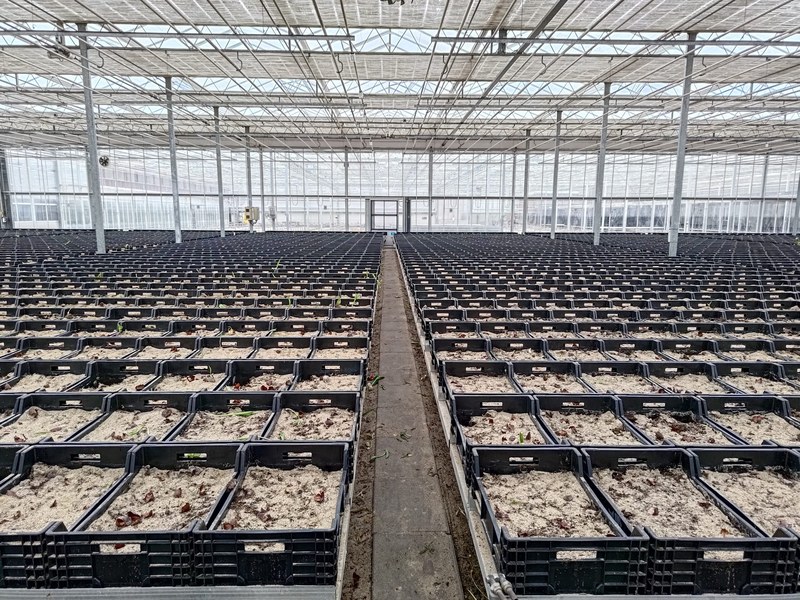
五千多万株切花,九月上市到五月中
温室里每年催出五千多万株郁金香,一百三十余个品种,从九月开始一直催到第二年五月中,母亲节前后收尾。
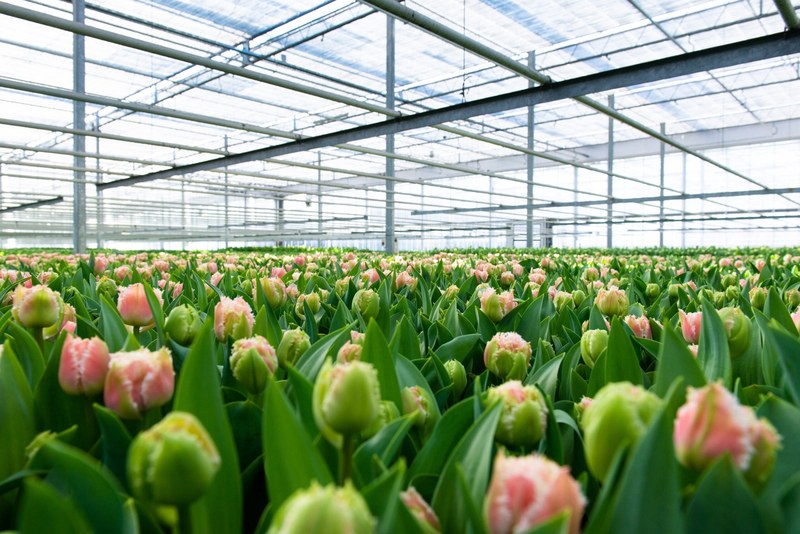
花是天天上市的,要么直接卖给买家,要么走荷兰的皇家花卉拍卖(Royal FloraHolland)。公司的重点放在高品质和独家品种上,花型分单瓣、鹦鹉、缨边、冠型和重瓣(牡丹型)几种,颜色和花型上都有明显差别。
从九月到第二年五月,几乎天天都有货。
新西兰的农场,把供货接到冬天
1991 年,公司第一次在南半球种郁金香。先在新西兰试过,也去别的国家试过,最后定在了新西兰,公司用毛利语里的说法奥特亚罗瓦指它。
2000 年,Triflor NZ Ltd. 在新西兰南岛注册下来。南北半球的季节正好相反,荷兰这边收球的时候,新西兰那边刚下地,客户因此能全年拿到货。
最忙的几段——种植、田里开花、起球剥皮、发运——新西兰的团队有荷兰派来的技术员搭把手。
种球卖到十个国家,屋顶装上了光伏
每年从荷兰运出约八千五百万颗种球,从新西兰运出约六千万颗。大头是美国,此外是加拿大、澳大利亚、波兰、奥地利、法国、挪威、韩国、中国和泰国。
三个人的分工是:切花找 Wouter Steltenpool,荷兰本地的种球找 Erik van Dam,出口找 Rens van Dam。
可持续这一块也有几项实打实的东西:MPS-ABC 是内部用的监测工具,登记农药使用情况,用量因此降下来;Global G.A.P. 是全球良好农业规范认证,讲的是生产规范和链条上的透明度;GRASP 是 Global G.A.P. 的附加项,管员工健康、安全和福利。
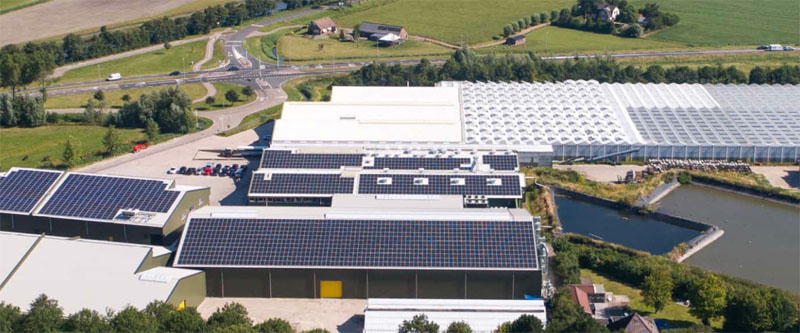
屋顶光伏从 2018 年、2019 年就开始装,2023 年 9 月给剩下的屋顶补上,2023 年 12 月全部完工,之后还在铺配套线路,让发出来的电用在该用的地方。公司说这是为了压能耗、降二氧化碳排放。
A Family Tulip Company That Started With Forced Flowers
Triflor is a Dutch family tulip company, started in 1965 by Henk van Dam. It began with a single greenhouse forcing tulips; three generations later the second and third generations run a company that does its own breeding, growing, export and forcing.
The company sits in the province of North Holland. The business has two sides: tulip bulbs sold to growers all over the world, and cut flowers forced in its own greenhouses and traded on the day they are cut.
Breeding is a house speciality, done for more than four decades, often together with other breeding companies such as Vertuco and Hybris.
Some 320 Hectares in Three Countries
Total cultivation worldwide comes to about 320 hectares. Of that, 170 hectares are in the Netherlands, mostly in Flevoland, with smaller parts in North Holland and Groningen.
Another 20 hectares are in the south of France, in the department of Vaucluse. Bulbs there ripen three to four weeks earlier than Dutch ones, which fits the start of the season and is still in demand.
New Zealand accounts for 130 hectares. The English-language pages of the website still carry the older set of figures, 260 hectares, 30 million tulips and 115 varieties, while the Dutch pages and the news item marking the company’s sixtieth anniversary in 2025 have been updated; the newer numbers are used here.
Over Fifty Million Forced Tulips, from September to Mid-May
Every year the greenhouses force more than fifty million tulips in some 130 varieties, starting in September and running until about mid-May, with Mother’s Day marking the end of the season.
The flowers trade every day, either directly to buyers or through the Dutch flower auction Royal FloraHolland. The focus is on high quality and exclusive varieties, with flower forms including single, parrot, fringed, crown and double (peony) tulips, which differ clearly in colour and shape.
From September through to May there are flowers going out almost every day.
A New Zealand Farm That Fills the Winter Months
In 1991 the company grew tulips in the southern hemisphere for the first time. It started in New Zealand and later tried a few other countries, but settled on New Zealand in the end, which the website calls Aotearoa in Maori.
Triflor NZ Ltd. was registered in 2000 on New Zealand’s South Island. The seasons run opposite each other: while bulbs are being lifted in the Netherlands, the New Zealand crop is only just going in, which is how customers get bulbs all year round.
At the busiest moments, planting, flowering in the field, lifting and peeling the bulbs and shipping them out, the crew in New Zealand is helped by specialists sent over from the Netherlands.
Bulbs to Ten Countries, Solar Panels on the Roofs
Roughly 85 million bulbs leave the Netherlands each year and 60 million leave New Zealand. Most go to the United States; the other markets are Canada, Australia, Poland, Austria, France, Norway, South Korea, China and Thailand.
Three people handle the sales: Wouter Steltenpool for flowers, Erik van Dam for bulbs in the Netherlands and Rens van Dam for export.
There is also a practical side to sustainability. MPS-ABC is a monitoring tool the company uses to register plant protection product use, which brings that use down; Global G.A.P. covers good agricultural practices and transparency in the chain; GRASP is the Global G.A.P. add-on for the health, safety and welfare of staff.
Solar panels went onto some roofs in 2018 and 2019, the remaining roofs were covered from September 2023, and the work finished in December 2023. Wiring and grid work is still going ahead so that all the power generated is used where it is needed. The company says this cuts energy use and carbon dioxide emissions.
相关文章:
 荷兰 简怀特父子球茎出口公司 Jan de Wit en Zonen B.V. – 荷兰球茎出口遍及二十多国
 荷兰 鲁斯郁金香公司 Reus Holland – 年产两千多万枝切花供应商
 荷兰 马维里奇 Maveridge – 荷兰球茎育种与出口遍及南北半球
 美国 John Scheepers 苗圃 – 1908历史悠久的荷兰花卉球茎专业进口商
 荷兰 瑞洛克花卉球茎 Ruigrok Flowerbulbs – 450 余种球茎的出口农场
 荷兰 乌滕博加德父子花卉球茎公司 JUB Holland – 荷兰球茎出口遍及三十多个国家
 荷兰 种球市场 Holland Bulb Market B.V. – 荷兰球茎出口遍及六十多国
 荷兰 韦斯特贝克花卉球茎公司 Westerbeek Bulb Company B.V. – 北美百年球茎出口商
发表回复