
三代人的月季之家
四地玫瑰园在德国汉堡南郊的贝尔格多夫区,从 1999 年起就是月季爱好者的目的地。园主 Jan D. Janßen 出身园艺世家,祖父辈的花卉经营到父亲 Dieter 一辈做了切花,供应汉堡大市场的花摊。第三代接手的 Jan 没有沿这条路走,而是把整个庄园改成了玫瑰。
庄园房子本身建于 1880 年,庭院面积约 2500 平方米。这个数字听着不小,可对月季园来说仍偏紧,700 多个品种要在这片地面上排开,每一寸都得算着安排。
从大市场切花到专攻月季
转机来得有点意外。Jan 说自己在一次草莓节上临时摆了个花摊,发现自己更适合市集和节庆这类面对面的场景。后来他跑的专场比赛越来越多,方向也就慢慢定在玫瑰上,最后干脆把全部业务转了过来。
父亲起初并不看好,觉得这一步走得太激进。如今父亲仍在庄园帮忙,这桩父子之间从反对到并肩的故事,在当地被传为佳话。
收藏与育种两手并重
园子同时是收藏园和育种场。Edelweiss、Moosrose、Gallica、Damascena 这些老玫瑰类群在老玫瑰园里按系统分区栽培,杂交茶香、丰花月季、藤本、地被则另辟地块。比利时系月季的学者 Martin Rix 和作家 Roger Phillips 跟这里有往来,2017 年荷兰城堡 Hex 的命名礼上,园主把自己 2014 年育出的新品以二人的姓氏命名。
老玫瑰和现代月季的界限通常划在 1867 年——Guillot 育出的 La France 被视为第一个杂交茶香月季,此后的杂交种算现代月季,此前一律归为老玫瑰。四地玫瑰园两个门类都收。
自育品种拿过德国香水月季奖
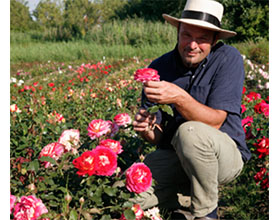
自育品种是这家园子最硬的成绩单。香水月季 Marie 在 2017 年基克贝格玫瑰市场拿到香水奖,命名是为了纪念园主的外祖母;灌木月季 Vierlandenperle 在 2016 年同一市场拿过最佳香水月季,2017 年又在沃尔夫斯加滕城堡的公爵花园节上为另一自育品种 Eyes for you 拿下铜质植物学奖。
玫瑰命名礼在这边办得很勤。Schöne Erfurterin 在 2012 年埃尔福特玫瑰大会命名,Euphrates 是较早收进商品目录的 Hulkemia 杂交种,株高七十厘米上下,耐干热。
一年到头的活动和课程
3 月是玫瑰修剪课和早春玫瑰(Lenzrose)开放日,7 月的玫瑰日请来铁线莲、观赏草、香草等同行摆摊,同时展出和销售自育月季。7 月下旬还办玫瑰主题讲座,从修剪、栽培到嫁接技术,由 Sabine Janßen 主讲的烘焙与玫瑰食品课程单独收费,需要提前报名。
8 月末收尾的是玫瑰果节,主题是这种富含维生素 C 的果实怎么吃、怎么做。9 月底还会去沃尔夫斯加滕参加公爵花园节。整个活动季从三月一直排到八月。
Three Generations in Roses
The Vierlaender Rosenhof sits in the Bergedorf district south of Hamburg and has drawn rose visitors since 1999. Jan D. Janßen comes from a family of horticulturists: his grandfather kept flowers, and his father Dieter grew cut flowers for the Hamburg wholesale flower market. Jan took the third generation in a different direction and turned the whole farm over to roses.
The farmhouse itself was rebuilt in 1880 and the yard covers roughly 2,500 square metres. That is not a lot of ground once you try to fit in more than 700 varieties, so every metre of the layout is planned.
From Wholesale Cut Flowers to Roses Only
The turn came almost by accident. Jan recalls setting up a stall at a strawberry festival and finding that markets and fairs suited him better than the wholesale trade. He kept taking on more specialist fairs, focused harder and harder on roses, and eventually switched the entire business over.
His father was unimpressed at first and considered the decision too radical. He now works in the farm anyway, and the story of that reversal is told locally as something of a family reconciliation.
Collector and Breeder at Once
The garden is both a collection and a breeding ground. Moss roses, Gallicas, Damascenas and other old-rose groups are laid out systematically in the old rose section, while hybrid teas, floribundas, climbers and ground covers get their own beds. The garden has links with rose botanist Martin Rix and writer Roger Phillips; at the 2017 naming ceremony at Kasteel Hex in the Netherlands, Jan named a 2014 seedling after the two of them.
The usual dividing line between old and modern roses is the year 1867, when Guillot’s La France is taken as the first hybrid tea. Everything bred after that counts as modern, everything before it as old. This farm keeps both.
Seedlings That Won the Scent Prize
Its own seedlings are the strongest part of the record. The scented rose Marie took the scent prize at the Kiekeberg rose market in 2017, named for Jan’s grandmother. The shrub rose Vierlandenperle won best scented rose at the same market in 2016, and in 2017 another of Jan’s seedlings, Eyes for you, took the bronze botany prize at the princely garden festival at Wolfsgarten.
Naming ceremonies happen here often. Schoene Erfurterin was named at the rose congress in Erfurt in 2012, and Euphrates was one of the early Hulthemia hybrids taken into the catalogue, reaching about 70 cm and coping with dry, warm spots.
Events and Courses Through the Season
March brings a pruning course and days for the early hellebores. The rose days in July invite clematis growers and specialists in grasses and herbs to set out their own stalls, alongside a display and sale of the farm’s roses. A series of talks later in July covers pruning, growing and propagation, with a separate paid course on rose baking run by Sabine Janßen that requires booking.
The season closes with a rose hip festival in late August on how to eat and preserve this vitamin-C-rich fruit, and the farm also exhibits at the princely garden festival at Wolfsgarten in September. Events run from March through August.
相关文章:
 德国 Rosenhof Schultheis – 韦特劳最古老家族玫瑰苗圃
 英国 DICKSON玫瑰苗圃 – 种苗生产与销售
 英国 C&K Jones玫瑰苗圃 – 种苗生产与销售
 美国 Weeks Roses玫瑰苗圃 – 是来自自己的杂交还是来自国际育种公司或业余美国育种者的努力
 南非 路德维希的月季(玫瑰)农场 – 南非历史最悠久、规模最大的月季专业机构之一
 德国 明斯特苗圃 Münster Baumschulen – 露地栽培铁线莲300多品种
 荷兰 Kwekerij Jansen 苗圃 – 三代传承的蔬果与宿根花卉家庭农场
 英国 Pococks玫瑰苗圃和Cornish玫瑰公司 – 种苗生产与销售
发表回复