
九个州协会之上的一个全国性总会
奥地利园丁联邦协会(Bundesverband der Österreichischen Gärtner,简称 BVÖG)是奥地利园艺行业的全国性总会,按社团形式登记,办公地在维也纳。它本身不直接经营苗圃,而是把全国园艺从业者组织起来、对外代表他们说话。站上把它明确定位为一个 Dachverband,即联合会之上的联合会。
它的正式成员共十四家,分两类。一类是九个州级园艺协会,覆盖奥地利全部九个联邦州:布尔根兰、克恩顿、下奥地利、上奥地利、萨尔茨堡、施泰尔马克、蒂罗尔、福拉尔贝格,以及维也纳州园艺协会。另一类是五个跨州的专项组织:奥地利苗圃和多年生园丁协会(Bund Österreichischer Baumschul- und Staudengärtner)、花卉营销协会(Blumenmarketing Austria)、奥地利青年园丁工作组(ARGE Österreichischer Junggärtner)、维也纳女园丁工作组(ARGE Wiener Gärtnerinnen)、以及奥地利墓地园丁协会(Vereinigung der Friedhofsgärtner)。
这个结构解释了为什么联邦总会的很多工作要跨州来做。州协会管的是本州的事,而花卉推广、职业培训、年度植物评选这类事情,一个州做规模太小,九个州各做一套又太碎,联邦总会正好承接这一层。墓地园丁协会能进入正式成员名单,也从侧面说明园艺在奥地利不只指苗圃和切花,墓园养护同样是行业的一部分。
协会的成立时间要分两段说。1933 年有过一次成立,首任主席是 Michael Walla,奥地利被吞并后工作停止。1947 年 8 月 3 日在萨尔茨堡重新成立,Walla 再次出任主席,首任事务经理是下奥地利农业商会的 Leopold Schmidt。1948 年成立国际园艺生产者协会(AIPH),Walla 出任理事。也就是说,这个组织比二战后的奥地利重建更早,而它的现役主席 Ulrike Jezik-Osterbauer 是维也纳的墓地园丁。
六项任务与两套决策机构
站上把联邦总会的任务列成六条:绿色行业的公众宣传;在国内外代表园丁面对第三方;园丁的专业继续教育;创建、管理和支持服务于商业园艺的各类设施;在全国层面做推广以提高本国园艺产品的销量;组织展会和展览。
决策分两层。管理机构(Präsidium)由主席、两位副主席,以及十四个正式成员的负责人组成,是社团的领导机关,负责日常事务。事务经理和各成员组织的事务经理可以列席会议,但只有建议权、没有表决权。
代表大会(Delegiertenversammlung)是社团法意义上的全体大会,每年在全国园艺大会期间召开。每个州协会有权派三名代表,超过 200 家经营单位可以再派一名;其余正式成员各派一名;赞助成员以建议身份列席。代表大会的权限很实在:批准决算和预算,决定是否接纳新成员,选举主席和副主席,并在主席团准备好的基础上做出重要的专业和经济决定。换句话说,会费怎么花、新成员进不进、谁来当下一任主席,都在这个会上定。
现任主席是 ÖkR Ulrike Jezik-Osterbauer,墓地园丁出身,ÖkR 是奥地利农业界的功勋职称。两位副主席一位是 Ing. Karl Auer,来自 Schwechat 的蔬菜园艺师,另一位是 Karl Grossbötzl,来自 Ried im Innkreis 的苗圃经营者。事务经理是 DI Marlies Zahaurek。
需要说明的是,站上把这些人的办公地址、座机、传真和邮箱都完整列出,还给出社团登记号。本站不转录这些信息,想联系请直接访问协会站。
2015 年全行业家数与面积
协会把奥地利园艺的定义划得比多数国家窄。这一点在统计里看得很清楚:园艺(Gartenbau)在奥地利指苗圃和温室栽培,涵盖观赏植物、切花、多年生草本和木本苗木,以及温室蔬菜生产;而露地菜、果树种植在别的国家常常也算进园艺,奥地利不算。协会给的理由是,这一定义既对着可独立开设职业培训的那些工种,也对着统一的用地分类口径,还顾及从业者对本行业的认同。
按这个口径做的是 2015 年的园艺业普查( Statistik Austria),数据由协会公布。三大门类分别是观赏植物、蔬菜和苗圃,数字很能说明这个行业的体量和分布。
观赏植物:2015 年全国 624 家经营单位,占地 375.18 公顷,比 2010 年少了 106 家、经营面积减少 24 公顷。九个州都有分布:下奥地利最多,181 家、106.32 公顷;施泰尔马克次之,111 家、78.59 公顷;随后是上奥地利 85 家、蒂罗尔 57 家、维也纳 53 家、克恩顿 49 家、萨尔茨堡 35 家、福拉尔贝格 33 家,布尔根兰最少,20 家、27.32 公顷。
这个行当一半是纯粹的生产单位,按农业经营登记、由农业商会代表;另一半是持有园艺经营许可的生产场子,业务涉及园艺设计、绿地上空养护、墓地园艺和花束制作(Floristik),这部分另外由工商商会代表。销售方式上,奥地利跟很多国家不同:八成以上的经营单位直接或至少部分直接卖给终端顾客,零售苗圃是主流,经由批发市场出货的基本上只在维也纳和紧邻的下奥地利。
生产重心是盆栽,尤其是花坛和阳台花卉。尽管需求已经变得多样,天竺葵和秋海棠仍然是最主要的两大类;春季和秋季的主打是紫罗兰和报春花,冬季则是圣诞红和盆栽菊花。盆栽香草和蔬菜秧苗的比重在上升。切花切叶在奥地利产量很小,多半供自家花艺作坊使用;专门做切花的苗圃已经很少见,露地品种主要是切花灌木、切叶材料、玫瑰、干花和大丽花,温室集中在郁金香、玫瑰、菊花、扶郎花和水仙。生产方式以常规栽培为主,有机和综合生产占比很小,但天敌昆虫的利用增长明显。
苗圃:2015 年全国 200 家,占地 965.33 公顷。经营单位数量从 2004 到 2015 年减少 11%,面积减少 143.64 公顷。分布上奥地利的情况和观赏植物正好相反:上奥地利一家独大,61 家、466.37 公顷,几乎是全国面积的一半;下奥地利 57 家、226.21 公顷;施泰尔马克 50 家、186.60 公顷。萨尔茨堡只有 2 家、蒂罗尔 3 家、维也纳 3 家、布尔根兰和福拉尔贝格各 5 家,克恩顿 14 家。苗圃占地大、培育周期长,所以集中在地价相对低、土地连片的上奥地利和南部,这也是为什么苗圃数量比观赏植物少得多,面积却大得多。
园艺蔬菜:2015 年全国 376 家,占地 622.81 公顷。经营单位比 2010 年少 33 家,面积反而增加 62.68 公顷,增幅最大的两个州是布尔根兰和施泰尔马克。这一门类的分布极不均衡:维也纳 169 家、328.28 公顷,一个州就占了全国一半以上的面积;施泰尔马克 61 家、72.79 公顷;布尔根兰 47 家、97.36 公顷;下奥地利 41 家、65.00 公顷;维也纳之所以面积大,跟它紧邻下奥地利蔬菜带、以及全市对鲜切配送的需求有关。其余五州加起来不到 70 家,协会的判断是这些州的园艺蔬菜基本没有分量。
园艺蔬菜几乎全是生产单位,带园艺经营许可的极少,销售主要走生产者组织、单店零售或直接卖给终端;经批发市场卖给连锁超市或加工厂的比例很小。生产重点是番茄(散装和串收两种)、黄瓜、甜椒(青椒和彩椒)、樱桃萝卜、球叶甘蓝和苦菊。要进生产者组织的渠道,必须按 AMA 质量标志的规范生产,而该规范以综合生产为基础。天敌昆虫在这行用得很普遍。
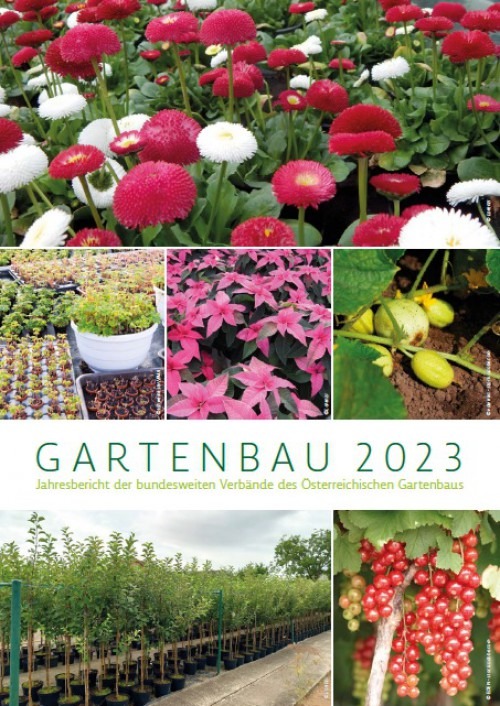
这组统计是 2015 年的,站上公布的仍是这一版,没有更新年份。三大类的家数合计约 1200 家,但同一个经营单位可能同时出现在几类里,所以不能简单相加当作行业总数。协会另有一份逐年更新的年度报告,公开列出 2011 年至今各年的 PDF 下载,其中 2023 年那期的副标题写明是奥地利全国性协会的行业年度报告。
《Beetgeflüster》与面向消费者的宣传机构
协会名下办了一份面向消费者的季刊,叫《Beetgeflüster》,德语字面意思是「花圃絮语」。这份杂志由成员机构花卉营销协会(Blumenmarketing Austria)出版,2013 年夏季创刊,每季一期,一年四期,52 页,免费放在苗圃和苗圃店供顾客取阅。选题跟着季节走,围绕花园、阳台、露台和室内植物展开,每期还附一份内容很全的园艺与月相日历,外加书籍推荐和活动预告。
杂志的选题由一个专业委员会定,委员包括花卉营销协会主席 ÖkR Albert Trinkl(本人是布尔根兰 Loipersbach 的园丁)、Ing. Veronika Schubert、DI Gerhard Six、Mary Delißen、Wolfgang Praskac,以及花卉营销协会事务经理 DI Karin Lorenzi。选题的取向上有两个标准:苗圃和苗圃店实际在卖什么、供什么服务;以及哪些内容对爱植物的人有意思。养护窍门、颜色和品种的趋势、植物各部分作装饰或食材的用法,以及好照片,是最常出现的几类。
创刊第一期印了 5 万份。这个数字要放在一起看,因为它是杂志发行方式的结果:免费取阅意味着发行量取决于有多少苗圃肯在自己店里摆,有多少顾客肯顺手拿。杂志的印刷费用由花卉营销协会先垫,各家园丁按取走的份数付钱——所以发行量实际上要靠园丁和顾客双方都动起来才能上去。
花卉营销协会是另一个需要说明的机构。它是一个专门做宣传推广的社团,宗旨是在整合绿色行业各方力量的前提下,宣传花卉、植物及与之相关的服务。除了办《Beetgeflüster》,它还组织「苗圃里的课堂」(Schule in der Gärtnerei)这类面向学校的活动,以及面向养蜂人、天敌昆虫等主题的专项宣传。它有自己的年度大会,成员按缴纳的宣传费金额派 1 到 3 名代表出席,创造性机构则是一个由主席团和各成员代表组成的顾问委员会。
协会每年同其他全国性协会联合出版一份年度报告,公开列出 2011 至 2023 各年的 PDF 下载地址。近年除了年度报告,站上还有几项固定内容:园丁与教育机构查询器(按州和半径找附近的苗圃或培训机构)、当季蔬菜菜谱、蜜蜂与蝴蝶植物名录、耐热花卉推荐,以及每年 4 月 25 日前后的全国开放日。
年度植物与全国开放日
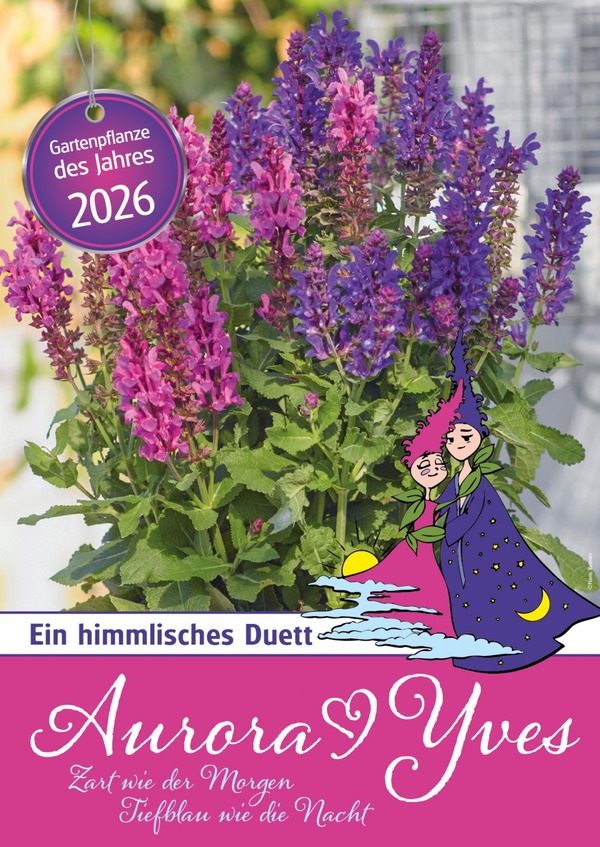
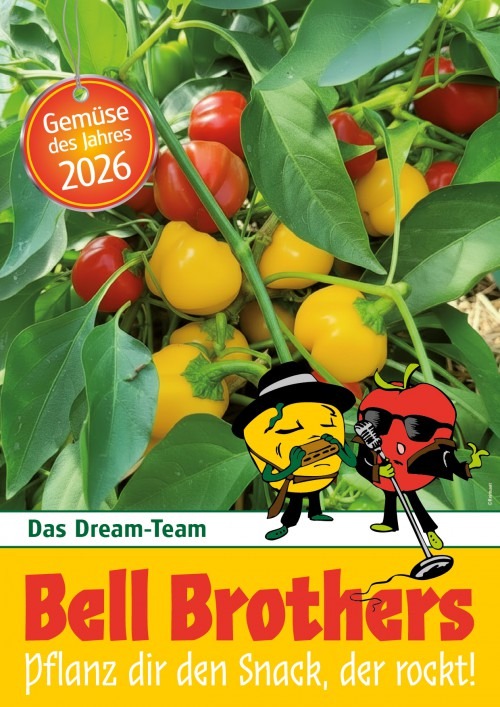
每年 4 月下旬,奥地利全国的苗圃和苗圃店会在同一天开放,这一天同时用来公布新一年的年度植物。2026 年 4 月 25 日公布的年度植物是鼠尾草双株组合 Aurora 与 Yves——Aurora 是柔和的粉色,Yves 是深蓝色,一对撞色的组合,协会的说法是这对颜色正好映衬春天:Aurora 的粉代表喜悦、萌动和温暖,Yves 的蓝代表安静、恒久与和谐。同期公布的年度蔬菜是 Bell Brothers 甜椒双株,一黄一红两个小果甜椒合栽一盆。协会给出的种植提示很实在:甜椒喜暖,跟所有茄果类一样要等过了冰圣节再移出室外,栽在营养足、排水好的基质里能长到约 80 厘米高,植株高,插一两根支竹防风倒。
这两项评选不是协会自己定的,而是奥地利园丁全国范围内评选的结果,协会负责推广。评选出来的年度植物会配一套完整的宣传材料——标志图、文字模板和图片,各州协会拿去用。协会站还公开列出往年的下载包,这一点对做园艺内容的人有用:往年的标志和官方图片可以直接引用,不必重画。
A national umbrella over nine regional associations
The Bundesverband der Österreichischen Gärtner (BVÖG) is the national federation of Austria’s horticulture trade, a registered association based in Vienna. It does not run nurseries itself; its job is to organise the country’s growers and speak for them. The site calls it a Dachverband — an umbrella above umbrellas.
It has fourteen formal members in two groups. The first is the nine regional associations, one for each of Austria’s federal states: Burgenland, Carinthia, Lower Austria, Upper Austria, Salzburg, Styria, Tyrol, Vorarlberg, and the Vienna state garden association. The second is five cross-regional specialist bodies: the Austrian Federation of Tree and Perennial Nurserymen, Blumenmarketing Austria, the working group of young Austrian gardeners, the working group of Viennese women gardeners, and the association of Austrian cemetery gardeners.
This structure explains why so much of the federation’s work is done across state lines. The regional associations handle their own state’s business, but flower promotion, vocational training and the annual plant selection are all too small for one state and too fragmented across nine, which is exactly the layer a national federation is built for. The presence of the cemetery gardeners’ association is a reminder that horticulture in Austria means more than nurseries and cut flowers; grave maintenance is part of the trade too.
The association’s founding comes in two instalments. It was first set up in 1933 under Michael Walla as the Bundesverband der Österreichischen Erwerbsgärtner, and its work stopped when Austria was annexed. It was re-founded on 3 August 1947 in Salzburg, with Walla again as president and Leopold Schmidt of the Lower Austrian Chamber of Agriculture as first secretary. In 1948 the international growers’ body AIPH was founded, with Walla on its board. The organisation therefore predates post-war Austrian reconstruction, and its current president, Ulrike Jezik-Osterbauer, is a cemetery gardener from Vienna.
Six tasks and two decision-making bodies
The site lists six tasks for the federation: public relations for the green sector; representing gardeners’ interests towards third parties at home and abroad; professional further training for gardeners; creating, administering and supporting facilities that serve commercial horticulture; running promotion at national level to increase sales of Austrian horticultural products; and organising trade fairs and exhibitions.
Decisions run through two bodies. The executive board (Präsidium) consists of the president, two deputies, and the heads of the fourteen formal members; it is the association’s leading organ and handles current business. The federation’s secretary and the secretaries of the member organisations may attend its meetings, but in an advisory capacity only, without a vote.
The delegate assembly (Delegiertenversammlung) is the general meeting under association law and convenes annually during the national horticulture conference. Each regional association may send three delegates, plus one more once it passes 200 businesses; every other formal member sends one. Supporting members attend in an advisory capacity. The assembly’s powers are substantial: it approves the accounts and the budget, decides on admitting new members, elects the president and the deputies, and takes the fundamental professional and economic decisions prepared by the board. Subscription spending, new admissions and the next president are all settled here.
The current president is ÖkR Ulrike Jezik-Osterbauer, a cemetery gardener; ÖkR is an Austrian distinction for outstanding service to agriculture. Her two deputies are Ing. Karl Auer, a vegetable grower from Schwechat, and Karl Grossbötzl, a tree nursery owner from Ried im Innkreis. The secretary is DI Marlies Zahaurek.
The site publishes the postal address, telephone, fax, email and association register number for these people. None of that is reproduced here; the federation’s site is the place to reach them.
Business counts and areas in 2015
The federation draws Austria’s definition of horticulture more narrowly than most countries do, and the statistics make it visible. In Austria, Gartenbau means nurseries and greenhouse cultivation: ornamental plants, cut flowers, perennials and woody plants, plus greenhouse vegetable production. Field vegetables and fruit growing are not counted, although in other countries they usually are. The federation’s reasoning is that the definition follows both the trades that can be trained independently and the uniform land-use classification, while also respecting how practitioners themselves see their profession.
The figures come from the 2015 horticultural census (Statistik Austria), published by the federation, and cover three sectors: ornamental plants, vegetables and tree nurseries.
Ornamental plants: 624 businesses on 375.18 hectares in 2015, down 106 businesses and 24 hectares from 2010. All nine states are represented. Lower Austria leads with 181 businesses on 106.32 hectares, Styria follows with 111 on 78.59, then Upper Austria 85, Tyrol 57, Vienna 53, Carinthia 49, Salzburg 35, Vorarlberg 33, and Burgenland lowest at 20.
Half of these businesses are pure production units registered as agricultural holdings and represented by the chambers of agriculture. The other half are production sites holding a trade licence covering garden design, grounds maintenance, cemetery horticulture and floristry, and are represented by the chambers of commerce. Austrian practice differs from much of the world here: more than 80 per cent of businesses sell directly, wholly or partly, to end customers. Retail nurseries dominate; wholesale market channels matter almost only in Vienna and neighbouring Lower Austria.
The production focus is pot plants, especially bedding and balcony plants. Demand has widened, but pelargoniums and begonias remain the two main groups; violets and primroses lead in spring and autumn, poinsettias and pot chrysanthemums in winter. Potted herbs and vegetable seedlings are rising. Cut flowers and foliage are produced in small volumes in Austria, mostly for the farm’s own floristry workshop, and nurseries specialising in them have become rare: outdoors it is cutting shrubs, foliage, roses, dried flowers and dahlias; under glass it is tulips, roses, chrysanthemums, gerberas and daffodils. Production is conventional, organic and integrated growing are marginal, but the use of beneficial insects is clearly increasing.
Tree nurseries: 200 businesses on 965.33 hectares in 2015. The number of businesses fell 11 per cent between 2004 and 2015 and the area shrank by 143.64 hectares. The distribution is almost the reverse of the ornamental sector: Upper Austria dominates with 61 businesses on 466.37 hectares, close to half the national area, followed by Lower Austria with 57 on 226.21 and Styria with 50 on 186.60. Salzburg has just 2, Tyrol and Vienna 3 each, Burgenland and Vorarlberg 5 each, Carinthia 14. Nurseries occupy a lot of land and run long cycles, so they concentrate where land is cheaper and contiguous — which is also why the sector has far fewer businesses than ornamental growing but far more area.
Horticultural vegetables: 376 businesses on 622.81 hectares in 2015, 33 fewer businesses than in 2010 but 62.68 hectares more ground, with the largest increases in Burgenland and Styria. The distribution is extremely uneven. Vienna alone has 169 businesses on 328.28 hectares, more than half the national area; Styria follows with 61 on 72.79, Burgenland 47 on 97.36 and Lower Austria 41 on 65.00. Vienna’s figure reflects its adjacency to the Lower Austrian vegetable belt and the city’s demand for fresh delivery. The other five states together hold fewer than 70 businesses, and the federation considers horticultural vegetables there to be of little significance.
These are almost purely production units; production sites holding a trade licence are scarcely to be found. Marketing runs mainly through producer organisations, retail or straight to the customer, with wholesale into supermarket chains or processors playing a minor role. The production focus is tomatoes (loose and truss), cucumbers, peppers (green and coloured), radishes, cabbage lettuce and endive. To sell through a producer organisation, growers must work to the AMA quality seal, which is based on integrated production. Beneficial insects are widely used here.
These figures are from 2015, and the federation still publishes that version with no newer year. The three sectors total roughly 1,200 businesses, but one holding can appear in more than one category, so the numbers must not simply be added up. The federation also publishes an annual report updated each year, with PDF downloads for 2011 onward; the 2023 edition carries the subtitle “Jahresbericht der bundesweiten Verbände des Österreichischen Gartenbaus”, the annual report of the nationwide associations of Austrian horticulture.
Beetgeflüster and the consumer-facing promotion body
The federation publishes a quarterly consumer magazine, Beetgeflüster — literally “garden whispers” — issued by one of its members, Blumenmarketing Austria. It was founded in summer 2013, appears four times a year, runs to 52 pages, and is handed out free in nurseries and nursery shops. Topics follow the season, covering gardens, balconies, terraces and houseplants; each issue carries a detailed gardening and moon calendar, book tips and an events diary.
The editorial line is set by a specialist panel: Albert Trinkl, chairman of Blumenmarketing Austria and himself a gardener from Loipersbach in Burgenland, together with Ing. Veronika Schubert, DI Gerhard Six, Mary Delißen, Wolfgang Praskac, and DI Karin Lorenzi, the association’s secretary. Two criteria guide the choice of subjects: what nurseries and nursery shops actually grow and offer, and what is of interest to plant lovers. Care tips, colour and variety trends, the use of plant parts as decoration or in the kitchen, and good photography recur across the issues.
The first issue ran to 50,000 copies. That number is worth pausing on, because it follows from how the magazine is distributed: free copies mean circulation depends on how many nurseries put it out and how many customers pick one up. The association pays the printing up front and growers then pay for the copies they take, so circulation only rises if both growers and customers move.
Blumenmarketing Austria itself is worth a mention. It is a dedicated promotional association, set up to advertise flowers, plants and the related services while drawing on all branches of the green industry. Alongside Beetgeflüster it runs “school in the nursery” and other campaigns for nurseries and tree nurseries. It has its own general assembly, where members send one to three delegates according to their promotional contribution, and a creative organ in the form of an advisory board drawn from its executive and one or two representatives per member.
The federation publishes an annual report jointly with the other national associations, with PDF downloads for each year from 2011 to 2023. Alongside the reports, the site now carries a few standing features: a finder for nurseries and training establishments by state and radius, seasonal vegetable recipes, a list of bee and butterfly plants, heat-tolerant flower recommendations, and the nationwide open day around 25 April.
The plant of the year and the national open day
Every year in late April, nurseries and nursery shops across Austria open on the same day, and that day is when the new plant of the year is announced. On 25 April 2026 the plant of the year was a pair of sages, Aurora and Yves — Aurora a soft pink, Yves a deep blue, a clashing pair. The federation reads the colours as a picture of spring: Aurora’s pink standing for joy, new beginnings and warmth, Yves’s blue for calm, constancy and harmony. The vegetable of the year announced the same day was the Bell Brothers pepper, a yellow and deep red pair of small-fruited peppers sharing one pot. The advice is practical: peppers are warmth-loving, and like all fruiting vegetables they should go out only after the cold snaps, reaching about 80 cm in a nutrient-rich, free-draining substrate, with a cane or two worth adding so they do not snap in the wind.
Neither selection is made by the federation alone; both come from a vote across Austria’s gardeners, with the federation handling promotion. Each winning plant comes with a complete set of campaign material — logo artwork, text templates and photographs — for the regional associations to use. The site also keeps the download packs for past years on file, which is useful for anyone producing horticultural content: earlier logos and official images can be used as published rather than redrawn.
相关文章:
 奥地利 苗圃和多年生园丁协会 Baumschulinfo – 78 家会员的行业团体
 加拿大 苗圃景观协会 Canadian Nursery Landscape Association – 全国园艺行业联合会
 奥地利 下奥地利州园丁协会 NÖ Gärtner – 250 余家商业苗圃的行业团体
 英国 HTA 园艺行业协会 – 自 1899 年起代表英国园艺行业
 奥地利 萨尔茨堡园丁和菜农协会 Salzburger Gärtner – 覆盖七区的 64 家园艺场
 奥地利 花园中的自然运动 Natur im Garten – 25 余年生态园艺推广与认证
 德国 水花园爱好者协会 – 致力于推动水生和沼泽植物的研究、栽培与应用
 德国 石勒苏益格‑荷尔斯泰因州苗圃联合会 – 欧洲最大连片苗圃区行业团体
发表回复