
运动起源与组织架构
1996年,奥地利下奥地利州政府、下奥地利州环境咨询机构与下奥地利州农业区管理局共同拟定“我们的花园——自然而然地生活”方案,并以刺猬作为标志动物。一方面,伊丽莎白·科彭施泰纳在下奥地利州环境咨询机构组建“花园”工作组;另一方面,玛丽亚兰岑多夫镇的约翰娜·洛伊特格布、下奥地利州政府环保协调处的彼得·桑特纳与农业区管理局的克里斯蒂安·施泰纳在该镇启动“近自然绿地”试点,召开首次联席会议并商定联合工作计划。
1999年,随着欧盟生命基金项目获批,时任下奥地利州环境事务委员沃尔夫冈·索博特卡以“与自然共同耕作”为基本理念正式发起“花园中的自然”运动,推出“保持让我们健康的自然健康”口号,编印首套园艺指南活页夹,并建立园艺咨询热线与入户花园指导机制。该运动由下奥地利州政府支持,日常工作由设在下奥地利州图尔恩的“花园中的自然”有限公司及服务有限公司承担,并在巴登、茨韦特尔、甘瑟恩多夫、圣珀尔滕、图尔恩和伊布斯河畔魏德霍芬设有六个区域咨询点。2024年,该运动在圣珀尔滕举办了二十五周年庆典。目前其主站基于开源内容管理系统构建,外部访问页面时偶有临时维护提示,但静态图形文件与历史归档页面仍可正常调阅。
三大核心标准与花园徽章
该运动自1999年确立并沿用至今的三项核心标准为:不使用化学合成农药(仅允许符合欧盟有机法规或该运动质量标志的植保制剂)、不使用化学合成肥料、不使用泥炭。在此基础上,花园实地评审分为“自然花园要素”与“生态管理方式”两大类:自然花园要素包含本土野生灌木绿篱、野趣角落、野花草甸、干湿生境、草本草坪、适地乔木、保留自然生长植物以及本土开花宿根植物八项,申请者须至少满足其中七项;生态管理方式包含堆肥箱或蚯蚓箱、地表覆盖、环保材料选择、蔬菜与香草园、益虫栖息屋、果树与浆果灌木、雨水收集利用以及混作轮作与绿肥八项,须至少达到其中五项。不硬化地面、少用塑料、避免光污染与友善对待动物可作为额外加分项。
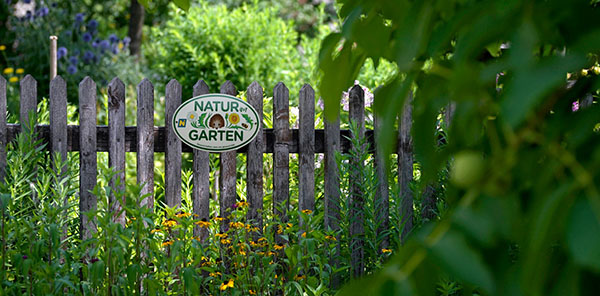
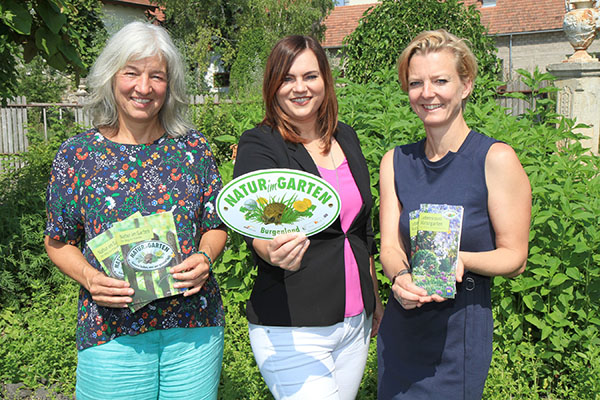
私家花园、企业、学校及幼儿园均可报名现场评审,评审员实地核验合格后颁发绘有刺猬图案的“花园中的自然”椭圆徽章与证书,单户现场评审收取三十欧元工本费;若同一市镇有五户以上集中申报“徽章行动日”,每户费用降为十欧元。此外,该运动还对符合欧盟有机条例且不含泥炭的土壤改良剂、物理粘虫板、园艺工具、益虫旅馆及植物强化剂授予“花园中的自然”产品标志,方便园艺爱好者选购。
市镇绿地、合作企业与科普教育
除私家花园外,该运动将无化学合成农药、无化肥、无泥炭三项原则推广至公共绿地与园艺商业领域。根据站点地图统计,下奥地利州已有四百九十九个市镇签署生物植保承诺,其中四百零二个市镇通过议会决议正式成为“花园中的自然”合作市镇。下奥地利州村镇与城市更新机构为合作市镇的公共绿地营建提供百分之二十五至百分之四十的专项补助,单个申请主体每年补助上限可达三万至四万欧元。商业端共有百余家苗圃、花店、园艺中心、景观设计与养护企业通过认证成为合作企业,相关园艺礼券可在奥地利一百七十多家合作苗圃、树苗场与花店使用。
在自然教育方面,发起人沃尔夫冈·索博特卡于2015年10月16日获德国园艺学会在迈瑙岛颁发的索妮娅·贝纳多特自然教育奖,成为首位获此奖项的奥地利人,一千五百欧元奖金全数捐予瓦尔德地区协助长期失业者修缮历史花园石墙的公益协会。2016年起,该运动获得奥地利“教育机构”类别的生态标签认证,2018年及2021年旗下两家运营公司先后纳入奥地利成人教育质量认证名录。日常传播与教学渠道涵盖每周日在奥地利国家广播电台第二套节目播出的园艺电视栏目(由有机园艺师卡尔·普洛伯格主持)、每年免费寄送四期的园艺杂志、播客节目、多瑙河克雷姆斯大学合作课程,以及树木、绿篱、攀援植物在线选种导航与全天候病虫害在线问答页。
跨国合作网络与欧洲花园协会
从下奥地利州起步后,该运动逐步扩展到奥地利布尔根兰州、克恩顿州、上奥地利州、萨尔茨堡州、施泰尔马克州、蒂罗尔州、福拉尔贝格州和维也纳,并与德国(巴登-符腾堡、巴伐利亚、黑森、梅克伦堡-前波美拉尼亚、下萨克森、北莱茵-威斯特法伦、萨克森、萨克森-安哈尔特、图林根、柏林及勃兰登堡)、瑞士、列支敦士登、意大利南蒂罗尔(莱姆堡农业试验中心)、捷克和斯洛伐克的合作机构建立联合网络。根据下奥地利州与国际联合会页面数据,悬挂在下奥地利州花园围栏上的徽章已超过两万块(早期统计为一万八千多块),全欧洲七国累计发放约两万七千块。
2012年,各国合作组织共同成立“欧洲花园协会——花园中的自然国际联合会”,由沃尔夫冈·索博特卡担任主席,将每年6月30日设立为国际“花园中的自然”日(2026年年度主题为“种植香草,丰富生活”),每两年举办一次欧洲生态园艺奖评选,并与欧洲景观承包商协会及奥地利园艺与花艺行会合作提名生态绿化示范工程。
下奥地利州代表性展示花园
下奥地利州现有百余座通过评审的“花园中的自然”展示花园,其中七十多座获得该运动最高荣誉“金刺猬”奖。位于瓦格拉姆山麓基希贝格镇的“炼金术士公园”建于2007年,由奥地利永续农业机构、当地市镇与“花园中的自然”合作营建,汇集约两百种适应当地气候的一年生与多年生果树、坚果、灌木蔬菜和香草;除樱桃、杏等常见果树外,还栽有猫儿屎、北美泡泡果、蓝靛果、红肉桃和桑树等少见果木,并配有自然风格儿童游乐区,全年免费向公众开放。
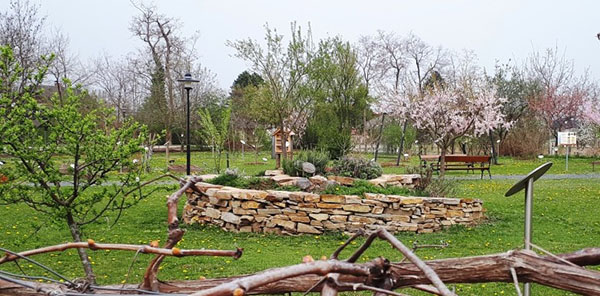
齐尔斯多夫镇的布丽吉特·弗勒利希私家花园由昔日的集约型菜园经几代人改造而成,占地约一千三百平方米;园内利用高低错落的植物花境与步道将狭长地块划分为多个空间,紧邻住宅布置厨房菜园,并建有生态泳池。多年停用农药后,园内及周边花园聚集了蝴蝶、乌鸫、燕雀、大斑啄木鸟、蝙蝠和刺猬,园主还将繁殖旺盛的宿根植物分株赠送给花友或栽入公共花坛,每年五月中旬至九月底可预约参观。
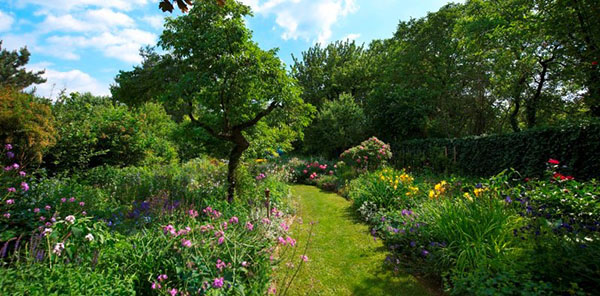
克莱因韦茨多夫镇韦茨多夫城堡与海登堡之间的“海登堡英式花园”始建于1830年前后,荒废多年后经细致修缮,于2005年重新向公众开放。园内保留古树群落,串联起带蓄水池的石窟喷泉、名为“帕纳斯”的观景山丘、比德迈耶风格茶亭、鹰憩台与蜗牛山,将土、气、火、水四要素融入造园布局;毗邻园区还设有新石器时代环壕聚落露天博物馆、猛禽站、西班牙皇家骑术学校利皮扎马训练中心以及拉德茨基元帅纪念馆,英式花园区域每年四月至十月周二至周日免费开放。
Origins and Organizational Structure
In 1996, the provincial government of Lower Austria, the environmental advisory organization “die umweltberatung”, and the Lower Austrian District Agricultural Authority drafted the concept “Unsere Gärten – natürlich lebendig” (“Our Gardens – Naturally Alive”), adopting the hedgehog as their emblem animal. Under the leadership of Elisabeth Koppensteiner, a “Garden” working group was formed at “die umweltberatung Niederösterreich”, while Johanna Leutgöb from the municipality of Maria Lanzendorf, Peter Santner from the Environmental Protection Coordination Office of the Lower Austrian government, and Christian Steiner from the District Agricultural Authority launched the pilot project “Naturnahe Grünräume” (“Near-Natural Green Spaces”) in Maria Lanzendorf and drew up a joint work programme.
In 1999, following the approval of an EU LIFE project, Lower Austria’s then Provincial Councillor for the Environment Wolfgang Sobotka officially launched the movement “Natur im Garten” (“Nature in the Garden”) around the core idea of gardening with nature and the motto “Natur im Garten – gesund halten, was uns gesund hält” (“keep healthy what keeps us healthy”). An advisory binder, a dedicated garden telephone hotline, and on-site garden consultations formed the initial backbone. Carried by the province of Lower Austria, daily operations are run from the competence center in Tulln by Natur im Garten GmbH and Natur im Garten Service GmbH, supported by six regional offices in Baden, Zwettl, Gänserndorf, St. Pölten, Tulln, and Waidhofen an der Ybbs. In 2024, the movement marked its 25th anniversary in St. Pölten. The main Contao-based website occasionally displays a temporary 503 maintenance notice to external visitors, while static files and archived pages remain accessible.
Three Core Criteria and the Garden Plaque
Since 1999, the movement has been defined by three mandatory core criteria: no chemical-synthetic pesticides (only plant protection products compliant with the EU Organic Regulation or the movement’s own quality seal are permitted), no chemical-synthetic fertilizers, and no peat. Beyond these three rules, garden assessments evaluate two groups of criteria: “Natural Garden Elements” (native wild shrub hedges, wild corners, wildflower meadows, wet or dry biotopes, herb lawns, site-appropriate trees, tolerance of wild growth, and native flowering perennials — at least seven of eight must be met) and “Ecological Management” (compost heap or worm bin, mulching, eco-friendly materials, vegetable and herb beds, beneficial insect shelters, orchard and berry shrubs, rainwater harvesting, and companion planting with crop rotation and green manure — at least five of eight must be achieved). Unsealed permeable paths, plastic-free gardening, absence of light pollution, and animal-friendly maintenance count as bonus points.
Private gardeners, companies, schools, and kindergartens can apply for an on-site assessment; upon passing, they receive the oval “Natur im Garten” hedgehog plaque and a certificate for a €30 contribution toward expenses, or €10 per applicant when at least five gardens in a municipality apply together on a plaque action day. In addition, the “Natur im Garten” quality seal (“Gütesiegel”) certifies peat-free and EU-organic-compliant soil improvers, sticky traps, garden tools, beneficial insect hotels, and plant strengtheners.
Municipal Green Spaces, Partner Businesses, and Education
Beyond private gardens, the movement extends its pesticide-free, fertilizer-free, and peat-free principles to municipal green spaces and commercial horticulture. According to the interactive map on the site, 499 municipalities in Lower Austria have signed the biological plant protection commitment, and 402 municipalities have passed municipal council resolutions as official “Natur im Garten” municipalities. Through Lower Austria’s village and urban renewal programme, ecological green space projects receive subsidies of 25% to 40%, up to €30,000 to €40,000 per applicant per calendar year. On the commercial side, more than 130 nurseries, florists, garden centers, landscape designers, and maintenance firms are certified partner businesses, and gift vouchers can be redeemed at over 170 nurseries and garden shops across Austria.
In recognition of its nature education work, initiator Wolfgang Sobotka became the first Austrian to receive the Sonja Bernadotte Award for Ways to Nature Education from the German Horticultural Society (DGG 1822) on Mainau Island on 16 October 2015, donating the €1,500 prize money to the Waldviertel association ÖKOKREIS, which engages long-term unemployed people in restoring historic gardens and dry-stone walls. Since 2016, “Natur im Garten” has held the Austrian Ecolabel for educational institutions, and its operating companies were listed in the national Ö-Cert adult education quality framework in October 2018 and November 2021. Outreach channels include a weekly Sunday television programme on ORF 2 hosted by organic gardener Karl Ploberger, a free quarterly magazine, the “Red ma Natur” podcast, university courses in cooperation with Danube University Krems, and online plant navigators for trees, hedges, and climbing plants alongside the Gartentelefon24 pest and disease portal.
Cross-Border Network and European Garden Association
From Lower Austria, the initiative expanded to the Austrian provinces of Burgenland, Carinthia, Upper Austria, Salzburg, Styria, Tyrol, Vorarlberg, and Vienna, as well as partner organizations in Germany (Baden-Württemberg, Bavaria, Hesse, Mecklenburg-Western Pomerania, Lower Saxony, North Rhine-Westphalia, Saxony, Saxony-Anhalt, Thuringia, Berlin, and Brandenburg), Switzerland, Liechtenstein, South Tyrol in Italy (Laimburg Research Centre), the Czech Republic, and Slovakia. According to the Lower Austrian and international association pages, more than 20,000 “Natur im Garten” plaques hang on garden fences in Lower Austria alone (up from over 18,000 in earlier counts), and roughly 27,000 plaques have been awarded across the seven participating European countries.
Since 2012, partner organizations have been united under the umbrella association “European Garden Association – Natur im Garten International”, chaired by president Wolfgang Sobotka. The association designated 30 June as International “Natur im Garten” Day (with the 2026 focus theme dedicated to culinary and habitat herbs), organizes the biennial European Award for Ecological Gardening, and nominates ecological green infrastructure projects for the ELCA Trend Award in cooperation with the European Landscape Contractors Association.
Representative Show Gardens in Lower Austria
More than 100 audited show gardens in Lower Austria belong to the network, over 70 of which hold the movement’s highest show-garden distinction, the “Golden Hedgehog” (“Goldener Igel”). Established from 2007 onward in Kirchberg am Wagram as a cooperation between Permakultur Austria, the market municipality of Kirchberg am Wagram, and “Natur im Garten”, the permaculture show garden “Alchemistenpark” brings together around 200 edible plant species suited to the local climate, including annual and perennial fruits, edible nuts, shrub vegetables, and culinary herbs. Alongside cherries and apricots, visitors encounter blue-bean shrubs, pawpaws, honeyberries, red-fleshed peaches, and mulberries, complemented by a natural children’s playground; admission is free year-round.
In Ziersdorf, the private show garden of Brigitte Fröhlich evolved over generations from an intensively worked childhood kitchen garden into a 1,300-square-meter natural garden combining recreation and food production. Winding paths and beds of varying planting heights divide the long, narrow plot into distinct garden rooms, placing herb, vegetable, and fruit beds close to the kitchen alongside a natural swimming pond. Years of pesticide-free management across the plot and neighboring gardens have brought back butterflies, blackbirds, finches, great spotted woodpeckers, bats, and hedgehogs; surplus perennial divisions are shared with fellow gardeners or planted in public beds, and the garden is open by appointment from mid-May to late September.
Between Wetzdorf Castle and the Heldenberg in Kleinwetzdorf, the historic “Englischer Garten Heldenberg” was laid out around 1830, rescued from overgrowth through careful restoration, and reopened to the public in 2005. Structured by mature specimen trees, the park links a grotto fountain with water basin, the “Parnass” viewpoint hill, a Biedermeier teahouse, the Adlersruh, and the Schneckenberg to represent the four elements of earth, air, fire, and water. The wider Heldenberg complex also houses an open-air Neolithic circular-ditch village with a birds-of-prey station, the Lipizzaner training center of the Spanish Riding School, and the Field Marshal Radetzky memorial; the English Garden itself is open free of charge Tuesday through Sunday from April to October.
相关文章:
 奥地利 格罗绍尔 Grossauer 景观规划事务所 – 20 余年景观与开放空间规划
 德国 Park der Gärten – 德国规模最大的主题花园园区之一杜鹃特色收藏
 欧洲花园 Garten Europa – 园艺展示与体验空间
 德国 Garten Schlüter 苗圃 – 北德百年家族花园植物邮购商
 美国 儿童与自然网络Children & Nature Network – 专业园艺服务机构
 奥地利 LuxuryTrees – 欧洲日式庭园设计与建造企业
 德国 Mein schöner Garten 订阅商店 – 德国十余种园艺刊物订阅服务
 德国 Garten-Ratgeber花园指南 – 提供有关如何创建、使用和正确维护花园的提示
发表回复