
一个州把自己的园丁登记在册
萨尔茨堡州园丁和菜农协会(Die Salzburger Gärtner und Gemüsebauern)是奥地利萨尔茨堡州园艺栽培从业者的自愿行业团体,按社团形式登记,办公地在萨尔茨堡市。协会同时是萨尔茨堡农业商会认可的专项团体(Anerkannter Fachverband),也是奥地利园丁总联合会(Bundesverband der Österreichischen Gärtner)的成员。
协会站上写的是「约 70 家会员」,自称代表州内观赏植物、蔬菜栽培和苗木这三类里最有经验的一批园艺场子。而站的会员名录里实际列出的是 64 家,两处数字略有出入,站上没有解释。萨尔茨堡本地维基的条目写的又是「约 80 家」,更早一份转载站上的介绍则说「超过 100 家」。这几个数字来源不同、年份也不同,这里只照原样列出,不替站上做取舍。
协会按社团章程运作,日常事务由一名干事和一名事务经理处理。理事层分工很清楚:主席 Josef Lindner 是园艺师傅出身、拿过奥地利农业功勋金星奖(Ökonomierat),副主席有三位,其中 Johann Winklhofer 还兼蔬菜栽培分会主席。会长与副主席们几乎都同时是自家苗圃的经营者,这一点在协会活动名单里看得很明显。
要说明的是,站上的协会联系页面把办公地址、座机和邮箱都完整列了出来,还给出每位负责人各自的住宅地址、专机和私人邮箱。本站不转录这些信息,想联系请直接访问协会站。
名录按七个园丁分区铺开
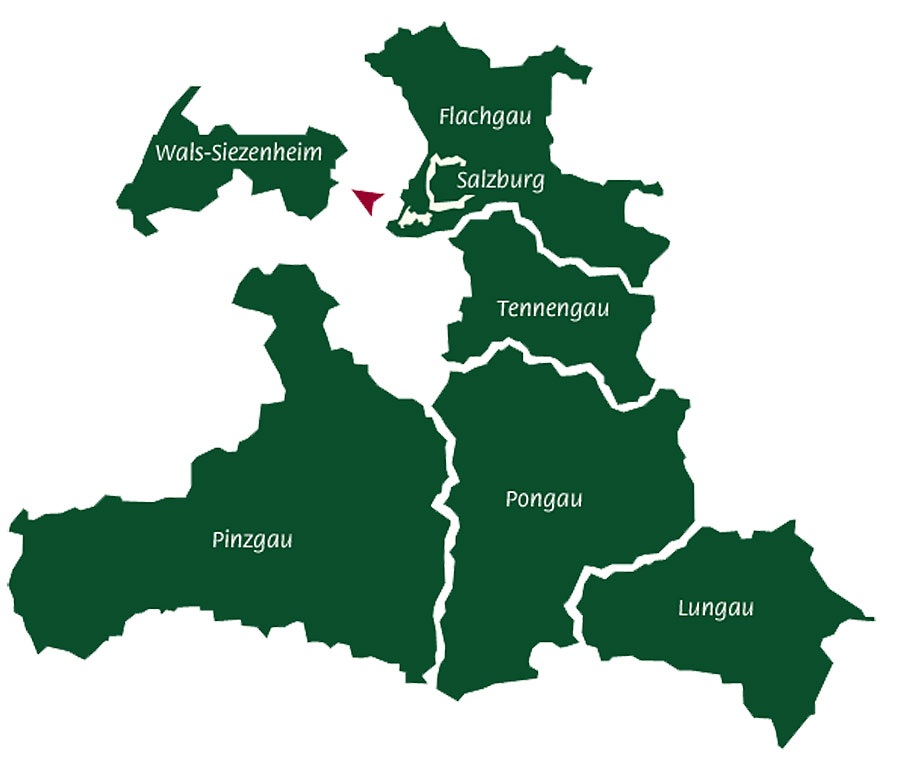
协会把全州划成七个园丁区,站在名录里按区给出每一家的名称、所在市镇和邮政编码,以及一串专业类别标记。从各区名录统计出来的分布是:萨尔茨堡市 13 家,Wals-Siezenheim 28 家,Flachgau 10 家,Pongau 5 家,Pinzgau 4 家,Tennengau 2 家,Lungau 2 家,合计 64 家。
分布很不平均。Wals-Siezenheim 一区占了将近一半,萨尔茨堡市和 Flachgau 各占一二十家,其余三区加起来只有 9 家。Tennengau 和 Lungau 各只有两家,Lungau 的两家分别是 Doppler-Santner-Ambrosch 鲜花店和 Moser 苗圃。这个格局跟萨尔茨堡的地形有关:Flachgau 是全州最平的一块农地,土壤和气候都适合露地栽培,蔬菜种植因此集中在那里;反过来 Lungau 和 Pinzgau 都在高海拔山区,露地种植受限,能做的大多转向花木和苗圃这类不必平铺土地的品类。
协会还专门画了一张分区的示意地图,标出七个园丁区的位置关系,图中只写区名,不标任何具体园址。
每一行名录后面都跟着几个小图标,标明这家场子做哪几块业务。
名录里那一串图标对应七个专业类别。把 64 家的图标汇总起来,各类的分布是:观赏植物栽培 35 家、学徒培训场 30 家、蔬菜栽培 28 家、花艺(Floristik)25 家、花卉装饰(Blumenschmuckgärtner)23 家、园林与景观工程 14 家、苗圃 8 家。一家场子往往兼做几项,所以这些数字加起来远超 64。几个中文名容易混淆,下面逐一说清楚。
七个专业类别分别管什么
观赏植物栽培(Zierpflanzenbau)是名录里最多的一类,35 家。指的是专业生产盆栽、花坛植物和室内观叶植物的苗圃,规模从几间温室到几十间不等。这一类是协会的主干。
苗圃(Baumschule)只有 8 家,是名录里最少的一类。这个数字小有它的道理:培养一株要嫁接到能出圃规格的果树或观赏苗木需要好几年,占地又多,能撑住这个时间成本的场子自然少。这 8 家集中在 Flachgau、Pongau 和萨尔茨堡市。
蔬菜栽培(Gemüsebau)28 家,其中 25 家挤在 Wals-Siezenheim 一区,萨尔茨堡市只有 2 家,Flachgau 1 家。名录里这一区大量出现的都是「某某 – 某某bauer」这样的德语双姓格式,bauer 是农户的意思,说明这一带是以家庭农场为主体的小规模蔬菜种植,很多还兼做有机。
花卉装饰(Blumenschmuckgärtner)23 家,指的是为市政绿化、公共建筑和活动场合供应盆栽与花饰的专业场子。萨尔茨堡州政府专门办过一项「Salzburger Blumenschmuck」的比赛,发动州内居民参加,协会作为合作方参与,这类装饰业务因此在本州有一套完整的行规和货源。
花艺(Floristik)25 家,是做花束、花篮和礼品花束的手艺型业务,跟上一类重叠但侧重不同:一类面向公共景观的批量供应,一类面向个人零售。
园林与景观工程(Garten- und Landschaftsbau)14 家,做的是园子设计、铺装、植栽和养护这类工程活。
学徒培训场(Lehrbetrieb)30 家,占了名录的将近一半,是七类里覆盖面最广的一类。这不是一种业务,而是资格标记:凡是挂着这个标号的场子,都经萨尔茨堡工商商会认可,可以接收并培训园艺学徒。这个数字能说明萨尔茨堡州园艺培训的承接能力相当充足。
一年一度的开放日与年度植物评选
协会每年组织全州苗圃同时开放,通常在 4 月下旬。2026 年的开放日定在 4 月 25 日。同一天,协会公布当年度的年度花和年度菜,都是由本州苗圃自己评出来的,不是全国统一指定。
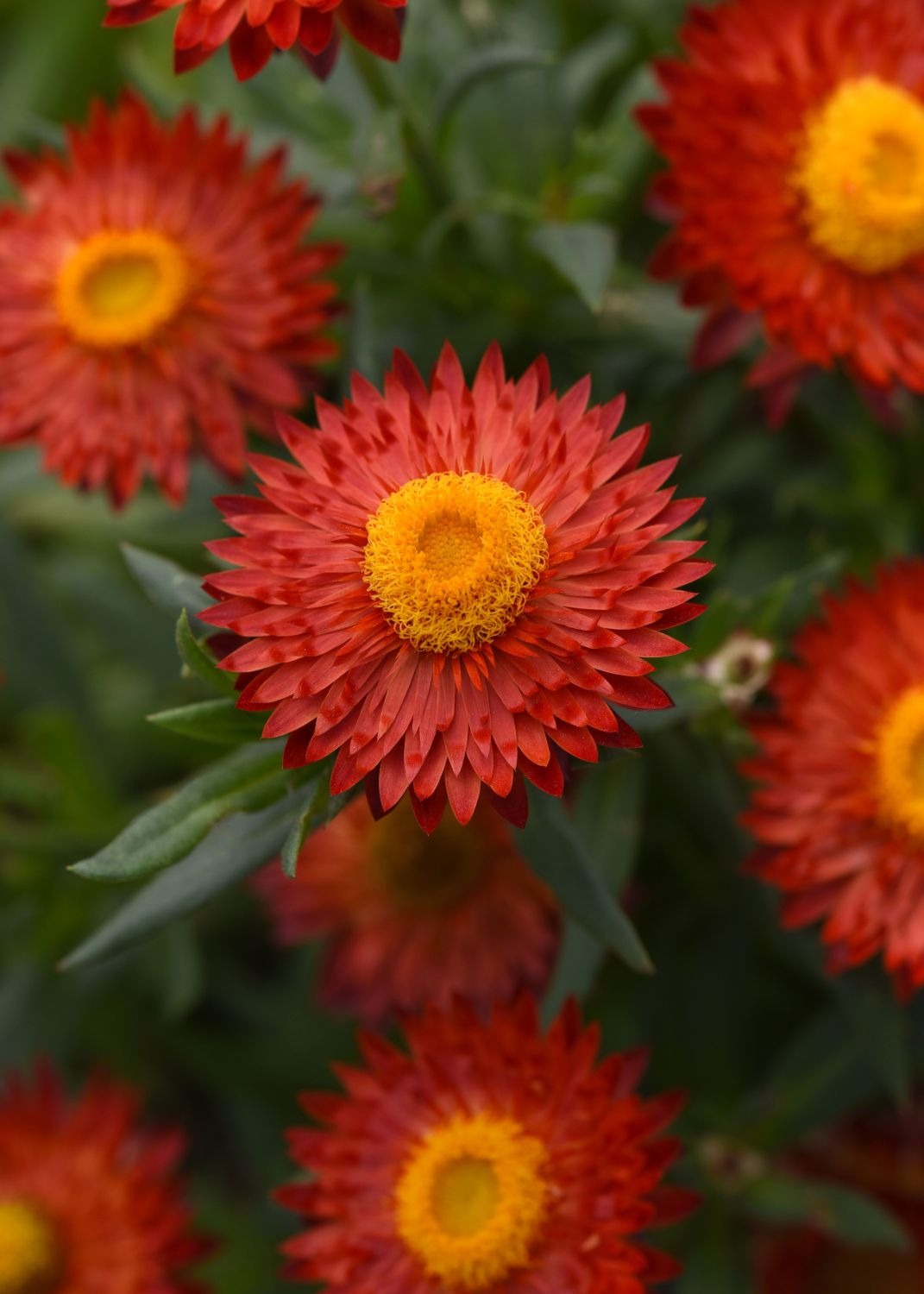
2026 年的年度花是「Sonnenglück」,学名 Bracteantha Mohave Fire Red,一年生草花,属麦秆菊一类(Strohblume)。这一品种的特点是花色浓烈:外围苞片是橙红到深红,中心是亮黄盘,随着日照增加红色还会继续加深。株高和冠幅都在 30 到 40 厘米之间,株型紧凑,叶片健康,整个生长期都保持长势,适合大盆和阳台箱,也能下地种在花畦里。花期覆盖整个夏季,对蜜蜂和蝴蝶来说都是蜜源。
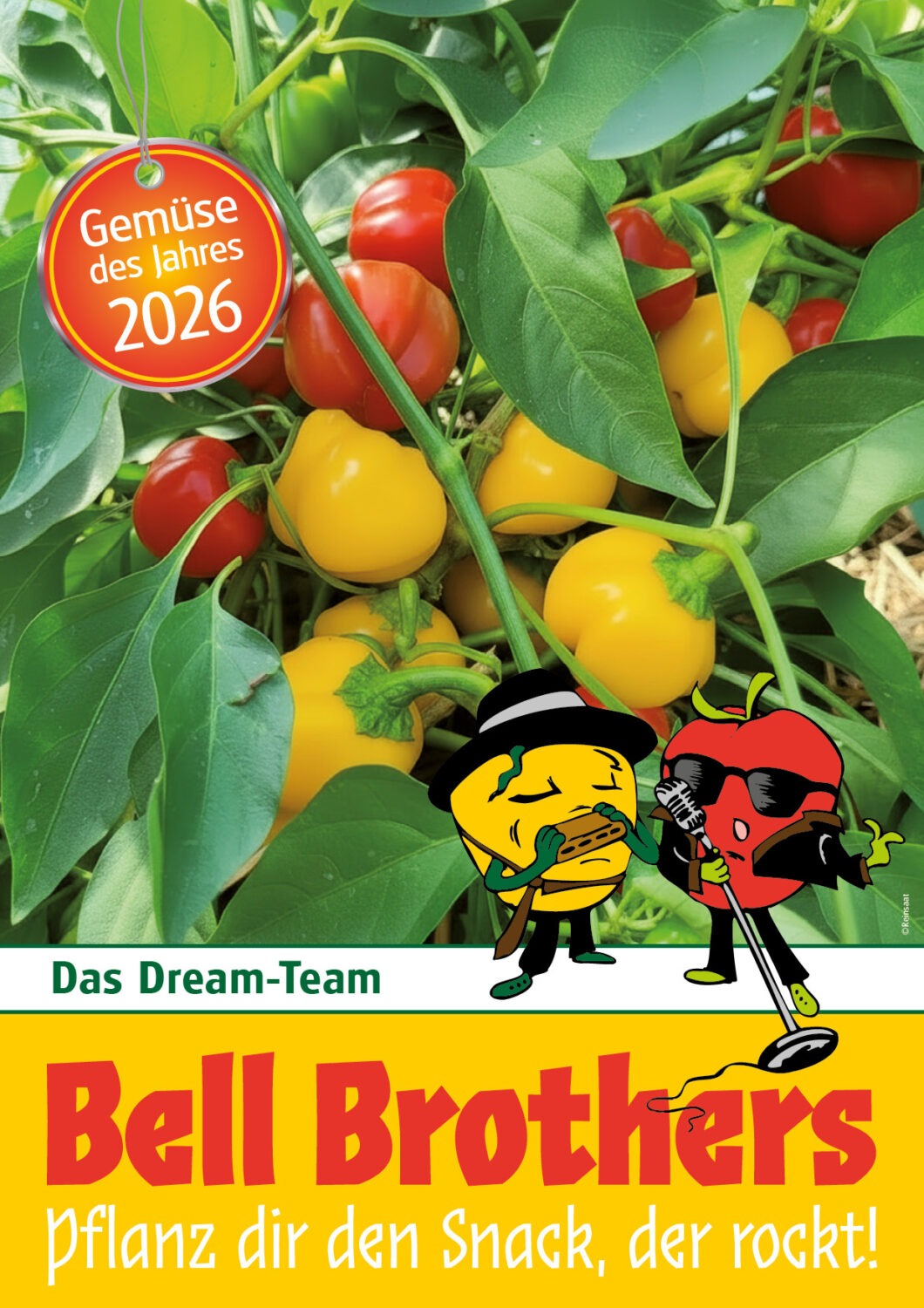
2026 年的年度菜是 Bell Brothers 甜椒,一个黄红双株组合——两株小果甜椒合栽一盆,一株黄、一株红,果实呈灯笼形。这是奥地利园丁联合会全国范围内评选的结果,萨尔茨堡这边照样跟着推。协会给的说法很实在:甜椒喜暖,跟所有茄果类一样要等过了冰圣节才能移出室外;栽在营养足、排水好的基质里能长到约 80 厘米高,植株较高,插一两根支竹防风倒。水分和肥都要跟上,用果菜肥最合适。果实甜香,小孩也喜欢直接从枝上摘着吃。
2027 年的年度花已经在评选中。协会 2026 年 8 月 28 日发布的一条消息说,全州园丁集体外出,专门为了选出这一年的年度花。
除了年度评选,协会还组织面向消费者的联合促销。2026 年秋天的 Herbstkisterlaktion(秋季花箱行动)由 17 家会员苗圃共同参加,各家在自家门口摆出秋季组合盆栽,顾客可以就近看货就近买。这类联合摆摊对旺季销量影响不小。
园艺学徒的培训通道与专业客户目录
协会在教育这块承担的主要职能,是把想当园丁的人引到合适的场子去。站的 Ausbildung 部分先讲入行条件:想做园丁的人,需要对环境有亲近感,喜欢动手,跟植物打交道时肯下功夫,并且愿意多干活。植物世界的多样性正好提供了很大的发挥空间。
想先看看再决定的人,可以到苗圃参加体验日(Schnuppertage)。协会的建议是通过站的「Anfragen」表单报名,因为它要按苗圃安排时间,不是随时去都有人接待。
在县内较大的城镇都有经认可的培训场可以接收学徒。学徒在企业里学的同时,还要去上 Berufsschule für Gärtner,位于 Wals 的 Kleßheim 农校。这是全州唯一的园丁职业学校,学徒按专业方向分班教学。
站上没有把培训场全部列在一页,而是给了一个 Fachbetriebe 名录入口,按园丁区和专业类别分别列,点进去能看到具体是哪家。萨尔茨堡州这边的 Berufsschule für Gärtner 与奥地利园丁行业协会(beruf-gaertner.at)是同一个体系里的:协会站把跨地区的培训场名录、招聘信息和继续教育都引到这个全国性的职业平台上去。
教育之外,协会还为专业客户整理了一份投入品目录。站上有一块 Gärtner-Profiprodukte 栏目,整理的是本州会员场子供应给专业客户的园艺投入品,分六个产品组:园艺基质(Gärtner Erden)、肥料(Gärtner Dünger)、植物保护(Gärtner Planzenschutz)、园艺专业用具(Gärtner Profizubehör)、植物强化剂(Pflanzenstärkungsmittel)、以及天敌昆虫(Nützlinge)。
以基质这一组为例,目录里列了十来种具体产品:盆栽土(Gärtner Blumenerde)、自然腐殖质培育土(Naturhum Gärtner Kulturerde)、阳台和种植土、高品质花箱土、墓园用土、花卉种植土、火山岩装饰颗粒(Gärtner Lärchendekor)、园艺纤维土(Gärtner Gartenfaser)、生物蔬菜与高床土、玫瑰土、种植土、泥炭花床土、桶栽植物用土。产品按用途分门别类,标明各自适合什么场景,是给专业买家看的技术清单,不是零售货架。
这一栏的意义在于把分散的技术信息集中起来。基质和肥料这类东西,单个园艺场子未必有条件做配方和技术说明,但各家都拿得到货源;协会把各家的货集中列一份目录,专业客户就能按用途对比,而不必逐家去问。
A self-governed trade body for one Austrian state
The Salzburger Gärtner und Gemüsebauern is the voluntary professional association for commercial horticulture in the Austrian state of Salzburg, registered as a Verein and based in the city of Salzburg. It is a recognised specialist body of the Salzburg Chamber of Agriculture (anerkannter Fachverband der Landwirtschaftskammer Salzburg) and a member of the Austrian national gardeners’ federation, the Bundesverband der Österreichischen Gärtner.
The association’s own site says it represents around 70 members. The member directory on the same site actually lists 64. The Salzburg local wiki entry says roughly 80, and an older third-party site claims over 100. These figures come from different sources and different years, and none of them explains the gap, so they are simply reproduced here rather than reconciled.
It runs on association statutes with a chairman, three deputies and a business manager. The chairman, Josef Lindner, is a trained master gardener and an Ökonomierat, a title awarded for outstanding service to Austrian agriculture. One of the deputies, Johann Winklhofer, additionally heads the vegetable-growing section. Nearly all of them also run nurseries of their own, which shows plainly in the joint promotions they organise.
The association’s contact page publishes its office address, landline and email, along with each board member’s home address, direct line and private email. None of that is reproduced here; the association’s site is the place to reach them.
Seven horticultural districts
The association divides the state into seven horticultural districts, and the directory lists each business by name, town and postal code, followed by a row of icons marking which trades it works in. Counting the entries gives: 13 in the city of Salzburg, 28 in Wals-Siezenheim, 10 in Flachgau, 5 in Pongau, 4 in Pinzgau, 2 in Tennengau and 2 in Lungau — 64 in total.
The distribution is heavily uneven. Wals-Siezenheim alone accounts for nearly half the list, while the city of Salzburg and Flachgau account for a dozen or so each, and the remaining three districts together hold only nine. Tennengau and Lungau have just two apiece. The pattern follows Salzburg’s topography: Flachgau is the flattest stretch of farmland in the state, with soil and climate suited to open-field cultivation, so vegetable growing concentrates there. Lungau and Pinzgau sit at high altitude, where open-field growing is restricted and most businesses turn instead to flowers and nurseries, which do not need the same amount of level ground.
The association also publishes a schematic map of the seven districts, showing only their positions and names. No individual nursery sites are marked on it.
The icons after each entry mark which of the trades that business works in.
The icons after each entry map to seven trades. Tallied across all 64 entries: Tallied across all 64 entries: ornamental plant growing 35, training establishments 30, vegetable growing 28, floristry 25, floral decoration 23, garden and landscape construction 14, tree nurseries 8. Most businesses work in more than one trade, so these figures add up to more than 64.
What the seven trades mean
Several of the names are easy to confuse in translation, so it is worth setting out what each actually covers.
Ornamental plant growing (Zierpflanzenbau) is the largest group at 35 businesses. These are nurseries producing pot plants, bedding plants and indoor foliage on a professional scale, from a few greenhouses to several dozen. This is the backbone of the association.
Tree nurseries (Baumschule) number just eight, the smallest category. The reason is inherent to the trade: a grafted fruit or ornamental tree takes years to reach saleable size and occupies ground for the whole time, so few operations can carry that. All eight are in Flachgau, Pongau and the city of Salzburg.
Vegetable growing (Gemüsebau) covers 28 businesses, of which 25 sit in Wals-Siezenheim alone, against just two in the city of Salzburg and one in Flachgau. Many entries in that district use the German double-surname pattern ending in “bauer”, a word for farmer, indicating family farms rather than larger commercial concerns; many of them also run organically.
Floral decoration (Blumenschmuckgärtner) covers 23 businesses that supply planters and floral installations to municipal greening, public buildings and events. The state of Salzburg runs a dedicated competition called “Salzburger Blumenschmuck” that the association helps organise, so this line of work has an established set of trade conventions and supply channels within the state.
Floristry (Floristik) covers 25 businesses making bouquets, baskets and gift arrangements. It overlaps with the previous category but is weighted differently: one supplies public landscaping in bulk, the other sells to individual buyers.
Garden and landscape construction (Garten- und Landschaftsbau) covers 14 businesses doing design, paving, planting and maintenance work.
Training establishments (Lehrbetrieb) number 30, close to half the directory and the broadest of the seven categories. This is not a line of business but a qualification mark: any business carrying it is recognised by the Salzburg Chamber of Commerce and may take on and train garden apprentices. That figure speaks for the state’s capacity to absorb horticultural apprentices.
Open days and the annual plant of the year
Every year the association organises open days across nurseries in the state, usually in late April. For 2026 the date was 25 April. On the same day the association announced that year’s flower and vegetable, both chosen by the state’s own nurseries rather than designated nationally.
The 2026 flower of the year is “Sonnenglück”, botanically Bracteantha Mohave Fire Red, an annual from the immortelle group (Strohblume, the strawflower family). It is valued for intense colour: orange-red to deep red bracts around a bright yellow centre, with the red deepening as sunlight increases through the season. It reaches 30 to 40 cm in both height and spread, stays compact, keeps healthy foliage and holds its vigour right through the season. It suits large containers and balcony boxes, and also works in a flower bed. It flowers all summer and gives bees and butterflies a source of food.
The 2026 vegetable of the year is the Bell Brothers pepper, a yellow-and-red pairing — two small-fruited peppers planted together in one pot, one yellow and one deep red, the fruit bell-shaped. This one was chosen across Austria by the national gardeners’ federation, and Salzburg promotes it in turn. The association’s advice is practical: peppers are warmth-loving, and like all fruiting vegetables they should not go outdoors until the cold snaps have passed. In a nutrient-rich, free-draining substrate they reach about 80 cm, so one or two canes are worth adding to stop them snapping in wind. Water and feeding need to be generous; a fruiting-vegetable fertiliser is the right choice. They do well in containers, are straightforward to look after, and the sweet fruit is usually picked straight from the plant by the children themselves.
The flower of the year for 2027 is already being chosen. A news item the association posted on 28 August 2026 reports that growers from across the state travelled out together specifically to make the selection.
Alongside the annual naming, the association runs joint consumer promotions. The autumn 2026 Herbstkisterlaktion brought together 17 member nurseries, each displaying autumn planter combinations outside its own premises so customers could look and buy locally. Such joint trading has a noticeable effect on peak-season sales.
Training routes and a trade catalogue
The association’s main educational function is to direct people who want to become gardeners towards suitable businesses. The Ausbildung section starts with the entry requirements: an inclination towards the environment, a liking for working with plants, creativity, willingness to put in the effort, and the ability to handle physical work. The sheer variety of the plant world provides a wide field to work in.
Anyone who wants a look before deciding can spend a taster day (Schnuppertage) at a nursery. The association recommends registering through the site’s Anfragen form, because the nurseries schedule these by appointment rather than taking walk-ins.
Recognised training businesses in the larger towns of the state take on apprentices. Alongside in-company training, apprentices attend the Berufsschule für Gärtner at Kleßheim farm school in Wals, the state’s only horticultural vocational school, where classes are split by specialisation.
The site does not put all the training businesses on one page. It offers an entry into the Fachbetriebe directory, filterable by district and by trade, listing which specific business is which. On the Salzburg side this school forms part of the same system as beruf-gaertner.at, the national occupational platform: the association site sends visitors there for training establishments in other regions, job listings and continuing education.
Beyond education, the association compiles an input catalogue for trade buyers. The site carries a Gärtner-Profiprodukte section listing horticultural inputs supplied by member businesses to professional customers, in six product groups: growing media, fertilisers, plant protection, professional equipment, plant strengtheners and beneficial insects.
The growing media group alone lists about a dozen specific products: potting compost, a natural humus-based cultivation soil, a quality balcony and planting soil, grave-side soil, flower and planting soil, a lava-decoration granulate, garden fibre, organic vegetable and raised-bed soil, rose soil, planting soil, peat-based bedding soil and container soil. Each is filed by use case and described in terms of what it suits, which makes this a technical reference list rather than a retail shelf.
The value of the section is the consolidation of scattered technical information. Individual nurseries may not have the facilities to formulate growing media or to write the usage notes themselves, but they all have access to supply; by collecting the range in one catalogue, trade buyers can compare products by purpose instead of having to ask each business in turn.
相关文章:
 奥地利 下奥地利州园丁协会 NÖ Gärtner – 250 余家商业苗圃的行业团体
 奥地利 萨尔斯堡园林设计师 – 园林设计施工企业
 奥地利 苗圃和多年生园丁协会 Baumschulinfo – 78 家会员的行业团体
 美国 FindNurseries.com 苗圃目录 – 面向园艺爱好者和苗圃业主的在线行业目录站
 美国 园艺产业基金会 AmericanHort – 代表美国园艺全产业链的全国性行业组织
 德国 石勒苏益格‑荷尔斯泰因州苗圃联合会 – 欧洲最大连片苗圃区行业团体
 美国 马萨诸塞州苗圃和景观协会 – 推动环境园艺行业的专业化与可持续发展
 英国 HTA 园艺行业协会 – 自 1899 年起代表英国园艺行业
发表回复