
两千平方米里的四千种高山植物
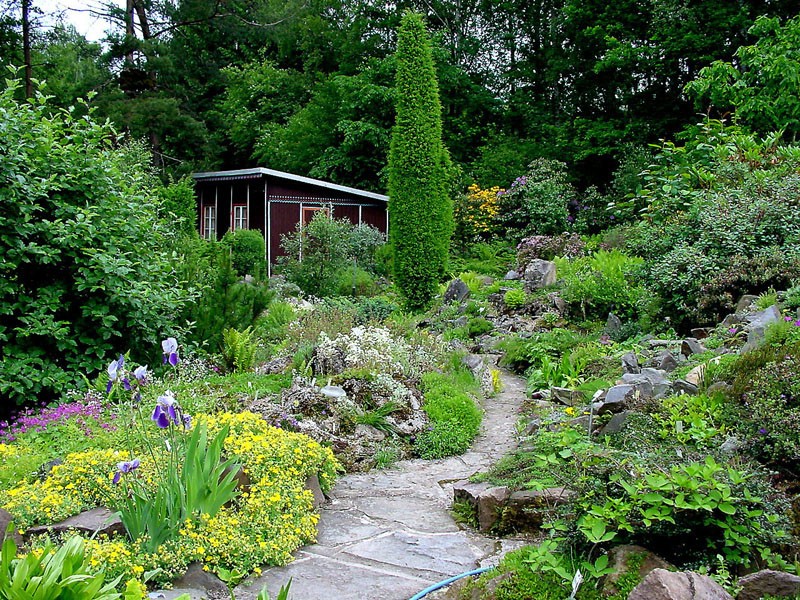
Arktisch-Alpiner-Garten der Walter-Meusel-Stiftung 是一座北极高山植物园,在德国萨克森州开姆尼茨市东北缘,海拔 352 米,方位是北纬 50 度 53 分、东经 12 度 56 分。整座园子连建筑算在一起只有 2000 平方米,却种着约 4000 个植物种,主产自全球寒冷到温带地区,按地理、生态和社会学三个维度分区布置。
园主 Walter Meusel(1922–1990)本是音乐家、作曲家,也写了不少动物学和植物学著作,1956 年建园并一直私下经营。他去世后,沃尔特·默塞尔基金会接手,负责管理他的音乐和文学遗产、维持和延续这座植物园,并资助相关的研究项目。基金会的宗旨是促进文化和科学目的、自然保护与景观管理,因非营利性质可以开具捐赠收据。
收集的是冷地植物
园里的重点收藏有四块:柳属(Salix)、杜鹃花科(Ericaceae)、蕨类(Pteridophyta),以及新西兰高山植物。岩梅科(Saxifragaceae)、喜马拉雅、东亚、高加索、南北美洲、巴尔干山地和阿尔卑斯,以及欧洲各地中海拔山地的植物也占了相当比重。每一株的来源都做了数据化登记,这使得精确的科学工作成为可能。
有几种是园里的招牌。银莲花科的银露梅(Dryas octopetala)是北半球典型的北极高山种,也是园徽上画的那株。鹿蹄草属的 Cassiope mertensiana 环绕北半球分布,在北极苔原和欧亚、北美的高山带都常见,是一座垫状、生长在风口的小植物,被称作这座园子的代表性植物。柳属里的 Salix ivigtutiana 高只有 1 到 1.5 厘米,是世界上最小的柳树之一,原产格陵兰西南部。
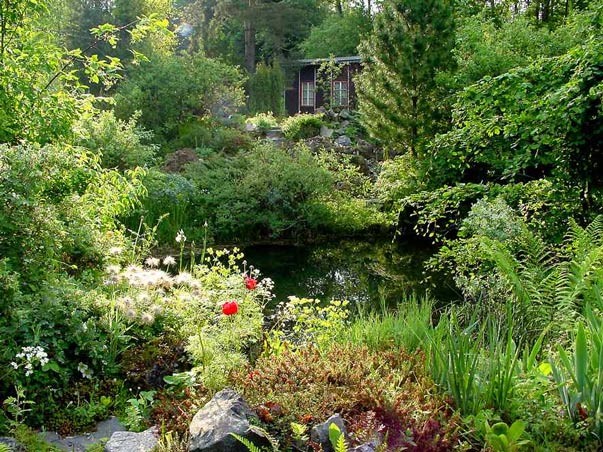
园里的地形起伏做得很有层次,不只是为了好看,还为特定植物造出合适的小生境,同时也给两栖类、爬行类、昆虫、软体动物、小型哺乳动物和三十多种鸟类留下空间。园中另设露天生态池,按自然的方式展示青蛙、钝口螈、火蝾螈和蛇类。火蝾螈在萨克森和德国其他地区都明显衰退,园里靠人工繁育把这批数量补了回来,从蝌蚪到成体的各个阶段和体形都能看到。
研究、种子交换与自办刊物
除了对外开放,基金会还承担物种保护项目。萨克森的数据并不乐观:据州环境部门,境内原有的动植物种每年都有八种以上消失,过去三十年里已有将近 10% 的本地种在野外灭绝,剩下的一半以上仍受威胁。园里的做法是跟当地自然保护区、州环境局、图林根州环境机构以及巴伐利亚上弗兰肯地区的行政机构合作,为稀有和濒危植物保住种群、重建原生地、让存量恢复。
已经完成的项目包括:南萨克森蛇纹岩植物群的保护与重新引入的移植处理,濒危蕨类在当地的种群维护,莱比锡专区最后一批梳状鳞毛蕨(Dryopteris cristata)的保育,以及 Waldheim 附近蛇纹岩条纹蕨的原地养护。银露梅属(Dryas)在萨克森的项目以野外种群记录和生境保护为主。银莲花科的 Pulsatilla vulgaris 在萨克森只剩最后一处野生种群,2012 到 2018 年专门做了保护与种群恢复项目。
研究方面也有持续产出。区域项目是在波希米亚—萨克森易北砂岩山地做珍稀与濒危蕨类调查,跨州项目则包括 Postelwitz 的蕨类峡谷。有人在这里描述过新种,比如意大利瓦雷泽省南部前阿尔卑斯一个地方性特有种 Primula hirsuta subsp. valcuvianensis,以及 2008 年在上弗兰肯蛇纹岩上发现的新蕨类杂交种 Asplenium × wojaense,2011 年又发表了 Dryopteris affinis 复合群里的新种 Dryopteris lacunosa。相关论文多发在《Kochia》这类植物分类学期刊上。
园里采收的种子通过国际种子交换提供给世界各地许多植物园。基金会还办了一份不定期的专页系列《Sammelblätter Gebirgspflanzen》,每期讲一个植物类群的形态识别、产地与地理分布,以及栽培方法,还会在导论部分介绍名称来源和民间药用。这套系列最早由 Walter Meusel 发起,一直发行到 1989 年由 Karl-Marx-Stadt 的植物市场承接销售,如今逐步重新编辑、按 A5 开本出版,每年出三到十期,三月底或四月初寄出。完整收藏另有 CD 版,订阅价 14.90 欧元。
现行可读的主题有:Eritrichium、Cyathodes 与 Leucopogon、Pentachondra、岩梅属 Xanthizoon 组,以及南肋脉蕨属 Austroblechnum 等。
买苗和目录
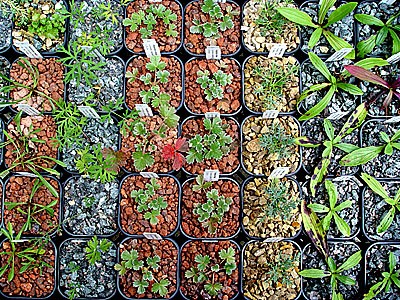
园里卖高山植物、矮生木本、蕨类和柳树,供应石头园、草原花园、荒原花园和高山温室之用。苗用种子或孢子繁殖,也走扦插、分株等无性繁殖,每个克隆后面都注明原始来源——这样同一物种里既有生长慢、株形小的克隆,也有长得快、株形大的,来源已不可考的则在括号里注明自然分布范围。店家保证所售品种的真实性,合理的异议照办。植物来自露天栽培,不受化肥和其他化学药剂影响。
报价与价格目录每年一月底或二月初出一版,2026 年版是 20 页的 PDF,分高山植物(3–17 页)、石南类与木本(18–23)、蕨类(23–24)、柳树(24–26)、新西兰澳大利亚南部与南美高山植物(26–31),最后是《Sammelblätter》目录索引(32–39)。多数植物用 7×7×8 厘米的再生材料盆装,价格已含 7% 销售税,单株 2 欧起、最高 49.90 欧。植物的发货期是四月底到十月中。目录可以只取文字版,也可以取带图的版本,取图版要另加钱;填好的订购单既可发邮件也可邮寄,付款在收到货后 14 天内结清。
运费按件算:德国境内每件(20 公斤以内)13.90 欧,欧洲境内 10 公斤以内 24 欧、20 公斤以内 29 欧,30 欧元起才寄。买得多有折扣,满 150 欧 5%、300 欧 10%、500 欧 15%。另外,订植物的人需要承诺遵守《生物多样性公约》关于植物材料商业化的规定。
开放日和捐款
因为要兼顾公众教育、物种保护和科研,园子对公众开放并卖苗的日子集中在每周三 9 点到 18 点,开放期是 4 月 15 日到 10 月 7 日;其他日子需电话约。2026 年的开放日定在 5 月 6 日星期三 9 点到 18 点,主题是「迷人的植物日」。另外还参加珍稀植物交换市集,2026 年 8 月 29 日和 30 日在爱尔福特,另有高山植物爱好者聚会在费希特万根举行,日期待定。
基金的维持靠开姆尼茨市文化领域和市绿化部门的共同投入,也得到萨克森州和市两级财政的支持。2025 年欧洲文化之都之年,基金会还获得一笔州里的专项经费,用于修补工作间、材料与基质仓库的屋顶、修围栏、做冬季与夏季防护、树木灌木养护、灌溉、办公照明和办公设备更新,并部分负担更换老旧工作车的费用。园里许多工作由志愿者完成,因此基金会依靠捐款。捐款满 20 欧可按需选一款印有园中植物的特别邮票,售价 1.60 欧。
地址与联系方式在站上的版权说明页里,写到开姆尼茨市一级;门牌号、电话、传真、邮箱和银行账户这些细节不在文章里重复。参观与购买都建议先联系再约时间。
Four Thousand Alpine Plants in Two Thousand Square Metres
The Arktisch-Alpiner-Garten der Walter-Meusel-Stiftung is an arctic and alpine botanical garden on the northeastern edge of Chemnitz in Saxony, Germany, at 352 metres above sea level, at 50 degrees 53 minutes north and 12 degrees 56 minutes east. The whole garden, buildings included, covers just 2,000 square metres, yet it holds around 4,000 plant species, mainly from cold to temperate regions of the world, laid out by geographical, ecological and plant-sociological criteria.
Walter Meusel (1922–1990), a musician and composer who also wrote a good number of zoological and botanical books, founded the garden in 1956 and ran it privately for the rest of his life. After his death the Walter Meusel Foundation took over, managing his musical and literary estate, keeping the garden going and funding the research that goes with it. The foundation is a non-profit body working for cultural and scientific purposes, for nature conservation and landscape maintenance, and can issue donation receipts.
A Collection of Cold-Country Plants
Four collections stand out: willows (Salix), heath family plants (Ericaceae), ferns (Pteridophyta) and plants of the high mountains of New Zealand. Saxifragaceae, and plants from the Himalaya, East Asia, the Caucasus, North and South America, the Balkan mountains and the Alps, together with the European low mountain ranges, are also well represented. The origin of every plant is recorded in a database, which makes exact scientific work possible.
Several plants are the garden’s signature. Dryas octopetala, the silverwurt, is a typical arctic-alpine species of the northern hemisphere and is the plant drawn on the garden’s emblem. Cassiope mertensiana, the heath, is circumpolar, found in arctic tundra and in the high mountains of Eurasia and North America, a small mat-forming plant of wind-scoured sites; it is the garden’s emblematic plant. Salix ivigtutiana, at one to one and a half centimetres tall, is among the smallest willows in the world and comes from southwest Greenland.
The varied relief of the garden does more than please the eye: it creates the small habitats particular plants need, and does the same for amphibians and reptiles, insects, molluscs, small mammals and more than thirty bird species. There are also open-air terrariums where frogs, newts, fire salamanders and snakes are shown in settings built on natural principles. The fire salamander, in sharp decline in Saxony and elsewhere in Germany, is even being bred here successfully, so that larvae through to fully grown animals can be seen at every stage and size.
Research, Seed Exchange and Its Own Leaflets
Alongside opening to the public, the foundation runs species conservation projects. The figures for Saxony are not encouraging: according to the state environment ministry, more than eight animal and plant species disappear from the state every year, and close to ten per cent of the species once native there have become extinct in the wild over the past thirty years, with more than a third of what remains under threat. The garden’s approach is to work with the conservation authorities, the state environment agency, the Thuringian state environment and geology agency and, in northern Bavaria, the government of Upper Franconia, in order to preserve populations of rare and strongly endangered plants, restore their sites and rebuild their stocks.
Completed projects include conserving the serpentinite flora of southern Saxony, tending the sites and replanting potential ones, documenting occurrences and preserving endangered fern populations in southern Saxony, securing the last population of the crested fern (Dryopteris cristata) in the Leipzig administrative district, tending the serpentinite spleenwort sites near Waldheim, and, for Dryas in Saxony, documenting occurrences and protecting the sites. The project on Pulsatilla vulgaris, the pasque flower, covered the last remaining occurrence in Saxony with a conservation and regeneration programme running from 2012 to 2018.
The research output is continuous. A regional project surveys rare and critically endangered ferns in the Bohemian-Saxon Elbe Sandstone Mountains, across the state border, looking at historical records, current distribution, present condition and possibilities for conservation. Cross-regional projects include the fern-rich gorge in Saxon Switzerland near Postelwitz. Several taxa have been described from here, among them Primula hirsuta subsp. valcuvianensis, a local endemic of the southern pre-Alps in the province of Varese, and in 2008 the new spleenwort hybrid Asplenium × wojaense on serpentinite in Upper Franconia; in 2011 the new species Dryopteris lacunosa of the Dryopteris affinis group was published. The associated papers appear in taxonomic journals such as Kochia.
Seed collected in the garden is made available to botanical gardens all over the world through the international seed exchange. The foundation also publishes a loose-leaf series, Sammelblätter Gebirgspflanzen, each issue dealing with the identification features, occurrence and geographical distribution of a particular plant group, plus its garden cultivation, with a general introduction covering name origins and folk uses. The series was initiated by Walter Meusel, distributed until 1989 by the Pflanzenbasar in Karl-Marx-Stadt, and is now gradually reworked and issued in A5 format, with three to ten new topics a year posted out in late March or early April. The complete collection is also available on CD, with a subscription of 14.90 euros.
Topics currently available include Eritrichium, Cyathodes and Leucopogon, Pentachondra, Saxifraga section Xanthizoon, and Austroblechnum, the southern-ribbed ferns.
Buying Plants and the Catalogue
The garden sells alpine plants, dwarf woody plants, ferns and willows, for rock gardens, steppe and heath gardens and alpine houses. Plants are propagated from seed or spore, or vegetatively by cuttings and division, and the original provenance is given behind each clone. That is useful, because a single species can have both slow-growing, small clones and fast, larger ones; where the origin is no longer known, the natural range is given in brackets. The nursery guarantees the identity of the species offered and will act on justified complaints. The plants come from outdoor culture and are unaffected by chemical fertilisers or other chemical agents.
The offer and price catalogue appears once a year at the end of January or in early February. The 2026 edition is a 20 page PDF: mountain plants on pages 3 to 17, heaths and woody plants 18 to 23, ferns 23 to 24, willows 24 to 26, plants of the high mountains of New Zealand, Australia, South Africa and South America 26 to 31, and an index of the Sammelblätter leaflets on 32 to 39. Most plants are supplied in 7 by 7 by 8 cm pots made of recycled material; the prices include 7 per cent VAT, and single plants start at 2 euros and go up to 49.90. Plants are shipped from the end of April to the middle of October. The catalogue can be obtained without pictures, and the illustrated version costs extra; completed order forms can be sent by email or post, and payment falls due 14 days after the invoice.
Shipping is charged per parcel: within Germany 13.90 euros up to 20 kilos, and for Europe the fastest service costs 24 euros up to 10 kilos and 29 euros up to 20 kilos, with a minimum goods value of 30 euros. There is a discount on plant purchases: 5 per cent from 150 euros, 10 per cent from 300 and 15 per cent from 500. Buyers of plants also undertake to observe the rules of the Convention on Biological Diversity as they apply to the commercialisation of plant material.
Opening Days and Donations
Because the garden is also busy with public education, species conservation and scientific projects, the days on which it is open to visitors and sells plants are limited to Wednesdays from 9am to 6pm, between 15 April and 7 October; other days are by telephone arrangement. The 2026 open day falls on Wednesday 6 May, 9am to 6pm, under the motto Tag der faszinierenden Pflanzen. The garden also takes part in rare plant exchange fairs, at Erfurt on 29 and 30 August 2026, and at an alpine plant enthusiasts’ gathering in Feuchtwangen whose date is still to be announced.
The garden is kept going by the city of Chemnitz through its cultural programme and its green spaces department, with state and municipal funding. In 2025, the European Capital of Culture year, the foundation was granted a sum from the state’s investment reinforcement funds, which went to urgent work on the roofs of the work, storage and substrate sheds, fence repairs, winter and summer protection, tree and shrub care, irrigation, lighting and office equipment, and part of the deposit for replacing the old and faulty company vehicle. Much of the work of keeping the garden is done by volunteers, so the foundation depends on donations. From 20 euros of donations you can choose a special stamp featuring a plant from the garden, at 1.60 euros each.
The address and contact details are on the site’s legal notice, and are given here down to the city of Chemnitz; the house number, telephone, fax, email address and bank details are not repeated. Visiting and buying both work best by arranging contact in advance.
相关文章:
 挪威 Tromsø 北极高山植物园 – 世界上最靠北的植物园
 德国 Park der Gärten – 德国规模最大的主题花园园区之一杜鹃特色收藏
 德国 高山多年生植物苗圃 Alpine Staudengärtnerei – 百种高山植物与矮生木本
 德国 Peters 苗圃 – 四代家族专营多年生和高山植物苗圃
 德国 Zwickauer 岩石园协会 – 德国岩石园艺爱好者团体
 德国 Reinhard Böttger 龙胆苗圃 – 龙胆与高山植物私人栽培园
 加拿大 安大略蕨类 Ontario Ferns – 蕨类在线野外图鉴
 加拿大 魁北克高山与岩石园协会 – 让魁北克园艺爱好者认识全球高山植物
发表回复