
做郁金香球茎的全球专门户
Haakman Flowerbulbs B.V. 是一家荷兰北霍兰省 Wervershoof 的郁金香球茎出口商,**用公司自己的话说,是「做郁金香球茎这件事上的全球绝对专门户」**。它只做郁金香球茎,不掺别的:产品出口给全世界的种植者,供催花用、干售用,也供采摘花园用。
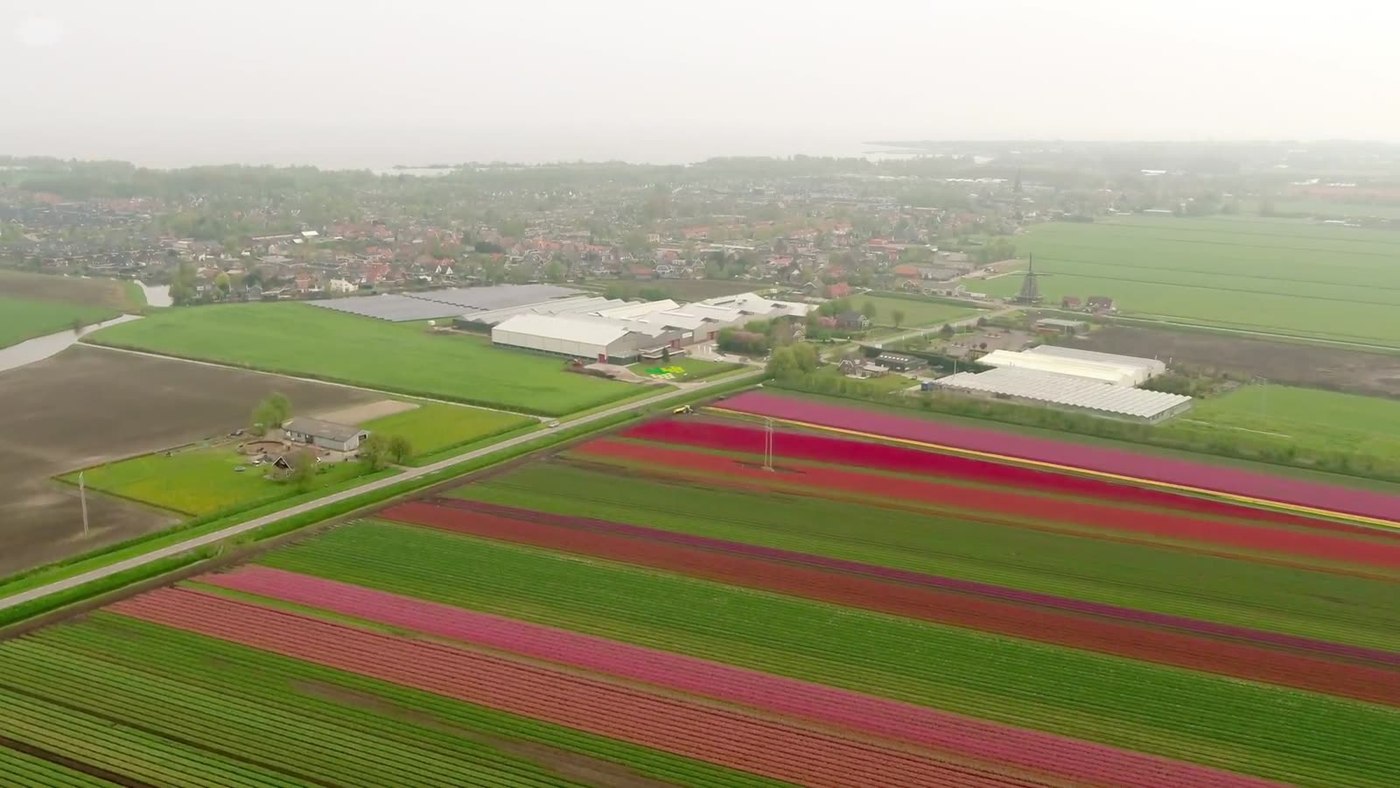
厂区在 Wervershoof——荷兰球茎区的中心地带。**面积 22,100 平方米,其中 15 间先进的冷库可以同时存放 1.5 亿颗郁金香球茎**,温度常年稳定在 20 至 23 摄氏度,这是准备送往催花端的球茎的理想储藏温度。公司自建了试验催花设施,另有一个新西兰分部,靠这两样实现了全年供货。
需要说明的是,站上公开了完整的街道地址、邮编、办公电话和邮箱。本站不转录这些内容,想联系请直接访问公司站。
从收购、分级到催花的一整条链
这家公司的业务不是简单地「买进卖出」,而是把球茎从进门到上货架的每一步都握在自己手里。
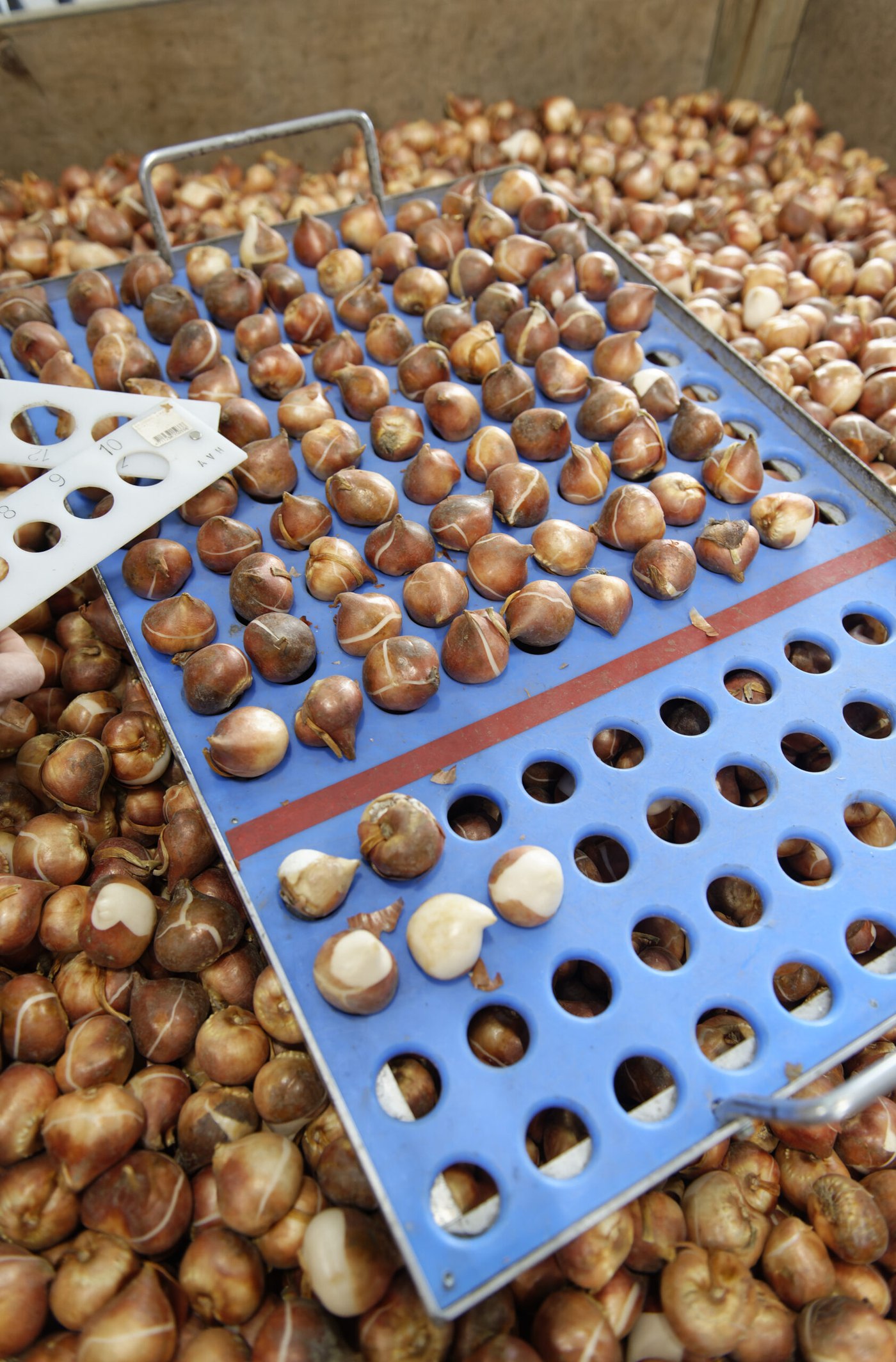
进货检验是这条链的起点。公司有专门的质检员负责进库和出库两端,进货检验在交货之后立刻开始。做法是用一只标志性的蓝色分格检验盘,100 个格子——每一批抽 100 颗球茎,逐颗目视评估,检查质量并核对是否达到约定的规格。不合格或形状不规整的球茎单独挑出来。100 颗全部检完,结果汇总并做数字化记录,**这样每一批货在到货那一刻就有清晰可靠的质量画像**。
分级与准备同样是自己做的。现代仓库里有分选台,把大量球茎按大小、品级分开,同时核对内部品质和发育阶段——后面的冷却环节要按这个结果调整。公司还请了一位郁金香准备方面的专家常年驻场协作。
出口覆盖多种催花方式:温室里的土培、黑色塑料筐装土催花,以及水培筐催花。球茎先在自家仓库里按程序准备好,再发往客户所在的温室。公司常年在 Wervershoof 办开放日,把全品种摆出来开花展示,同时也能提供备货方法和催花排期表。
自有催花是这家公司最不寻常的一点。H&M Flowers 成立于 2010 年,是一家独立的催花企业,服务欧洲的零售商和超市;公司从 10 月到次年 6 月自己生产 **3,000 万支切花郁金香**,供应零售和批发渠道。按 Tulip Trade Event 上他们自己的说法,**他们是唯一一家同时自己种郁金香花的球茎出口商**——这个「唯一」是他们的自我表述,但确实少见。
433 个品种,用九类九色筛
品种目录是这家公司对外的门面。目录按作物分类,每一类下列具体品种,并可以直接按品种名检索。**当前目录里共有 433 个品种**,从 Aafke、Abba、Activa 一路排到 Yukon、Zambesi。
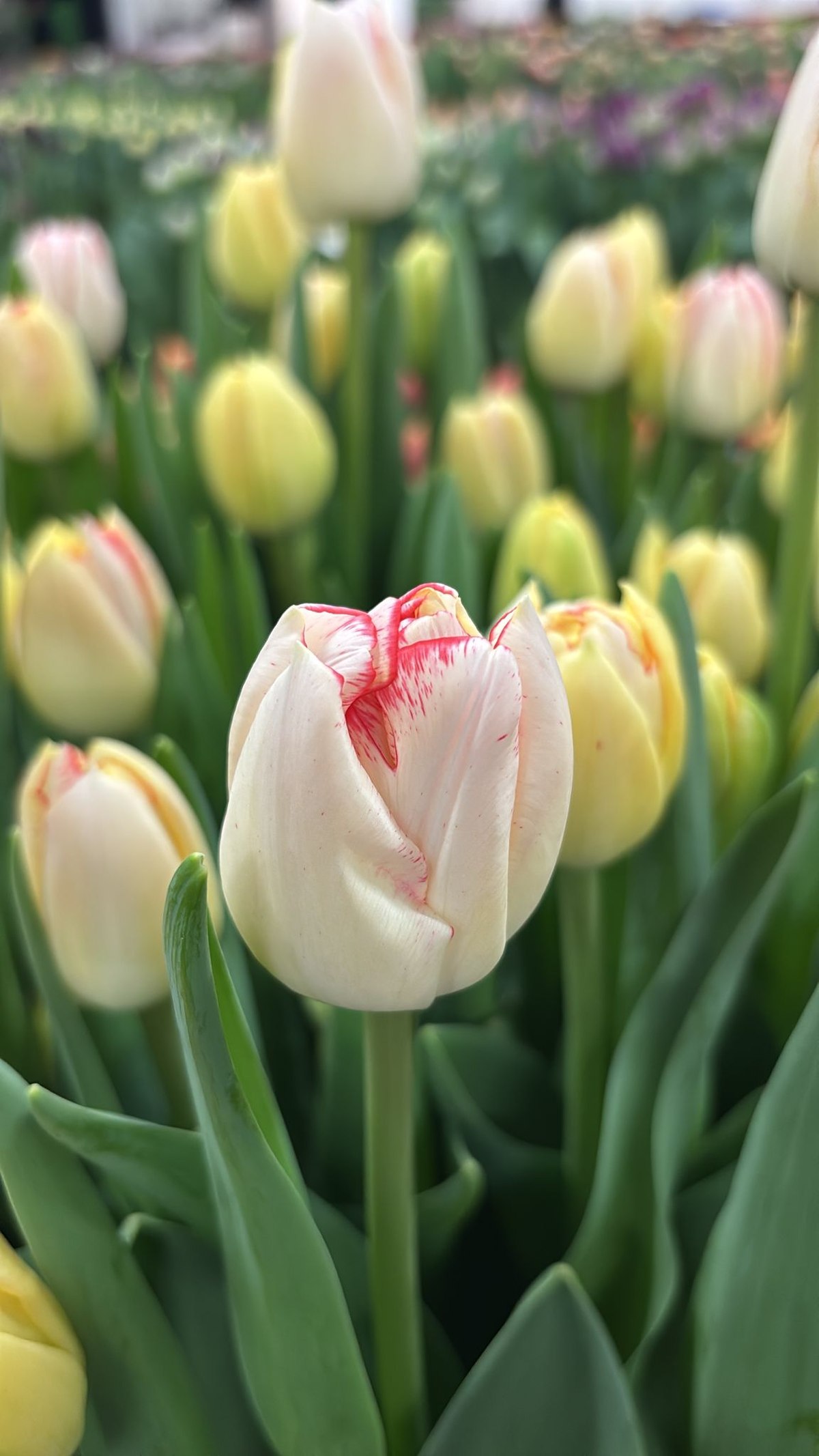
筛选维度分四组。品种群共九类:Triumph 206 个、Dubbel vroeg 70 个、Gefranjerd 31 个、Darwin Hybride 19 个、Dubbel laat 17 个、Enkel vroeg 14 个、Parkiet 10 个、Coronet 4 个、Leliebloemig 1 个——归入品种群的有 372 个,其余 61 个尚未归类。颜色有十种:红 58、粉 67、紫 49、白 41、黄 28、橙 19、杏 13、奶油 9、淡紫 6、褐 1 个。此外还能按**花期**(早、中、晚)、**株高**(矮、正常、高)、**储藏温度**(9°C 与 5°C 适配)、**水培适配**和**适宜栽种周次**(第 43 至 52 周)来筛。
温度这一栏是给催花客户用的实操信息——同一批球茎能不能进 5°C 或 9°C 的库,直接决定后面能不能接上生产排期。栽种周次同理,标的是 Plantweek 口径,让买家知道自己该在什么时候把货接过去。
用调温和充气代替农药
郁金香球茎最麻烦的害ers之一是郁金香瘿螨。公司的做法不是上化学药剂,而是用 CATT(Controlled Atmosphere Temperature Treatment,受控大气温度处理):在密闭空间里靠温度、氧气和二氧化碳的组合把螨虫杀死,全程不用化学农药。
这套设施是 2026 年 7 月正式全面投用的。首批处理成功后,到发稿时已经完成了超过二十五次处理。处理过程中条件全程连续监测,而**处理效果的前提是球茎到货时足够干净干燥**——这一点公司写在新闻里当作对种植户的明确要求。
公司整体的可持续做法也写在专门的页面上:Wervershoof 的冷藏与催花设施**完全不用燃气,全部用电**,其中很大一部分来自自建屋顶光伏;配热泵和含水层蓄热系统(ATES)实现供热与制冷,不动化石燃料。温室用 LED 照明和多层幕布、风机变频控制来压能耗,同时防止光污染、保留绿地、分开人车流线。公司还在研究未来把多余的热和能源供给附近的住户。认证方面,公司持有 MPS 徽章,并于 2026 年 6 月 11 日取得 **MPS-Florimark GTP(良好贸易规范)** 认证,证书编号 913090,有效期至 2029 年 6 月 10 日。
展会、Keukenhof 和走出去
这家公司在两件事上挺显眼。
一是自己办展会。每年三月,它联合荷兰其他出口商开放三天,让客户来看全品种开花的效果、聊新趋势和栽培方法。2025 年 3 月 19 至 21 日办的是 Dutch Tulip Show,2026 年 3 月 18 至 20 日同一场地改称 Tulip Trade Event,2024 年那场来了将近 250 位访客。这类开放日在荷兰球茎圈子里已经成了惯例,Haakman 是常驻主办方之一。展会之外,它还每年出一本自己的日历海报,从 2021 年这一本一直排到了 2027 年这一本。
二是Keukenhof。它是这座花园的官方供应商,2026 年正式拿到「Valued Exhibitor of Keukenhof」供应商证书。公司对此的表述是:贡献不只是提供合格的球茎,更是把自己对这行的知识、经验和感情分享给国际观众——毕竟一株郁金香要走到盛放,需要多少手艺、照料和前期准备,做球茎的人最清楚。
再往外是走出去的部分。2026 年 6 月,公司在哈萨克斯坦阿斯塔纳的 Flora Expo 展会上展出郁金香与球茎,面向哈萨克斯坦以及乌兹别克斯坦、中国等邻国的来访者。同年 9 月,在印度班加罗尔的 HortiConnect India / AgriCon India 2026 上,公司在长期合作伙伴 Indam Seeds 的展位上设点,商业总监 D.J. Haakman 与卡纳塔克邦首席部长 D.K. Shivakumar 会面,并当面送上一株黄色郁金香。
管理层是一支家族与职业经理人混合的队伍:商业总监兼销售经理 D.J. Haakman、总经理兼运营总监 Michiel Kruijer、销售经理 Stijn Meijer,另有已退休担任顾问的 Dick Haakman、球茎准备专家 Alex Laan 和财务负责人 Marcel de Wit。
A global tulip bulb specialist
Haakman Flowerbulbs B.V. is a tulip bulb exporter from Wervershoof in North Holland, the Netherlands, and in the company’s own words an absolute global specialist when it comes to tulip bulbs. It does nothing else: the bulbs go out to growers all over the world for forcing, for dry sale and for picking gardens.
The site sits in Wervershoof, in the very centre of the Dutch bulb region. Within 22,100 m² of premises, fifteen advanced cold storage cells hold more than 150 million tulip bulbs at a time, with the temperature constantly stabilised between 20 and 23 degrees Celsius — the ideal storage temperature for bulbs destined for forcing. An in-house test forcing facility and a branch in New Zealand together make year-round supply possible.
The site publishes the full street address, postal code, office telephone and email address. None of that is reproduced here; the company’s site is the place to reach them.
From intake and grading to forcing
The business is not simply buying and selling. Every step from the bulb arriving to the bulb going out is held in the company’s own hands.
Incoming inspection is where the chain begins. A dedicated quality inspector is responsible for both the incoming and the outgoing check, and inspection starts the moment a delivery lands. The method is a characteristic blue inspection tray with 100 compartments: 100 bulbs are selected from every lot and assessed one by one, checking quality and whether they meet the agreed specification. Bulbs that fall short or show irregularities are set aside separately. Once all 100 have been checked, the result is evaluated and recorded digitally, so that every lot has a clear and reliable picture of its quality the moment it arrives.
Grading and preparation are likewise done in house. The modern warehouse holds sorting stations where large quantities of bulbs are separated by size and grade, while internal quality and development stage are checked — the cooling process that follows is then adjusted to the result. The company also works with an expert in tulip preparation who is associated with it.
Export covers several ways of forcing: in the ground in the greenhouse, in black plastic crates with soil under glass, and in hydroponic crates, that is water forcing, also for use in greenhouses. The bulbs are properly prepared in the company’s own warehouse before they go out. Open days are held regularly in Wervershoof, where the full range is put up in flower while customers look around, talk about new trends and growing methods, and are given preparation methods and forcing schedules.
Growing their own is the least unusual thing about this company. H&M Flowers, founded in 2010, is an independent forcing facility serving European retailers and supermarkets; from October to June the company produces 30 million cut tulip flowers for the retail and wholesale trade. In their own words on the Tulip Trade Event, Haakman is the only tulip bulb exporter that also grows its own tulip flowers — a claim of uniqueness that is unusual, if it is theirs to make.
433 varieties, filtered nine ways by type and by colour
The variety catalogue is the company’s public face. It is organised by crop, lists the individual varieties, and can be searched by name. The current catalogue holds 433 varieties, running from Aafke, Abba and Activa through to Yukon and Zambesi.
The filters fall into four groups. Variety group, nine categories: Triumph with 206, Dubbel vroeg with 70, Gefranjerd with 31, Darwin Hybride with 19, Dubbel laat with 17, Enkel vroeg with 14, Parkiet with 10, Coronet with 4 and Leliebloemig with 1 — 372 varieties are assigned to a group, the remaining 61 are not yet classified. Colour runs to ten: 58 red, 67 pink, 49 purple, 41 white, 28 yellow, 19 orange, 13 apricot, 9 cream, 6 lilac and 1 brown. Beyond that you can filter by flowering period (early, mid, late), stem length (short, normal, long), storage temperature (suitable for 9°C and for 5°C), hydroponic suitability, and suitable planting week (weeks 43 to 52).
The temperature filter is practical information for anyone forcing: whether a lot can go into a 5°C or a 9°C store directly determines whether it can be slotted into a production schedule. The planting week is on the same footing, given in Plantweek terms so that a buyer knows when to take delivery.
Temperature and gas in place of pesticides
One of the more troublesome pests of tulip bulbs is the tulip gall mite. The company’s answer is not chemical, but CATT — Controlled Atmosphere Temperature Treatment. In a sealed room, the mites are killed through a controlled combination of temperature, oxygen and CO₂, without any chemical pesticides.
Those facilities went fully into operation in July 2026. The first treatment was completed successfully, and by the time of writing more than twenty-five treatments had been carried out. Conditions are monitored continuously throughout, and the quality of the incoming bulbs matters: the cleaner and drier they are on arrival, the better the whole chain can be guaranteed. The company says so plainly in its own news item.
The wider sustainability story is set out on its own page. The cold storage and forcing facilities in Wervershoof are completely gas-free and run entirely on electricity, a large part of which is generated by the company’s own solar panels on the land. A heat pump and an Aquifer Thermal Energy Storage (ATES) system provide heating and cooling without fossil fuels. The greenhouses use energy-efficient LED lighting and advanced climate control, limiting energy use through multiple screening layers and frequency-controlled fans while optimising the growing climate. The result is a significant reduction in CO₂ emissions and consistent product quality. Around the site the company pays attention to preventing light pollution, keeping green zones and separating traffic flows, and is exploring supplying heat and energy to nearby homes. On certification, the company holds the MPS badge and, from 11 June 2026, MPS-Florimark GTP (Good Trade Practice) — certificate number 913090, valid until 10 June 2029.
Shows, Keukenhof and going out into the world
Two things stand out about this company.
The first is that it runs its own show. Every March it joins other Dutch exporters in opening its doors for three days, so customers can see the full range in flower, catch up on new trends and growing methods, and talk business. The open days held from 19 to 21 March 2025 were called the Dutch Tulip Show; the same venue hosted the Tulip Trade Event from 18 to 20 March 2026, and the 2024 event drew close to 250 visitors. Open days of this kind have become a fixture in the Dutch bulb trade, and Haakman is one of the regular hosts. Alongside them, the company puts out a calendar poster of its own every year, with editions running from 2021 through to 2027.
The second is Keukenhof. The company is an official supplier to the garden and formally received the “Valued Exhibitor of Keukenhof” certificate in 2026. Its own account of what the contribution amounts to is that it goes beyond supplying quality bulbs — it is a chance to share its knowledge, experience and love of the craft with an international audience, since anyone in the bulb business knows how much skill, care and preparation it takes before a tulip opens in full glory.
Beyond that, the company travels. In June 2026 it presented its tulips and bulbs at Flora Expo in Astana, Kazakhstan, to visitors from Kazakhstan and neighbouring Uzbekistan and China. In September of the same year, at HortiConnect India / AgriCon India 2026 in Bangalore, the company set up at the stand of its long-standing partner Indam Seeds, where Commercial Director D.J. Haakman met the Chief Minister of Karnataka, D.K. Shivakumar, and presented him with a yellow tulip in person.
Management is a mix of family and professional managers: Commercial Director & Sales Manager D.J. Haakman, General Manager & Operations Director Michiel Kruijer, Sales Manager Stijn Meijer, Dick Haakman retired and acting as advisor, Alex Laan as agrospecialist, and Marcel de Wit as financial manager.
相关文章:
 荷兰 诺德隆默斯 Nord Lommerse – 球茎处理与全球供应商
 荷兰 普林斯球茎 Prins Bulbs – 面向英国零售的家族出口商
 荷兰Van Haaster – Nevada花卉球茎公司
 美国 John Scheepers 苗圃 – 1908历史悠久的荷兰花卉球茎专业进口商
 荷兰 霍普曼 P. Hopman – 荷兰百年球茎出口商
 荷兰 范·哈斯特球茎 Van Haaster – 荷兰百年球茎种植与出口企业
 荷兰 斯滕斯与莱伊滕 Stengs & Leijten – 荷兰百公顷郁金香球茎农场
 荷兰Van den Bos花卉球茎公司 – 对于专业的花卉种植者和进口商业来说,”荷兰Van den Bos花卉球茎公司”是从事百合、小苍兰及马
发表回复