
名字是一句话的开头
Fluwel 是一家荷兰北霍兰省的球茎公司,2007 年成立。**它的名字是句缩写:Flowers love u, we enjoy life——「花爱你,我们享生活」。**
创始人 Carlos van der Veek 自己是水仙 specialist。他父亲 Karel van der Veek 当年是种水仙的,退役后开始收集和育种稀有品种;Carlos 接过父亲的水仙育种事业,也接下了那份收藏。公司最早是拿 Carlos 自己的名字当招牌,后来弟弟 Sigge 加入进来,再后来 Eric Breed 和 Jeroen van den Hoek 也成了合伙人——四个人一起,公司就不能再只叫一个人的姓。几番讨论之后,名字定成了 Fluwel。
有意思的是这家公司的出发点。Carlos 干过很多年出口,他常看到最好的球茎——那些独家品种——被运到日本、俄罗斯、美国这样的远方去,而欧洲市场上摆的却主要是便宜品种,量大于质、一切为了低价。「我看到的是很可惜的样子,那是我创办 Fluwel 的起点。」
需要说明的是,站上公开了完整的街道地址、邮编、办公电话和邮箱。本站不转录这些内容,想联系请直接访问公司站。
「Fluwel 质量」到底指什么
Fluwel 把自己的这套做法称为「Fluwel quality」,核心是三件事。
只卖最大的球茎。球茎的规格按周长厘米数标,比如 10/12、12/14,产品页上写明。理由很直接:球茎越成熟,储的养分越多,开出的花就越大。在花卉球茎这行,「大就是好」是句实话。
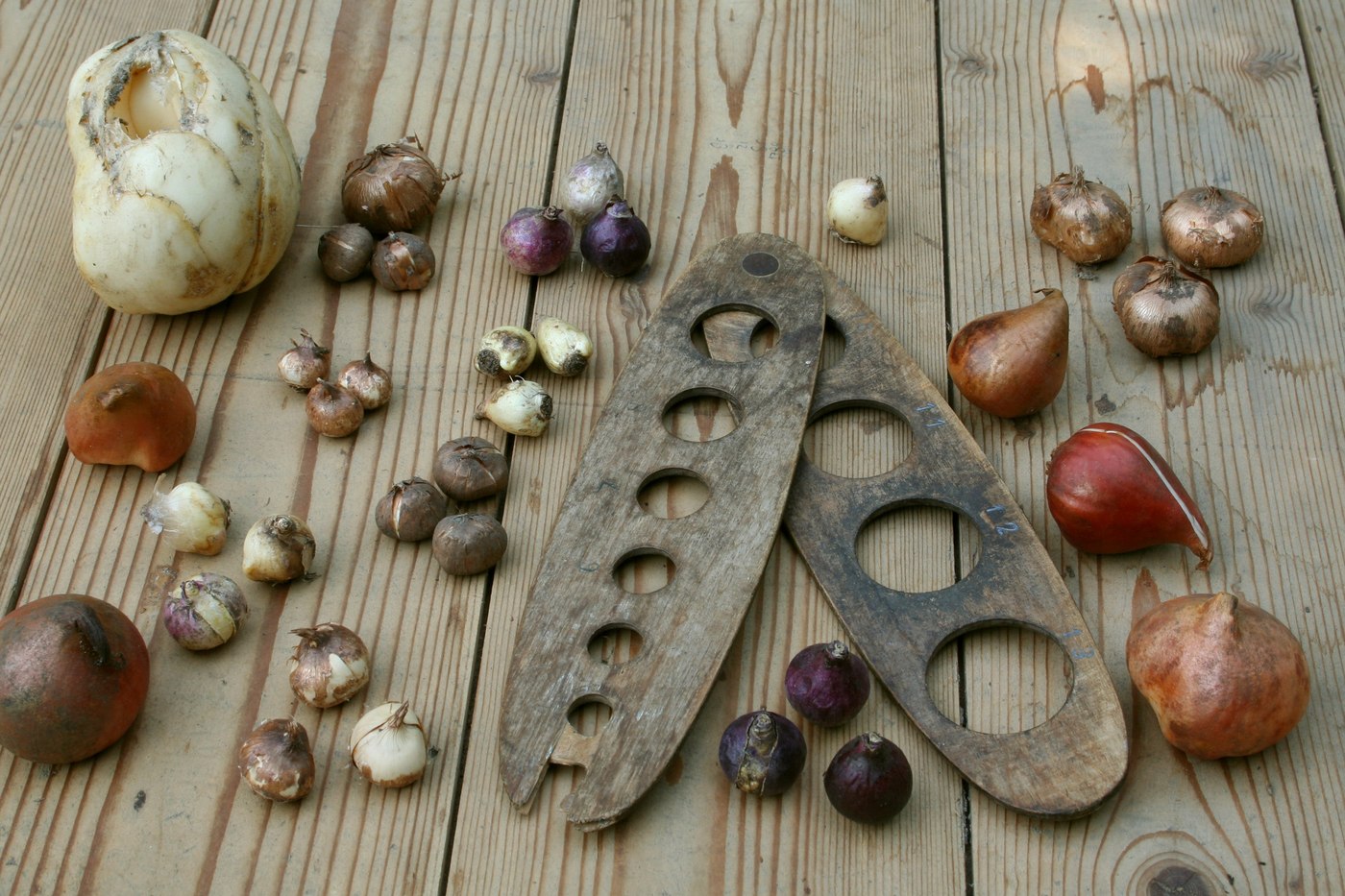
保证开花。所有球茎都要先在自家试验园里种下、试过,**只有开出最好效果的那一批才进网店**。这一条比听起来严格——公司还专门有个展示园,每年把网上卖的所有球茎在自家地里的展示园种一遍,用来核对各个供货品种的品质够不够标准。新品种也先在这里试种。
发货时间对得上栽种期。订单在合适栽种的时点发出,由自家仓库打包、走 PostNL 寄出并给追踪码。发货窗口分两段:**5 月 17 日到 9 月 28 日之间不发货**(这段时间只能预订,9 月 28 日之后发),**12 月 15 日到 1 月 6 日之间也不发**。季节合适时下单,3 到 6 个工作日到货;预订单因为量大,要 5 到 10 个工作日。
另外还有一条兜底的承诺:**任何在正常养护下没长好的球茎,无条件免费更换**。客服电话每天上午 9 点到下午 2 点有人接。
值得一提的是「只卖最大球茎」和「卖得比别家多」并不矛盾。Fluwel 卖的是更大的数量而不是更小的单包——行业里常见的是 10 颗一包,Fluwel 常常给几十颗甚至上百颗,**因为量大,单颗成本反而更低**。公司自建的仓库自己打包,这也是价格能压下来的原因之一。
1050 个品种,和一个庞大的水仙目录
线上商店目前挂着 1050 个产品。按产品类型拆开看,**专属水仙(Fluwel Special Narcissus)有 338 个,是最大的一块**;郁金香 127 个、普通水仙 118 个、大丽花 112 个、朱顶红 106 个、春季特色球茎 47 个、百合 39 个、牡丹 30 个、混合搭配 28 个、秋海棠 26 个、Allium 20 个、番红花 13 个、夏季特色球茎 11 个、Zantedeschia 7 个、Nerine 7 个、风信子 7 个,另有礼盒与体验类若干。
那 338 个专属水仙不是拼凑出来的。Carlos 的收藏从五十多年前他父亲 Karel 家里开始——最初只有不到 100 个品种,在房后种给同行看,因为「分蘖冠」这种做法在当时的邻居里还算新鲜,很快成了气候,收藏也就一年年长起来,同行和育种人不断把新东西送来。**这个收藏涵盖 13 个分类、两千多个品种,公司称其为全世界最大的水仙收藏。**
公司还接手了英国 Choice Bulbs 和 Miniature Bulbs 两家的完整货盘——这两家是上世纪八十年代在 Sunderland 经营水仙生意的老牌商家,Carlos 与创始人 Frankie Charlton 是老交情,Charlton 退休后把生意整个转给了他们。**现在这些品种第一次以完整阵容出现在 Fluwel 网上**,美国那边则由 Chris Harley 以 Qdaffs 的名字在卖同一份货。
育种是慢功夫
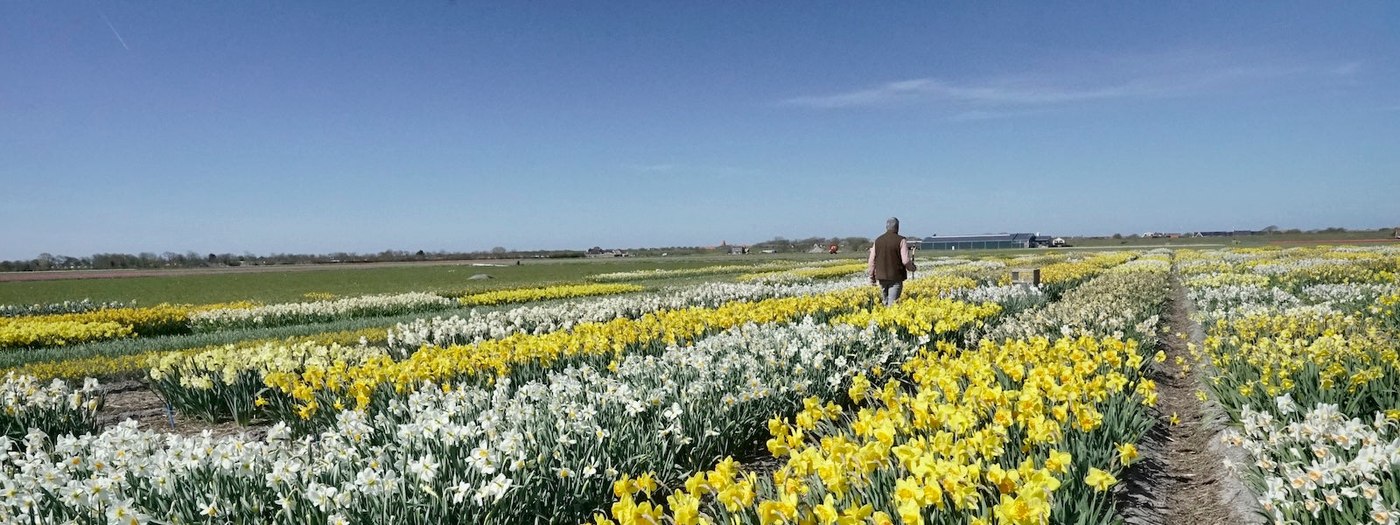
公司自营的苗圃分四块:试验园、水仙栽培与育种、番红花栽培与育种、新郁金香品种栽培。
水仙是主力。Karel 去世后 Carlos 接着做,苗圃里有数百个尚未命名的品种,每年按花色和长势评一次,有的淘汰,每年都有新苗第一次开花。这些自育品种已经进入生产,在网店上归在「Fluwel narcis」名下。公司也为美国和英国的邮购公司代种特殊品种——那些专供英国水仙协会会员的商店、要卖老种水仙的专营店,要的都是最不常见、最排他、最好看的货。
番红花的育种从 1998 年一个业余爱好开始,现在成了一份正经工作。**育种计划让四万个实生苗开花,从里面筛出约 250 个不同的番红花实生苗。**筛选的做法是:种子播下后先养三年,按生长速度分级,只留最快的 10%,这些再种三年,期间从每丛里挑出花最多、最好看的那部分,**最后从四万棵里留下的不到 1%**。现在每年把所有实生苗挖出来点数、过秤,只有长势最好的才留在collection 里。这个过程全程不用任何土壤或球茎消毒药剂——苗得自己证明扛得住。目前实生苗的存量还太少,几年内才会第一批上市。
郁金香方面公司没有自己的育种计划,但和 Jeroen、Eric 这样的郁金香爱好者一起办苗圃,新品种自然会来。Eric 对园艺郁金香很有眼光,最近还从一位要退休的老人手里收来一小批上乘的 Lily-flowering 园艺郁金香;Jeroen 常年关注适合切花生产的新品种,冬天不忙 Fluwel 的时候还兼管公司的郁金香切花生产。
这些工作有个共同点:判断标准不是看花漂不漂亮,而是看它在园子里表现如何。**试种园每年也会从各供货商交货中抽样种下去**——美国邮购客户和本地客户都可能因为收到质量差或货不对板的球茎而失望,公司要做的是在退款之外弄清问题出在哪,抽样种植正好帮上忙。
Land van Fluwel,和其他能逛的地方
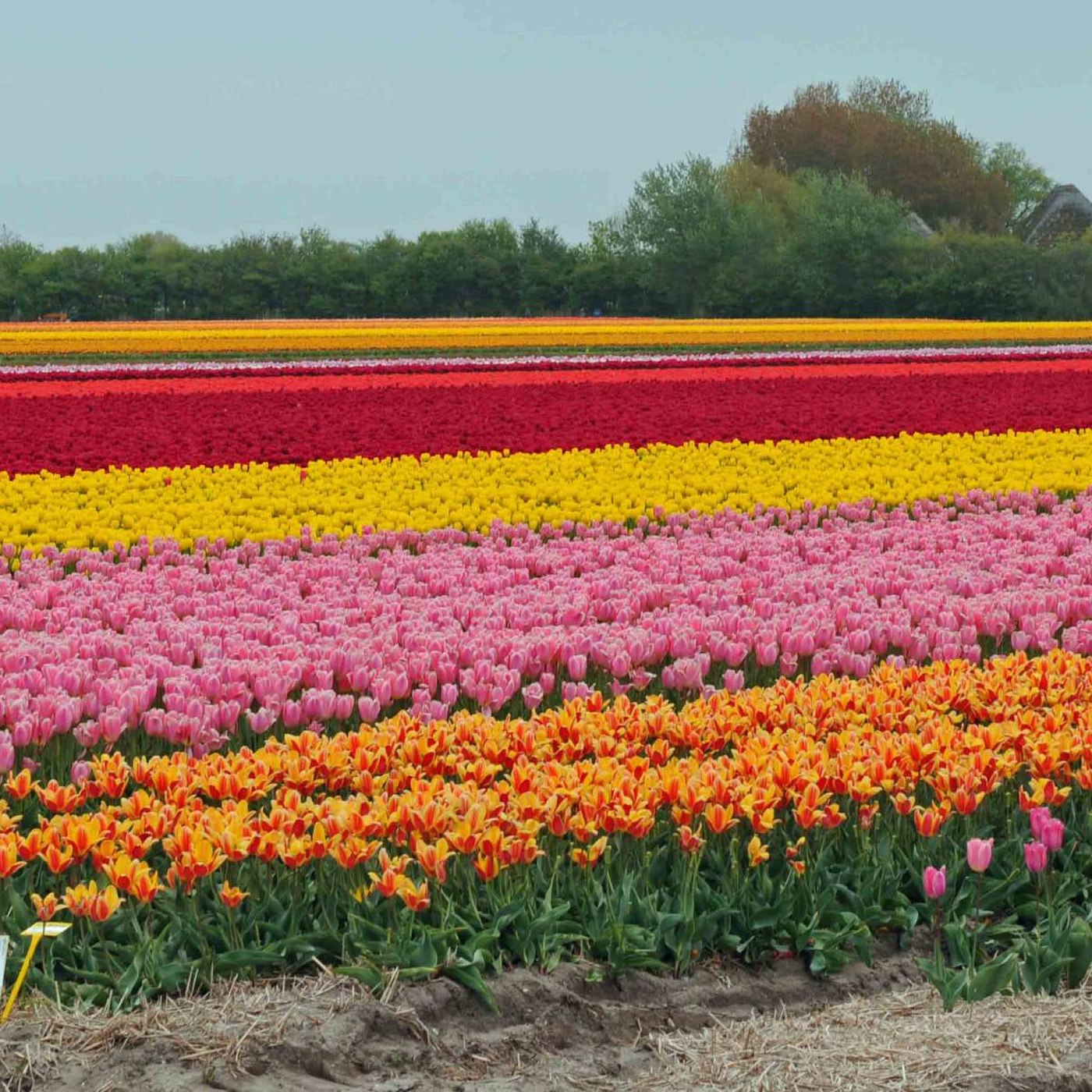
这家公司还有另一重身份。**Land van Fluwel 是北霍兰省的一座主题乐园,位于世界上最大的一片连片球茎产区腹地**——这片产区在 Alkmaar 与 Den Helder 之间。园子建在 Zijpe 的花田边上,春天是整片郁金香花开;别的花田夏天就没花了,Land van Fluwel 不一样。
园里最有意思的装置叫 Dutch Tulip Experience,是一条语音导览路线:从喜马拉雅的原生起源讲起,穿过土耳其苏丹的宫殿,十七世纪阿姆斯特丹的运河边,最后到今天荷兰的郁金香产业。语音导览有多种语言,儿童版和成人版分开。整个园子的主题就是郁金香本身。
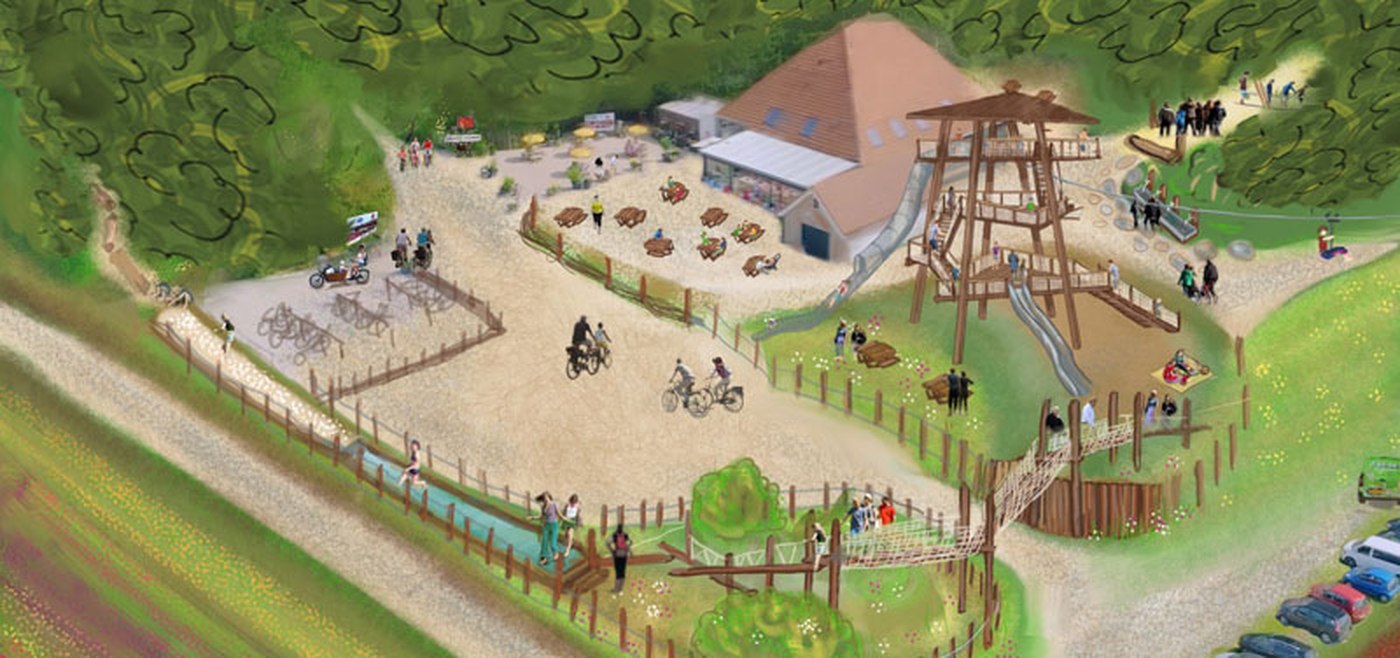
园区里还有 11 米高的观景塔、绳索桥、充气滑梯、沙滩、可以赤脚走的 Blotevoetenpad、树屋迷宫,以及建在老农舍里的餐厅 De Kneinsberg——煎饼和本地啤酒是主打,其中一瓶是标志性的橙色 Kwiek。旁边有煎饼屋,可以只吃饭不进园。**每年四月初到五月初,有一列叫 BloembollenBoemel 的小火车从 Land van Fluwel 出发**,由讲解员带着穿过这片连片球茎区看开花的郁金香田。
公司还经营一个采摘花园,可以自己动手摘郁金香和大丽花,花期开园日日开放。这个季节大丽花采摘园已经关闭,正在腾地准备种 2027 年春天的郁金香。
公司每年出一本自己的日历海报,从 2021 年这一本排到了 2027 年这一本。有一个博客专门记录行业见闻,其中「世界水仙之旅」系列值得一提——**每四年一届的全球水仙巡回,从新西兰出发,经美国、澳大利亚,最后落到欧洲的荷兰、英国和爱尔兰**,沿途看花、聊花、讨论展览标准、推动科研、联络关系。Carlos 自己参与过 2024 年那一届,路上走访了几位育种家,其中也包括 Eric Breed。
还有一件事值得单说。**Fluwel 的球茎被种在两处著名的展示园里:德国的 Schloss Ippenburg 和荷兰的 Keukenhof**,供大量游客和爱花者观看。公司自己在西弗里斯兰 Zijpe 的苗圃也是这条链的起点。
A name made from the first letters
Fluwel is a Dutch flower bulb company in North Holland, founded in 2007. Its name is an abbreviation of a sentence: Flowers love u, we enjoy life.
The founder, Carlos van der Veek, is a daffodil specialist himself. His father Karel van der Veek grew daffodils and, when he stopped, began collecting and breeding rare varieties. Carlos took over both the breeding programme and the collection. The company was first named after Carlos himself; when his brother Sigge joined, and later Eric Breed and Jeroen van den Hoek became partners, a single surname no longer fitted, and after long discussions the name became Fluwel.
What the company set out to change is worth noting. Carlos worked in export for many years and kept seeing the best bulbs — the exclusive varieties — shipped to far-off countries such as Japan, Russia and the US, while the European market was mostly cheaper varieties, quantity over quality, everything at a low price. That was the starting point for Fluwel.
The site publishes the full street address, postal code, office telephone and email address. None of that is reproduced here; the company’s site is the place to reach them.
What the “Fluwel quality” actually means
Three things make up what the company calls the Fluwel quality.
Only the largest bulbs are sold. Bulb sizes are given as a circumference in centimetres — 10/12, 12/14 and so on — and stated in the product description. The reasoning is straightforward: a more mature bulb holds more stored food and therefore produces a larger flower. In this trade, bigger really is better.
Guaranteed flowering. Every bulb is planted and tested in the company’s own trial garden first, and only those that give the best flowering result go into the webshop. That is stricter than it sounds. There is also a show garden where every bulb sold online is planted each year, so the quality of each variety supplied can be checked against standard. New varieties are trialled there too.
Delivery timed to the planting season. Orders are dispatched at the right moment to plant, packed in Fluwel’s own warehouse and sent by PostNL with a tracking code. There are two blackout windows: nothing is sent between 17 May and 28 September, when bulbs can only be pre-ordered for dispatch after 28 September, and nothing is sent between 15 December and 6 January. In season an order arrives within 3 to 6 working days; pre-orders take 5 to 10, because of the volume.
There is also a blanket promise: any bulb that fails to grow properly under ordinary care is replaced free of charge. The customer service phone line is staffed from 9 am to 2 pm.
Worth noting that selling only the largest bulbs and selling more bulbs than anyone else are not in conflict. Where other shops sell sets of ten or fewer, Fluwel often works with dozens or hundreds at a time, which makes the price per bulb lower rather than higher. Packing in the company’s own warehouse is part of why the prices hold.
1,050 products, and a very large narcissus list
The webshop currently carries 1,050 products. Broken down by type, the largest block is Fluwel Special Narcissus with 338; then tulips 127, narcissus 118, dahlias 112, amaryllis 106, spring specialty bulbs 47, lilies 39, peonies 30, mixes 28, begonias 26, alliums 20, crocuses 13, summer special bulbs 11, zantedeschias 7, nerines 7 and hyacinths 7, plus gifts and experiences.
Those 338 special narcissus are not an assembled list. The collection began over fifty years ago in Karel’s garden, with fewer than a hundred varieties planted behind the house to show fellow growers — split-crown narcissus were novel to the neighbouring growers at the time, and the thing took hold immediately, so breeders and growers kept bringing new material. It covers all 13 divisions and well over 2,000 cultivars, and the company describes it as the largest daffodil collection in the world.
The company also took over the full ranges of the British Choice Bulbs and Miniature Bulbs, businesses run in Sunderland from the 1980s by Frankie Charlton, a long-standing friend of Carlos’s who has since retired and handed the trade over. Those varieties now appear on the Fluwel site for the first time in full; in the United States the same range is sold by Chris Harley as Qdaffs.
Breeding is slow work
The nursery covers four disciplines: a trial garden, narcissus growing and breeding, crocus growing and breeding, and the cultivation of new tulip varieties.
Narcissus is the core of it. After Karel’s death Carlos continued the breeding programme, and the nursery holds hundreds of varieties that do not yet have a name, judged every year on how they flower and grow. Some are dropped each year, and new seedlings come into flower for the first time. The first Fluwel-bred bulbs are now in production and sold under the name “Fluwel narcis”. The company also grows commercial narcissus on request for American and British mail-order companies, and for niche shops supplying members of the English Daffodil Societies — customers who want the most unusual, exclusive and beautiful varieties, grown and multiplied for them specifically.
Crocus breeding started as a hobby in 1998 and became a serious job. The programme brings around 40,000 seedlings into bloom, from which about 250 different crocus seedlings are kept. The selection works in stages: after the seed is sown and grown for three years, only the fastest 10% are kept; those are planted and left in the soil for another three years, during which the seedlings with the nicest, most floriferous clumps are selected out. Fewer than 1% of the original 40,000 survives. Today every seedling is lifted, counted and weighed each year, and only the strongest growers stay in the collection. No soil or bulb disinfecting chemicals are used at any point — the seedlings have to prove they can survive on their own. The stock is still too small to offer, but the first introductions are expected within a few years.
Tulips are not bred by the company itself, but running a nursery alongside enthusiasts like Jeroen and Eric means new varieties arrive anyway. Eric has a nose for good garden tulips and recently picked up a small collection of superb lily-flowering garden tulips from an old man retiring. Jeroen keeps an eye out for new varieties for the cut flower trade and runs Fluwel’s tulip cut flower production in the winter months when he is not otherwise occupied.
All of this work shares one principle: the judgement is not about how a flower looks, but how it performs in a garden. The trial garden is also where a sample is taken from every delivery by every supplier. American mail-order customers and local ones alike can be let down by poor quality bulbs or bulbs that are not true to name, and beyond issuing refunds the company wants to work out what went wrong — planted samples are a good way to find out.
Land van Fluwel, and other places to go
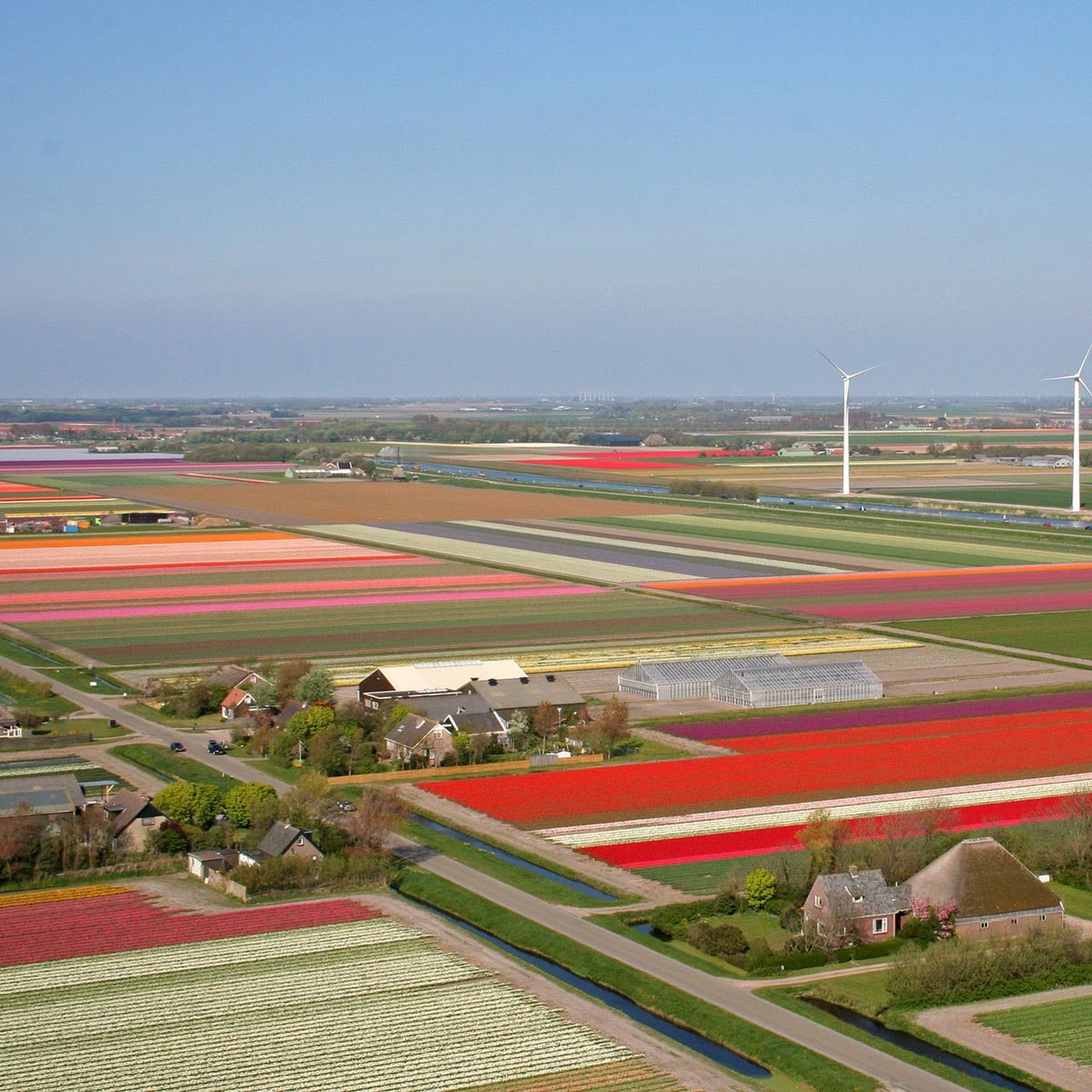
The company has a second identity. Land van Fluwel is an adventure park in North Holland, sitting in the heart of the largest contiguous bulb-growing area in the world — the area between Alkmaar and Den Helder. It is built beside the flower fields of Zijpe, and while other fields are bare by summer, Land van Fluwel is not.
The centrepiece is the Dutch Tulip Experience, an audio trail that carries visitors from the tulip’s origins in the Himalayas through the palaces of the Turkish sultan and the canal houses of 17th century Amsterdam to the modern tulip industry. The audio tour is available in several languages, in separate versions for children and adults.
Around it are an 11-metre observation tower, rope bridges, slides, a beach, a barefoot path, a hedge maze and a treehouse trail, plus restaurant De Kneinsberg in the old farmhouse, known for pancakes and the local beer, including the orange Kwiek. There is a pancake house next door, and you can eat there without entering the park. From early April to early May a small train called the BloembollenBoemel runs from Land van Fluwel, taking visitors with a guide through the contiguous bulb area while the tulips are in flower.
The company also runs a picking garden where visitors pick their own tulips and dahlias, open daily through the flowering season. The dahlia picking garden is closed for now, the ground being prepared for tulip bulbs to be planted for spring 2027.
The company puts out a calendar poster of its own every year, with editions running from 2021 through to 2027. Its blog records industry visits, and the World Daffodil Tour series is the most interesting of them. The tour runs every four years, starting in New Zealand and continuing to the US, then Australia and finally to Europe — the Netherlands, the UK and Ireland — to see narcissus in flower, talk about them, refine show standards, promote research and build relationships within the world of narcissus. Carlos took part in the 2024 edition, calling in on several breeders along the way, among them Eric Breed.
One more thing deserves a mention. Fluwel’s bulbs are planted in two famous show gardens — Schloss Ippenburg in Germany and Keukenhof in the Netherlands — where large numbers of visitors and enthusiasts see them. The company’s own nursery at Zijpe in West Friesland is the starting point of the whole chain.
相关文章:
 荷兰 霍普曼 P. Hopman – 荷兰百年球茎出口商
 荷兰 诺德隆默斯 Nord Lommerse – 球茎处理与全球供应商
 荷兰 普林斯球茎 Prins Bulbs – 面向英国零售的家族出口商
 荷兰 阿克球茎花卉公司 P. Aker – 荷兰百年球茎出口商
 荷兰 范哈斯特‑内瓦达花卉球茎 Van Haaster‑Nevada – 350 余种球茎的出口商
 荷兰 罗特费尔父子球茎出口公司 L. Rotteveel & Zonen Export B.V. – 南荷兰球茎出口遍及欧美
 美国 Van Engelen 球茎批发公司 – 专营可展览级荷兰球茎的批发商
 美国 ROOZENGAARDE & TULIPS 球根苗圃 – 荷兰家族四百年球茎批发与展示花园
发表回复