

从一块空地开始的家族苗圃
Aylett Nurseries 是英格兰东南部 St Albans 的一家独立家族花园中心,创办人是园艺专业的 Roger Aylett。他在 1955 年 4 月创办公司时,那里「除了一片绿什么都没有」——那时还没有花园中心这个概念。
起步的方式很朴素:他成束地卖大丽花,顾客问「为什么不能卖点别的」,于是就有了后来的百货式花园中心。最初种的是大丽花、菊花、水果和蔬菜;大丽花很快成了苗圃的招牌,顾客从很远的地方赶来买这些得过奖的植株。Roger 也是后来转型盆栽的第一批人之一——早在此之前,苗圃只卖裸根苗,季节性极强。
创立者的妻子 Hazel 是他带出的第一个学生,18 岁开始学徒,每周薪水一英镑,两人后来成了伴侣。BBC 七十周年的报道里记着一段她的话:起初十五年他们种香豌豆和飞燕草供切花市场做,**一直在亏钱,银行经理甚至劝婆婆把苗圃关掉**。转机出现在六十年代末——有人想出把植株上盆这个主意,公司从此站稳。
Roger 2010 年去世后,业务由女儿 Julie 和女婿 Adam Wigglesworth 继续打理,如今员工约 150 人。需要说明的是,站上把完整街道地址、电话和邮箱都公开列出。本站不转录这些内容,想联系请直接访问公司站。
大丽花:从 55 枚金奖到收摊
这段历史里最硬的一块是获奖记录。Roger 1957 年 9 月第一次在皇家园艺学会展出自家大丽花,1961 年 8 月拿到第一枚金奖。站上给出了两种写法:Home Grown Crops 页说「自 1961 年起我们的大丽花展品获得了 40 多枚皇家园艺学会金奖」,Dahlias 页则写 55 枚。第三方资料另有 42 枚和「1961 至 1999 年间连续 36 枚」两种口径。**写「40 多枚」比较稳妥,另外三次获得的是更难得的 RHS 威廉斯纪念奖章(William’s Memorial Medal)。**
Roger 本人是皇家园艺学会展览委员会和大丽花委员会的重要成员,经常在 Surrey 的 RHS Garden Wisley 参与大丽花品种评定。1999 年,皇家园艺学会授予他 Gold Veitch Memorial Medal,以表彰他在园艺科学与实践推进上的贡献。
然后是转折。2026 年 5 月,苗圃宣布结束自繁大丽花业务,秋季大丽花节停办,**大丽花庆祝花园(Dahlia Celebration Garden)也一并关闭**。
董事 Adam Wigglesworth 给出的理由是市场:传统品种的销量连年下滑,去年的销售额只有 2019 年的四分之一。为繁殖需要在大丽花田里种出块茎供下一季使用,那片花田因此成了极好的展示,也就是庆祝花园和秋季大丽花节的基础;而在田里产块茎、再于二三月扦插繁殖成株,时间、成本和精力都相当可观,只有销量足够才撑得住。
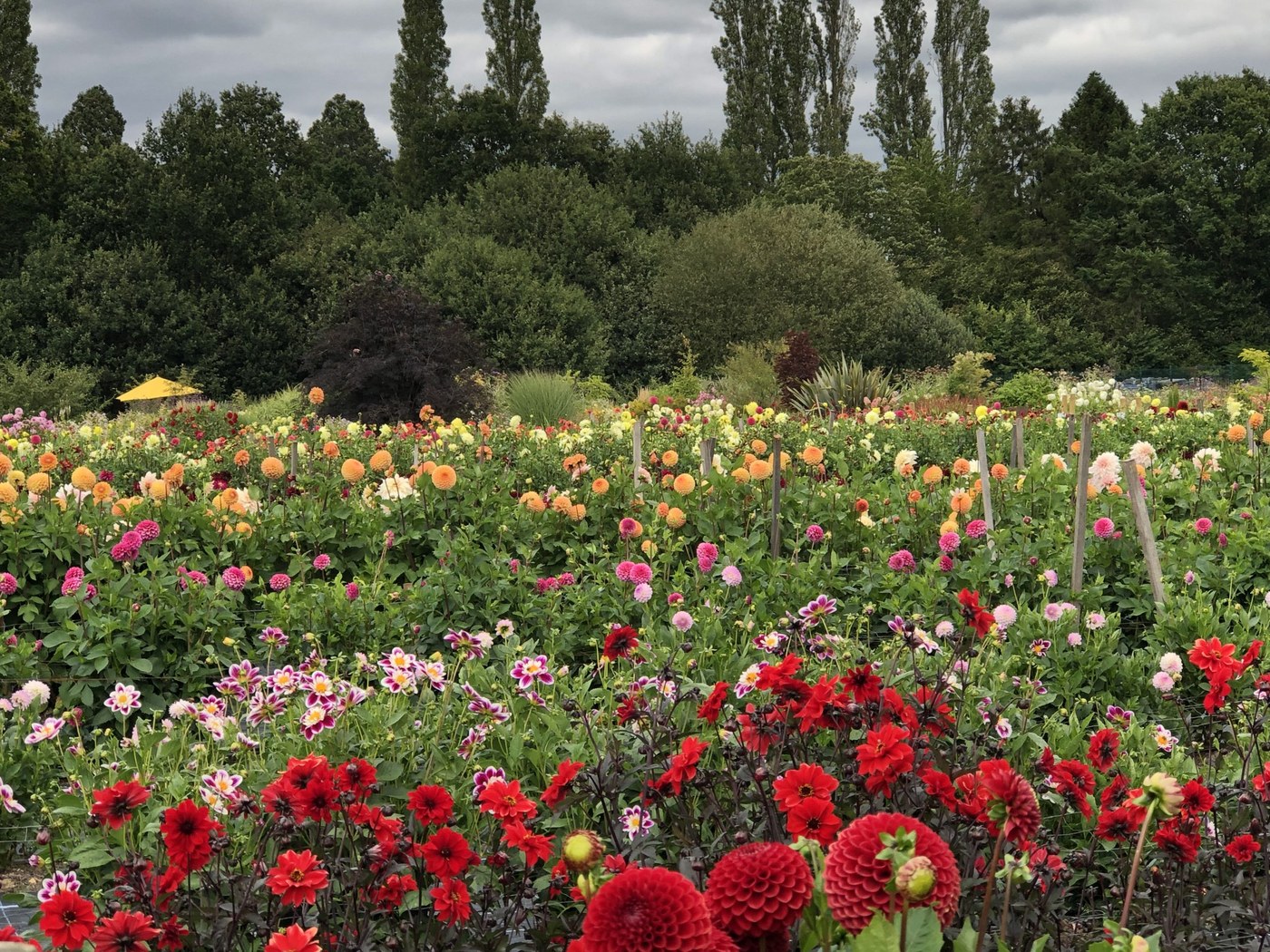
但这不等于放弃大丽花。他明确说明苗圃「活得很好」,仍然大量种植夏季花球、吊篮,以及用幼苗培育的新品种大丽花——这些顾客在家用花盆或花境里更容易种活。作物计划里保留的还有圣诞红、仙客来、报春花和 polyanthus。他说了一句很实在的话:过去七十年我们一直在根据顾客的选择调整,过去做的事并不保证将来。
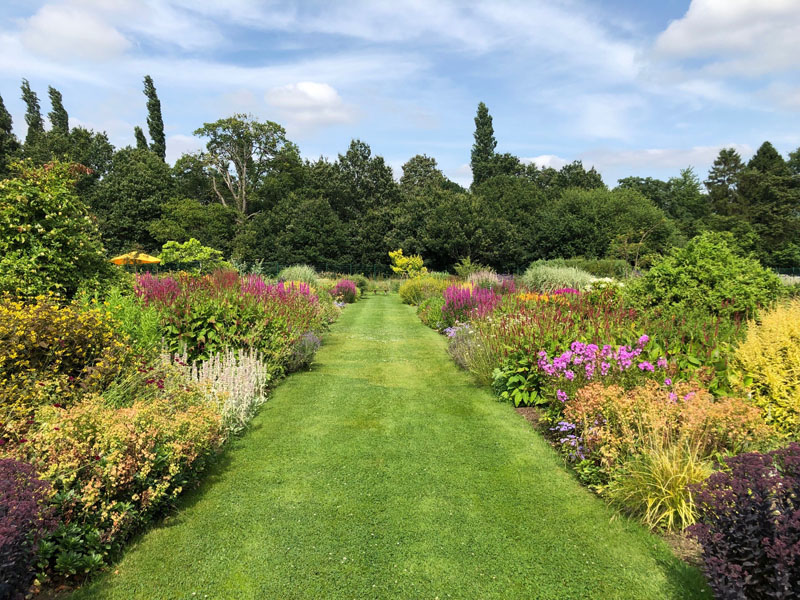
这张庆祝花园的照片如今成了一段记录。那片 2 英亩的大丽花田和庆祝花园曾经需要整整一周种满整套品种的字母表——每个品种每一行 80 株。这些植株从一月开始的故事很具体:块茎从储藏室取出,铺在湿润基质上,开热开灯,等它们冒出绿色新梢;第一批插条从块茎上剪下、生根、上盆到 11 厘米盆里继续长;夜变长后关掉钠灯继续取插条,直到块茎耗尽养分。一个繁殖季下来,通常能取到 17,000 多支插条。六月第一周,全园开始移栽大丽花田和庆祝花园,八月开花,十一月收块茎。
苗圃现在种什么
苗圃后方的生产区有将近一公顷的玻璃温室和受保护种植区,由燃气锅炉供热,一套环境计算机控制热、通风、湿度,并负责顶部灌溉的开关。作物的轮作顺序排得很紧:元旦时温室里是去年六月就播下、静静等着春天上市的报春花和 polyanthus;二月初第一批天竺葵和倒挂金钟作为幼苗从世界各地的专业苗圃运到,上盆后不断摘心、间苗、施肥,长成紧实漂亮的植株;五六月是夏花和吊篮的旺季;夏末是倒挂金钟;秋天是仙客来、报春花和 polyanthus。
各品类年产量有具体数字:报春花 38,000 盆、天竺葵 29,000 盆、倒挂金钟 11,000 盆、夏季花球 6,000 盆(合 36,000 株)、仙客来 10,000 盆、圣诞红 4,000 盆,另有大丽花 17,000 株。二月到四月之间,苗圃要上盆超过 40,000 株天竺葵和倒挂金钟幼苗。
倒挂金钟是另一项自产特产,生产苗圃里种着 50 多个品种,站上的说法是「我们每株自产的 11,000 株倒挂金钟都在 St Albans 的苗圃里养大」。天竺葵的种苗来自荷兰、瑞士和德国的专业幼苗苗圃,母株是无病毒的,取其插穗繁殖。吊篮则另有一番讲究:每年六月苗圃会跑遍各家育种家的试验地,确认用的是最新最好的品种,再按 Hazel Aylett 摸索出的配方搭配植物与颜色——整个季节种出六百多个吊篮。
奖项:连着十年的行业排名
奖项页把话写得很克制:不爱为此大张旗鼓,但偶尔还是会被认出来——「开心的顾客是我们最大的回报」。然后是一长串记录。
最近的一次在 2025 年 1 月:获得花园中心协会(GCA)的卓越花园中心认证,并在英国百强花园中心中排第四。站上把这称作「开始第 70 个营业年的绝佳方式」。往前一年,2024 年 7 月拿下 GCA 东部地区年度花园中心,同年还有最佳花园用品零售商第一名、最佳室内植物零售商第一名,以及环境与可持续性第二名。2023 年 7 月是北区最佳客服奖和最佳目的地花园中心第二名。2019 年 1 月首次列入英国十大花园中心,2020 年 1 月、2025 年 1 月再度获得卓越花园中心认证。2018 年 9 月还拿了 Glee 的年度保护型花园中心奖。
更早的一段在站上单列为「2015 年之前」:2010 和 2011 年两度获得《Which?》园艺「最佳购买」推荐,**并被评为英国第三大独立花园中心**——旧文把这条写成了「2010 年荣获百思买园艺奖」,实际上那是《Which?》杂志的推荐,而且年份是 2010 和 2011 两年。2014/15 年度获得 GCA 卓越花园中心认证,2007/08 年度还拿了北区优胜。
还有一批来自 Garden Trade News 的「Greatest」系列奖:2015 年最佳园艺零售团队金奖,2016 年最佳客服团队银奖和最佳节庆植物团队金奖,2017 年最佳植物咨询团队金奖。
不只是买卖植物
花园中心的规模数字之外,站上关于日常经营的说法需要记一笔。营业时间周一到周五 9 点到 5 点、周六到 5 点半、周日 10 点半到 4 点半,咖啡馆 Seasons 全周营业,Roots Coffee Bar 每天 10 点到 3 点半。停车位 200 个免费,有电动车充电位(通过 Monta App),可以推到车边、送到家门口,配送范围是花园中心周边 20 英里。
植物那条线上有两项服务需要单说。一是**两年耐寒植物保证**:任何容器栽培的耐寒植物,若按其种植说明栽种并做了适当养护,两年内死亡可免费更换或折价;凭证是带着原标签的植株加上购买凭证。这条承诺和苗圃自产直接相关——因为大部分自产作物本就在露天过冬。二是**植物查找器**:可以按植物名、类型、花色、叶色、果色等条件筛选,每个条目附养护和种植信息;查到想要的植物发邮件问库存即可,站上提醒「我们卖的植物」会随季节和供应情况变化。
社区那部分的数字是实的:2025 年他们支持了超过 50 所本地学校和教学机构,提供种子和物资;学校园艺俱乐部可以拿到免费的咨询、免费的种植项目种子、配送范围内免费送货、大部分商品 10% 折扣。2024 和 2025 年募款支持的机构包括国家花园计划、St Albans 食物银行、Greenfingers、RNIB、Macmillan 癌症支持、听障犬、RNLI、Save the Children、皇家园艺学会的 RSPB、West Dean 等。此外还支持面向有健康和社会需求人士的 Growing Stronger 项目。
可持续这一块站上有具体措施:自产作物用减少 40% 泥炭的基质,室外容器全部改用无泥炭基质;零售区大部分灯具换成 LED;温室由计算机控制以节约能源;尽可能从英国苗圃采购植物;园艺化学品区增设更多有机与天然来源产品,多数对儿童和宠物安全;回收纸板、玻璃、纸张、木材、墨粉和碳粉盒、电池以及大部分塑料,并回收顾客用完的塑料花盆和堆肥袋。
A family nursery that started in a field
Aylett Nurseries is an independent family-run garden centre in St Albans in south-east England. Its founder Roger Aylett was a horticulture student, and when he started the company in April 1955 there was “nothing here except a green field” — the concept of the garden centre as we know it had not been invented yet.
The start was plain. He sold bunches of dahlias, people asked why he could not sell them anything else, and from there the modern garden centre grew. The first crops were dahlias, chrysanthemums, fruit and vegetables; dahlias soon became the crop the nursery was known for, and customers travelled a long way to buy the prize-winning plants. Roger was among the first to move plants into pots — before that, a nursery could only sell bare-root stock, which made trading sharply seasonal.
Hazel was his first student, taken on at eighteen at one pound a week; she later became his wife. In the BBC’s report on the seventieth year, she recalled that they grew sweet peas and delphiniums for the cut flower trade and lost money for the first fifteen years, to the point where the bank manager begged her mother-in-law to sell the nursery off. The turning point came in the late 1960s, when another horticulturist came up with the idea of putting plants into pots.
Roger died in 2010 and the business is now run by his daughter Julie and her husband Adam Wigglesworth, with around 150 staff. The site publishes the full postal address, telephone number and email address; none of that is reproduced here, and the company’s site is the place to reach them.
Dahlias: from 55 golds to calling it a day
The hardest part of this history is the awards. Roger first exhibited at the Royal Horticultural Society in September 1957 and took his first gold in August 1961. The official site gives the count two ways: the Home Grown Crops page says our displays of dahlias were awarded over 40 Gold Medals by the Royal Horticultural Society, while the Dahlias page says 55. Third-party accounts give 42, and one describes 36 consecutive gold medals between 1961 and 1999. “Over forty” is the safest formulation. On three occasions they also received the far more prestigious RHS William’s Memorial Medal.
Roger became a valued member of the RHS Shows and dahlia committees, and was regularly seen assessing dahlia trials at RHS Garden Wisley in Surrey. In 1999 the Royal Horticultural Society awarded him the Gold Veitch Memorial Medal in recognition of services given in the advancement of the science and practice of horticulture.
Then the turn. In May 2026 the nursery announced it would stop propagating its own dahlias, ending the Autumn Festival and closing the Dahlia Celebration Garden.
Director Adam Wigglesworth gave the reason as the market: sales of these traditional varieties have been declining for years, and last year’s sales were 25 per cent of what they were in 2019. Propagation required growing the plants in the dahlia field to produce the tubers needed for the following season’s crop, which is what gave the field its fantastic display and the reason behind both the Autumn Festival and the Celebration Garden. The time, cost and energy involved in producing tubers in the field and then propagating true-to-form plants in February and March can only be carried by enough sales, and sadly that was no longer the case.
That is not the same as giving up on dahlias. He was explicit that the nursery is very much alive and growing significant quantities of summer bedding, hanging baskets and newer dahlia varieties grown from young plants that customers can grow easily at home in containers or in the garden. The cropping programme continues to include poinsettias, cyclamen, primroses, polyanthus and other autumn crops. He put it plainly: over seventy years they have watched customer choices change and have always moved with the times; what you did in the past does not guarantee a future. Change, he added, is something they have always embraced, from a wooden shed in 1955 growing tomatoes, chrysanthemums and dahlias to an award-winning garden centre in 2026.
This photograph of the Celebration Garden is now a record. The 2 acre dahlia field and the garden beside it once took a full week to plant with the complete alphabet of their dahlia varieties, 80 plants of each variety in every row. The story starts in January: tubers come out of storage and are laid on moist compost in the propagation house, heat and lights are switched on, and slowly green shoots appear. The first cuttings are taken, rooted and potted into 11cm pots to grow on. As the nights shorten the sodium lights are turned off and the tubers keep sprouting, and more cuttings are taken until the tubers use up their energy. By then they will normally have taken over 17,000 cuttings, rooted, potted and put out for sale. In the first week of June the whole team turns to planting the dahlia field and the Celebration Garden, the plants are stopped, fed and watered until they flower in early August, and in September the feeding regime changes to build up the tuber before it is lifted in November.
What the nursery grows now
Behind the garden centre the production unit has just under a hectare of glass and protected cropping, heated by a gas-fired boiler, with an environmental computer controlling heat, ventilation and humidity and operating the overhead irrigation. The cropping programme is tightly sequenced. On 1 January the greenhouses hold primroses and polyanthus, sown the previous June and quietly growing for spring sales. In early February the first geraniums and fuchsias arrive as young plants from specialist nurseries around the world, are potted into 10cm pots and started off; they are then spaced, watered, fed and stopped many times to build a strong, compact plant. May and June bring summer bedding and hanging baskets; late summer brings fuchsia; autumn brings cyclamen, primroses and polyanthus.
The figures per crop are specific: 38,000 primroses, 29,000 geraniums, 11,000 fuchsias, 6,000 bedding packs totalling 36,000 bedding plants, 10,000 cyclamen, 4,000 poinsettias, and 17,000 dahlias. Between February and April the nursery pots on more than 40,000 young geranium and fuchsia plants.
Fuchsia is the other home-grown speciality, with over 50 varieties in the production nursery, and the claim that every single one of the 11,000 home-grown fuchsias is nurtured in the St Albans nursery itself. Geranium cuttings come from virus-free mother plants, many varieties originating in Holland, Switzerland and Germany, and are potted into 11cm pots by the team before growing on in the greenhouses. The hanging baskets have their own routine: every June the team visits the trial grounds of various young plant breeders to be sure they are using the latest and best varieties, then plants them following a recipe designed by Hazel Aylett from her knowledge of blending plants and colours — over six hundred baskets over the course of the season.
Awards: a decade of standing in the industry
The awards page puts it modestly: they don’t like to make a song and dance about it, but from time to time they are recognised for their excellent quality plants and passion for customer service. Happy customers is the greatest reward. Then comes a long list.
The most recent was January 2025: a GCA Garden Centre of Excellence and 4th place in the TOP 100 Garden Centres in the UK, which the site calls a superb way to start their 70th year in business. The year before, in July 2024, they took the Garden Centre Association Garden Centre of the Year for the East Region, together with 1st place for Best Garden Product Retailer, 1st place for Best Indoor Plants Retailer and 2nd place for Environmental and Sustainability. July 2023 brought Best Customer Service for the North Thames Region and 2nd place for Best Destination Garden Centre. January 2019 brought the first listing among the UK’s top ten garden centres, repeated in January 2020 and January 2025. September 2018 brought the Conservation Garden Centre of the Year Award at Glee.
The earlier years are listed separately under “Prior to 2015”. In 2010 and 2011 Aylett Nurseries received the accolade of Gardening Which “Best Buy” — rated the third best independent garden centre in the UK. The old article rendered this as a 2010 Best Buy gardening award; it is in fact a Which? recommendation across two years. 2014/15 brought a Garden Centre of Excellence award from the Garden Centre Association, and 2007/08 added a North Thames Area Winner.
There are also a run of Garden Trade News “Greatest” awards: gold for The Greatest Garden Care Retail Team in 2015, silver for The Greatest Garden Centre Customer Service Team and gold for The Greatest Festive Plant Team in 2016, and gold for The Greatest Plant Advice Team in 2017.
More than selling plants
Away from the plants, the site says a good deal about how the business actually runs. The garden centre opens 9am to 5pm Monday to Friday, 9am to 5.30pm Saturday and 10.30am to 4.30pm Sunday; the Seasons café runs all week and the Roots Coffee Bar daily from 10am to 3.30pm. Parking is free for 200 vehicles, there are EV charging points via the Monta App, a carry-to-car service, home delivery within a 20 mile radius, and click and collect from the car park.
Two services on the plant side are worth singling out. The first is a two year hardy plant guarantee: any container-grown hardy plant that dies within two years of purchase will be replaced free or credited, provided it was planted in accordance with the planting instructions and given appropriate after-care, with the plant presented bearing its original label together with proof of purchase. The promise sits naturally alongside a nursery that grows most of its own stock outdoors. The second is the plant finder, which lets you browse plant types and varieties by name or by criteria such as flower colour, leaf colour and fruit colour, with care and planting information for each; you then email your list to check availability. The site notes that what they stock changes with the season and with availability from suppliers and growers.
The community figures are concrete. In 2025 they supported over 50 local schools and educational settings with seeds and resources for growing projects and fundraising events. School gardening clubs receive free help and advice from their team, free seeds for growing projects, free delivery within the normal delivery area and 10% discount on most items. The charities they raised funds for in 2024 and 2025 include the National Garden Scheme, St Albans Foodbank, Greenfingers, RNIB, Macmillan Cancer Support, Hearing Dogs for Deaf People, the RNLI, Save the Children, the RSPB and West Dean. They also back Growing Stronger projects for people with health and social needs.
On sustainability the site lists specific measures: a compost with 40% reduced peat for their own crops and peat-free compost for outdoor planted containers; most retail lighting converted to LED; computer-controlled greenhouses to keep energy use down; as many plants as possible sourced from British nurseries; a growing range of organic and natural-based garden chemicals, most of them safe for children and pets; and recycling for card, glass, paper, wood, toner and printer cartridges, most plastics and batteries, together with a facility for customers to bring back empty plastic pots and compost bags.
相关文章:
 英国 RV Roger苗圃 RV Roger Ltd – 种苗生产与销售
 英国 格罗夫斯苗圃和花园中心 Groves Nurseries – 多塞特郡最大苗圃与花园中心之一
 英国 伍尔皮特苗圃 Woolpit Nurseries – 年供 25 万株花坛植物苗圃
 英国 鲁姆伍德苗圃 Rumwood Nurseries – 英格兰东南部最大玫瑰种植商
 苏格兰Edrom苗圃 Edrom Nurseries – 专营罕见高山与球根植物的家族苗圃
 丹麦 Jespers Planteskole 苗圃 – 丹麦最大的室内温室展示空间之一
 英国 Ridgeview大丽花苗圃 – 种苗生产与销售
 英国 史温卡苗圃 Swincar Nurseries – 西约克郡家族经营苗圃与咖啡馆
发表回复