
从父亲租下的一小块园子,到二十一公顷的农庄
这家苗圃在奥地利上奥地利州基希多夫县,主人是彼得·哈斯霍费尔和特蕾西娅·迪特尔,店名写作「彼得大丽花」。大丽花的底子是从一小块租来的园子起的:彼得十六岁那年就在父亲的园子里种花,按他们自己那份产品目录的说法,这个底子到 2024 年已经打了大约三十五年。
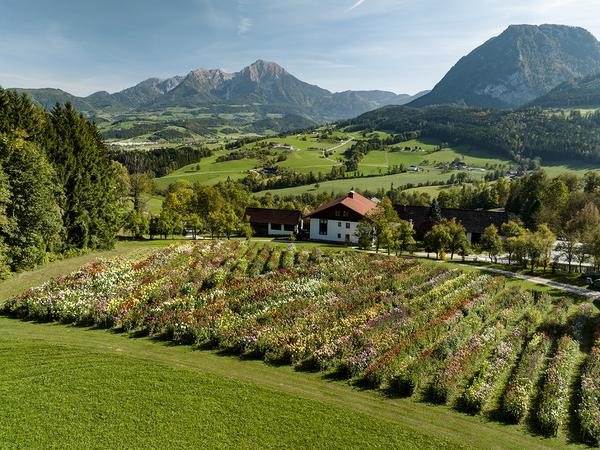
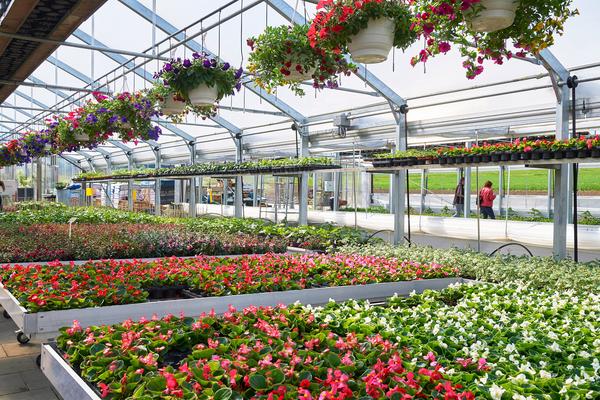
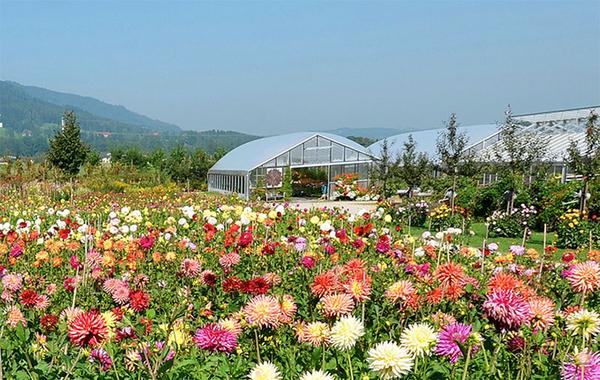
2003 年,夫妇俩在圣潘克拉茨开第一家苗圃,一直开到 2013 年春天,那块租来的地随后退还并重新整治。同年夏天,他们把整个经营迁到上奥地利州基希多夫县的米歇尔多夫,父母名下的农地上;站方的说法里这块地是一公顷农业用地,他们实际耕种约两千平方米。新设施包括两座各三百平方米的温室和一座一百六十平方米的塑料大棚;另有五百平方米露地种耐寒草本、浆果和果树,全部面积的一半以上种大丽花。2018 年又在罗斯莱滕买下一座二十一公顷的农庄,海拔七百五十米处开出约四千平方米的大丽花田,用来繁殖块茎和供应切花,农庄里还养着羊和马。
苗圃的植株几乎全部由自家温室里的种子或插条繁殖,选种时看重抗性和在当地能否长好。主营其实是花坛和阳台花卉,也做新的浆果品种、果树和耐寒草本;大丽花是他们育种的主线,自育品种在欧洲各地都能见到,美国也有几个。
自家育的种,名字上带着缩写
自育品种的名字里大多带一个缩写标记,是从他姓和名各自开头的字母拼成的注册商标;目录里另有一些自育品种没用这个缩写,而是直接标上「自育」两个字。
关于自家育种做了多少年,站上给出的说法有三个:2024 年的产品目录写「大约三十五年」,「关于我们」页写「二十五年以上」,首页则写「将近二十年」。站方没有解释这几个数字之间的关系。
品种总数的口径也不一样。网站首页和品种页都写超过六百个大丽花品种;2024 年那份三十三页的目录里,按品种名逐个数下来是四百五十几个,其中两百九十几个冠着自家缩写标记;每年种下的数量,目录写的是约一万五千株、五百多个品种。在线商店的十个花型分类加起来是四百四十四个条目,另外「新品种」一页列出的三百二十七个条目全部能在这些花型分类里找到,可见它不是另一批品种,而是同一批货按新排序的另一个视图。
八个国际分类,商店分成十栏
目录按国际分类把大丽花分成球型、装饰型、鹿角型、仙人掌型、绒球型、睡莲型、半仙人掌型和星型八类,其中装饰型与半仙人掌型又分普通花和大花两种;商店因此分成十个分类目录摆出来。每个品种还记着株高——超高、高、中高、低四档——以及是否适合切花、是否用于展台,花色和用途都有简注。
下单是有季节的:块茎只在每年 12 月 1 日到 3 月 20 日之间可以在线订购,发货也从 12 月开始,起订五块茎,一个包裹装五到三十块茎。苗圃页另有一套说法,说 10 月起就能在花田现场预订,11 月开始发货;两处口径不同,站方没有解释。奥地利境内每个包裹运费 15 欧元,欧盟内 30 欧元,瑞士和列支敦士登 55 欧元;只接受先付款,十四天内不到账订单自动取消。
切花、温室与可以来看花的月份
切花从七月底开花起一直供到霜降,剪下的多是单朵花,茎长按品种在 30 到 50 厘米之间;小朵和中朵各类型的切花每支 0.80 欧元,超大的单朵每支 1.50 欧元,夏季还配百日菊、紫菀、金鱼草和玉簪叶,每支 0.50 欧元,观赏草每支 0.20 欧元。切花在温迪施加尔施滕的展示园出售,园子 8 月到 10 月开放,营业时间是周一、周二、周五和周六上午 8 点到 12 点。
看苗圃也有两段时间:4 月 1 日到 5 月底,米歇尔多夫的苗圃每天上午 8 点到 12 点卖花坛和阳台花卉、蔬菜苗、香料、灌木和草本,还有果树和浆果,6 月和 7 月闭园休整;温室里的盆栽苗要在 2 月前下单,4 月初到 5 月底在米歇尔多夫取货。展示园则在 8 月到 10 月开放,周三下午安排讲解,十五人以上需提前电话预约。
他们给的种植提示是:4 月中旬起种,株距五六十厘米见方;块茎种下先不要浇水,等苗长到十到二十厘米再浇,而且只在确有必要时浇;追肥用花肥,到 7 月中旬就该停,不然块茎长不饱满、冬天存放时容易烂;花后要常剪,剪得越勤开得越多;侧芽掰掉,主花能开得更大;第一场霜后把块茎挖出来,存进零到十摄氏度之间的无霜处。大丽花原产墨西哥,喜欢阳光,色系齐全,唯独没有蓝色。
联邦园艺展上的奖牌
获奖最密集的地方是联邦园艺展。2023 年曼海姆那届,他们连续第十次拿到最高一档的金奖,那次一共运去一万枝切花参展,同届还记着三金二十二银九铜。2021 年爱尔福特那届,站上列出两枚大金奖,另有四十八金、三十四银、四铜共八十六项奖,评语分别给了「令人叹服的丰富品种谱系」和「覆盖所有类别与花色的新品种阵容」;作为切花单项参展者,他们还拿到联邦农业部的金质荣誉奖。
2019 年海利布隆那届拿了两枚大金奖、六十七金和二十三银,其中一枚评语是「令人惊叹的多样品种阵容」,另一枚是「品质出色的新品种阵容」,把知名的月季育种家科尔德斯挤到了第二名。
更早还有 2013 年汉堡国际园艺展、2015 年哈弗尔地区、2011 年科布伦茨和 2009 年什未林的金奖;网站列出的清单写着自 2005 年起九次获得大金奖,还列出斯图加特市最佳外地品种荣誉奖(2005 到 2012 年间多次)和 2005 年巴特诺伊纳尔最佳小花新种的银杯,2017 年又得到克里斯蒂安·迪根纪念章。
From a rented plot to a twenty-one hectare farm
The nursery sits in the Kirchdorf district of Upper Austria, run by Peter Haslhofer and Theresia Dietl, and the nursery trades as Dahlien Peter. The dahlia work began on a small rented plot: Peter was growing flowers in his father’s garden from the age of sixteen, and by the firm’s own catalogue that foundation was some thirty-five years old in 2024.
The couple opened their first nursery at St. Pankraz in 2003 and ran it until the spring of 2013, after which the leased site was handed back and recultivated. In the summer of that year they moved the whole operation onto farmland belonging to Theresia’s parents at Micheldorf in the Kirchdorf district of Upper Austria; the site describes it as a hectare of agricultural land, of which they farm about two thousand square metres. The new facilities are two greenhouses of 300 square metres each and one plexiglas house of 160 square metres; a further 500 square metres outdoors carries hardy perennials, berries and fruit trees, while more than half of the total area is under dahlias. In 2018 they bought a twenty-one hectare farm at Roßleithen, where a dahlia field of roughly 4,000 square metres sits at 750 metres above sea level for propagating tubers and supplying cut flowers; sheep and horses graze there as well.
Almost every plant they sell is raised from seed or cuttings in their own greenhouses, and they put weight on resistance and on how a variety copes with local conditions. The main business is in fact bedding and balcony plants, together with new berry varieties, fruit trees and hardy perennials; dahlias are where the breeding work sits, and their own varieties turn up all over Europe, with a few in the United States as well.
Seed of their own, with a mark in the name
Most of the varieties they have bred carry an abbreviation in the name, a registered trademark assembled from the opening letters of the breeder’s surname and first name; some other own-bred varieties do not use it and are simply labelled as their own selections in the catalogue.
How long they have been breeding is given three ways: the 2024 catalogue says roughly thirty-five years, the about-us page says more than twenty-five years, and the home page says nearly twenty years. The site does not explain how the three figures relate to one another.
The totals differ too. The home page and the range page both speak of more than six hundred dahlia varieties; counting the variety names in the thirty-three page catalogue gives four hundred and fifty-odd, of which close to three hundred carry the trademark, and the same catalogue puts the annual planting at some fifteen thousand plants in more than five hundred varieties. In the online shop the ten shape categories add up to four hundred and forty-four entries, and the separate new-varieties page lists three hundred and twenty-seven of them, all of which also turn up among the shape categories — a differently sorted view of the same stock rather than a further set of varieties.
Eight international classes, ten columns in the shop
The catalogue sorts dahlias into the international classes: ball, decorative, deer-horn, cactus, pompon, water-lily, semi-cactus and stellar, with decorative and semi-cactus each split into ordinary and giant-flowered forms, which is why the shop lays them out in ten categories. Each variety also carries a height class – very tall, tall, medium tall or short – notes on whether it suits cutting or the show bench, and a short description of colour and use.
Ordering has its season: tubers can only be ordered online between 1 December and 20 March, shipping starts in December, the minimum is five tubers and five to thirty travel in a parcel. The nursery page gives a second version of the timing, saying that pre-orders can be placed at the field from October with shipping from November; the two versions do not match and no explanation is offered. Postage is 15 euros per parcel inside Austria, 30 within the European Union and 55 to Switzerland and Liechtenstein; payment is in advance only, and an order is cancelled automatically if the money does not arrive within fourteen days.
Cut flowers, greenhouses and the months you can visit
Cut flowers run from the start of flowering in late July until the first frost, mostly as single blooms, with stem length running from about 30 to 50 centimetres depending on the variety. Small and medium cut dahlias of every form cost 0.80 euros a stem and giant single blooms 1.50 euros; in summer they add zinnias, asters, snapdragons and hosta leaves at 0.50 euros a stem and ornamental millet at 0.20 euros. The cut flowers are sold at the show garden at Windischgarsten, which is open from August to October, on Monday, Tuesday, Friday and Saturday mornings from 8 to 12.
There are two windows for seeing the nursery: from 1 April to the end of May the Micheldorf nursery sells bedding and balcony plants, vegetable seedlings, herbs, shrubs and perennials, along with fruit trees and berries, every morning from 8 to 12, while June and July are closed. Potted young plants are raised only for orders placed by February and can be collected in Micheldorf from early April to the end of May. The show garden opens from August to October, with guided tours on Wednesday afternoons for groups of fifteen or more by prior telephone arrangement.
Their growing notes say: plant from mid-April, fifty to sixty centimetres apart; do not water the tubers after planting, wait until shoots reach ten to twenty centimetres and water only when it is really needed; feed with a flowering fertiliser and stop by mid-July, or the tubers will not ripen properly and tend to rot in winter storage; cut often, the more you cut the more they flower again; break out the side buds for a larger main bloom; lift the tubers after the first frost and keep them frost-free between zero and ten degrees. Dahlias come from Mexico and like the sun, the colour range is complete, and there is no blue.
Awards at the federal garden shows
The federal garden shows are where the medals cluster. At Mannheim in 2023 they took the top gold medal for the tenth time running, sending a total of ten thousand cut dahlias there, and also collected three gold, twenty-two silver and nine bronze. At Erfurt in 2021 the site lists two large gold medals, plus forty-eight gold, thirty-four silver and four bronze, making eighty-six awards in all; the citations went to an overwhelming range of dahlia varieties and to a new variety range in every class and colour. As a sole exhibitor of cut flowers they also took the gold honour prize from the federal ministry of agriculture.
At Heilbronn in 2019 they won two large gold medals together with sixty-seven gold and twenty-three silver. One citation was for a diverse dahlia range, the other for a new variety range in exceptional quality, and with it they pushed the well known rose breeder Kordes into second place.
Further back there are gold medals from Hamburg in 2013, the Havel region in 2015, Koblenz in 2011 and Schwerin in 2009. The list the site keeps says the large gold medal was won nine times from 2005 onwards, and it adds the city of Stuttgart’s honour prize for the best foreign variety, awarded several times between 2005 and 2012, the silver cup of Bad Neuenahr for the best small-flowered novelty in 2005, and the Christian Deegen commemorative medal in 2017.
相关文章:
 德国 巴特克斯特里茨大丽花 Köstritzer Dahlien – 图林根州五代家族的育种苗圃
 美国 朱莉大丽花 Dahlias by Julie – 小型家庭式大丽花球根专营苗圃
 美国 Big Dahlias 大丽花苗圃 – 华盛顿州小型家族大丽花球根专营苗圃
 美国 Connell 大丽花 Connell’s Dahlias – 华盛顿州塔科马家族三代苗圃
 美国 老屋大丽花 Old House Dahlias – 俄勒冈州小型家庭经营大丽花农场
 美国 德尔大丽花 Dahlia Del – 明尼苏达小型个人大丽花苗圃
 美国 DAHLIAaddict 大丽花品种库 – 可邮购大丽花品种数据库
 加拿大橡树岭大丽花 Oakridge Dahlias – 安大略小型家庭式大丽花球根苗圃
发表回复