

爱丁堡附近的老围墙菜园
站方把苗圃的起点放在爱丁堡附近比尼庄园的旧围墙菜园,在那里种了三十三年多年生植物。英国园艺杂志 Gardens Illustrated 2022 年的探访记下了这块地的情况:围墙之内只有一英亩,墙外另有四英亩;园子离海只有几英里,海拔一百三十七米,气候温和多雨,耐寒分区属第八区;墙内是微酸的粉质土,墙外则是黏重的黏土。园主比利·卡鲁瑟斯原先在伦敦经营唱片店,对植物的兴趣起于童年,格拉斯哥家里的母亲种过一株重瓣红牡丹,每年都在他生日那天开花。站方的条款页把经营主体写作 Binny Plants LLP。苗圃的社交账号写明,2014 年戴维以合伙人身份加入,此前他做的是商业地产法律工作。
三类牡丹与三百多个品种
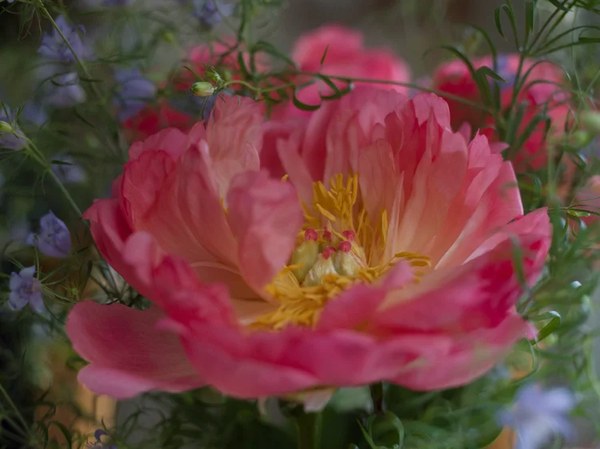
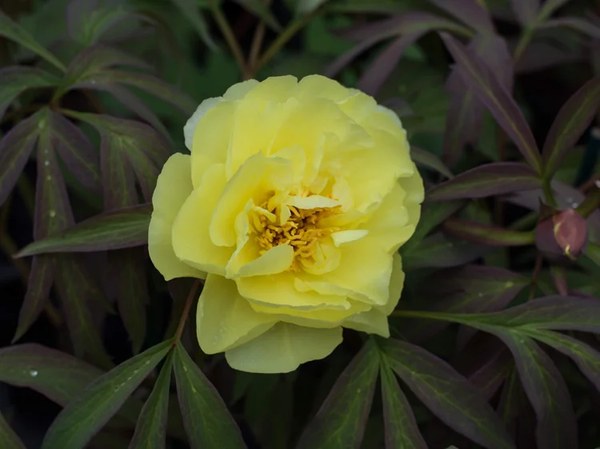
牡丹是苗圃最大的专长,分草本牡丹、杂交牡丹和木本牡丹三类,杂交牡丹是草本与木本杂交出来的类型,木本牡丹带木质化茎干,能长到六英尺高。草本牡丹四月到七月中旬陆续开放,按早、中、晚三个花期分开,选齐三组可以从五月到七月接续开六周。木本牡丹的选色从深红、紫到浅粉、奶油色和明黄都有,园方称这是英国最齐全的木本牡丹选种之一。Gardens Illustrated 的评语说,园里现有三百多个牡丹品种。
切尔西花展与各地的植物展
苗圃连续十一年参加英国皇家园艺学会的切尔西花展,每届都拿到奖牌,2022 年则凭牡丹与多年生植物的展示拿下第一枚金牌,展台由希思·厄克特设计并搭建。除切尔西之外,园方还参加大迪克斯特的春秋两季植物展、斯康宫植物展、苏格兰岩石花园俱乐部的活动以及圣安德鲁斯植物展。《每日电讯报》把这里列入全英二十家最佳邮购苗圃,并称这里是苏格兰牡丹品种最全的一处;Gardens Illustrated 的百佳苗圃名单里也有它。
目录里的其他品类
牡丹之外,目录里还有多年生植物、蕨类、玉簪、玫瑰、乔木与灌木、高山植物,以及从各地引进的稀有植物,栽培用的是不含泥炭的堆肥。分类做得细,多年生植物按季节、光照与用途分列,牡丹另设早、中、晚花期与花色分类,带香味的品种和适合切花的品种单独成列,木本牡丹按花色、花期与单瓣、重瓣等花型分开,蕨类则分为落叶、常绿、喜湿和高大四类。
邮购、发货与栽培要点
植株在英国境内以邮购方式发货,没有最低订购量,运费按地区固定,英格兰十英镑,苏格兰高地十二点五英镑,苏格兰群岛十五英镑,多数包裹由 DPD 快递投递,留下邮箱或手机号会收到一小时送达窗口的通知,订单备注最多二十个字符。全部植株提供六个月保障,收货后如有问题应尽快拍照联系,脱欧之后园方不再向北爱尔兰及其他国家发货,首次合作的贸易客户需要填写申请表。栽培上,草本牡丹多数在四升深盆里培育,根系粗壮的品种以及杂交、木本牡丹用五到十升的盆,裸根苗收到后先在室温水里泡几个小时,穴挖到十八英寸见方,芽眼埋进土里不超过两英寸,木本牡丹的冠部齐土面埋下,嫁接在草本砧木上的要埋到土下十厘米,嫁接口才不会自己萌蘖,木本牡丹还要栽上几年才稳住并开花。
An old walled kitchen garden near Edinburgh
The nursery dates itself to the old walled kitchen garden of the Binny Estate near Edinburgh, where it has grown hardy perennials for thirty-three years. A visit from Gardens Illustrated in 2022 described the ground in some detail: an acre inside the walls with four acres beyond them, a few miles from the sea at 137 metres, a mild and wet climate in USDA zone 8, a slightly acidic silty soil inside the walls and heavy clay outside. Billy Carruthers used to run record shops in London, and his interest in plants goes back to his childhood, when his mother in Glasgow grew a double red peony that flowered every year on his birthday. The terms page names the operating company as Binny Plants LLP. The nursery’s own account records that David joined as a partner in 2014, having left a career as a commercial property lawyer.
Three kinds of peony and three hundred varieties
Peonies are the nursery’s main specialism, in three groups: herbaceous peonies, intersectional peonies and tree peonies. Intersectionals are crosses between the herbaceous and tree types, while tree peonies grow on woody stems and can reach six feet. Herbaceous peonies flower from April to mid-July and are sorted by early, mid and late season, so that picking from all three groups gives six weeks of continuous bloom from May to July. The tree peonies run from deep red and purple through soft pink, cream and bright yellow, and the nursery describes its selection as one of the broadest in the UK. Gardens Illustrated noted that the nursery holds more than three hundred peony varieties.
Chelsea and the plant fairs
The nursery has attended the RHS Chelsea Flower Show for the past eleven years and has taken a medal each year. In 2022 it won its first Gold Medal, for a display of peonies and perennials designed and built by Heath Urquhart. Away from Chelsea it shows at the Great Dixter spring and autumn fairs, the Scone Palace plant fair, Scottish Rock Garden Club events and the St Andrews plant fair. The Daily Telegraph lists the nursery among the twenty best mail-order nurseries in Britain and calls it the place with the largest list of peonies in Scotland, while it also appears in Gardens Illustrated’s hundred best plant nurseries in the UK.
The wider catalogue
Beyond peonies the catalogue covers perennials, ferns, hostas, roses, trees and shrubs, alpines, and rare plants brought in from elsewhere, all grown in peat-free compost. The sorting is fine-grained: perennials are listed by season, light and use; peonies have separate sections for early, mid and late season and for colour, with scented varieties and those suited to cutting given their own runs; tree peonies are grouped by colour, season and flower form, single, semi-double and double; and ferns are divided into deciduous, evergreen, moisture-loving and tall.
Mail order, delivery and planting
Plants are sent by mail order within Britain with no minimum order and a flat delivery charge, ten pounds for England, twelve pounds fifty for the Scottish Highlands and fifteen pounds for the Scottish Islands, most parcels travelling with DPD, and leaving an email address or mobile number brings a message with a one-hour delivery window. Delivery notes are limited to twenty characters. All plants carry a six-month guarantee, so anything that fails should be reported with photographs as soon as it arrives, and since Brexit the nursery no longer ships to Northern Ireland or to other countries, while first-time trade customers are asked to fill in an application form. On planting, most herbaceous peonies are grown in four-litre pots and the more heavily rooted varieties, along with intersectionals and tree peonies, in five to ten litre pots, and bare-root peonies should be soaked in room temperature water for several hours before going in. Dig a hole about eighteen inches wide and deep, and keep the eyes no more than two inches below the surface. For a tree peony the crown sits just under the soil, and one grafted onto a herbaceous rootstock goes about ten centimetres down so that the graft does not shoot; tree peonies also need a few years to settle before they flower.
相关文章:
 新西兰 牡丹花园The Peony Gardens – 园艺展示与体验空间
 美国 斯文森牡丹苗圃 Swenson Gardens – 明尼苏达州数百个牡丹品种
 美国 Chateau城堡牡丹花园 – 旧金山240品种牡丹专业种植园
 新西兰 Simmons牡丹苗圃 – 种苗生产与销售
 美国 牡丹的羡慕苗圃 Peony’s Envy – 美国东北部牡丹收藏展示园
 美国 Solaris耐寒植物农场 – 专业园艺服务机构
 美国蟋蟀岭花园苗圃 (Cricket Hill Garden) – 1989 年创立于康涅狄格州托马斯顿的中国牡丹专类家族苗圃
 英国 春天到达苗圃 Spring Reach Nursery – 种苗生产与销售
发表回复