
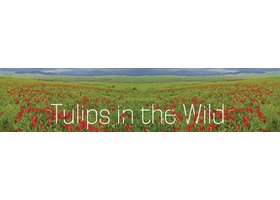
网站定位与项目缘起
Tulips in the Wild 收录了 Eric Breed、Sjaak de Groot、Arie Peterse、Vladimir Kolbintsjev、Willem Lemmers、Marijn van den Brink 六位荷兰及欧洲球根花卉从业者与爱好者在 20 多年间实地拍摄的物种郁金香照片。站点由美国 Colorblends Wholesale Flowerbulbs 与阿姆斯特丹郁金香博物馆 (The Amsterdam Tulip Museum) 联合出版, 文稿编辑为 Christian Curless, 部分图片由植物学家 Nicholas Turland 授权使用。
互动地图与 41 个原种郁金香
站点核心是一张交互式原产地地图, 标注了 41 个原种郁金香的拍摄地点, 覆盖哈萨克斯坦、吉尔吉斯斯坦、乌兹别克斯坦、塔吉克斯坦、土库曼斯坦 5 个中亚国家, 以及阿富汗、伊朗、土耳其、克里特岛、希腊、意大利、瑞士、阿尔及利亚、巴基斯坦、挪威、德国、法国等地。海拔跨度大, 从伊朗西部低海拔荒原到伊朗北部 1900m 山地均有分布, 例如 Tulipa bakeri 仅生长于克里特岛的 Omalos 高原 (1000m), Tulipa greigii 见于哈萨克斯坦 1300m 的早春融雪草甸。
五段考察区域与代表物种
中亚干旱草原 (1-19 号) 是物种最集中的区域, T. patens、T. schrenkii、T. albertii、T. greigii、T. kaufmanniana 多个种在此交汇; 伊朗至阿富汗 (20-30 号) 代表种有 T. clusiana (女士郁金香, 以 16 世纪将郁金香带入莱顿大学的 Carolus Clusius 命名)、T. humilis、T. botschantzevae; 地中海岛屿 (33-37 号) 含 T. cretica、T. doerfleri、T. saxatilis 等克里特特有种; 阿尔及利亚 (38 号) T. primulina 生长在奥雷斯山 (Aurès) 的石灰岩缝隙; 欧洲原野 (39-41 号) 涵盖 T. sylvestris (经由旧商路土壤压舱物从意大利扩散到德国葡萄园陡坡、挪威海港)、T. grengiolensis (瑞士 Grengiols 镇附近极罕见种)、T. australis (法国西南部科比耶山脉)。
幻灯片文字与摄影伦理
Eric Breed 为每张幻灯片照片撰写现场笔记、植物学描述与轶事, 文字以英文为主。站点明确标注「原片版权归摄影师所有, 媒体编辑用图请洽 press[at]colorblends[dot]com」, 商用与编辑用途需逐张申请。Sjaak de Groot 拍摄的中亚市场照片记录了当地居民在路边售卖郁金香球根的场景, 反映了郁金香在这些原产地被视作普通植物而非园艺珍品的文化差异。
出版形式与博物馆渠道
该书曾以纸质形式由 Colorblends 与阿姆斯特丹郁金香博物馆联合发行, 阿姆斯特丹郁金香博物馆位于王子运河 116 号 (Prinsengracht 116, Jordaan 区), 距中央火车站步行可达, 紧邻安妮之家与西教堂 (Westerkerk)。博物馆全年开放, 除该书外还展出郁金香从奥斯曼帝国引入荷兰的完整历史。现纸质版售罄, 仅网站提供完整电子内容, 包含 41 张原产地地图、幻灯片逐张解读、路边花商纪实。
Site Overview and Project Origins
Tulips in the Wild gathers species-tulip photography by Eric Breed, Sjaak de Groot, Arie Peterse, Vladimir Kolbintsjev, Willem Lemmers and Marijn van den Brink, six Dutch and European bulb-industry professionals and enthusiasts, over more than two decades of fieldwork. The site is co-published by Colorblends Wholesale Flowerbulbs (USA) and The Amsterdam Tulip Museum (NL); text by Eric Breed is edited by Christian Curless, with additional images contributed by botanist Nicholas Turland.
Interactive Map and 41 Species Tulips
An interactive origin map links every photograph to its location and indexes 41 species tulips across Kazakhstan, Kyrgyzstan, Uzbekistan, Tajikistan, Turkmenistan (five Central Asian republics), plus Afghanistan, Iran, Turkey, Crete, Greece, Italy, Switzerland, Algeria, Pakistan, Norway, Germany and France. Altitudes span from lowland steppe (T. patens at 600m in Kazakhstan) to high montane scree (an unnamed tulip photographed at 1900m in Iran); Tulipa bakeri is endemic to the Omalos Plain on Crete at about 1000m, while T. greigii blooms in Kazakh snow-melt meadows at 1300m.
Five Geographic Regions and Representative Species
Central Asian steppes hold species 1–19: T. patens, T. schrenkii, T. albertii, T. greigii, T. kaufmanniana and the bearded T. regelii, one of the rarest of all wild tulips. Iran and Afghanistan (species 20–30) include T. clusiana, the lady tulip named for the 16th-century scientist who brought tulips to Leiden University’s botanical garden, plus T. humilis and T. botschantzevae. Mediterranean islands (33–37) host Crete endemics such as T. cretica, T. doerfleri and T. saxatilis. Algeria (38) hosts T. primulina in Aurès limestone pockets. European mainland (39–41) covers T. sylvestris (whose bulbs traveled in old ballast soil from Italy to German vineyard slopes and Norwegian ports), T. grengiolensis (a very rare tulip near Grengiols, Switzerland) and T. australis (bright-yellow wild populations in the Corbières Mountains of southwestern France).
Slideshow Notes and Image Use Policy
Eric Breed writes the per-image caption notes, botanical descriptions and anecdotes in English. The site states explicitly that all photographs remain copyrighted by their photographers and that editorial or media use requires contacting press[at]colorblends[dot]com. Sjaak de Groot’s roadside-seller photos from Central Asia show local villagers offering tulip bulbs as ordinary trade goods, an attitude that contrasts sharply with the tulip’s collector status in Western gardens.
Book Edition and Museum Distribution
The original printed edition was co-published by Colorblends and The Amsterdam Tulip Museum. The museum sits at Prinsengracht 116 in Amsterdam’s Jordaan canal district, a short walk from Central Station and steps from the Anne Frank House and Westerkerk. The museum is open year-round and, besides this book, exhibits the full history of the tulip’s introduction from the Ottoman Empire into Holland. The print run is now sold out at the visitor shop, but the complete site (interactive map, 41 slideshow photos, roadside-seller gallery, photographer biographies) remains freely available online.
相关文章:
 野生郁金香网站 Tulips in the Wild – 二十年郁金香实景影像与物种笔记合集
 荷兰 阿姆斯特丹郁金香博物馆 – 跨亚欧郁金香历史展览馆
 美国 ROOZENGAARDE & TULIPS 球根苗圃 – 荷兰家族四百年球茎批发与展示花园
 荷兰 卓越郁金香合作组织 Remarkable Tulips – 专业园艺服务机构
 加拿大 野花苗圃 Wild About Flowers – 推动本土野花回归城市园林与田园景观的代表性供应商
 荷兰 Nord Lommerse花卉球茎集团 – 专业园艺服务机构
 美国 Colorblends 球根批发 – 主营混色花球茎调和配方与春花球茎批发分销
 荷兰 Tuberbulb花卉球茎出口公司 – 专业园艺服务机构
发表回复