
一家五代人做下来的大丽花苗圃
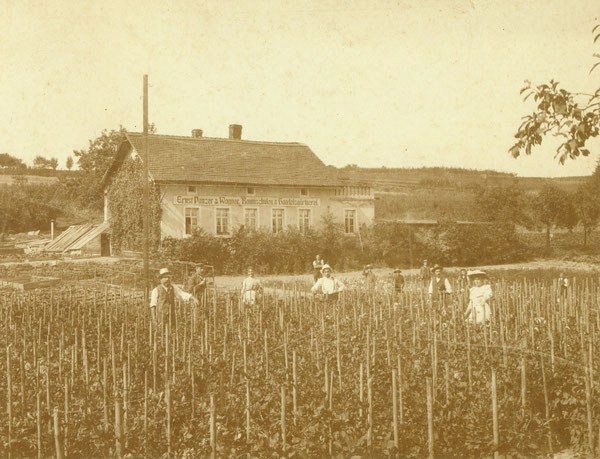
招牌上写着「保罗·潘策园艺」,网站叫「巴特克斯特里茨大丽花」,两个名字指的是同一家人,苗圃在德国图林根州的小城巴特克斯特里茨。1872 年,曾祖父恩斯特·潘策和合伙人瓦格纳在今天这块地上开了一家苗圃,起先以苗木为主;后来他的儿子保罗把大丽花引进园子并一路改良,园子从此改用他的名字。
接手的一直是自家人。保罗的儿子鲁道夫把园子交给孙子海因茨,1979 年 1 月 1 日生效;1999 年,海因茨的儿子迪尔克和妻子卡特琳一起接手,到今天这家园子已经传了五代。
巴特克斯特里茨不大,十九世纪六十年代全城人口约五千,却和大丽花绑在了一起。1812 年,14 岁的克里斯蒂安·迪根从魏玛宫廷园艺家康拉德·谢克尔手里得到几块大丽花块根,1824 年买下一座带两万平方米园林的旧宫殿,1826 年在那里开出德国第一家经营大丽花的商业苗圃。这座城因此有个别号,叫「德国大丽花育种摇篮」。
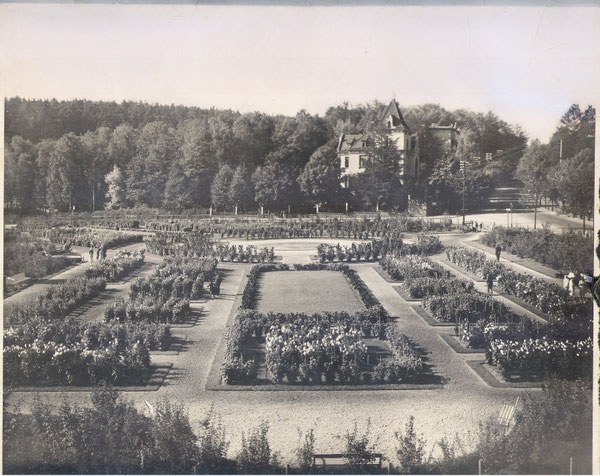
城里还有一座 1928 年开园的格拉大丽花园,是全德国最早的大丽花观赏园,园中那座「那朵大丽花」喷泉出自建筑师蒂洛·肖德 1930 年的手笔。2028 年这座花园满一百岁,而园里的花苗一百年来一直由巴特克斯特里茨的花农运送过去,如今还在供货的只剩这家苗圃。
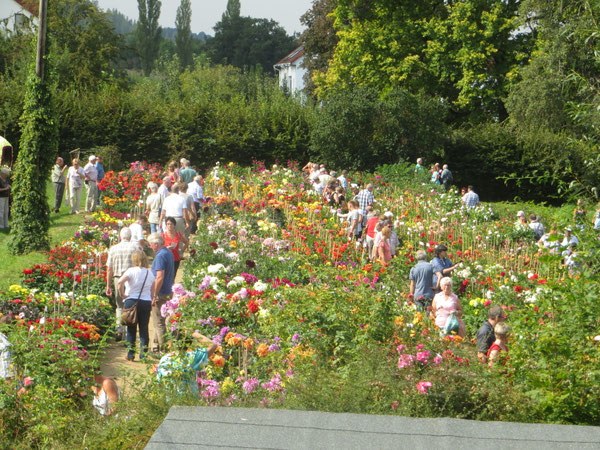
每年九月初的大丽花节
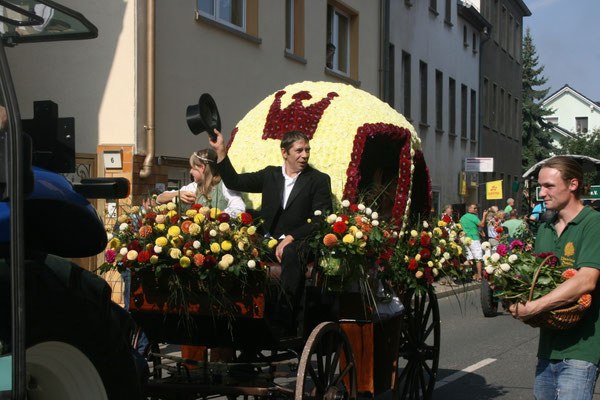
巴特克斯特里茨的大丽花节办了三十多年,固定落在九月的第一个周末。开幕前一天晚上,新一届大丽花女王在宫殿的大丽花厅加冕;接下来两天是市中心街道节,海因里希·许茨故居里摆陶器展,城堡公园里办一场小规模的大丽花展,周日早晨有露天礼拜,晚上评选当届最美的大丽花。2025 年是第四十七届,2026 年是第四十八届。
节日本身也是苗圃的展示窗口。园子里有一块展示畦,按字母顺序排开的完整目录里挂着各品种的名牌,客人可以照着单子挑,看中了直接写订货单。赶不上节日的客人也能在当年第一次霜冻之前来看,品种清单和订货单就放在畦边随手可取。苗圃里还设了一间大丽花咖啡馆,看完花喝杯咖啡歇脚是这里的固定节目。
节上还有个老规矩:每年有一场由客人投票的「最美大丽花」评选,得主随即成为新一任大丽花女王。这家苗圃的自育品种拿过这个称号,2012 年在迈瑙岛的大丽花展上,自育品种奥托·迪克斯获「2012 年大丽花女王」称号。
目录里到底有多少个品种
站方在首页上写的是商店里有两百五十多个不同的大丽花品种。他们公开的 2025 年品种清单表里有三百六十五个带编号的条目,而如今商店里按字母顺序排开的完整目录一共十五页,逐个数下来是四百三十六个条目。三个数字各有出处,站方没有解释其中的差额。
清单表给每个品种记了类别、花色、株高和花径,株高从二十五厘米一直到三米,一半的品种在一米一上下。按类别分,装饰型最多,一百二十四个,其次是半仙人掌型五十个、球型四十一个,再往下有睡莲型、仙人掌型、领圈型、鹿角型等等十来个类目。
按店内的分类页看,自育品种八十四个,标明五十年以上的老品种四十个,专为蜜蜂留花源的五十七个,深色叶片的十七个,矮生品种二十五个。此外还按株高分出高株、中株、矮株几档,按用途分出适合切花的一类,商店里另有块根以外的少量配套商品。
自育出来的品种拿过哪些奖
育种由父亲海因茨·潘策主持,三十多年里推出一批自育品种。2004 年,他的自育品种拿到法国大丽花奖;2012 年,自育品种奥托·迪克斯在迈瑙岛的大丽花展上被选为当届大丽花女王;2015 年在哈费兰的联邦园艺展上,苗圃拿到一枚银质国家荣誉奖。
联邦园艺展是这家苗圃的常客。2007 年格拉和龙讷堡那届,他们从所有参展园艺手里拿到最多的奖牌:四枚国家荣誉奖和八枚大金奖。2023 年曼海姆那届拿到的是联邦金质国家荣誉奖,这是德国园艺界最高的一档荣誉,由联邦农业部颁发,评语写的是在露地和展棚的新品种评比中的育种成绩。奖是海因茨和伴侣乌特·比勒一起去曼海姆领的。
2025 年德国大丽花协会的新品种评定同样由他主导。那一届一共报上来十一个新品种,他名下两个品种把最重要的两个奖都收入囊中,得分一百一十三分的那株拿了主席莫斯纪念奖,一百零六点五分的那株拿了奥托·贝格霍夫纪念奖。评委分别在三处试种田打分:汉堡大丽花园、斯图加特的基勒斯贝格和埃尔福特的埃加公园。这两个品种背后各有近十年的杂交工作。
从哪一年开始参加联邦园艺展,站方自己的说法也不一致:沿革页写 1995 年起每届都参加,招聘页写 1997 年起参加两年一届的联邦园艺展。站方两处口径对不上,没有给出解释。
主业之外还做的活,和一顶新帽子
这是一家家族企业,全职员工不到十人。主业是大丽花块根,地里种、地里收,自育品种也是自家地里育出来的。除此以外还做玫瑰、花坛和阳台植物、少量苗木、花艺,以及割草和庭院养护一类的零活。园里有个小小的花店和零售店,由卡特琳·潘策管着,店里还养着一条叫佐拉的农场狗,几只猫则归小女儿伊丽莎白照看。迪尔克和卡特琳都在柏林洪堡大学读过园艺和农业科学。
苗圃挂着「图林根品质」的标志,每年复查一次;种地尽量少用药水,也尽量少动土。春天赶市集,比如莱比锡一带的园艺集市。苗圃还整理了一份彩色大丽花图册和一份带品种特征的清单表放在网上,可以直接下载,订货单也提供打印版。
2018 年,家族的下一代出了一本书,讲大丽花怎么种、怎么用、怎么上桌,作者是小女儿安妮-索菲,在图林根州园艺协会支持下写成;2025 年出了第二版,硬封九十六页。这本书当年上过德国中部电视台的园艺节目和本地报纸。
2024 年 3 月,这项传统被提名代表图林根州申报联邦非物质文化遗产名录,是全州四项申报之一,写申请的是卡特琳·潘策和小女儿安妮-索策,同州一位企业协会主席也参与了。图林根州后来把「埃尔斯特河中段的大丽花传统」收进了州级名录;至于联邦名录,文章发布时仍要等联邦文化部长定夺。
A dahlia nursery run by five generations of one family
The sign above the gate reads Paul Panzer Gardening and the website trades as Köstritzer Dahlien; both names belong to the same family, working a dahlia nursery in the small Thuringian town of Bad Köstritz. The business began in 1872, when the great-grandfather Ernst Panzer set up a nursery on the very same plot with a partner, Wagner, working mostly in nursery stock. It was his son Paul who brought dahlias into the garden and bred them onwards, and the nursery has carried his name ever since.
Handover has always stayed in the family. Paul’s son Rudolf passed the nursery to his grandson Heinz with effect from 1 January 1979, and in 1999 Heinz’s son Dirk took over together with his wife Katrin. The garden is now in its fifth generation.
Bad Köstritz is a small place, with about five thousand inhabitants in the 1960s, yet it is tied to dahlias. In 1812 the fourteen-year-old Christian Deegen received a few dahlia tubers from Conrad Sckell, the court gardener at Weimar; in 1824 he bought an old princely summer palace with a park of some two hectares around it, and in 1826 he opened there the first commercial nursery in Germany to sell dahlias. The town still carries the title of cradle of German dahlia breeding.
The town also holds the Gera dahlia garden, opened in 1928 and the oldest dahlia show garden in Germany, whose fountain called Die Dahlie was designed by the architect Thilo Schoder in 1930. The garden turns a hundred in 2028, and the dahlias planted there have been supplied by growers from Bad Köstritz for a century. Of those growers the Panzer nursery is the last one still doing it.
The dahlia festival in early September
The Köstritzer dahlia festival has run for more than thirty years and always falls on the first weekend of September. On the evening before the opening a new dahlia queen is crowned in the dahlia hall of the palace; the two days that follow are a street festival in the town centre, with a ceramics exhibition in the Heinrich Schütz House and a small dahlia show in the castle park, an open-air service on Sunday morning and the vote for the most beautiful dahlia of the year on Sunday evening. The 2025 edition was the forty-seventh and the 2026 edition the forty-eighth.
The festival doubles as a shop window for the nursery. A show bed in the garden carries the name plates of every variety in the full alphabetical list, and visitors can pick out what they want and write it on an order sheet. Anyone who cannot make the festival can still come and walk the bed until the first frost of the year, with the list and the order slips kept at the edge of the bed. There is a dahlia café in the nursery as well, and a coffee and cake there is part of the visit.
One old custom is worth noting: the dahlia chosen by visitors as the most beautiful of the year keeps that name and becomes the mascot of the following edition. One of the nursery’s own seedlings has held the title, being voted dahlia queen at the dahlia show on the island of Mainau in 2012.
How many varieties the catalogue really holds
The nursery itself speaks of more than two hundred and fifty varieties in its shop. Its published 2025 variety list carries three hundred and sixty-five numbered entries, while the full alphabetical range in the shop now runs to fifteen pages which add up to four hundred and thirty-six items when counted one by one. The three figures come from three different places and the nursery does not explain the difference.
The list records class, colour, height and flower size for every variety. Heights run from twenty-five centimetres up to three metres, and half of them sit at about one metre ten. By class, decorative types are the largest group with one hundred and twenty-four, followed by semi-cactus with fifty and ball types with forty-one; below them come water-lily, cactus, collarette, deer-horn and a dozen other classes.
Counting the categories in the shop itself, there are eighty-four own seedlings, forty varieties labelled as fifty years or more, fifty-seven grown for bees, seventeen with dark foliage and twenty-five dwarf types. There are further groups by height, from tall to medium and short, and one for varieties suited to cutting, plus a small number of accessories alongside the tubers.
The awards behind the seedlings
Breeding is in the hands of the father, Heinz Panzer, who has introduced a steady stream of own varieties over more than thirty years. In 2004 one of his seedlings took a French dahlia prize; in 2012 his seedling Otto Dix was voted dahlia queen at the dahlia show on Mainau; and in 2015 the nursery collected a silver State Honour Prize at the federal garden show in Havelland.
The federal garden show is a regular fixture. In 2007, at the show in Gera and Ronneburg, the nursery took more medals than any other exhibitor: four State Honour Prizes and eight Large Gold Medals. In 2023 at Mannheim it received the Bundesehrenpreis in Gold, the highest honour German horticulture has to give, awarded by the federal ministry of agriculture for outstanding results in breeding new varieties for outdoor and hall shows. Heinz Panzer and his partner Ute Biele travelled to Mannheim to collect it.
The German dahlia society’s new variety trials for 2025 were likewise his year. Eleven new varieties were entered in all, and two of his took the two most important prizes: the one scoring one hundred and thirteen points won the President Moes memorial prize, and the one on one hundred and six and a half points took the Otto Bergerhof memorial prize. The judges assessed the entries on three trial fields, at the dahlia garden in Hamburg, at Killesberg in Stuttgart and at the egapark in Erfurt. Each of the two varieties stands on nearly ten years of hybridising.
Even the start date for taking part in the federal garden shows is given two ways on the nursery’s own pages: the history page says it has exhibited at every show since 1995, while the recruitment page says it has taken part in the federal shows, held every two years, since 1997. The two statements do not match and no explanation is offered.
Beyond the dahlias, and a new hat
This is a family business with fewer than ten employees. The main crop is dahlia tubers, grown and lifted in their own fields, and the nursery’s own seedlings are bred there too. On top of that come roses, bedding and balcony plants, a little nursery stock, floristry work, and odds and ends such as mowing and garden maintenance. There is a small flower and retail shop run by Katrin Panzer, and a farm dog called Zora lives on the premises while the youngest daughter Elisabeth looks after the cats. Both Dirk and Katrin studied horticulture and agricultural science in Berlin at the Humboldt University.
The nursery carries the Thuringian Quality seal, which is checked every year, and tries to spare the soil, the groundwater and the plots while using as few pesticides as possible. In spring the crew goes out to markets, among them the gardening fair in the Leipzig area. A full colour dahlia catalogue and a list of varieties with their characteristics are also published online as downloads, and a printable order sheet is offered.
In 2018 the next generation of the family produced a book on how to grow dahlias, how to use them and how to cook with them, written by the youngest daughter Anne-Sophie with support from the Thuringian state association for horticulture; a second edition appeared in 2025, hardcover, ninety-six pages. The book was covered at the time by a television gardening programme and by the local paper.
In March 2024 the tradition was put forward as one of Thuringia’s four nominations for the federal register of intangible cultural heritage, in a dossier drawn up by Katrin Panzer and Anne-Sophie together with the chairman of the local business association. Thuringia has since entered the dahlia tradition of the middle Elster valley in its own state register; the decision on the federal list was still with the federal culture minister when the announcement was made.
相关文章:
 英国 里奇维尤大丽花苗圃 Ridgeview Nursery – 300余种只卖扦插苗的两代苗圃
 英国 Sienna玉簪苗圃 – 种苗生产与销售
 美国 Connell 大丽花 Connell’s Dahlias – 华盛顿州塔科马家族三代苗圃
 美国 天鹅岛大丽花 Swan Island Dahlias – 美国最大最具影响力的大丽花种植商之一
 美国 疯狂大丽花苗圃 Crazy 4 Dahlias – 马里兰耐热大丽花苗圃
 美国 朱莉大丽花 Dahlias by Julie – 小型家庭式大丽花球根专营苗圃
 美国 Big Dahlias 大丽花苗圃 – 华盛顿州小型家族大丽花球根专营苗圃
 英国大丽花协会 National Dahlia Society – 英国历史最久规模最大的大丽花专业团体
发表回复