
三片园子合成一座公园
五彩花园在门兴格拉德巴赫市中心,占地约30公顷,从凯撒公园一路延伸到主墓园,中间把植物园也包了进去。整座公园分成三片:凯撒公园、五彩花园和植物园。作为免费开放的公共绿地,它是全城最受欢迎的公园之一。
三片不是同时建成的。凯撒公园最早,1890年由市民凑钱买下绿地建成,当时只有3.2公顷,外圈还砌着墙,把旁边的天主教和福音派墓园隔开;1900年墓园关闭,1902年墙就拆了。五彩花园这一片是1930年代末才成形,名字也是那时候来的。
园里的建筑大多是当年留下的。1902到1903年盖了凯撒-弗里德里希音乐厅,1905年在户外添了露天音乐台,两处今天还在用;1903年起办德国玫瑰展,玫瑰园也是那时候辟出来的。
植物园:三百平方米长到五公顷
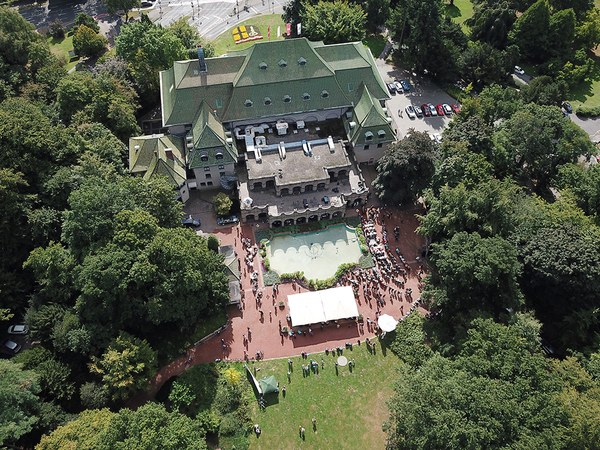
植物园的历史从1927年说起。原来是城里一所文理中学的校园花园,地方不够,1927年整体搬到旧墓园地块上,起步只有300平方米,如今是5公顷。1955年天主教墓园那块地卖给市政,园子跟着往北扩,到1960年前后长到1.6公顷。
现在园里的老树有些超过100岁,最有名的是那棵血山毛榉和匈牙利橡树。园子还以杜鹃花和映山红出名,初夏开花的时候整片都是。另外有一棵35米高的海岸红杉,站在下面得仰头看。
植物园被划成几个主题园:药剂师园种的是能入药的草本,冬青园、染料植物园、香草园、盲人园各管一摊;毒物园正在建。
四千余种植物
园里的落叶乔灌木有1400多个种类和品种,橡树60种、枫树150种、山毛榉25种、桦树20种;针叶树800种;杜鹃和映山红600种;草本1200种。加在一起,全园四千余种,是北威州一带数得着的植物收藏。
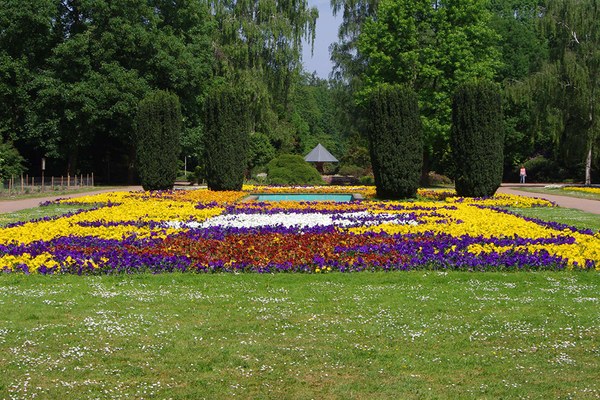
数字听着大,走起来更直观:一千平方米的花坛里种着两万余株草花,春天先栽三色堇,五月中旬换成夏季花卉,每年换新图案,这个做法坚持了七十多年。鸟舍从1970年起就有,近400平方米,养着二百多只鸟,鹦鹉、斑鸠、金丝雀、鹌鹑都有。
儿童游乐场1956年设起来,2014年大改过一次,2026年又由市政绿化部门扩建翻新。

艺术散在树丛里
园子里有十来件雕塑,金属、玄武岩、青铜都有。1970年立在圆形草坪上的《光柱》是海因茨·马克做的,十四米五高;沃尔夫冈·哈恩用玄武岩做的《两个部分》立在停车场上对面的小高地上;克里斯托夫·鲍曼的熊群在主大道口;安娜-玛丽亚·罗默斯基兴1950年的青铜少年像叫《寻找太阳》,摆出来当年就不见了人影。
园史里还留着一座纪念碑,属于路易丝·格伊里。她1854年生、1900年去世,把遗产里一大笔捐给城里,指定用于慈善和教会事业。纪念碑2005年11月列进文物保护名录。
怎么逛
园子全天开放,不收门票。慢跑的人沿着树丛间的小路跑,两公里到六公里;北面接主墓园和林子,三处连成一大片150公顷的绿地。旁边有迷你高尔夫,十八洞,也有北欧式健走的路线。
支持园子的是「五彩花园网络」协会,2008年5月成立,由当时的园长发起,现在跟成人教育中心合办课程和讲座,讲植物也讲生态。园里的导览、给孩子的自然教育活动都归他们管。
Three Parts, One Park
Bunter Garten sits in the centre of Mönchengladbach in North Rhine-Westphalia, covers about thirty hectares and runs from the Kaiserpark to the main cemetery, with the botanical garden folded in along the way. The whole thing is divided into three areas: the Kaiserpark, the Bunter Garten itself and the Botanischer Garten. It is free to enter and among the most popular parks in the city.
They were not built at the same time. The Kaiserpark came first: in 1890 local residents raised money to buy green land for public use, and the three-hectare park was walled off from the Catholic and Protestant cemetery next door. The cemetery closed in 1900 and the wall came down in 1902. The part that gave the park its name dates from the late 1930s.
Most of the buildings are period pieces. The Kaiser-Friedrich-Halle concert hall went up in 1902 and 1903, an open-air shell was added in 1905, and the rose garden with the German Rose Show dates from 1903.
The Botanical Garden
The botanical garden started in 1927, when the garden of a local secondary school had to move. It was transferred to the former cemetery plot and began on three hundred square metres; it now covers five hectares. The Catholic part of the cemetery was sold to the city in 1955, and the garden spread northwards afterwards, reaching one and a half hectares by around 1960.
Some of the trees here are over a hundred years old, among them a copper beech and a Hungarian oak. The garden is also known well beyond the city for its rhododendrons and azaleas, which flower in early summer, and for a thirty-five-metre coast redwood that takes some looking up to appreciate.
It is laid out as a set of theme gardens: a physician’s herb garden, a holly garden, a dye-plant garden, a herb garden and a garden for the blind. A poisonous plant garden is being added.
Four Thousand Kinds of Plant
The woody plants alone run to more than fourteen hundred species and cultivars: sixty oaks, a hundred and fifty maples, twenty-five beeches, twenty birches, eight hundred conifers, six hundred rhododendrons and azaleas and twelve hundred perennials. All told the park can claim some four thousand species and cultivars.
The numbers are easier to see in one place. A thousand square metres of flower beds hold around twenty thousand plants; pansies in spring give way to summer bedding from the middle of May, and the pattern is redesigned every year, a practice that has run for more than seventy-five years. The aviary has been there since 1970, nearly four hundred square metres for more than two hundred birds. The playground dates from 1956, was rebuilt in 2014 and was extended and restored by the city’s parks department in 2026.
Art Among the Trees
A dozen or so sculptures are scattered through the park, in metal, basalt and bronze. The tall steel Light Pillar on the round lawn was made by Heinz Mack in 1970 and stands fourteen and a half metres high; Wolfgang Hahn’s basalt Figure in Two Parts stands on the plateau opposite the car park; Christof Baumann’s bears sit where the Kaiserpark gives way to the Bunter Garten; and Anna-Maria Rommerskirchen’s bronze boy, The Sun Seeker, was put up in 1950 and vanished the same year.
One memorial in the park belongs to Louise Gueury, who lived from 1854 to 1900 and left a large part of her fortune to the city for charitable and church purposes. The memorial was entered on the monument register in November 2005.
How to Visit
The park is open to everyone and free of charge. Joggers use the paths between the trees for loops of two to six kilometres; to the north the park joins the main cemetery and the woods, and the three together make a green corridor of a hundred and fifty hectares. There is minigolf with eighteen holes next door, and walking groups use the park for Nordic walking.
The park is supported by a friends’ association, Netzwerk Bunter Garten, founded in May 2008 on the initiative of the then head of the garden. It runs guided tours and education programmes for children, and works with the local adult education centre on lectures and courses.
相关文章:
 德国 索林根植物园 Botanischer Garten Solingen – 北威州约 220 种凤梨温室
 德国 埃尔兰根植物园 Botanischer Garten Erlangen – 百余年教学收藏与濒危种保护
 德国 Park der Gärten – 德国规模最大的主题花园园区之一杜鹃特色收藏
 德国 柏林植物园 Botanischer Garten Berlin – 近两万种植物与分类研究
 德国 凯撒斯劳滕日本庭园 Japanischer Garten Kaiserslautern – 德国最大日式庭园
 奥地利 格拉茨大学植物园 Botanischer Garten Graz – 施蒂利亚州植物学教育与研究
 德国 欧洲花园 Garten Europa – 收录两千余座花园的德语门户
 德国 花园英雄 Garten‑Held – 下萨克森州百余篇德语园艺记录
发表回复