

园子从旧墓园旁边的空地开始
索林根植物园1963年九月七日开放,开园那天市长奥托·沃斯到场讲话。把它安在索林根-瓦尔德区一片旧福音派公墓的扩建用地上的是园长海因里希·瓦尔贝特。他原本打算的不只是建一座园子:园子旁边就是市里的苗圃,两处合起来办一所园艺职业学校,园丁学徒边学边种,把园子修出来。苗圃1952年就落成了,有八座温室、一间工作房和一间锅炉房。
园子的面积一路变大。最早是四万零六百平方米,1965年热带温室开放后又添了八百多平方米玻璃房,二〇〇一年整片旧公墓并进来,二十多万平方米跟着进了门,如今全园是六万一千五百二十平方米。二〇〇五年新开了一个入口,现在从五个方向都能进园。园子占着西南向的一片坡地,土是肥沃的壤土,年降水量一千毫米以上;正因为雨多,园里从高山到沼泽、从林缘背阴处到干燥阳光充足的草原,各种生境的植物才能各按各的要求种下。全园和热带温室在2010年前后被列进了受保护文物。
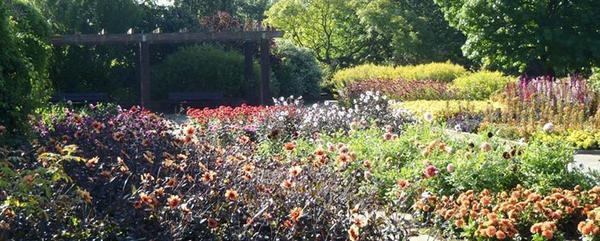
一块挨一块的主题园
主题园一块挨着一块,各占一处坡地或水边。高山园八百七十平方米,是园子最高的地方,园里的溪水从这里发源往下淌;石南园略超三千平方米,坡上种满石南科植物,是最大的一块;报春花园两千零一十平方米,花期从三月一直开到八月;鸢尾园一千一百七十平方米,溪流穿过园子,灌进几个小池塘再汇进大池;轮作花坛一百三十九平方米,春天种一万三千株郁金香、风信子、皇冠贝母和水仙,夏天换成九百多株大丽花;宿根花坛三百六十四平方米,种的都是能挺过干旱的宿根。
圣经园是二〇〇八年由造园师埃里希·施托斯贝格设计的,八个几何形状的高床,种的是圣经里提到的植物。花盆用金属做成,园里让它慢慢生出锈迹——金属代表生命的坚韧,锈迹代表万物无常。药用植物园二〇〇五年开园,照着一部中世纪记载药用植物的法令布置,二十四个小畦里种着其中列出的约五十五种,园里还按植物的轮作来排。香草园是当地主妇协会二〇〇四年建的,六十平方米,四周用黄杨围住。玫瑰园出自一个一八七七年成立的本地玫瑰协会,1998和二〇〇三两年陆续辟出来,一百六十平方米上下,品种由育种者白送,会员义务种植打理。
园里还有一道老蕨墙。老墙的石灰缝是某些稀有蕨类最后的落脚地,1993年当地最后一株这样的蕨被搬进园里,墙和植株都照原来的朝向安放。蕨墙旁边是林缘的蕨类区,再过去是无人照管的果树草坡,野苹果树散在草坡上。
玻璃房子里的热带植物
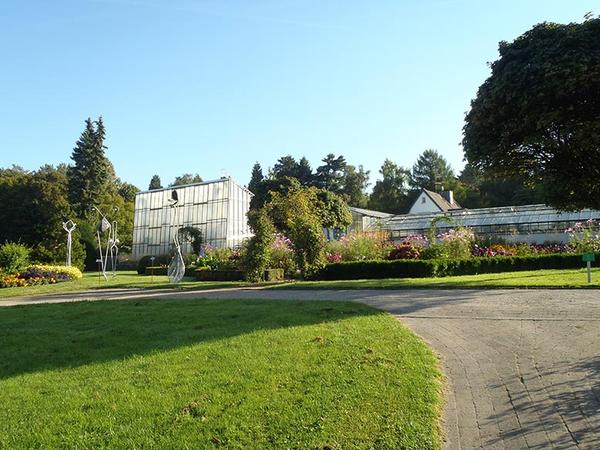
玻璃房一共八百二十六平方米。热带温室1965年落成,八米高的单坡屋顶,底面积官方页面给出过两个数字,一百三十七和一百四十三平方米。它朝西南,为的是借日照把屋里的空气烘出热带的味道,里面种着棕榈、甘蔗、肉桂、象脚芋和鹤望兰。九十年代中期重整过一次,加了水道和稻米梯台;2006年原来的锦鲤池改成给兰花和伴生植物做的东南亚水景。在莱茵地区,像这样五十年代六十年代建起、还带热带温室的植物园本来不多见。
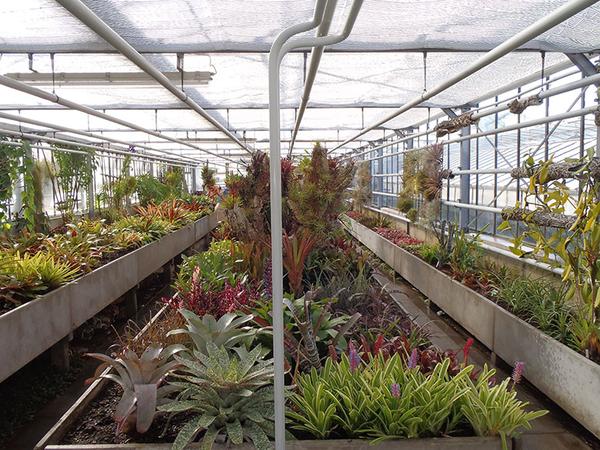
兰花馆以中南美洲的兰花为主,入口区和水景里的兰花轮流换着正在开的品种。凤梨温室收着约二百二十种凤梨科植物,园里说这是北威州最大的一批收藏之一;屋里还有香蕉、香草兰和食虫植物。多肉馆摆着二百五十种,其中一种夜皇后一年只开一次花,而且只在日落后开。柑橘馆按预约参观,每个月第二个和第四个星期六下午两点到五点,苦橙和香橼这类少见品种都在那儿。
水族馆的鱼缸两千升,2016年二月由区长剪彩启用,养着两百来条热带淡水鱼,饲养全靠志愿者;第二个鱼缸2022年修好。母本温室只在周日和节假日开放,能看见志愿者在里面育苗。温室从六十年代起就用垃圾焚烧厂送来的余热供暖。
野蜂步道和那些差点关门的日子
一条野蜂步道是市里和本地一家生物研究站一起设计的,九十年代末成形,基金会2007年自己动手重修了一遍,2016年再修时加了无障碍通道和盲文指示牌。德国登记在册的蜜蜂有四百二十九种,其中百分之五十七在濒危名录上,这条步道就是给它们留的口粮地。路边有一棵野苹果,树上带着一株槲寄生,是一位爱好者赠送的。
索林根植物园基金会1998年十月十五日成立,目标是保住并打理好这座园子。它接手过园里三座温室的日常管护、园内小卖部和野蜂步道,还靠志愿劳动替市里一年省下八万多欧元。会员从2006年的三百一十五人涨到2013年十月的五百多人。2015年底,园子加入德国植物园协会;2016年九月,又被收进莱茵河与马斯河之间的园林艺术之路,是索林根第二座入选的公园。
园子有过几次差点关门。1998年预算收紧,说要卖地盖楼,二〇〇三年又来一次,2014年再上名单,那次靠市民的抗议信和一千五百人签名的请愿才留住。2013年园子满五十岁,基金会出了三万多份的纪念特刊;2023年基金会成立满二十五周年,园子也满六十岁。2024年十月,园里补上了第三种猛犸树属的海岸猛犸,猛犸属至此三种齐全。2020年改造温室时腾出了一间绿色教室,孩子们可以在里面上课;2025年三月,修好的柱廊重新开张。
什么时候来,门票怎么算
不收门票,欢迎捐款。园子十一月一日到二月底上午九点开门,开到天黑最晚六点;三月一日到十月三十一日八点开门,开到天黑最晚八点。温室周日节假日十四点到十八点,周一到周四十点到三点半,周五周六不开;母本温室只在周日和节假日开门。园内小卖部从复活节主日到十月底,周日和有活动的周六下午两点到六点。
园子多数地方走得通,坡比较陡的几段可能要人搭把手;温室有坡道能上去,兰花馆、凤梨温室和水族馆轮椅可以进,多肉馆窄,只能容窄一点的助行器,热带温室门口有台阶,因为受文物保护改不了。狗要拴短绳,不能进温室和儿童游乐场,滑板一类要推着走。北门有电动车充电桩。
常年办的活动有志愿者讲解、绘画和瑜伽课、土地艺术工作坊,园子还能办婚礼。每年有花园与花卉市集,十二月底和临终关怀基金会合办圣诞市集,基金会自2017年起还办了一份园刊,报园里的事。二〇二六年的活动主题是「花园时间」。
A Garden That Began on the Edge of an Old Cemetery
The Solingen botanical garden opened on 7 September 1963, with the mayor, Otto Voos, present at the ceremony. The man who put it there was the garden director, Heinrich Walbert. His plan went further than a garden alone: a municipal nursery stood next to it, and the two together were to become a gardening trade school where apprentice gardeners would build the garden as they learned their trade. The nursery itself was finished in 1952, with eight greenhouses, a working shed and a boiler house.
The area kept growing. It started at forty thousand six hundred square metres, gained more than eight hundred square metres of glass when the tropical house opened in 1965, and took in the whole of the old cemetery in 2001, which brought over twenty hectares behind the gates. Today the garden covers sixty-one thousand five hundred and twenty square metres. A new entrance followed in 2005, and there are now five ways in. The garden sits on a south-west facing slope with fertile loamy soil and more than a thousand millimetres of rain a year; with that much rain, plant communities from alpine heights down to wet lowland, from shaded woodland edge to dry sunlit steppe, can each be given the conditions they ask for. The garden and its tropical house were placed under heritage protection around 2010.
One Theme Garden After Another
The theme gardens follow each other across the slopes and along the water. The alpine garden covers eight hundred and seventy square metres and marks the highest point of the garden, where the brook has its source. The heather garden is a little over three thousand square metres and is the largest of them, planted on a slope with many members of the heath family. The primula garden runs to two thousand and ten square metres and flowers from March into August. The iris garden covers one thousand one hundred and seventy square metres; the brook runs through it, fills a few smaller ponds and ends in the large pond. The rotation bed is a hundred and thirty-nine square metres, planted in spring with thirteen thousand tulips, hyacinths, crown imperials and daffodils, and in summer with more than nine hundred dahlias. The perennial bed measures three hundred and sixty-four square metres and holds the plants that cope with dry ground.
The biblical garden was designed in 2008 by landscape gardener Erich Storsberg: eight raised beds of different geometric shapes, planted with the plants the Bible mentions. The planters are made of metal and are left to rust on purpose — the metal stands for the strength of life, the rust for the transience of all things. The medicinal plant garden opened in 2005 and follows a medieval statute listing medicinal plants; in its twenty-four individual beds grow about fifty-five of the plants named there, and the rotation of crops is taken into account. The herb garden was made in 2004 by the local women’s association, sixty square metres framed with box. The rose garden came from a local rose association founded in 1877, laid out in 1998 and again in 2003, about a hundred and sixty square metres, with the varieties given free of charge by the breeders and planted and tended by the members as unpaid work.
There is also an old fern wall. The lime mortar joints of old walls are the last refuge of certain rare ferns, and in 1993 the last local specimen of such a fern was brought into the garden, wall and plant set in the same direction they had been. Beside the fern wall is a woodland-edge area with fern collections, and beyond that the old orchard meadow with wild apple trees scattered through the grass.
Tropical Plants Behind Glass
There are eight hundred and twenty-six square metres under glass. The tropical house was built in 1965, eight metres high under a single sloping roof; its floor area appears on the official pages as two figures, one hundred and thirty-seven and one hundred and forty-three square metres. It faces south-west so that the sun can heat the air inside to tropical temperatures, and it holds palms, sugar cane, cinnamon trees, elephant’s ears and strelitzias. It was reworked in the mid-nineties, gaining a watercourse and a rice terrace; in 2006 the old pike aquarium was turned into a Vietnamese biotope for orchids and their companion plants. In the Rhineland, a botanical garden with a tropical house from the fifties and sixties was always something of a rarity.
The orchid hall concentrates on orchids from Central and South America, with the ones in bloom on show in turn in the entrance area and in the Vietnamese biotope. The bromeliad house holds about two hundred and twenty species, and the garden calls it one of the largest collections in North Rhine-Westphalia; bananas, vanilla and carnivorous plants are there as well. The succulent house shows two hundred and fifty plants, among them a night-blooming cactus that opens its flowers once a year and only after sunset. The orangery can be visited by appointment, on the second and fourth Saturday of each month from two to five in the afternoon, with unusual citrus such as bitter orange and citron.
The aquarium tank holds two thousand litres. It was inaugurated in February 2016 by the district mayor and houses some two hundred tropical freshwater fish, cared for entirely by volunteers; a second tank was restored in 2022. The mother plant house opens only on Sundays and public holidays, when visitors can watch volunteers raising young plants. Since the sixties the greenhouses have been heated by waste heat from the incineration plant.
A Bee Trail and the Years the Garden Nearly Closed
The wild bee trail was designed by the city together with a local biological research station and took shape in the late nineties. The foundation rebuilt it itself in 2007, and a further renovation in 2016 added a step-free entrance and signs with Braille lettering. Four hundred and twenty-nine bee species are recorded in Germany, and fifty-seven per cent of them are on the red list of animals threatened with extinction; the trail is meant to be their larder. Along the way stands a wild apple tree carrying a mistletoe, given by an enthusiast.
The Stiftung Botanischer Garten Solingen was founded on 15 October 1998, with the aim of keeping and caring for the garden. It took over the day-to-day care of three of the greenhouses, the garden kiosk and the bee trail, and through unpaid work saved the city more than eighty thousand euros a year. Membership grew from three hundred and fifteen in August 2006 to more than five hundred by October 2013. At the end of 2015 the garden joined the national association of botanical gardens; in September 2016 it was taken up into the street of garden art between the Rhine and the Maas, the second park in Solingen to be included.
Several times the garden came close to closing. In 1998, with budgets squeezed, the land was to be sold for building; it happened again in 2003, and in 2014 the garden was on the list once more, saved this time by letters of protest and a petition with more than fifteen hundred signatures. In 2013 the garden turned fifty and the foundation issued a commemorative issue of more than thirty thousand copies. In 2023 the foundation was twenty-five years old and the garden sixty, and the third mammoth genus, the coastal mammoth, was planted, completing the collection of three mammoth genera. In March 2025 the restored pergola was opened again, and one of the greenhouses was turned into a green classroom where children have lessons.
When to Visit, and What It Costs
There is no admission charge and donations are welcome. The garden opens at nine in the morning from 1 November to the end of February and closes at dusk, at the latest at six; from 1 March to 31 October it opens at eight and closes at dusk, at the latest at eight in the evening. The greenhouses are open from two to four on Sundays and public holidays and from ten until half past three Monday to Thursday; they are closed on Friday and Saturday. The mother plant house opens only on Sundays and public holidays. The garden kiosk runs from Easter Sunday to the end of October, on Sundays and on Saturdays when something is on, from two to six in the afternoon.
Most of the garden can be walked, though on some of the steeper stretches a hand may be needed. The greenhouses are reached by a ramp; the orchid hall, the bromeliad house and the aquarium take wheelchairs, while the succulent house is too narrow for anything but a narrow walking frame, and the steps at the entrance to the tropical house cannot be changed because of the heritage protection. Dogs must be on a short lead, are not allowed in the greenhouses or the playground, and scooters have to be pushed. There is a charging point for electric bikes at the north entrance.
Guided tours are run by volunteers, and there are painting and yoga classes as well as land art workshops; weddings can be held in the garden too. There is a garden and flower market every year, and a Christmas market run together with the hospice foundation at the end of December. Since 2017 the foundation has also published a magazine about the garden. The theme of the 2026 season is garden time.
相关文章:
 德国 柏林植物园 Botanischer Garten Berlin – 近两万种植物与分类研究
 德国 埃尔兰根植物园 Botanischer Garten Erlangen – 百余年教学收藏与濒危种保护
 奥地利 格拉茨大学植物园 Botanischer Garten Graz – 施蒂利亚州植物学教育与研究
 奥地利 维也纳大学植物园 Botanischer Garten der Universität Wien – 12000余种植物收藏和研究
 德国 凯撒斯劳滕日本庭园 Japanischer Garten Kaiserslautern – 德国最大日式庭园
 荷兰 小花园园艺 KleineTuinen.nl – 七百余篇园艺实践记录
 瑞士 圣加仑植物园 Der Botanische Garten St.Gallen – 瑞士植物多样性展示的代表性机构之一
 德国 桑德曼高山植物园 Botanischer Alpengarten Sündermann – 两千余种高山植物苗圃
发表回复