

波茨坦的天然石画廊
斯坦霍夫画廊在德国波茨坦,是博多·朗格纳一个人经营的天然石作品工坊。石头分两类,一类是天然岩和冰川漂砾,一类是磨圆加工过的成品。展厅设在一栋画廊楼里,就在郊区的苗圃后面,常年摆着他的泥画和铁雕。开放时间写着每日都能看,咨询则要电话预约。站上展示的照片是最近几年的作品参考,并不是当前库存,当期货品可以来信索取照片。
水是造园的主线
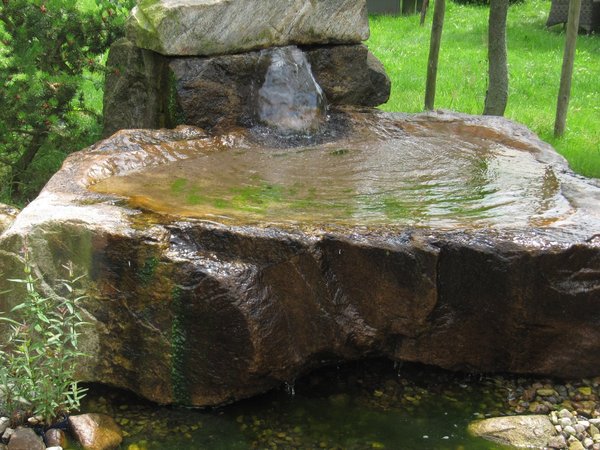
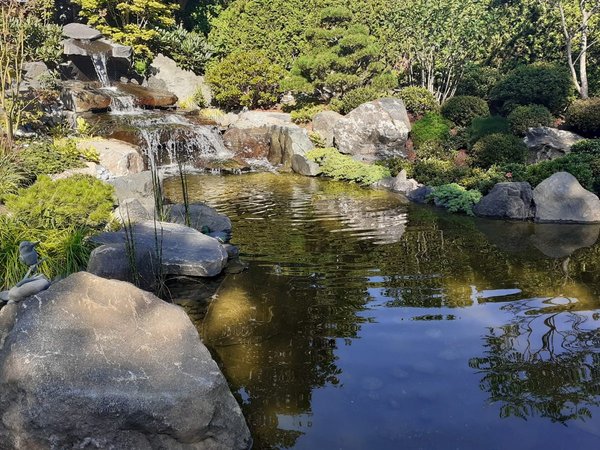
他的思路是把水引进花园,哪怕园子里没有池塘,也用石件做出水景。泉石和岩泉是重点,多由几块石头组合而成,也有整块独石。装好以后水声差别很大,从几乎听不见的细流,到水量足时像瀑布一样的响。安装一般要留出大约三米见方的地面,独石作品占地小一些。运输和安装尽量不用机械,慢慢挪到位。
踏步石与铺装小径
小径用冰川时代被磨平的漂砾,边缘又被人手磨圆,按走路的步幅一颗一颗摆开。石头之间的缝能透出苔藓和地被,路不会把园子割断。另一种做法是把踏步石撒在碎石地里。这两种做法都要在下面做防草层。常用的踏步石从二十五厘米到一百厘米,路口和想停下来看看的地方会放大尺寸。也可以用五到十五厘米的扁平小石铺面,每颗都有一面是平的,拼起来好走。常备的石材有瑞典的暗绿辉绿岩、德国上普法尔茨一带不同明度的灰花岗岩,还有瑞典的红花岗岩,其中扁平小石都是一块块手工挑出来的。
石灯笼、石碑与刻字门牌
除了泉石和铺装,目录里还有石灯笼、鸟饮水槽、带刻字的石碑,以及用石头做的厨房用具。门牌可以刻在漂砾上,站上那张照片里的石块约一米二高,字高至少十二厘米,按石块大小挑字,石料用花岗岩、片麻岩、石英岩这类质地均匀的石头。石碑的作用更偏布局,一块刻了字的竖石立在园中,园子的意思就落在了那里。
铁雕、泥画与风水
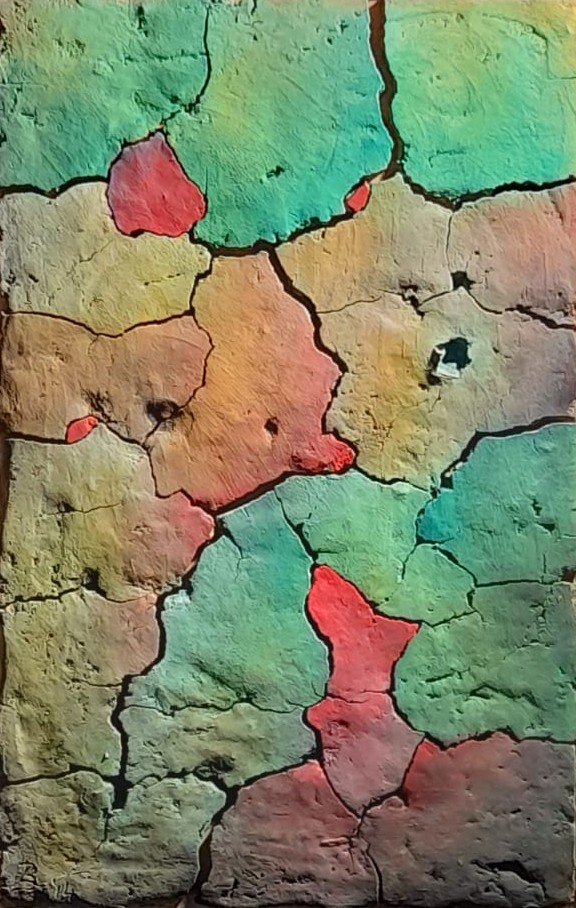
铁雕用工业上用不上的铸造废料和废铁拼起来焊接,给每块料找个新去处,高的到四米,矮的二十来厘米,搬动时压手。表面多是旧的锈层,几乎不再继续氧化,颜色发暗,接近黑。泥画是一门把立体造型和绘画合在一起的手艺,一九九五年他开出了这条新路子:不加处理的生泥作底,干透后用各种水溶颜色上色,颜料粉也能用,泥的厚薄决定阴影的深浅。风水方面,他主张有意放水来引动气场,泉的位置常按旺宅的说法摆。院子里做日式小园也是他的专长,小小地方照样能做出讲究的景致。
A Natural Stone Gallery in Potsdam
Steinhof Galerie sits in Potsdam, Germany, and is the one-man workshop of Bodo Langner. He works with two kinds of material: natural rock and glacial boulders on one side, and rounded, worked pieces on the other. The exhibition is kept in a gallery building where his clay reliefs and iron sculptures are shown year round. Visitors are welcome every day, while consultations are arranged by phone. The photographs on the site are references from recent years rather than current stock; photographs of the pieces available now are sent on request.
Water as the Main Theme
The idea behind the work is to bring water into a garden, and to do it with stone even when the garden has no pond. Spring and rock fountains are the core of the range, mostly built from several pieces of rock, sometimes from a single monolith. Once installed they sound very different, from a trickle that is barely audible to a proper roar when the water is plentiful. A fountain generally needs a base of about three metres by three metres, and a monolithic piece needs less. Delivery and installation are done gently, without machinery where possible.
Stepping Stones and Garden Paths
Paths are laid with boulders that the ice age ground flat and that were then rounded off by hand, set one by one at a comfortable stride. The gaps between them let moss and groundcover run through, so the path does not cut the garden in two. The alternative is to set stepping stones into a gravel bed. Both methods need a layer that keeps unwanted weeds down. Common stepping stone sizes run from twenty-five to a hundred centimetres, and larger pieces are used at path junctions and where you want to pause. A path can also be built from flat stones between five and fifteen centimetres, each with one flat face so that walking stays comfortable. The stock includes dark green diabase from Sweden, grey granite from the Upper Palatinate in different shades, and red granite from Sweden; the small flat stones are picked out by hand.
Lanterns, Steles and Engraved House Numbers
Alongside the fountains and the paving, the catalogue lists stone lanterns, bird troughs, steles with engraved lettering and stone kitchen utensils. A house number can be carved into a boulder: the stone in the photograph on the site is about one metre twenty high, the letters are at least twelve centimetres tall and are chosen to suit the size of the stone, and the material is granite, gneiss, quartzite or another rock of even texture. The steles work more on layout, with an upright carved stone standing in the garden giving the place its point.
Iron Sculpture, Clay Relief and Feng Shui
The iron sculptures are welded together from foundry leftovers that industry cannot use and from scrap metal, so that every piece of the old material gets a new job. They run from four metres tall down to about twenty centimetres, and they carry weight when handled. The surface is mostly an old rust layer that has largely stopped going further, giving a dark, almost black colour. Clay relief is a craft that joins modelling and painting; he opened that line in 1995. Untreated clay is the base, and once dry it takes any water-soluble colour, pigment powder included, with the thickness of the clay deciding how deep the shadows fall. On feng shui, he works with water on purpose to set the energy of a place in motion, and fountains are often positioned to suit the idea of a prosperous house. Small Japanese gardens are another speciality, where a small courtyard still gets a proper scene.
相关文章:
 美国宾州 Garden Fountains – 全美规模最大的独立喷泉电商
 澳大利亚 Rocks Plus – 家族式岩石与石材供应商
 德国 枯山水博客 Zengärten – 德国枯山水门户与图片廊
 德国 园艺乐趣花园 Gartenlust Halver – 4500 平方米的多年生私家花园
 丹麦 Alpines.dk 高山植物花园 – 900平米私人高山植物花园
 德国 露地日本庭园 ROJI Japanische Gärten – 日本庭院设计建造遍及三洲
 德国 凯撒斯劳滕日本庭园 Japanischer Garten Kaiserslautern – 德国最大日式庭园
 美国 Stone & Soil Depot – 德州景观材料分销商
发表回复