
科斯维希的一家人
Heidegärtnerei Grünberg 在德国萨克森州迈森县的小城科斯维希,是一家规模不大的家族苗圃,经营的仍是 Grünberg 家族。行业杂志 2025 年的报道说,这家生意 1925 年由 Kurt Grünberg 起家,起初种的是芦笋和酸菜,后来才迁到科斯维希,1955 年起开始做石南和杜鹃;1971 年并入当地的农业生产合作社 GPG“Coswiger Blume”,1985 年归入 VEG(国营农场)德累斯顿种子与观赏植物公司的科斯维希分部,结构几经变动,场地始终是自己那块。介绍页上写着一句实在话:自 1991 年起,他们只做石南花这一门生意,从扦插的插穗一直做到能上架的成品苗;母株选育、繁殖和全部生产都在本地完成,经营者是 Thomas Grünberg。
品种清单里的门道
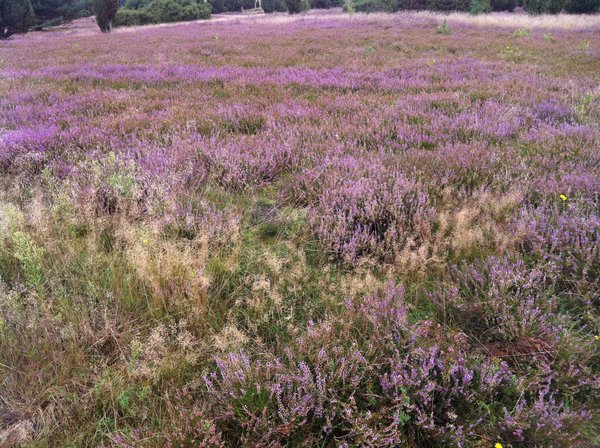
完整的品种表是一份可下载的清单,逐行列出品种名、所属种类、花期、花色、叶色、株型、高度和分类。清单共 517 行,481 行填了名称,其余 36 行只标物种。按清单自己的分组,蜜源石南花(Bienenheide)178 行最多,其次是夏季开花类(Sommerblüher)131 行、雪石南花(Schneeheide)74 行、南非石南花 44 行、气球石南花 35 行、树形石南花 31 行、芽苞石南花 13 行;另外 11 行不是石南花,而是 Boronia、Epacris、Grevillea 这类伴生植物。雪石南花一组里主要是早春开花的雪花石南花(Erica carnea)及其杂交种;夏季开花那一组里,灰石南花(Erica cinerea)的花色最杂,店页自己就写着它是所有石南花中花色最多、最艳的一类,钟状石南花(Daboecia cantabrica)、康沃尔石南花(Erica vagans)和沼泽石南花(Erica tetralix)也在其中。
四百多个品种,自己育自己卖
介绍页提到,他们把保住老品种看得很重,新出的育种成果也不拒收。站上写的是目前栽种的石南花超过 400 个品种;同一份清单里填了名称的条目有 481 行。露天栽培是他们看重的一点,理由说得很直白:这样育出来的苗更健康,也更扛得住。按 2025 年行业杂志给出的存苗量,大致是雪石南花一万株、夏季开花石南约七千株、Calluna 约七千株、树石南与海沼石南约一千株、当作季节商品供应的芽苞石南约两万株,此外还有不少南非石南种类。自家出的苗多是多年生、常绿,花色叶色变化多,好打理。在线商店把这些苗分成 9 个商品组,一共 56 个在售规格,多数是 3.30 欧元的盆栽,另有 4.50 欧和 5.00 欧的;店页也提醒,不是所有品种任何时候都有货。苗圃常年参加联邦和州园艺展以及各类专业展会。
石南花怎么种
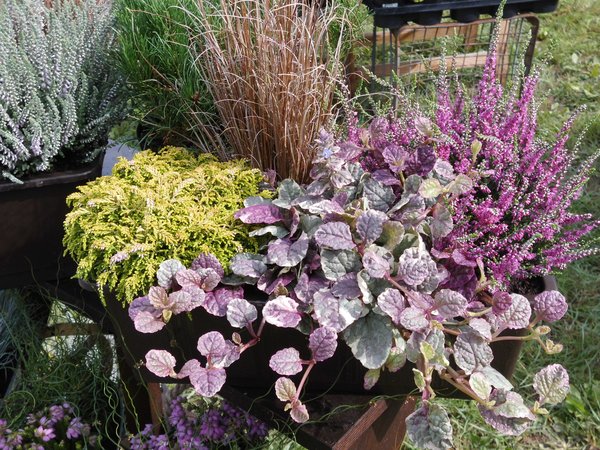
站上的种植建议写得挺细。位置要尽量向阳,土要松、要贫、要微酸,酸碱度 4.5 上下;黏土得先铺一层砾石排水,积水最伤石南花。栽植密度按每平方米 7 到 8 株算,常用配比是雪石南花约四分之一、夏季开花类约四分之一、普通石南花(Calluna)占一半。修剪得分种类:普通石南花和多数 Erica 在三月到四月剪,雪石南花要等到五月底六月初,因为它那会儿正开着。种下后的头几周要勤浇水,之后多数时候靠自然降雨就够;浇水最好用雨水,石南花怕石灰。店里的苗标明了在欧洲中部能过冬,例外会另外标注。
看苗与到访
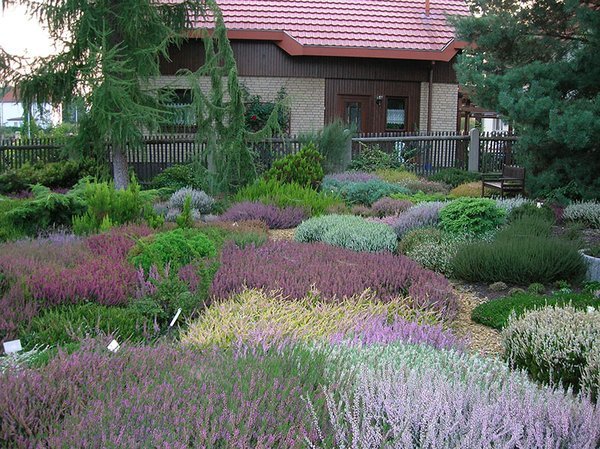
上门的访客要先约时间,站上和联系页都写着,来之前得先联系,没有预约不接待。站上的最新消息说,市集季暂时告一段落,但植物照卖,想要某个具体品种可以直接找他们。详细地址、联系电话和电子邮箱放在站上的版权说明页里,这篇文章只写到市一级。
A family nursery in Coswig
Heidegärtnerei Grünberg is a small family nursery in Coswig, in the district of Meissen in the German state of Saxony, and it is still run by the Grünberg family. A trade magazine portrait from 2025 records the business starting in 1925 with Kurt Grünberg, first growing asparagus and sauerkraut and later moving to Coswig, where heather and azaleas were added from 1955; in 1971 the nursery was folded into the local growing cooperative GPG “Coswiger Blume”, and in 1985 into the Coswig branch of VEG Saatzucht und Zierpflanzen Dresden, and through those changes the site remained the family’s own. The about page puts it plainly: since 1991 they have grown heather and nothing else, working from cuttings right through to finished plants ready for sale. Mother plant selection, propagation and the whole production run on their own site in Saxony, and Thomas Grünberg runs the business.
What the cultivar list shows
The full range is published as a downloadable list, one row per cultivar, giving the name, the species it belongs to, flowering time, flower colour, foliage colour, growth habit, height and a category. The list runs to 517 rows; 481 of them carry a name in the cultivar column, and the remaining 36 give only a species. By the list’s own groups, the bee heathers (Bienenheide) take the most with 178 rows, followed by the summer flowering types (Sommerblüher) with 131, the snow heathers (Schneeheide) with 74, the South African heathers with 44, the balloon heathers with 35, the tree heathers with 31 and the bud heathers with 13; a further 11 rows are not heathers at all but companion plants such as Boronia, Epacris and Grevillea. The snow heather group holds the early flowering Erica carnea and its hybrids, while in the summer flowering group the grey heather (Erica cinerea) carries the widest range of flower colours, which the shop page itself calls the most varied and intense of all heather types; Daboecia cantabrica, Erica vagans and Erica tetralix are in that group too.
Four hundred varieties, grown and sold on site
The about page notes that they are set on keeping the old varieties, while not turning away the newest breedings. The site says they currently grow more than 400 heather varieties, and the same list carries 481 named entries. Growing outdoors is the point they care most about, for a plain reason: plants raised that way come out healthier and tougher. The stock figures given in a 2025 trade magazine portrait work out at roughly ten thousand snow heathers, seven thousand summer flowering heather plants, seven thousand Calluna, a thousand tree and sea moor heathers, about twenty thousand bud heathers grown as seasonal stock, plus a fair number of South African Erica species. Most of their own plants are perennial and evergreen, varied in flower and foliage colour, and easy to look after. The online shop breaks them into 9 product groups with 56 forms on sale, most of them potted plants at 3.30 euros, some at 4.50 and 5.00 euros; the shop page also notes that not every variety is in stock at every time of year. The nursery appears regularly and successfully at federal and state garden shows as well as at numerous trade fairs.
How to grow heathers
The cultivation notes on the site are quite specific. Heathers want the sunniest spot they can get and soil that is loose, lean and slightly acid, around pH 4.5; heavy clay needs a drainage layer of gravel first, because standing water does them most harm. Allow 7 to 8 plants per square metre, and a mix that works is about a quarter snow heather, a quarter summer flowering types and half Calluna. Pruning depends on the group: Calluna and most Erica are cut in March or April, while snow heathers are left until the end of May or early June, because they are in flower then. Water regularly through the first weeks after planting and rely on natural rainfall later on; rainwater is better than mains water, as heathers dislike lime. The plants in the shop are marked as hardy in central Europe, with exceptions marked separately.
Visiting and ordering
Visitors are asked to arrange a time first: both the site and the contact page say to get in touch before coming, and unannounced visits are not possible. The latest news on the site says the market season is over for now, but the plants are still for sale and a specific variety can be ordered by asking. The full address, telephone number and email address sit on the legal notice page of the site, so this article stops at the town.
相关文章:
 英国 石楠花协会 – 推动石楠植物栽培保护的慈善组织
 世界帚石楠协会 The Heather Society – 行业自律与服务组织
 德国 Hachmann苗圃 – 种苗生产与销售
 德国 明斯特苗圃 Münster Baumschulen – 露地栽培铁线莲300多品种
 美国 西尔万苗圃 Sylvan Nursery – 马萨诸塞州沿海耐寒苗木苗圃
 英国 围墙花园苗圃 Walled Garden Nursery – 英国铁线莲专营与攀缘植物苗圃
 比利时 Van Nuffelen 苗圃 – 家族式铁线莲专营苗圃品种超过680个
 德国 高山多年生植物苗圃 Alpine Staudengärtnerei – 百种高山植物与矮生木本
发表回复