

1910 年,奥格斯特海斯特的一块地
公司从一块混着养牛、种菜和种球的农场起步。1910 年 3 月 17 日,Jacob Uittenbogaard 在莱顿附近的奥格斯特海斯特开下一座名为 Kweeklust 的农场,把草场改成了菜地和球茎地。1920 年他开始做郁金香催花,把球茎提前种进温室,让花在圣诞节前后上市。
四个儿子都进了公司。1943 年,Jan 搬到诺德韦克豪特另开球茎苗圃;Ruud 留在奥格斯特海斯特专做郁金香催花;Jaap 拉起贸易一头,除了做荷兰园丁的生意,还把球茎往英国出口。1947 年三兄弟一起进公司,名字正式改成 Jac. Uittenbogaard & Zonen。
搬进球茎区之后
1971 年,因为莱顿市扩建,奥格斯特海斯特的农场被征用,公司整个搬到了诺德韦克豪特——球茎区的腹地。这次搬家也让他们停掉了蔬菜,改种风信子。1976 年公司改成有限公司,Jaap 和 Jacob 一起成了股东。1986 年 Jaap 突然去世,第三代的 Jaap 接手贸易,Rudolph 接手苗圃,兄弟俩把两条线分了开。
规模是那之后二十年撑起来的。1990 年建了带冷库的新棚,苗圃扩到四十公顷,一年催花三百万枝切花;1995 年再添一座温室。2010 年公司办百年庆,也拿到了荷兰王室供应商的称号,货物还送进包括 Het Loo 宫在内的几座宫殿。2011 年新温室落成,催花规模涨到每季四百万株。
2017 年 1 月 11 日,公司在库肯霍夫拿到第 31 届荷兰园艺企业家奖,那一年它代表整个荷兰园艺行业做了一年的宣传人。公司如今有四十多名员工,苗圃、贸易和催花都在自己手里。
苗圃、育种和球的质量
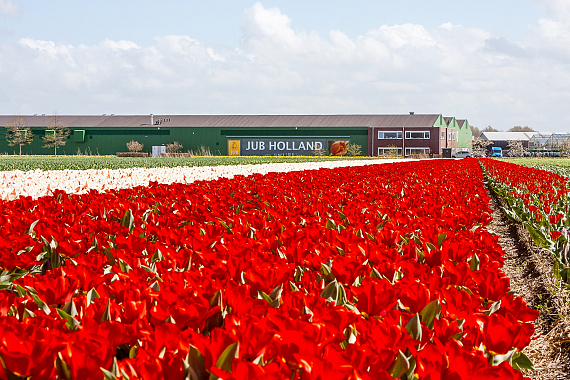
三十五公顷的苗圃在诺德韦克豪特,英文页面写的是九十英亩,其中二十五公顷是露地。公司自己的两个页面口径略有出入:核心业务页写按 MPS 的环保规定种约 30 个郁金香品种和 15 个水仙品种,苗圃页写约 24 个郁金香品种和 14 个水仙与卡玛夏。种植一年是一轮:九月下种,三月水仙开花时下地找病株,郁金香要摘掉花头让养分回到球里,六七月起球、晾干、分级。九成自产的球茎留给自己出口,其余卖给出口商和催花商。
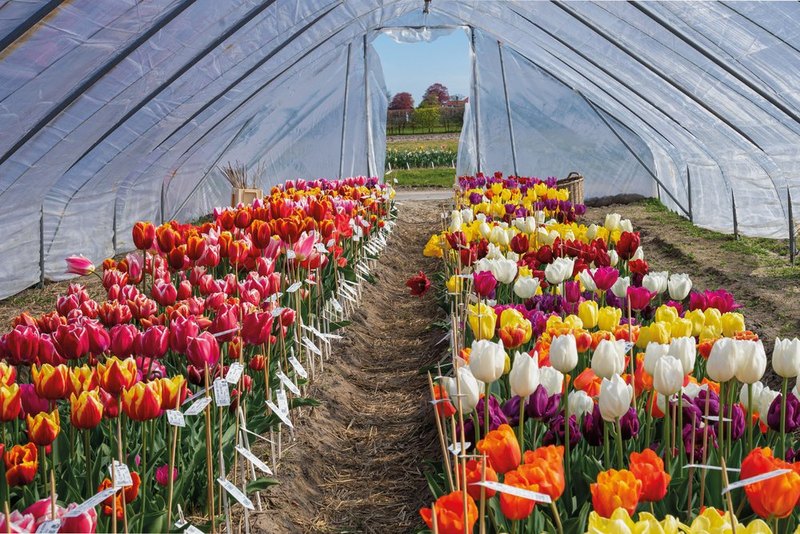
育种另有一副长跑。公司 1996 年加入 Remarkable 育种联合体,和另外几家种植商一起选育抗病性更好的郁金香。从授粉到新品种上市要走十八年,另一页写的是大约二十年:杂交出的种子先在温床里养两年,出苗后再等四到五年才第一次开花,之后还要连年做抗病毒和抗酸筛选,一批几千个杂交组合里每年只有三四个能留下来。育种场在里瑟的 Hobaho 试验中心,近年加入 DNA 检测,筛选快了不少。
零售、景观工程和出口三头并进
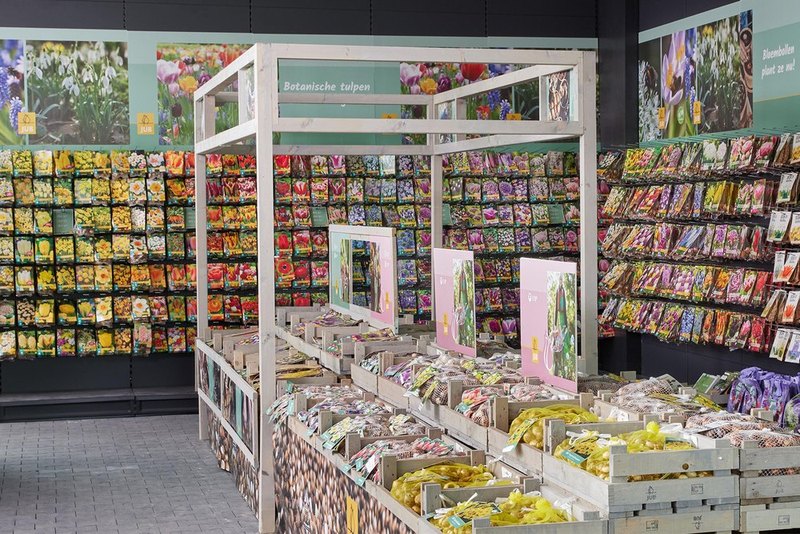
零售这一头做的是现成包装的球茎,五百多种产品,从小袋、网袋到礼盒都有,包装和花色由自家设计部门按当年的潮流来做,客户是园艺中心、植物出口商、进口商和礼品店。
景观工程这一头面向市政、园林设计师和职业园丁。公司自己改装了机械种植机,二十五年前就投入使用,一台机器每小时能在草皮下面直接种两万五千颗;配套还有一款花园设计 App,客户可以先把种植后的效果在屏幕上看到。公司每年还会挑出二十五种表现最好的球茎做推荐。
出口是最大的一块。公司把球茎卖到三十多个国家,2017 年获奖时的介绍写三十五个以上,面向进口商的页面写四十多个,客户从园艺中心到园林承包商、园丁和市政绿化部门都有。品类除郁金香和水仙外,还有番红花、风信子、葱属、大丽花和唐菖蒲,包装从小袋一直到给大项目用的整箱散装。荷兰一国占着全球球茎贸易的八成五。发货前公司自己的检验员逐批查硬度、含水量和品质,运往欧盟以外还要加一次外部检验。
库肯霍夫、名字的来历和最近的动静
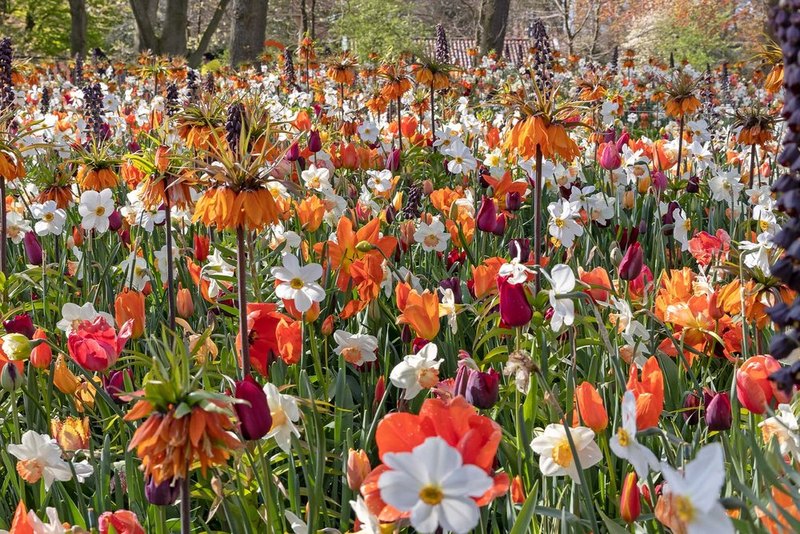
和库肯霍夫的缘分从 1949 年开园就有。每到秋天,各家一起往园里送七百万颗球茎,四十名园丁在 32 公顷的园区里栽下去。JUB 自己那一片从 2019 年起由设计师 Carien van Boxtel 每年换一套配色组合,展位在 14 号;2024 年还和 Boskoop 的 Rijnbeek Perennials 一起做了 BULB MANIA 那块适应气候的特别花境。
名字 JUB Holland 其实来得晚。行业里早先都叫它 JUB,正式登记的名字一直是 Jac. Uittenbogaard & Zonen BV。Jaap-Jan 接受行业媒体 FloralDaily 采访时说:拿了园艺企业家奖之后,媒体开始改口叫 JUB,而 Uittenbogaard 这个姓不够顺口也不够国际化,于是就正式定名 JUB Holland。
近两年公司的动作都落在外面。2025 年秋天,英国肯特大学用它那台种植机,在 Eliot 步道两边的草皮下一口气种了六万颗球茎,配色方案先用自家 App 画出来;2026 年 10 月,公司到布拉格捷克生命科学大学的 Libosad 校区做种植演示,展示每小时两万五千颗的机械种植;同年 5 月,它的英国团队去切尔西花展看景观口径上的球茎用法。2025 年公司第一次在花车游行的搭建期承办场地,2027 年还要再办一次。
Starting from a Farm at Oegstgeest
The company began on a farm that mixed cattle, vegetables and flower bulbs. On 17 March 1910, Jacob Uittenbogaard took over a farm called Kweeklust at Oegstgeest near Leiden and turned the meadow into ground for vegetables and bulbs. In 1920 he started forcing tulips, planting the bulbs early under glass so they would flower around Christmas.
All four sons went into the business. In 1943 Jan moved to Noordwijkerhout and started a bulb nursery of his own; Ruud stayed at Oegstgeest specialising in tulip forcing; and Jaap took over trading, supplying Dutch gardeners and exporting bulbs to England. In 1947 the three brothers joined the company and the name became Jac. Uittenbogaard & Zonen.
After the Move into the Bulb Region
The 1971 expansion of the city of Leiden meant the Oegstgeest farm was bought up for building, so the whole company relocated to Noordwijkerhout, in the heart of the bulb district. The move also ended vegetable growing and hyacinths took over. The company became a private limited company in 1976, with Jaap and Jacob as shareholders. When Jaap died suddenly in 1986, Jaap of the third generation took over trading and Rudolph took over the nursery, and the two brothers split the work between them.
The size of the business was built over the following twenty years. A new shed with cold storage went up in 1990, the nursery reached forty hectares and three million cut flowers were forced every year; another greenhouse followed in 1995. The company marked its centenary in 2010, the same year it was granted the Dutch Royal Warrant, and its bulbs began going into palaces including Paleis Het Loo. A further greenhouse in 2011 took forcing up to four million tulips a season.
On 11 January 2017 the company won the 31st Dutch Horticultural Entrepreneur Prize at Keukenhof, and spent the following year acting as an ambassador for the Dutch horticultural sector. Around forty people now work for the company, covering the nursery, the trade and the forcing side alike.
Nursery, Breeding and the Quality of the Bulb
The nursery covers thirty-five hectares at Noordwijkerhout, which the English pages give as ninety acres, of which twenty-five hectares are open ground. The company’s own two pages differ slightly: the core activities page lists around 30 tulip varieties and 15 narcissus types grown under the strict MPS environmental rules, while the nursery page lists about 24 tulip varieties and 14 narcissus and camassia species. A year in the field runs like this: planting in September, walking the rows in March when narcissus is in flower to pull out diseased plants, cutting the tulip flowers off so the energy goes back into the bulb, and lifting, drying and grading from June to July. Ninety per cent of the bulbs grown here go into the company’s own exports; the rest are sold to exporters and forcing growers.
Breeding is a longer race. The company joined the Remarkable breeding collective in 1996 to work with a handful of other growers on tulips that resist disease better. It takes eighteen years from pollination to a new variety on sale, or about twenty on another of their pages: crossed seeds are raised in a seedling house for two years, then planted out and left another four to five years before the first flower, and years more of selection for virus resistance and acid tolerance, with only three or four varieties surviving each year out of thousands of crossings. The breeding site sits at the Hobaho test centre in Lisse, and DNA testing has since speeded up selection.
Retail, Landscape Work and Export
Retail is about bulbs that are ready to pack: more than five hundred products, from small bags and net bags to gift boxes, with the packaging and colour schemes designed in house to follow the trends of the year, for garden centres, plant exporters, importers and gift shops.
Landscape work is aimed at local authorities, garden designers and professional gardeners. The company built its own mechanical planting machine twenty-five years ago; one machine puts up to twenty-five thousand bulbs an hour directly beneath existing turf. There is also a garden design app that lets customers see roughly how a planting will look before it goes in. Every year the company picks out its top 25 bulbs.
Export is the largest part of the business. Bulbs go to more than thirty countries, the write-up on the 2017 prize says more than thirty-five, and the page aimed at importers says over forty, with customers running from garden centres to landscape contractors, gardeners and local authorities. Alongside tulips and narcissus the range covers crocuses, hyacinths, alliums, dahlias and gladioli, packed from small bags right up to bulk crates for large projects. The Netherlands alone accounts for eighty-five per cent of world trade in flower bulbs. Before anything ships, the company’s own inspectors check hardness, moisture and quality batch by batch, and shipments outside the EU get an extra external inspection.
Keukenhof, How the Name Came About, and Recent Work
The connection with Keukenhof dates from the year the garden opened in 1949. Each autumn the exhibitors together deliver seven million bulbs, planted by forty gardeners across the 32-hectare park. Since 2019 designer Carien van Boxtel has put a new colour combination into the JUB border every year, and the stand is number 14; in 2024 the company also worked with Rijnbeek Perennials of Boskoop on the climate-adaptive Bulb Mania border.
The name JUB Holland came late. The trade had always called the company JUB, while the registered name remained Jac. Uittenbogaard & Zonen BV. Jaap-Jan explained to industry paper FloralDaily that after the Horticultural Entrepreneurs Prize the media started writing JUB, and that the surname Uittenbogaard was neither catchy nor particularly international, so the company went officially with JUB Holland.
Most of the company’s recent work has been away from home. In the autumn of 2025 the University of Kent used the planting machine to put sixty thousand bulbs under the turf along Eliot footpath in a matter of hours, with the colour scheme visualised in the app first. In October 2026 the company gave a planting demonstration at the Libosad campus of the Czech University of Life Sciences in Prague, showing mechanical planting at twenty-five thousand bulbs an hour, and in May that year its UK team went to the Chelsea Flower Show to look at how bulbs are used from a landscape point of view. In 2025 the company hosted the build days of the Flower Parade for the first time, and will do so again in 2027.
相关文章:
 荷兰 种球市场 Holland Bulb Market B.V. – 荷兰球茎出口遍及六十多国
 荷兰 鲁斯郁金香公司 Reus Holland – 年产两千多万枝切花供应商
 荷兰 霍普曼 P. Hopman – 荷兰百年球茎出口商
 美国 荷兰球根农场Holland Bulb Farms – 是一家美国在线花卉球根和园艺产品零售商,网站域名带有”Holland”字样表明其产
 荷兰 植物世界苗圃 Plantworld Holland – 欧洲高山植物小型苗圃
 荷兰 扬森海外有限公司 Jansen’s Overseas B.V. – 北荷兰球茎盆栽全球供应商
 荷兰 普林斯球茎 Prins Bulbs – 面向英国零售的家族出口商
 荷兰 维斯特 C.J.M. Vester – 荷兰球茎出口与处理商
发表回复