
建园历史与区域保护地位
德国萨克森瑞士国家公园 Nationalpark Sächsische Schweiz 位于萨克森州东南部易北河右岸,1990 年 10 月 1 日设立,是当年民主德国建起的第一个国家公园,1991 年 4 月 28 日对外开放。园区面积九千三百五十公顷,分成彼此不相连的两片:西片包括巴斯泰 Bastei、百合岩 Lilienstein 和波伦茨河谷 Polenztal,东片包括施拉姆施泰因 Schrammsteine、大冬山 Großer Winterberg 和后萨克森瑞士。园区外面还叠着一片两万两千八百七十公顷的景观保护区,官方给出的国家公园区总面积为三万八千一百公顷。国境另一侧的波希米亚瑞士国家公园与它接壤,两园共同构成易北砂岩山地的跨境保护区。
砂岩地貌与代表性岩峰
这里的砂岩是白垩纪浅海的沉积物,厚处达六百米,本来是一亿年前浅海底的沙层。垂直节理和水平层理被流水与霜冻反复切割,密集的方山、岩塔和窄谷就是这样形成的。代表性的岩体包括海拔四百一十五米的百合岩 Lilienstein,以及巴斯泰 Bastei 岩群,岩体高三百零五米,垂直高出易北河一百九十四米;东边的大冬山 Großer Winterberg 高五百五十六米,是全园最高点。园内还分布着基尔尼茨峡谷等几处狭窄的溪谷,崖顶的岩松是这里有代表性的林相。
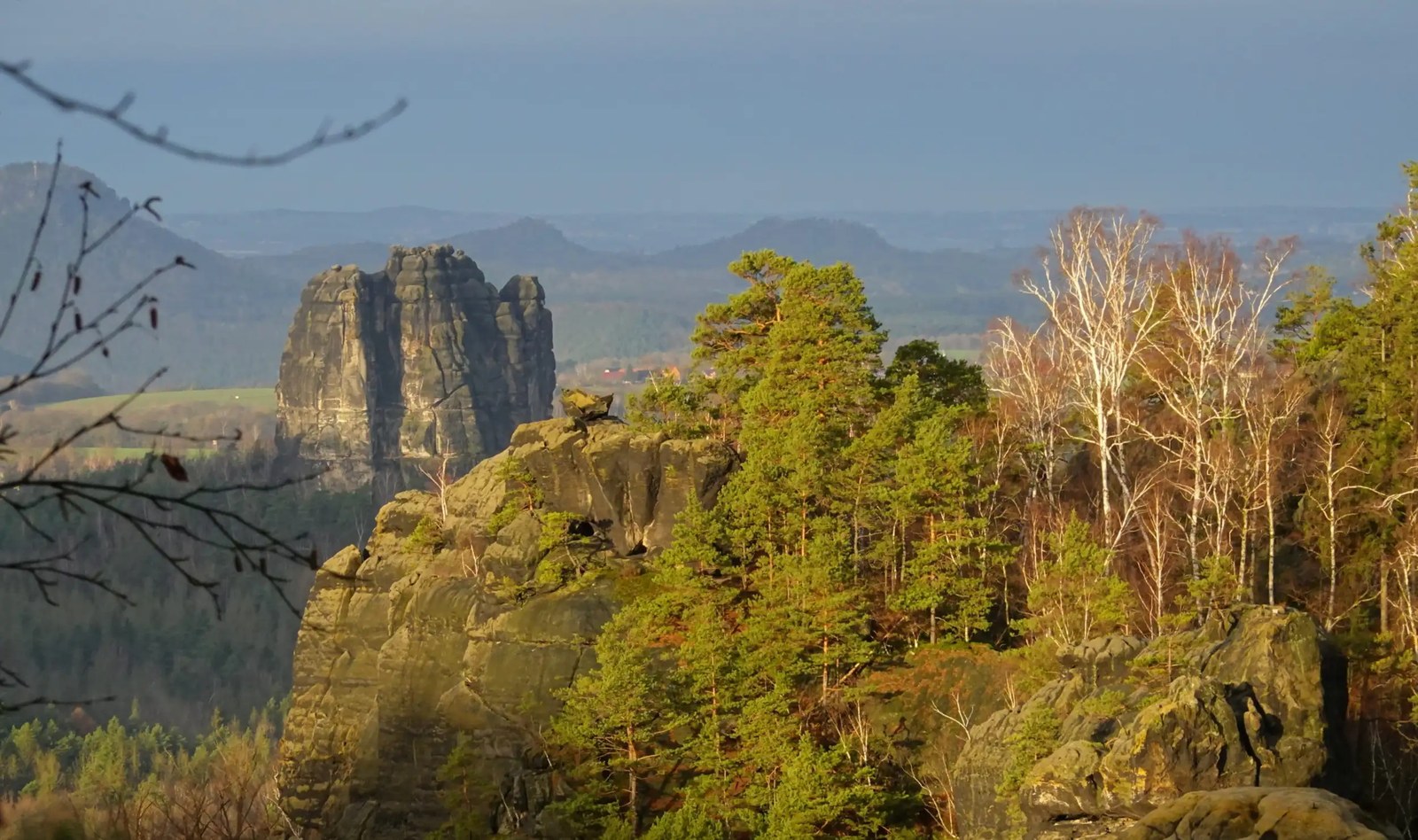
上图为秋色中的砂岩岩峰与峡谷,摄影 Alexander Nestler,图片由国家公园管理机构网站提供。
分区管理与森林演替
公园按允许干预的程度分成几类区域。核心区占全园两成三,区内原则上不再做林业经营,它包含在占三成七的自然区 A(静区)里,自然区 A 只保留最低限度的必要干预;自然区 B 是开发区,占五成八,允许有限的引导措施;维护区占百分之五。2021 年起,全园约七成六的面积已不再做引导性干预。园内林地约八千七百公顷,占园区九成以上,上世纪人工营造的大片云杉林正在让位给山毛榉等阔叶树,倒木和枯立木留在原地,啄木鸟和真菌因此多了栖息材料。2022 年 7 月底到 8 月中旬,大冬山一带发生大面积森林火灾,园区一度全面封闭,同年 8 月 27 日重新开放。
动植物记录与濒危物种
公开资料里,园内记录到四百五十余种开花植物、一百六十余种脊椎动物,此外还有约五百种苔藓和三百多种地衣。鸟类记录超过二百五十种,其中约一百二十种在此繁殖,游隼、猫头鹰和纵纹腹小鸮比较常见,重新引入的黑鹳已经形成稳定种群。大型哺乳动物早年都被猎尽,如今园内主要是马鹿和野猪;猞猁自二十世纪三十年代起重新出现,河狸和獾也回到了峡谷水域。
游径、访客中心与自然教育
国家公园中心设在 Bad Schandau,是了解园情和看展览的主要入口,园内及周边的木屋和看守屋提供简餐、住宿和基本解说。Bad Schandau 火车站有欧洲列车直达,园方也建议坐火车或徒步来,停车位很少。步道按颜色分级,蓝色是跨区域长线,红色是区域线,绿色和黄色是本地短线;画家之路 Malerweg 全长约一百一十六公里,百合岩脚下还有一条四点三公里的家庭教学步道。攀登限在确认过的岩顶,冬季岩窝营地从六月十六日到一月三十一日才开放,犬只全程牵绳。Leupoldishain 的森林体验中心 2024 年重新开放,面向学校和亲子团体开展自然教育活动。
Founding History and the Protected Landscape Region
Nationalpark Sächsische Schweiz was established on 1 October 1990, the first national park founded in the former GDR, and opened to the public on 28 April 1991. It covers 93.5 square kilometres on the right bank of the Elbe in south-eastern Saxony, split into two separate parts: the western one around Bastei, Lilienstein and the Polenztal, and the eastern one around the Schrammsteine, the Großer Winterberg and the Hintere Sächsische Schweiz. Outside the park boundary lies a landscape protection area of 22.87 square kilometres, and the park administration puts the total national park region at 38.1 square kilometres. Across the Czech border the Bohemian Switzerland National Park continues the protected area, the two parks together forming a cross-border reserve in the Elbe Sandstone Mountains.
Sandstone Landforms and Notable Rock Towers
The sandstone was laid down as shallow sea sediment in the Cretaceous, reaching six hundred metres in thickness, and was the floor of a sea around a hundred million years ago. Water and frost worked along the vertical joints and horizontal bedding planes, and the dense table mountains, pinnacles and narrow gorges grew out of that process. Notable rock bodies include the Lilienstein at 415 metres and the Bastei rock group, which rises 305 metres and stands 194 metres vertically above the Elbe; the Großer Winterberg in the east reaches 556 metres and is the highest point in the park. Several tight stream gorges cut through the area, and pine stands on the cliff tops are the characteristic forest type here.
Zoning and Forest Succession
The park is zoned by the degree of intervention allowed. Core zones take 23 percent of the area and are no longer managed for forestry; they sit inside nature zone A, the quiet zone, which covers 37 percent and keeps only the minimum necessary intervention. Nature zone B, the development zone, takes 58 percent and allows limited guiding measures, and maintenance zones account for 5 percent. Since 2021, about seventy-six percent of the park has been left without guiding intervention. Forest covers about 8,700 hectares, more than nine tenths of the park, and the spruce plantations of the last century are giving way to broadleaved trees such as beech. Fallen and standing dead wood is left in place, which supplies food and shelter for woodpeckers and fungi. A large forest fire broke out around the Großer Winterberg between late July and mid-August 2022, the whole park was closed at one point, and it reopened again on 27 August of that year.
Recorded Flora and Fauna
Published records list more than 450 flowering plant species and more than 160 vertebrate species in the park, together with roughly 500 mosses and more than 300 lichens. Bird records pass 250 species, about 120 of which breed here; peregrine falcon, eagle owl and the Eurasian pygmy owl are fairly common, and the reintroduced black stork now holds a stable population. Large mammals were hunted out long ago, so red deer and wild boar dominate today; Eurasian lynx has been seen again since the 1930s, and otter and badger have returned to the gorges.
Trails, Visitor Centres and Nature Education
The national park centre in Bad Schandau is the main place to get an introduction and see exhibitions, and huts and shelters in and around the park serve simple meals, overnight stays and basic interpretation. Bad Schandau station has direct European train services, and the park recommends arriving by train or on foot because parking spaces are few. Trails are graded by colour: blue for long cross-region routes, red for regional routes, green and yellow for local ones. The Malerweg runs for about 116 kilometres through the region, and a 4.3 kilometre family teaching trail starts below the Lilienstein. Climbing is allowed only on confirmed summits, winter bivouac camps open only from 16 June to 31 January, and dogs must be on a lead throughout. The WalderlebnisZentrum in Leupoldishain reopened in 2024 and runs nature education for school classes and families.
The photo above shows sandstone peaks and a gorge in autumn colours; photograph by Alexander Nestler, supplied through the park administration website.
相关文章:
 德国 黑森林国家公园 Nationalpark Schwarzwald – 巴登州首家国家公园
 德国 瓦登海国家公园 Nationalpark Wattenmeer – 横跨北海三片最大国家公园群
 德国 哈兹国家公园 Harz National Park – 德国最大的森林国家公园之一
 拉脱维亚Laumas植物园和自然公园 – 植物迁地保护与科普基地
 马来西亚 槟城国家公园 – 马来西亚半岛最小国家级保护区
 德国 国家级自然景观联合会 Nationale Naturlandschaften e. V. – 大型保护区团体
 美国 家庭国家公园 Homegrown National Park – 是由美国著名生态学家
 英格兰林业委员会 – 英国国有林地管理者
发表回复