
从 1905 年一块改成沙地的果园开始
H.M. van Haaster & Zonen 是一家荷兰的球茎种植与出口企业,家族经营四代,招牌上写着「自 1950 年起做郁金香球茎」。**这个 1950 年是家族手艺的起点,不是公司的成立年**——公司真正的起点要早半个世纪。
创始人是 Dirk van Haaster(生于 1889 年)和他的弟弟 Hein(生于 1891 年),一战前就开始种球茎。1905 年,他们在 Breeland 农场一带的一块果园和树林被改成了沙地;约 1910 年,兄弟俩在这块地上开始谨慎地试种风信子。1906 年,公司在商会注册登记。1923 年两人决定各干各的,Hein 盖了一座三层的现代新仓。
Hein 的四个儿子——Jan、Kees、Harry 和 Louis——先后进了公司。长子 Jan 在四十年代末去了英国学语言、打工,后来到美国接下第一批出口订单;Kees 五十年代去德国做销售;Harry 负责种植。1957 年四个儿子接手,老 Hein 退休。种球茎这门生意早期是重体力活,机械化的推进把它彻底改写了。
需要说明的是,站上公开了完整的街道地址、邮编、办公电话和邮箱。本站不转录这些内容,想联系请直接访问公司站。
四代人的分分合合
Harry 29 岁那年意外去世,Jan 和 Louis 接下 Kees 的贸易业务,美国方向的生意就此停下,Kees 专心管种植。1965 年,全公司搬到 Hillegom,也就是现在这个位置。
1982 年,公司决定把种植和贸易拆开,Jan、Kees 和 Louis 各自单干,**Louis 那一支以 H.M. van Haaster 的名字继续做**。1989 年,Louis 的两个儿子 Harry 和 Louis 接手公司:Harry 管批发和出口,Louis 管种植。1997 年建起新厂房,是一个约 6,000 平方米的现代仓库与冷库综合体。
第四代是 2019 年进来的 Hein(Harry 之子)和 Martijn(Louis 之子)。2024 年,Lucas(Harry 之子)和 Floris(Louis 之子)也加入公司。
这里有一点结构需要说明:这一家与荷兰其他几支同姓的球茎公司并不是同一家——**Van Haaster Vijfhuizen 来自 De Zilk 的一支,Van Haaster Nevada 是 1950 年代起的另一支**。H.M. van Haaster 是 Hillegom 这一支,1982 年分家时归在 Louis 名下。
种、备货、催花、出口
公司的业务线可以拆成四段。
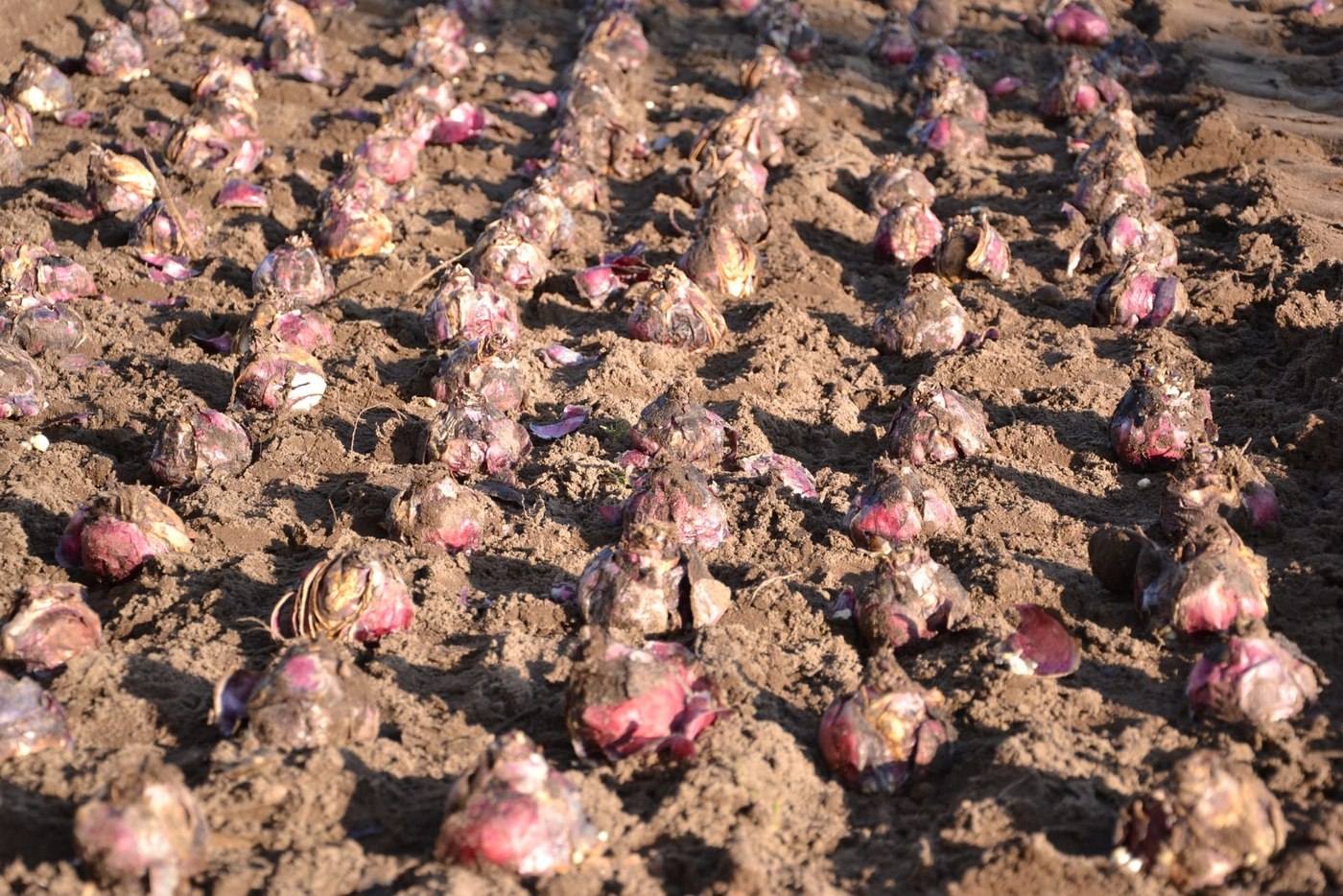
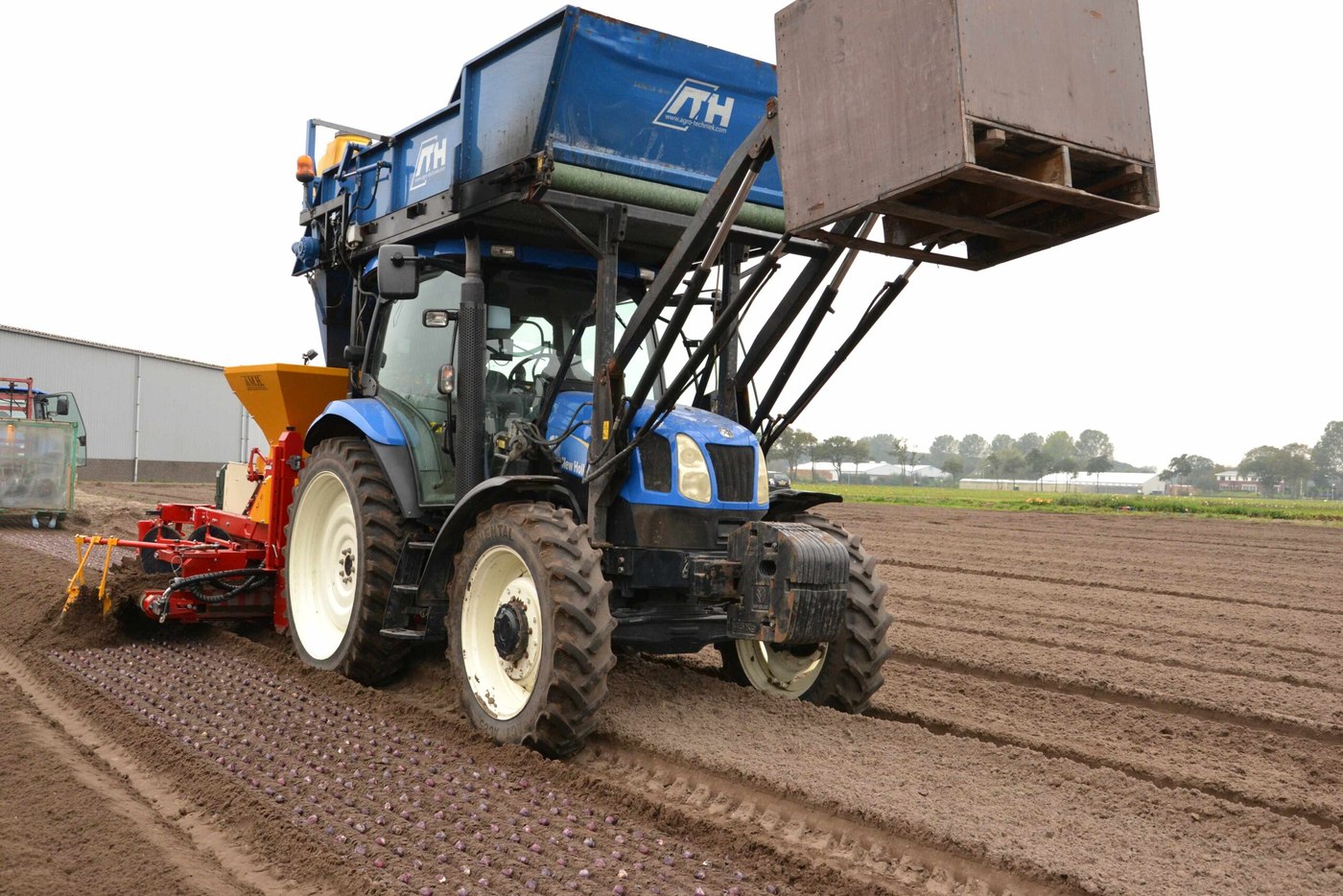
种植在 Hillegom 的苗圃进行,品种是风信子、郁金香和水仙,尽可能多地用于自家出口。品种清单定期增补、淘汰旧品,以保持一个不过时的贸易品种结构。苗圃配备了一套相当完整的车辆与机械——这个行业早年靠手工,如今已是彻底的机械化作业。
备货(prepareren)是这家公司真正的技术活:把球茎存放在受控环境里、按设定的温度处理,让它们恰好在终端消费者想要的时候开花。备货不是简单的存放,而是按不同温度处理分段推进的一整套程序,客户提货时球茎所处的发育阶段是提前商定好的。
催花在自家催花设施里做盆栽球茎——把球茎育成可以上架的盆装产品。品种范围要宽,好让零售端能拿到正好合适的当季春花。
出口由 H.M. van Haaster & Zonen Export BV 负责,已有 70 多年历史,是荷兰少数几家既自己种又自己出口的球茎公司之一。这种组合的好处是从球茎一直看到最终产品,链条上任何环节有变动都能迅速反应。出口部卖自家苗圃的球茎,同时也向特定种植户定点采购,让客户拿到他要的那一批。球茎运往全球约十个国家。
出口的品种清单比苗圃的清单宽得多,除了郁金香、风信子和水仙,还有大丽花、鸢尾、唐菖蒲、美人蕉、小苍兰、朱顶红以及各类特色根茎作物。公司还专门为盆栽和切花生产做球茎排期,服务对象是荷兰国内外做催花的同行——这项服务需要那套 6,000 平方米的仓库与冷库综合体撑着。
另外公司有自己的育种部门,主要方向是适合盆栽的郁金香。
自己的盆栽业务:Fleuriche
2019 年,Hein 和 Martijn 加入了公司,与 Boskoop 的 Van der Salm 一起成立了 Fleuriche BV——**由 Van der Salm 出资控股,这家种薰衣草、Ilex、黄杨和云杉的公司当时已有 13 处荷兰基地和 4 处葡萄牙基地**,同时还做盆栽球茎。分工很清楚:H.M. van Haaster 种出高质量球茎,Fleuriche 用它们做成漂亮的盆栽球茎产品。2023 年又加建了一座新棚。
Van der Salm 自己的叙述里,这家合资公司是 2020 年成立的;H.M. van Haaster 的站上写 2019 年。**两个年份都在引用时标明了出处。**
品种清单与 Bollenstreek
苗圃对外公开的郁金香品种有 21 个:Argos、Bullit、Canasta、Canyon、Carola、Cleveland、Flair、Dr. Ruth、Gabriella、Ice Lolly、Inzell、Joint Division、Lalibela、Milkshake、Mondial、Orange Sherpa、Red Paradise、Roeska、Tresor、Triple A、World Favourite。风信子是 10 个:Apricot Passion、Blue Pearl、Istanbul、Miss Saigon、Pink Pearl、Purple Sensation、Purple Storm、Red Glory、White Pearl、Yellowstone。**其中 Milkshake、Orange Sherpa 和 Triple A 三个品种同时出现在 Remarkable Tulips 的名录上**——那是荷兰的郁金香育种合作组织,与这家公司是不同机构,共享品种是行业内的常态。
公司所在的 Bollenstreek(球茎区)自古就是球茎种植和出口的中心。每到花季,这一带举办不少活动,最有名的是花车巡游和花坛拼图比赛。巡游的花车全用当季春花扎成,路线约 42 公里,穿过 8 个村庄、7 个市镇和 2 个省,通常在四月的第三个或第四个星期六举行。花坛拼图则是各村一年一度的比赛,由居民小组、学校、商家和爱好者一起拼,争夺长久的声誉。
最有名的是 Keukenhof。Lisse 的这座花园在八周里展示荷兰观赏园艺的成果,园中种着 700 万颗当季开花的球茎,来自 100 家供花方;20 多场花卉展览上,500 家种植企业展出他们的切花和盆栽。**H.M. van Haaster 是供花方之一,园中有一块属于他们的花园。**
公司把可持续列为重点之一,方向是每年让球茎种植再可持续一点,着眼点在气候、水质、生物多样性和土壤质量四项。它没有公布具体指标和年度数据,站上只有这一句概括性的表述。**这一段本篇照实转述,不给它补上任何数字。**
Starting with an orchard turned into sand
H.M. van Haaster & Zonen is a Dutch bulb growing and exporting business, run by the family for four generations, whose sign reads “tulip bulbs since 1950”. That 1950 is where the family’s trade began, not when the company was founded — the company itself started half a century earlier.
The founders were Dirk van Haaster (born 1889) and his brother Hein (born 1891), who began growing flower bulbs before the First World War. In 1905 a plot of orchard and woodland near Breeland farm was converted into sandy soil, and around 1910 the brothers cautiously began growing hyacinths on it. In 1906 they registered the company with the Chamber of Commerce. In 1923 they decided to continue independently, and Hein built a modern three-storey barn.
Hein’s four sons — Jan, Kees, Harry and Louis — worked in the company. The eldest, Jan, went to England in the late 1940s to learn the language and work, and eventually travelled to America for the first export orders; Kees went to Germany in the 1950s to sell bulbs; Harry ran the nursery. In 1957 the four sons took over and their father retired. Growing bulbs used to be labour-intensive work involving a great deal of hand work; mechanisation has transformed the trade completely.
The site publishes the full street address, postal code, office telephone and email address. None of that is reproduced here; the company’s site is the place to reach them.
Four generations splitting and reuniting
Harry died unexpectedly at 29. Jan and Louis took over Kees’s trading business, the American trade was discontinued, and Kees ran the nursery. In 1965 the whole company moved to Hillegom, where it still is.
In 1982 the decision was made to split the nursery from the trade, and Jan, Kees and Louis each went their own way — the branch under Louis continued as H.M. van Haaster. In 1989 Louis’s two sons Harry and Louis took over: Harry on wholesale and export, Louis on the nursery. In 1997 a new building was constructed, a modern barn and cell complex of approximately 6,000 m².
The fourth generation came in during 2019 with Hein (son of Harry) and Martijn (son of Louis). In 2024 Lucas (son of Harry) and Floris (son of Louis) joined as well.
One structural point is worth making: this company is not the same as the other Dutch bulb businesses that share the family name. Van Haaster Vijfhuizen comes from a different branch in De Zilk, and Van Haaster Nevada is a separate company dating from the 1950s. H.M. van Haaster is the Hillegom branch, the one that went to Louis in the 1982 split.
Growing, preparing, forcing, exporting
The business breaks into four parts.
Growing happens on the nursery in Hillegom, in hyacinths, tulips and daffodils, used for their own export as far as possible. New varieties are regularly added to the range and old ones cleared out, to keep the nursery’s trading assortment current. The nursery has a well-equipped fleet of vehicles and machinery — this trade used to be all hand work and is now thoroughly mechanised.
Preparing is where the real technical skill sits: storing bulbs in a controlled environment at a set temperature so that they flower at precisely the moment the end customer wants. It is not simply keeping them — the bulbs go through a whole programme of different temperature treatments, and the developmental stage they are in when they arrive is agreed in advance.
Forcing takes place in the company’s own facility, where bulbs are grown on into potted products — bulbs turned into something that can go straight onto a shelf. The range has to be broad, so that retail can offer exactly the right spring bloomers.
Export is handled by H.M. van Haaster & Zonen Export BV, which has been at it for more than 70 years. It is one of the few Dutch bulb companies that both grow and export. That combination means the knowledge runs from the bulb all the way to the finished product, so changes anywhere along the chain can be met quickly. The export side sells bulbs from their own nursery but also buys in from specific growers, so a customer gets exactly the bulbs they asked for. Bulbs go to around ten countries worldwide.
The export range is considerably wider than the nursery’s own: alongside tulips, hyacinths and daffodils there are dahlias, irises, gladioli, cannas, freesias, amaryllis and a range of other special tuber crops. The company also specialises in programming bulbs for pot and cut culture on behalf of forcing nurseries in the Netherlands and abroad — a service that rests on that 6,000 m² barn and cell complex.
There is also an in-house breeding programme, focused mainly on tulips suited to pots.
The pot business: Fleuriche
In 2019 Hein and Martijn joined the company and established Fleuriche BV together with Van der Salm of Boskoop — a company with 13 locations in the Netherlands and 4 in Portugal, growing lavender, Ilex, buxus and spruce, and also potted bulbs. The division of labour is clear: H.M. van Haaster grows high quality bulbs, and Fleuriche turns them into good-looking potted bulb products. A new building was added in 2023.
Van der Salm’s own account dates the joint venture to 2020, while the H.M. van Haaster site says 2019. Both years are given here with their sources.
The variety list and the Bollenstreek
The nursery lists 21 tulip varieties: Argos, Bullit, Canasta, Canyon, Carola, Cleveland, Flair, Dr. Ruth, Gabriella, Ice Lolly, Inzell, Joint Division, Lalibela, Milkshake, Mondial, Orange Sherpa, Red Paradise, Roeska, Tresor, Triple A and World Favourite. There are 10 hyacinths: Apricot Passion, Blue Pearl, Istanbul, Miss Saigon, Pink Pearl, Purple Sensation, Purple Storm, Red Glory, White Pearl and Yellowstone. Three of them — Milkshake, Orange Sherpa and Triple A — also appear in the catalogue of Remarkable Tulips, the Dutch tulip breeding collaboration, which is a separate organisation; shared varieties between them are normal in the trade.
The Bollenstreek, the bulb district, has been the centre of bulb growing and exporting since olden times. In flowering season the area hosts a good number of events, the best known being the flower parade and the flower mosaic competition. The parade’s floats are made entirely of spring bloomers, the route runs about 42 kilometres through 8 villages, 7 municipalities and 2 provinces, and it is usually held on the third or fourth Saturday of April. The mosaics are an annual village competition, put together by residents’ groups, schools, businesses and enthusiastic locals, competing for lasting renown.
Best known of all is Keukenhof. This garden in Lisse shows what Dutch ornamental horticulture has to offer over eight weeks, with 7 million spring flowering bulbs planted in the park, supplied by 100 contributors; in more than 20 flower shows, 500 growers present their cut flowers and potted plants in all their variety. H.M. van Haaster is one of the contributors, and a garden of theirs can be seen in the park.
The company lists sustainability as one of its priorities, with the aim of making bulb growing a little more sustainable every year, looking at climate, water quality, diversity and soil quality. It publishes no specific indicators or annual figures on this — the site carries only this general statement. It is reproduced here as it stands, with no figures added to it.








发表回复