
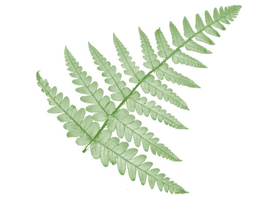
德国 Farndatenbank 蕨类植物数据库(farndatenbank.de)是由蕨类爱好者 Ralf Appelt 在黑森州 Schlangenbad 维护的一个面向温带气候带蕨类的物种数据查询与植物志综合平台,承载 789 个蕨类物种与品种的形态学、生态习性与分布信息、长达 242 条术语的蕨类学专业词汇表(Glossar)、一套覆盖 100 余本已无版权保护或已进入公共领域的德文与英文蕨类专著的电子图书馆(Bibliothek),以及按 11 项形态学与生态学维度(叶片长度、叶片颜色、叶片秋色、叶片光泽、叶片常绿性、叶柄颜色、叶柄长度、孢子叶颜色、根状茎是否形成漏斗、根状茎是否分枝、土壤湿度需求)交叉筛选的物种检索系统。网站以德语和拉丁学名双语呈现,配以可按目、科、属展开的现代蕨类分类树(Systematik)以及”Farn des Monats”(每月一蕨)专题,是目前德语世界规模最大、覆盖最细的温带蕨类公开数据库。
项目缘起与 Ralf Appelt 的 20 年单兵维护
Farndatenbank 由 Ralf Appelt 以个人之力建设并长期独立维护,运营载体是他在 2020 年代登记成立的非营利有限责任公司 Farngarten Appelt gUG(haftungsbeschränkt),办公地点设于黑森州 Schlangenbad-Georgenborn,植物园实体 Farngarten Schlangenbad 同时也作为项目”活体植物志”的现场参考圃。Ralf Appelt 在网站开篇明确说明,这是他”以所知范围内第一次以最详尽方式把植物描述纳入数据库”的尝试,写作时没有借助任何商业出版机构或大学合作团队,所有条目均出自他本人对经典蕨类学文献、欧洲野外调查与个人苗圃观察的长期整理,因此网站自评为”im (ewigen) Aufbau”(永远在建中),并欢迎访问者随时通过电子邮件提交补充意见与勘误。Ralf Appelt 在 Impressum 披露 gUG 的全部法律信息(注册地 Amtsgericht Wiesbaden 及相应商业登记号),并按德国《电信媒体法》(TMG § 5)履行运营者署名义务,整个项目在结构上是把法律合规的德式 Impressum 与个人学术兴趣数据库合并呈现的典型样本。
四大内容模块:Arten / Taxonomie / Bibliothek / Glossar
Farndatenbank 主体由四个内容模块构成。”Arten”(物种)模块收录 789 个条目,覆盖 Asplenium(铁角蕨属)、Athyrium(蹄盖蕨属)、Dryopteris(鳞毛蕨属)、Matteuccia(荚果蕨属)、Osmunda(紫萁属)、Polypodium(水龙骨属)、Polystichum(耳蕨属)等温带常见属的物种、亚种、变种与栽培品种,每条目按 11 项形态学与生态学维度结构化登记,并提供德文俗名、英文俗名、在德国的越冬可行性(Winterhart)等三列交叉信息,是网站对外可查询的核心数据集。”Taxonomie”(分类)模块用可点击的层级树(Klasse → Ordnung → Familie → Gattung → Art)展示现代蕨类系统学(PPG I 体系),方便用户从门类到属逐步定位目标植物。”Bibliothek”(电子图书馆)收录约 100 本已过版权保护期(按德国法律为作者去世 70 年后,即 1949 年前去世的作者)的德语、英语及少量法语蕨类专著,涵盖 19 世纪末到 20 世纪中期的经典作品(Eduard Newman《A History of British Ferns》、Thomas Moore《A Popular History of the British Ferns》、Karl Foerster《Einzug der Gräser und Farne in die Gärten》、Rabenhorst《Deutschlands Kryptogamen-Flora》等),并对每本提供下载链接;为规避版权风险,Ralf Appelt 明确表示”如不确定作者去世年份,仅收录 1900 年前出版或已知可在别处免费获取的版本”。”Glossar”(术语表)按字母顺序收录 242 条蕨类学专有词汇与拉丁词根,配以近义词对比与物种例举(abaxial / aculeatus / alpestris / akroskop / alete Spore / amphistomatisch / Antheridium / Anulus / Archegonium / Athyrium filix-femina ‘Cristata Angustata’ 等),共 5 页,是德语世界少有的免费开放蕨类学专业词库。
“Farn des Monats”专题与 11 维度形态学筛选系统
为兼顾植物学深度与大众兴趣,Farndatenbank 每月推出一期”Farn des Monats”(每月一蕨)专题页,由 Ralf Appelt 亲自从 Bibliothek 收录的古籍中抽取原始描述并改写为现代德语总结,配以该物种的栽培与生态要点。2026 年 5 月专题为紫萁属的 Osmunda regalis(Royal Fern / Königsfarn),文中综合 Eduard Newman、E. J. Lowe 等 19 世纪英国蕨类学家的描述,整理出 300+ 厘米巨型双羽状复叶、管状叶柄、上部羽片完全变态为孢子叶等关键识别特征,并把 Vernation(幼叶卷叠方式)不卷旋、根状茎在老株上呈球状近树干状、孢子夏季成熟等关键生态习性做成简表。Arten 模块的检索系统同样遵循这一”先经典描述、再结构化字段”的思路,11 个筛选维度(叶片长度、颜色、秋色、光泽、常绿性、叶柄颜色与长度、孢子叶颜色、根状茎形态、土壤湿度、越冬性)允许访问者逐步缩小范围,目标是让没有植物学背景的园艺爱好者也能按形态线索定位到自己的目标物种,再跳转到具体条目页查看完整描述。
德国 Impressum 合规、版权立场与公共领域资源整合
Farndatenbank 在法律层面完全按德式站点惯例操作:Impressum 页(/seite/impressum)按 § 5 TMG 公示运营者 Farngarten Appelt gUG 的办公地址、garten 地址、gUG 法人代表 Ralf Appelt、注册法院与商业登记号,并在 Datenschutzerklärung(/seite/datenschutz,2025 年 4 月版)按 DSGVO 履行透明义务,明确 Google Maps 与 Google Fonts 接入、IP 匿名化、Session Cookie 等技术细节。在版权立场上,Ralf Appelt 主动遵循德国《著作权法》70 年保护期规则(”Das Urheberrecht erlischt 70 Jahre nach dem Tod des Autors”),Bibliothek 因此只收录作者于 1949 年及之前去世的著作,对于作者去世年份存疑的旧书则附加”vor 1900 erschienen oder anderweitig online verfügbar”的二次保险条件;这一保守策略使整个图书馆能在不依赖出版社授权的前提下长期稳定运行,也为德语园艺与植物学爱好者提供了一份难得的”高密度 + 低风险”公共领域资源池。综合而言,Farndatenbank 是把”个人学术热情 + 公共领域文献 + 现行 DSGVO 合规 + 非营利 gUG 法人”四件套同时跑通的德式垂直数据库样本,对关注温带蕨类分类、生态与文献的园艺爱好者、植物学学生与苗圃从业者具有持续的参考价值。
Farndatenbank (farndatenbank.de) is a German-language taxonomic and botanical-reference platform for temperate-climate ferns, maintained single-handedly in Schlangenbad (Hesse, Germany) by fern enthusiast Ralf Appelt through his non-profit limited-liability company Farngarten Appelt gUG. The site combines a structured database of 789 fern species, subspecies, varieties and cultivars indexed across 11 morphological and ecological dimensions, a 242-entry pteridology glossary (Glossar), a digital library (Bibliothek) of more than one hundred fern monographs whose authors died before 1949 and are therefore in the public domain under German copyright law (UrhG § 70), and a clickable modern fern taxonomy (Taxonomie) that follows the PPG I classification from class through order, family and genus down to species. A monthly “Farn des Monats” feature draws on classical 19th- and early-20th-century descriptions and rewrites them in modern German, while the entire site is presented bilingually in German vernacular and Latin binomial nomenclature with English common names.
Project Origin and Ralf Appelt’s Two-Decade Solo Stewardship
Farndatenbank is built and curated by Ralf Appelt as a long-running personal project, with the operating entity being the non-profit gUG (haftungsbeschränkt) “Farngarten Appelt” registered in Hesse, Germany, and the on-site Farngarten Schlangenbad in Schlangenbad-Georgenborn doubling as the project’s living-plant reference garden. In his opening note, Ralf Appelt states that this is, to the best of his knowledge, the first attempt anywhere to capture fern species descriptions at such depth in a database; because no commercial publisher or university partner is involved, the site is self-described as “im (ewigen) Aufbau” (perpetually under construction) and the author explicitly invites visitors to send corrections, suggestions and additional observations. The site’s Impressum page discloses the gUG’s full legal identity (registration court Amtsgericht Wiesbaden and the corresponding commercial register entry) in compliance with § 5 of the German Telemedia Act (TMG), making the project a typical example of a single-author reference database operating under formal German commercial-impressum rules.
The Four Core Modules: Arten / Taxonomie / Bibliothek / Glossar
Farndatenbank is organised around four interlocking content modules. The Arten (Species) module catalogues 789 entries spanning Asplenium, Athyrium, Dryopteris, Matteuccia, Osmunda, Polypodium, Polystichum and other temperate genera, with each entry structured across eleven morphological and ecological dimensions and cross-referenced to German and English common names plus a Winterhart (hardiness) marker; this is the site’s primary public dataset. The Taxonomie (Taxonomy) module presents a clickable hierarchical tree from class through order, family and genus to species, following the modern PPG I pteridophyte classification and allowing visitors to navigate top-down from phylogenic categories to individual taxa. The Bibliothek (Library) module curates roughly one hundred fern monographs whose authors died before 1949 and are therefore out of German copyright, including late-19th- and early-20th-century classics such as Eduard Newman’s A History of British Ferns, Thomas Moore’s A Popular History of the British Ferns, Karl Foerster’s Einzug der Gräser und Farne in die Gärten, and Rabenhorst’s Deutschlands Kryptogamen-Flora, with download links for every volume; for works where the author’s death year is uncertain, the curator applies a conservative secondary rule of “published before 1900 or already freely available elsewhere”. The Glossar (Glossary) module lists 242 pteridological terms and Latin descriptors in alphabetical order across five pages, complete with synonym cross-references and worked species examples (abaxial, aculeatus, alpestris, akroskop, alete Spore, amphistomatisch, Antheridium, Anulus, Archegonium, Athyrium filix-femina ‘Cristata Angustata’ and many more), making it the largest open-access German-language pteridology vocabulary currently available online.
The “Farn des Monats” Series and the Eleven-Dimension Morphological Search
To balance scholarly depth with general-interest appeal, Farndatenbank publishes a monthly “Farn des Monats” (Fern of the Month) feature in which Ralf Appelt extracts classical 19th- and early-20th-century descriptions from the Bibliothek and reworks them into modern German summaries with key identification and cultivation notes. The May 2026 feature, for example, presents Osmunda regalis (Royal Fern / Königsfarn) by drawing on Eduard Newman and E. J. Lowe to highlight the species’ 300+ cm bipinnate fronds, tubular stipes, dimorphic fertile pinnae (fully converted into sporangial panicles rather than bearing true sori or indusia), non-circinate vernation, trunk-like rhizome in mature plants, and summer spore maturity, and presents these data as a compact identification card. The Arten module’s search interface follows the same “classical description first, structured fields second” logic: visitors can filter across eleven dimensions — frond length, frond colour, autumn colour, frond lustre, winter-greenness, stipe colour, stipe length, fertile-frond colour, rhizome rosette form, rhizome branching, soil-moisture requirement and Germany-native occurrence — to narrow the 789-entry list down to a manageable set of candidate species before opening the detailed entry pages.
German Impressum Compliance, Copyright Stance and Public-Domain Curation
Farndatenbank operates fully within German site-compliance norms. The Impressum page (at /seite/impressum) discloses the operating entity Farngarten Appelt gUG with its office address, the garten address, the legal representative Ralf Appelt, the registration court and the commercial register entry, all in compliance with § 5 TMG. The Datenschutzerklärung (at /seite/datenschutz, April 2025 revision) discharges DSGVO transparency duties by documenting the embedded Google Maps and Google Fonts integrations, the anonymisation of server-log IP addresses, the use of strictly necessary session cookies, and the absence of any third-party tracking or marketing cookies. On copyright, Ralf Appelt applies the German 70-years-post-mortem-auctoris rule (UrhG § 70) literally: the Bibliothek only hosts monographs by authors who died before the mid-twentieth-century copyright cutoff; for works where the death year is unknown, the curator adds a belt-and-braces rule that the edition must either have been published before the early twentieth century or already be freely available elsewhere. This conservative stance allows the entire library to be hosted long-term without publisher authorisation, and it positions Farndatenbank as a uniquely high-density, low-risk public-domain resource pool for German-speaking horticulturists, botany students and fern-nursery practitioners. Taken together, the project is a working model of how a single person’s academic passion, a curated body of public-domain literature, current DSGVO compliance, and a non-profit gUG corporate form can be combined into a sustainable vertical reference platform for temperate-climate pteridophytes.

发表回复