
一座建了二十五年的私家花园
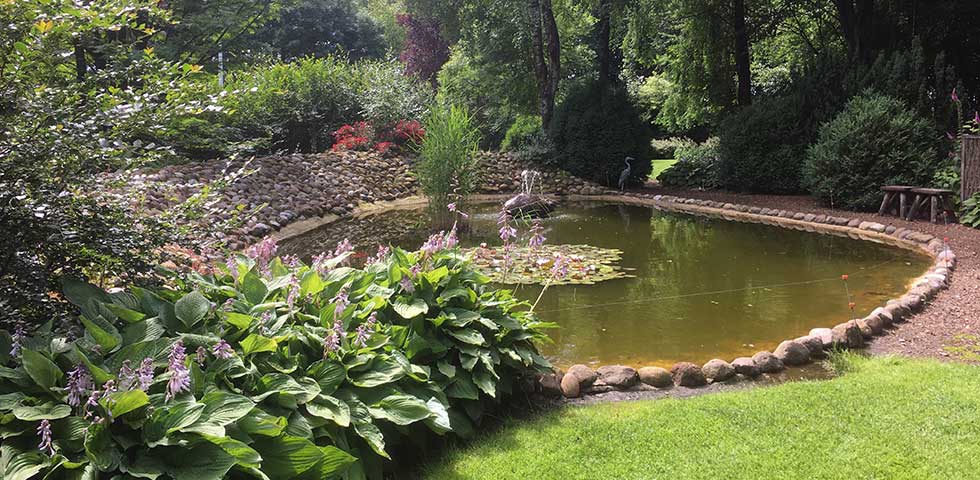
汉加德花园在丹麦西日德兰的斯基尔恩,是一座私家花园。园子由花园设计师安娜·汉加德和丈夫埃里克从 1986 年建到 2011 年,前后二十五年。他们的想法是让配色和谐、植物选本地适宜的品种,园子又好打理,所以动手前先栽了一条防风林带。
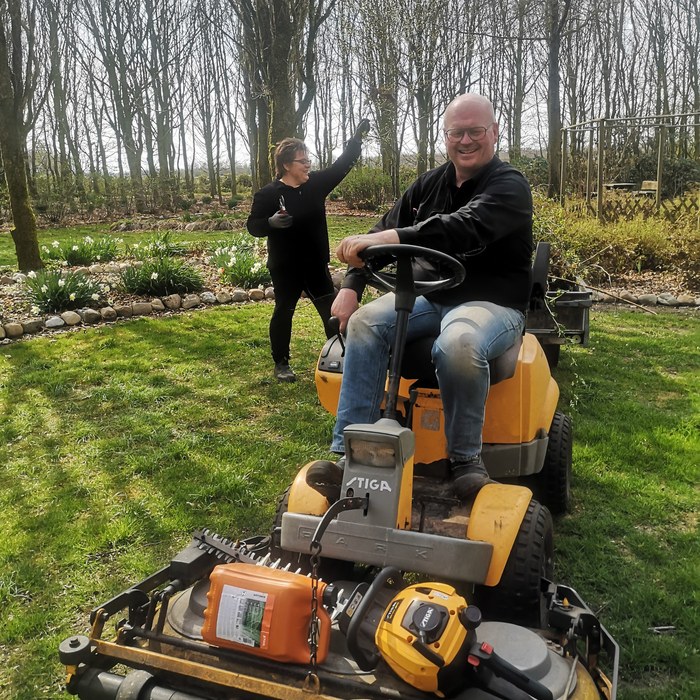
2011 年以后园子对公众关闭。九年之后,戴安娜和丹尼斯·克洛克买下它,收拾起来重新开放,如今成了当地办活动最多的一座私人花园。两口子都是农业和园艺行家,2011 年带着三个儿子从荷兰迁到丹麦;2021 年他们找房子时,无意中撞上这座带大园子的老宅,看第一眼时并没注意到院子有多大。园子如今占两万余平方米。
杜鹃、山毛榉迷宫和林间小径
园子的骨架是植物。春天先看球根花卉,接着是杜鹃和映山红接手;园里有多个铁线莲品种,有的攀在常绿树木和灌木上,有的铺成地被。夏天开花的珍稀树木灌木、几百株英国月季和历史月季接上,把整个花季撑满。
2022 年 1 月,他们开始种一座山毛榉迷宫,用了 1450 棵山毛榉,如今树已长高,走在里面容易迷路。2021 年还添了蝴蝶园和昆虫旅馆,2024 年蜜蜂入园,蜂蜜也成了副产品。园子后面是一片林子,客人可以在那儿打林地高尔夫。
找精灵、堆肥学校和亲子活动
园里最受欢迎的是找精灵。花园的主角是精灵迪迪,园里的精灵雕塑散在各处,孩子在咖啡屋领一张卡片就开始一路找过去。旁边的堆肥学校教孩子分拣厨余和不可回收物,讲怎么把落叶和园内废料堆成肥。
活动和课程多跟米凯尔森绘图学校合作办,绘画、泥塑这类手作课常年都有。展览由本地艺术家办,场地方也对外出租,举行生日、婚礼、公司聚会和培训。园里另有精灵寻宝路线,还有篝火和季节性的家庭日。
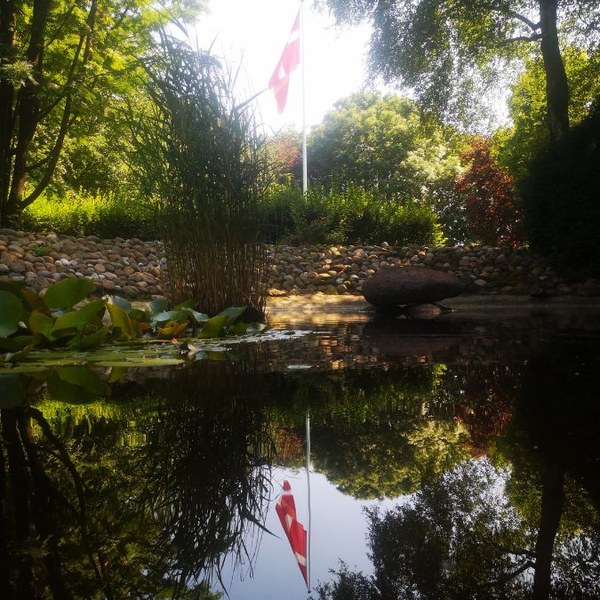
无障碍设施与咖啡馆
园子对行动不便的客人照顾得比较细。主干道大部分路段轮椅和助行器都能走,咖啡馆、展览区和厕所都在平层,厕所宽大并带扶手,留出护理员的位置。入口附近有供大车和小型巴士停的无障碍车位,从车位到铺砖的入口是 1 到 4 米的压实碎石路。
导盲犬和辅助犬免费入园。园里花粉量高,也常有蜜蜂和黄蜂,过敏的客人建议提前吃抗过敏药。咖啡馆供应咖啡、茶、汽水和饼干小食,可以自带食物,也可以在草坪上铺开野餐、玩羽毛球。
开放时间与门票
2025 年的开放季是 5 月 9 日到 9 月中旬,周三到周日每天 10 点到 17 点,周一和周二闭园。门票每人 75 丹麦克朗,13 岁以下儿童免费,10 人以上的团体每人 70 丹麦克朗,付现或用 PayPal、MobilePay 都行。
2026 年的安排变了。戴安娜和丹尼斯发文章说,两口子都有全职工作,孩子也大了要安家,这一年他们想歇一歇、也去看看别人家的园子,所以不再以参观花园的形式开放,具体安排以后再说。网站的博客仍会发园里的照片和消息。
A private garden twenty-five years in the making
Hangaards Have is a private garden at Skjern in West Jutland, Denmark. It was built in stages by garden designer Anna Hangaard and her husband Erik from 1986 to 2011, taking roughly twenty-five years. Their idea was a garden where the colour combinations are harmonious, the plant choices suit the West Jutland area, and the whole thing stays manageable, so a shelter belt of trees went in first.
The garden was shut to the public after 2011. Nine years later Diana and Dennis Klok bought it, put it back in order and opened it again, and it is now the busiest private garden in the area for events. Both have farming and horticulture backgrounds, and moved from the Netherlands to Denmark with their three sons in 2011. In 2021, while looking for a house, they came across a property with an unexpectedly large garden, though they had not noticed it at first sight. It now covers more than twenty thousand square metres.
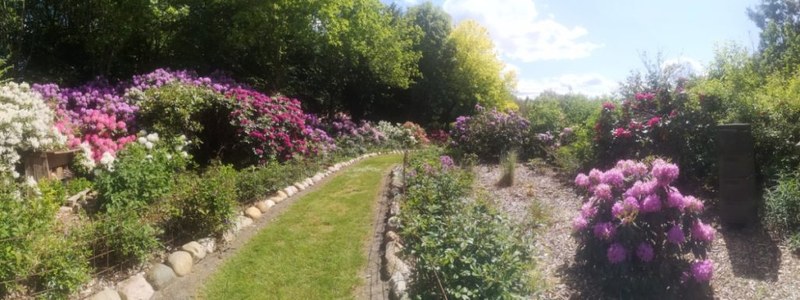
Rhododendrons, a beech maze and paths through the woods
Plants are the backbone of the garden. Bulbs come first in spring, followed by rhododendrons and azaleas. There are several varieties of clematis, some climbing over evergreen trees and shrubs, others used as ground cover. Rare trees and shrubs flowering in summer, and several hundred English and historical roses, carry the season on.
In January 2022 they began planting a maze of 1,450 beech trees. The trees have now grown tall and it is easy to lose your way inside. A butterfly garden and an insect hotel were added in 2021, and bees moved in during 2024, making honey a by-product. Behind the garden is a stretch of woodland where visitors can play a round of forest golf.
Troll hunts, a compost school and family days
The most popular activity is the troll hunt. The garden’s character figure is the troll Didi, and the trolls are scattered across the grounds, so children pick up an activity card in the cafe and set off to find them. Alongside it is the compost school, where children learn to sort kitchen waste from what cannot be recycled, and how leaves and garden waste are turned into compost.
Most of the activities and courses run in partnership with Mikkelsens Tegneskole, with drawing and craft classes running through the year. Exhibitions are put on by local artists, and the venue is rented out for birthdays, weddings, company gatherings and training. The trolls have their own treasure trail, and there are also fires and seasonal family days.
Accessibility and the cafe
The garden goes out of its way for visitors who have limited mobility. Most of the main paths take a wheelchair or a rollator, the cafe, the exhibition and the toilets are all on one level, and the toilets are roomy with support rails and space for a companion. Accessible parking for large vehicles and small buses sits close to the entrance, with one to four metres of firm gravel between the parking and the paved entry.
Guide and assistance dogs are welcome free of charge. Pollen counts are high in the garden and bees and wasps are often about, so visitors with allergies are advised to take antihistamines beforehand. The cafe serves coffee, tea, soft drinks and biscuits, and you can bring your own food and picnic on the lawn, or play badminton.
Opening times, admission and what happens in 2026
For the 2025 season the garden was open from 9 May to mid September, Wednesday to Sunday, 10 am to 5 pm, and closed on Mondays and Tuesdays. Admission was 75 Danish kroner per person, free for children under 13, and 70 kroner per person for groups of ten or more, payable in cash, by PayPal or MobilePay.
The arrangement changed for 2026. Diana and Dennis Klok wrote that both of them now have full-time jobs and their children are establishing themselves, so they are taking a break and visiting other people’s gardens for a while. The garden does not open as a visitor garden in its current form in 2026, and they will post photographs and news from the garden on the site from time to time.
相关文章:
 丹麦 布兰斯花园 Blanshaven – 746 种植物与珊瑚石灰岩园
 丹麦 文化俱乐部 The Danish Club – 丹麦三百余座历史宅邸与花园
 丹麦 日本庭园 De Japanske Haver – 从京都带回日本的造园师
 丹麦 创意花园 Den Kreative Have – 丹麦最美的私人花园之一
 丹麦 比克高登家庭公园 Birkegårdens Haver – 五座花园与最大日本庭园
 英国 赫尔姆斯利围墙花园 Helmsley Walled – 治疗性园艺花园
 英国 伯肯格罗夫花园中心 Birchen Grove – 伦敦最大花园中心九大卖场
 英国 康沃尔 Tanglewood 野生花园 – 自然野趣园艺与家族实验
发表回复