

从四口鱼塘到三公顷的花圃
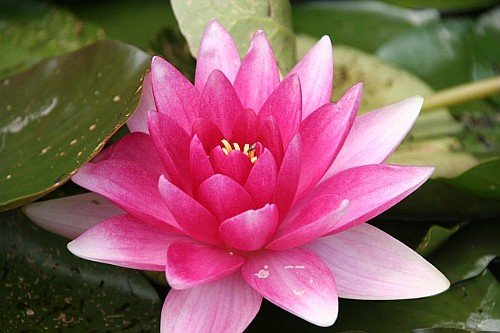
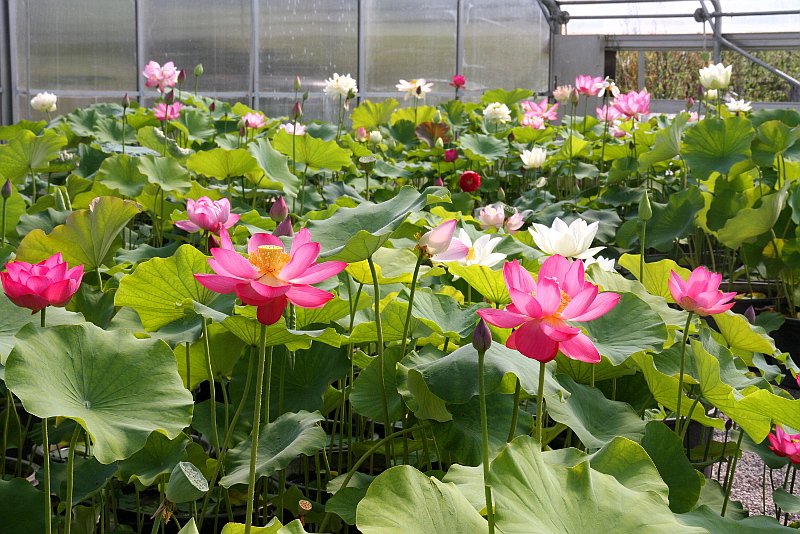
德国巴伐利亚州下阿尔高县施瓦本地区基希海姆,有一家专做睡莲和荷花的苗圃,招牌是维尔纳·瓦尔纳园艺,网上的店名叫宁菲翁,日常管事的是曼弗雷德·施密德和维尔纳·瓦尔纳。生意是从鱼塘起的头。1920 年代,祖辈冬天农闲,就把时间用来挖塘,一铲一铲挖出坑,土用独轮车推走,祖父在下面铲,祖母推着装满土的车走一块架在小溪上的窄木板。几年下来挖出四口塘,大到能画进地形图。塘本来不是为植物准备的,是养鲤鱼的。那时的下阿尔高是穷地方,买观赏植物的人少,鱼也少自家吃;每年耶稣受难节当天起网卖鱼,曾祖母到最后一刻还要讨回几条,于是受难节那天全家改吃青蛙。到了第二代人手里,塘里自己冒出了第一批睡莲,只为摆着好看;农庄卖掉时,塘留在了家族里。再往后,园主开始收集沼泽植物和水生植物,办一家专种这些植物的园子的念头就这么冒了出来。2006 年苗圃迁到基希海姆,园子有三公顷多,中间夹一片老果树草甸,一条小溪沿地边流过;温室里养着将近两百个荷花品种,两座砖砌的水池里开着将近一百个热带睡莲品种。

目录里的睡莲与荷花
店里的货按类分得很细。睡莲商品页 132 个,其中耐寒睡莲分中型 54 个、大型 20 个,另有 5 个特价页、4 页萍蓬草和 1 页迪特·贝希特霍尔德选育的品种;热带睡莲分白天开花的 23 个、夜里开花的 5 个、块茎 14 个,外加 1 个特价页;再往外是杂交睡莲 4 个、巨型睡莲 1 个。荷花 48 个商品页,按大小分中型 19 个、大型 12 个、小型 12 个,另有 4 页手册和 1 个特价页。睡莲加荷花正好 180 个商品页,这个数是照站里公开的商品清单逐条数出来的,跟目录页一页页翻过去统计的结果对得上;只是特价页和手册页里有些货跟主目录重复,按品种算要比 180 少一些。除植物以外,站里还有 7 页清晨赏荷的门票、3 页莲叶茶新品、3 页肥料与基质商品,以及 4 个早年留下的池塘植物品种(莕菜、菱、两栖蓼、水鳖)。站上有一条庆祝 25 周年的旧公告,说他们是德国最早开始卖荷花的苗圃,当时给全部荷花品种打了 25% 的折扣。同行可以从单独的经销商入口登录。
2020 年以后收窄的品种与今年的供货
2020 年以后,店里的品种线明显收窄了。一位当家人病了一场,短期记忆和长期记忆都受了影响,园子只能收缩:荷花和耐寒睡莲留着,热带睡莲要等苗子长到能发货才挂出来,池塘水生植物基本停卖,水草也要等养到能运走才重新上架。2025 年的荷花季收尾时,只剩几株带小叶的荷花根茎,按「Onashi 荷花」的名义 18 欧元一株出手,不含肥料,也不能挑品种。2026 年的荷花更收不上来——有人发病住院,接着又是几周的康复,等能回地里的时候,荷花已经抽得太高没法采,店里一度把整个网店清零,说好大约 3 月 30 日以后先恢复肥料、砂土混合料、莲种和手册的订单。最近一条公告说这几样已经重新可订,只是发货会慢一些、也不如从前顺;今年睡莲能不能收成还说不准,荷花根茎则是确定没有。园子眼下不对外开放,货照常发,活动也还没有排期。
睡莲与荷花的来历和种法
站里的科普页把这两样讲得比目录还细。在拉图尔-马利亚克之前,欧洲园子里能买到的睡莲只有欧亚和北美的野生种,大多开白花,叶子很快铺满水面,花却少,一年只开几个星期。1830 年生在法国西南部的约瑟夫·博里·拉图尔-马利亚克是第一个动手杂交的人,1875 年他开出世界上第一家睡莲苗圃,把热带睡莲的颜色一点点引进耐寒种里;莫奈是他最出名的客户,吉维尼的园子整个被改成睡莲池,如今德国能买到的睡莲大多还是他的后代。二十世纪的代表是美国园艺家斯洛卡姆,他在佛罗里达开苗圃,退休后到北卡罗来纳继续育种,育出的品种大多用他自己的名字命名,花量大,颜色比欧洲常见的更浓,杏色和桃色也是他带进来的。澳大利亚的查尔斯·温奇退休后做了六百多次杂交,从中挑出两百个命名,橙色睡莲就是他这一代做出来的;阿莫斯·佩里有一年做了 159 次杂交,只有一朵花结了种子,气得就此洗手。荷花的来历更杂:中国育成过几百个品种,矮的能摆在窗台的浅碗里,高的比人还高,北方冬天都种在盆里搬进地窖;朝鲜荷花 2006 年才第一次进德国,头一年就开了花;欧洲本地的野生荷花在冰期就绝了,如今只剩意大利北部的逸生种群。种法上,耐寒睡莲要整个冬天盖在水下、根茎不至于冻透才算稳,四十厘米左右的水深起就够;苗要种在盆里,而不是直接栽进塘底,多数品种五到十升的容器就行,土要沉、最好带点黏土,粪肥、泥炭、堆肥和树皮都不能掺,只用矿质肥;五月、六月栽最合适,花期从 5 月下半月开到 9 月初,黄花品种晚两个星期,单朵花开三到四天就谢。虫子不算多,偶有蚜虫落在花苞上,拿水管冲掉就行;睡莲螟和睡莲叶甲不致命,但把叶子啃得难看,这两种虫会飞,附近三公里内有虫的池塘就可能飞过来。荷花比睡莲皮实,水面留三十厘米、根下留三十厘米土就熬得住冬天,开花却挑水温,得攒够二十度以上的小时数,所以店里的建议是葡萄产区以外的地方用桶养。
清晨的荷花池、发货与付款
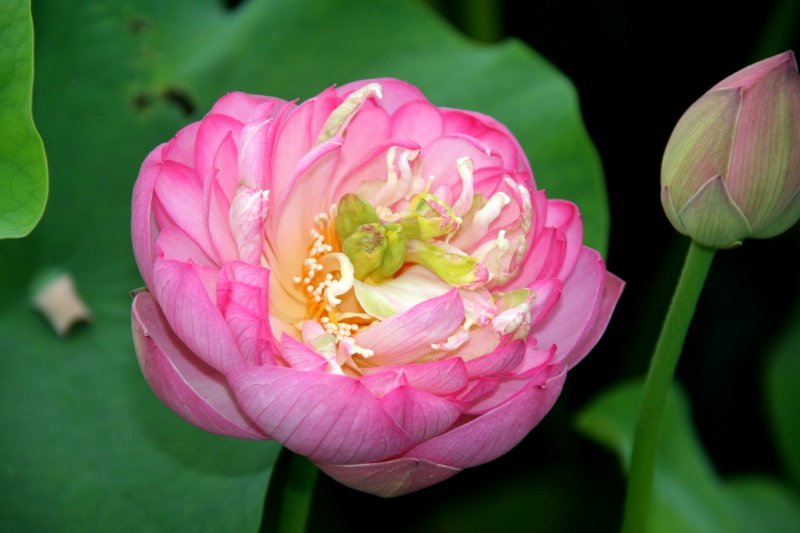
荷花池的清晨是店里另一项安排:六月到八月底的某几个周日,开园比日出早半小时,客人在荷花温室里等花打开,一次最多五个人,除了你最多还有四位陌生客人;也可以把整个早晨包下来,结束时奉上一碗莲叶茶。眼下没有排期,站里的活动页写着暂时没有活动。来访要提前写邮件约,常规是每年四月起的周四、周五、周六,现在园子暂不开放参观。发货走 DHL 挂号包裹,小件用德国邮政的大宗信件,2,90 欧元;德国境内每件包裹一个价,6,90 欧元。欧盟国家按重量算:5 公斤以内 18,00 欧元,5 到 10 公斤 22,90 欧元,10 到 20 公斤 33,90 欧元,20 到 31,5 公斤 46,90 欧元;列支敦士登另计,30,99 到 60,99 欧元不等。送到瑞士边境的包裹站也行,不过地址算在德国境内,账单按德国税率开含税价。付款是先款后货,可以银行转账,也可以用 PayPal,银行信息随订单确认邮件一起寄走。发货时间按品类分:荷花 3 月底到 7 月,睡莲 4 月中到 8 月底,耐寒池塘植物 4 月到 10 月(有些水草 5 月才有),热带池塘植物 5 月底到 10 月,多年生植物 4 月到霜降。
From Four Carp Ponds to a Three-Hectare Nursery
In Kirchheim in Schwaben, in the Unterallgäu district of Bavaria, southern Germany, there is a nursery devoted to water lilies and lotus. The sign says Werner Wallner Gartenbau, the online shop is called Nymphaion, and Manfred Schmid and Werner Wallner run it day to day. The business began with fish ponds. In the 1920s, with little farm work in winter, the grandparents spent the season digging ponds by hand, the grandfather shovelling and the grandmother balancing the full wheelbarrow across a narrow plank laid over the brook. Over the years they dug four ponds, large enough to be marked on the topographic map. The ponds were not meant for plants but for carp. Unterallgäu was a poor region then, few people bought ornamental plants, and the family rarely ate the fish itself; the ponds were netted and the catch sold on Good Friday, and every year the great-grandmother talked a few fish back at the last moment, so the family ate frogs instead. In the next generation the first water lilies appeared in those ponds, purely for show, and when the farm was sold the ponds stayed in the family. Later the owner began collecting marsh and water plants, and the idea of a nursery for exactly those plants grew out of it. In 2006 the nursery moved to Kirchheim. The grounds cover more than three hectares, with an old orchard meadow inside and a small brook along one edge; the greenhouse holds close to two hundred lotus varieties, and two masonry basins hold nearly a hundred varieties of tropical water lily in flower.
How the Water Lily and Lotus Catalogue Is Sorted
The stock is divided in fine categories. The water lilies come to 132 product pages: hardy lilies in medium (54) and large (20) sizes, plus 5 special-offer pages, 4 pages of yellow water lilies of the genus Nuphar and one page of selections by Dieter Bechthold; tropical lilies in day-blooming (23), night-blooming (5) and tuber (14) forms, plus one special offer; beyond those, 4 interspecific hybrids and 1 giant water lily. The lotus come to 48 product pages: medium (19), large (12) and small (12) sizes, plus 4 pages of handbooks and 1 special offer. Water lilies and lotus together make exactly 180 product pages, counted entry by entry through the shop’s published product list and matching the total obtained by paging through the categories. Some of the special-offer and handbook pages repeat goods that also appear in the main categories, so counted as varieties the number is a little below 180. Beyond the plants, the shop lists 7 pages of tickets for the dawn lotus sessions, 3 pages of lotus leaf tea, 3 pages of fertiliser and substrate, and 4 pond-plant varieties left over from earlier years (Nymphoides peltata, water chestnut, amphibious bistort, frogbit). An old notice marks a 25-year jubilee, calls the nursery the first in Germany to sell lotus, and recalls a quarter off every lotus variety at the time. Trade buyers have a separate dealer login.
A Narrower Range Since 2020, and What Can Be Ordered Now
The range has narrowed visibly since 2020. One of the two people running the nursery fell ill, and both short-term and long-term memory were affected, so the nursery had to contract: lotus and hardy water lilies were kept, tropical lilies were listed only once the plants were big enough to ship, pond plants were largely withdrawn, and water plants came back to the shop only after they had grown large enough to travel. When the 2025 lotus season closed, a few rhizomes with small leaves were left and offered as Onashi lotus at 18 euros each, without fertiliser and with no choice of variety. The 2026 harvest failed outright: an illness put one of them in hospital and then into several weeks of rehabilitation, and by the time the ground could be worked the lotus had grown too tall to cut, so the whole shop was set to zero for a while, with orders for fertiliser, sand mixtures, lotus seed and handbooks to resume from about 30 March. The latest notice says those items can be ordered again, though despatch will be slower and less smooth than before. Whether water lilies can be harvested this year is still open, and lotus rhizomes are definitely off. The nursery is closed to visitors for now, despatch continues as usual, and no events are scheduled.
Where the Plants Come From, and How They Are Grown
The shop’s information pages go further into both plants than the catalogue does. Before Latour-Marliac, the only water lilies on sale in Europe were wild forms from Europe and North America, flowering more or less white, covering a basin in leaves within a season and producing few flowers, and those only for a few weeks a year. Joseph Bory Latour-Marliac, born in 1830 in south-western France, was the first to cross them, and in 1875 he opened the first water lily nursery in the world, bringing the colours of tropical lilies into the hardy ones step by step. Monet was his most famous customer, and the garden at Giverny was completely remade into lily ponds; most water lilies sold in Germany today are still his descendants. The representative of the twentieth century is the American horticulturist Perry D. Slocum, who ran a nursery in Florida and carried on breeding after retiring to North Carolina; most of his varieties carry his own name, they flower heavily, the colours are more intense than Europeans were used to, and apricot and peach tones came in with him. Charles Winch in Australia made more than six hundred crosses after retiring and named two hundred of them, and the orange water lilies belong to his generation; Amos Perry gave up after a year in which 159 crosses produced a single seed-setting flower. The lotus has a more mixed pedigree. China bred hundreds of varieties, from dwarfs for a bowl on a windowsill to giants taller than a man, and in the north they have always been kept in tubs and carried down to the cellar for the winter; Korean lotus reached Germany only in 2006 and flowered in its first year; the native European lotus died out in the ice ages, and only naturalised stands in northern Italy remain. On growing them, a hardy water lily is reliably hardy if it stays under water all winter and its rootstock cannot freeze through, which holds from about forty centimetres of depth; plants go into a container rather than straight into the pond bottom, five to ten litres suit most varieties, the soil should be heavy and preferably a little clayey, and manure, peat, compost and bark mulch must stay out, with mineral fertiliser the only suitable kind. May and June are the best planting months, flowering runs from the second half of May to early September, yellow varieties start a fortnight later, and a single flower lasts three or four days. Pests are limited: aphids occasionally sit on buds and can be hosed off, while the water lily moth and the water lily leaf beetle do no lasting harm but spoil the leaves, and both fly, so an infested pond within three kilometres can send them over. Lotus is tougher than the lilies, needing only thirty centimetres of water above and thirty centimetres of soil below the roots to survive any winter here, but flowering depends on accumulated hours above twenty degrees, which is why the shop recommends tub culture everywhere outside the wine-growing regions.
Dawn in the Lotus House, Shipping and Payment
The dawn session in the lotus house is the shop’s other arrangement: on a few Sundays between June and the end of August the greenhouse opens half an hour before sunrise, guests wait inside for the flowers to open, five people at a time, so at most four strangers besides yourself, or the whole morning can be booked privately, and a bowl of lotus tea closes it. No dates are set at the moment and the events page says nothing is scheduled. Visits still need an email in advance, usually on Thursdays, Fridays and Saturdays from April, but the nursery is closed to visitors for now. Orders travel as insured DHL parcels, with small quantities sent as a large letter through the German postal service for 2,90 euros; within Germany there is one flat rate per parcel of 6,90 euros. To the other EU countries the price follows weight: 18,00 euros up to 5 kg, 22,90 euros from 5 to 10 kg, 33,90 euros from 10 to 20 kg and 46,90 euros from 20 to 31,5 kg, while Liechtenstein is priced separately between 30,99 and 60,99 euros. Delivery to a packshop on the Swiss border is possible, though the address then counts as German and the invoice carries German VAT. Payment is in advance by bank transfer or PayPal, with the banking details sent along with the order confirmation. Despatch windows differ by group: lotus from the end of March to July, water lilies from mid-April to the end of August, hardy pond plants from April to October with some water plants only from May, tropical pond plants from the end of May to October, and perennials from April until the first frost.
相关文章:
 美国水生植物与睡莲苗圃 Pond Megastore – 根据不同地
 德国 梦幻睡莲 Traumseerose – 德国睡莲销往欧洲数十国
 德国 睡莲农场 Seerosenfarm – 睡莲与荷花四百余种及栽培知识
 德国 睡莲品种 Seerosensorten – 下萨克森州上百种睡莲苗圃
 德国 水生植物商店 H2O‑Pflanze – 下萨克森州百余种池塘植物电商
 美国 百合花水生植物花园 Lilyblooms Aquatic Gardens – 水生植物零售与邮购品牌
 奥地利 水生植物 Greinegger – 上奥地利州百余种水生植物苗圃
 德国 水花园爱好者协会 – 致力于推动水生和沼泽植物的研究、栽培与应用
发表回复