

从两代人的郁金香生意说起
这家公司 1989 年由 Jan Ruiter 和 Carla Wever 创办,坐落在北荷兰省安代克。家族生意还能往上追两代,Jan Ruiter 在公司历史页里回忆,家族生意从 1944 年他父母结婚那年开始,父亲手里只有一条旧木船和一片土豆地,靠租地种油菜、晚香玉和花椰菜,也种郁金香和鸢尾,种郁金香还得先拿到许可。1988 年兄弟分家,他带着 Carla 搬到安代克重新开始,当时有九公顷地;鸢尾遇上价格不行,几年后索性不种了,专心做郁金香。两个儿子先后进公司,2012 年 1 月起由 Stef 和 Niels 接手。
早熟球种靠塑料膜和法国地块抢时间
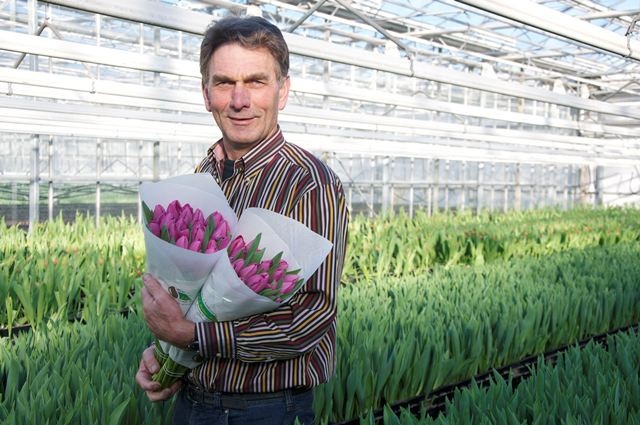
公司做郁金香球茎和切花,真正的看家本领是让球茎早熟。在荷兰的塑料膜下和法国的地块上做早熟栽培,花期能往前提,从十二月初起,市场上就能拿到颜色比较齐全的一批货。全年的目标是花季从头到尾都有货,品种上尽量往花头重、单瓣的类型靠。催花用的球茎尽量用自家荷兰和法国地里的收成,起始材料的品质才握得住;此外也接球茎预处理、分级包装和出口前的整理。
地在西弗里斯兰,田里的活一年排到头
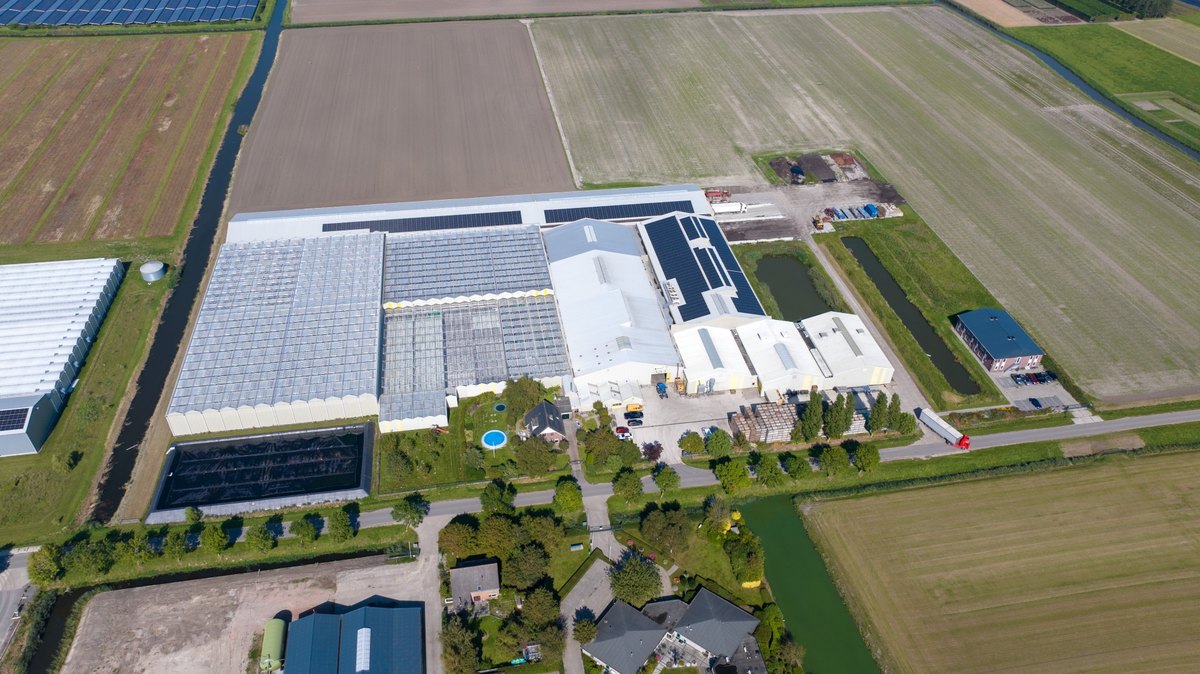
球茎主要种在西弗里斯兰,恩克赫伊曾和霍伦之间、奥斯特沃德一带,以及维灵厄梅尔。有的地是自家的,有的从养牲口和种大田的农户手里租;德伦特省还有一部分是替人合同种的,机器自己开过去。田里的活一年排得满:三月下地挑花,先看叶子再看花;四月初揭掉塑料膜,让早熟的郁金香开起来好剪;六月半两台自有的起球机起球;七月中交货到十月中;十月半重新下地,先种替别人合同种的风信子,再种自家的郁金香。逐块地取土样化验来定肥量,剪花时九成八的花头由机器切、其余靠手工;每个品种定下查病毒的时机,带病的拔掉,这是通过法定检验的前提。
干燥、脱皮和冷库里的分寸
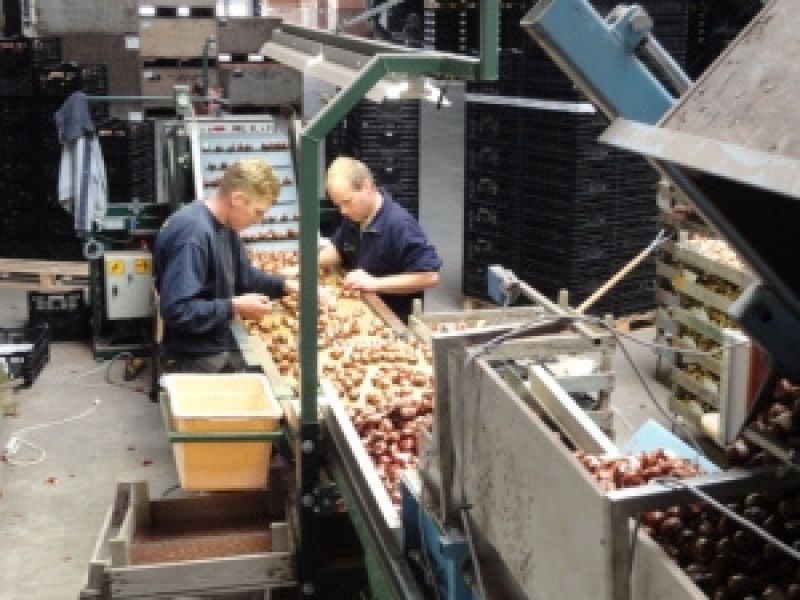
球茎收上来先过水,一条筛线把小球和大球分开,好控制后面的干燥。厂里有三十六面干燥墙,一墙能放十个周转箱,合起来三百六十箱,一次能晾两天的收成,堆久了容易返酸,公司在这上头舍得投入。脱皮线宽一米八,两年前装的,产量跟得上起球的进度,哪个品种什么时候脱最合适能分开定;线上每天约有二十五个人干活,一边复脱一边挑病球和虫害球。进冷库之前球茎按用途分好日期,库里能给的温度从二度、五度、七度、九度一直到十七度、二十度、二十三度、三十四度,箱子推进强制通风墙,公司一共能存三千一百箱;不同库房还能分别控制二氧化碳、乙烯、温度和湿度。
球茎和切花怎么出门
站上的球茎页列了二十个品种,每个标着花色、两档冷藏起始日和结束日期,也标出是否在法国种、是否用塑料膜促成。切花生产表里有三十一个品种,按颜色和周次排开,从第四十九周到第十九周都有货,其中红色七个、粉色五个、白色五个。两页加起来是三十多个不同的郁金香品种。出口做得早,自家产的球茎尽量多出,重、损耗少,早种和晚种的球茎还分开挑规格,装箱时按目的地和温度处理的要求走。圣诞节前后公司能一次凑齐七种颜色,不同品种轮着供到五月中。主要市场在美国、加拿大和波兰;切花按客户的重量、长度和采摘成熟度配,纸卷包桶装或者贴条码封箱都行,一个质量标准凑不齐全部颜色时,会找同行把缺的补上。
Two Generations of a Tulip Business
The company was founded in 1989 by Jan Ruiter and Carla Wever and sits in Andijk, North Holland. The history page quotes Jan Ruiter himself, and the family business really starts in 1944, the year his parents married, when his father had an old wooden barge and a small patch of potato land and took on rented ground to grow oilseed rape, gladioli and cauliflower, and tulips and irises with a licence for the latter. The brothers split in 1988; he and Carla moved to Andijk to start again with nine hectares, and when iris prices turned bad the irises went and tulips became the whole business. Their two sons joined in turn, and in January 2012 Stef and Niels took over.
Early Bulbs From Plastic and French Ground
The business is tulip bulbs and cut tulips, and the real speciality is getting bulbs to finish early. Grown under plastic in the Netherlands and on French ground, the crop reaches the market from the beginning of December, when a fairly complete range of colours is wanted. The aim is to cover the whole season from early to late, leaning towards heavier, single-flowered tulips. For forcing they use as many of their own bulbs from Dutch and French ground as possible, so the quality of the starting material stays in their own hands. They also take on bulb pre-treatment, grading, packing and preparing the work for export.
Ground in West-Friesland, and a Year That Is Full
The bulbs are grown in West-Friesland, between Enkhuizen and Hoorn and around Oostwoud, and in the Wieringermeer. Some of the land is their own and some is rented from livestock and arable farmers, and a part of the crop is contract grown in Drenthe, where they travel with their own machines. The year has a fixed rhythm: selection in the field in March, first on the leaf and later on the flower; the plastic comes off in early April so the early tulips can open and be cut; two net-lifting machines of their own start lifting in mid-June; delivery runs from mid-July to mid-October; planting starts again in mid-October, hyacinths for another grower first and their own tulips after that. Soil samples from every field decide the fertilising, ninety-eight per cent of the flower heads are cut by machine, and each cultivar gets its own moment for virus checks, with affected plants removed so the crop can pass inspection.
Drying, Peeling and the Cold Room
Bulbs go through water first, where a screen line separates small bulbs from coarse ones so the drying that follows can be controlled. The works has thirty-six drying walls taking ten crates each, three hundred and sixty crates in all, enough to dry two days of lifting at a time; bulbs that sit too long turn sour, and the company puts money into this. The peeling line is one metre eighty wide, fitted two years ago, quick enough to keep up with the lift so each variety can be peeled at the moment that suits it, and about twenty-five people work the line daily, re-peeling and picking out diseased and pest-ridden bulbs. Before storage the bulbs are sorted by the date each customer wants, the cells can be run at anything from two, five, seven and nine degrees up to seventeen, twenty, twenty-three and thirty-four, crates are pushed into forced-air walls, and the company can hold three thousand one hundred crates that way, with carbon dioxide, ethylene, temperature and humidity controlled separately from cell to cell.
How the Bulbs and Cut Flowers Leave
The bulb page on the company website lists twenty varieties, each with its colour, two cooling start dates and an end date, and whether it is grown in France and whether it is grown under plastic. The cut flower schedule lists thirty-one cultivars by colour and week, running from week forty-nine to week nineteen. They export early and from their own production as far as possible, so the bulbs are heavier and losses are lower, early and late bulbs are graded into different sizes, and packing follows what the destination and the temperature treatment require. Around Christmas the company can put together seven colours at once and keeps different cultivars coming until mid-May. The main markets are the United States, Canada and Poland. Cut flowers are packed to the customer’s weight, length and picking maturity, either wrapped in paper in a bucket or sealed with a barcode for the shelf, and when one quality standard cannot cover every colour, colleagues are asked to make up the difference.
相关文章:
 荷兰 德鲁伊特鲜花创新公司 De Ruiter Innovations – 百年玫瑰育种与全球花卉种苗企业
 荷兰 普林斯球茎 Prins Bulbs – 面向英国零售的家族出口商
 荷兰 乌滕博加德父子花卉球茎公司 JUB Holland – 荷兰球茎出口遍及三十多个国家
 荷兰 瑞洛克花卉球茎 Ruigrok Flowerbulbs – 450 余种球茎的出口农场
 荷兰 扬森海外有限公司 Jansen’s Overseas B.V. – 北荷兰球茎盆栽全球供应商
 荷兰 特里弗洛尔花卉球茎 Triflor – 覆盖北美亚洲欧洲的球茎出口商
 荷兰 范登博斯花卉球茎 Van den Bos Flowerbulbs – 500 余种球茎的出口商
 荷兰 博特球茎花卉公司 Bot Flowerbulbs – 北荷兰球茎预处理全球出口商
发表回复