

一座开放参观的私人花园
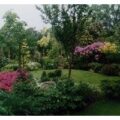
布兰斯花园在丹麦洛兰岛的一个村子里,离水大约 200 米。洛兰岛是丹麦气候最温和的地方,园主把这里当作试验场,试着把丹麦别处难活的植物挪到这儿来种,园里能见到橄榄树、南欧月桂和矮棕榈。园子占地 2900 平方米,分成五个互相隔开的园室,另有一处卖苗区。
园主 1949 年出生,2014 年 6 月退休,此前在公共部门做了 42 年:头 25 年当教师和地区顾问,接着十年在市镇政府负责儿童照护、学校、文化和市民服务,最后几年做镇长助理。他一年有 300 天待在园子里,园子从不停工,植物年年有增有减。2025 年他记下的来访者里,有西兰岛高山植物俱乐部,以及马里恩利斯特民众学院的 76 位访客。
五个园室与卖苗区
第一园室在长车道两旁,种着大叶杜鹃。通向屋子的路两侧用蕨类连成约 50 米的绿带,兰草的种子自己落进蕨丛里发芽。第二园室在屋前,一张喜阴的兰花床紧贴房前,屋檐淌下来的水正好灌进床里;其中一株杓兰 2019 年开出 75 朵花,同年 9 月分成了 4 株。
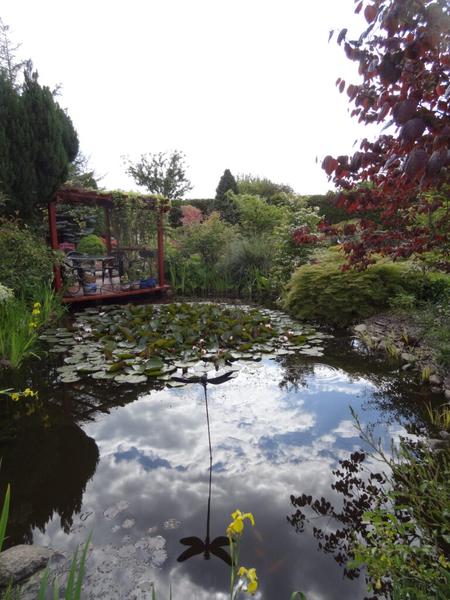
第三园室是园子中央的大池塘,池边种着槭树和木兰,水面浮着睡莲,塘里的青蛙很多,春天挤在一起取暖。宿根花境从第三园室一直铺到第四园室,2014 年在花境里铺进两百多块石板,可以走到花丛跟前看;2023 年底又重新调整了种植,效果比原来好。第四园室中央是一块心形的月季花境,四周种满雪滴花;园主嫌其中一角光线不够,2025 年另辟一床种月季、紫锥菊和软枣猕猴桃,2026 年是第一次亮相。
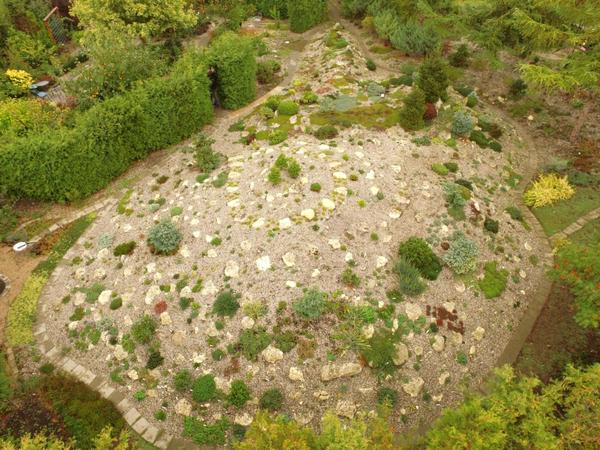
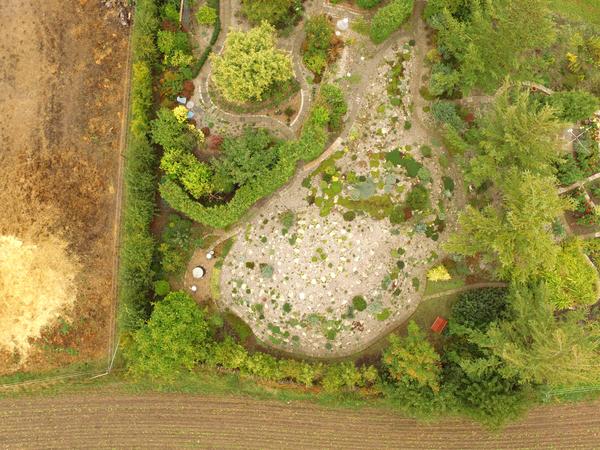
第五园室是石灰岩山园,用 30 吨珊瑚石堆起来,石料出自法克瑟采石场。那些石头来自丹麦所在的年代——那时这片海是亚热带海洋,珊瑚礁的礁体后来成了今天的石料,有几百万年。堆这个山前后花了 14 年,土、砂石全靠人力搬;2024 年拓宽了通道,还修了台阶能走到山顶。第六园室是卖苗区,旁边有萱草、浆果灌木、无花果、大丽花和一座温室。
杜鹃与月季
杜鹃是园子的长项。第一园室那些大叶杜鹃以屋久岛杜鹃为主,屋久岛在日本最南端外约 60 公里,直径 26 公里,山高到 1935 米,冬天常有暴雪。这个种耐旱、耐晒、耐风,是许多杂交种的母本,园主种它和它的杂交种已经 20 年,一株没丢,反而年年长势稳、开花旺。大叶的品种是 2006 年从德国北部的哈赫曼苗圃来的,当时苗高 40 厘米,如今快到 180 厘米。小叶的品种种在塘边两座酸土丘上,位置越来越挤,想加苗就得先减苗。
月季是另一个主角:杜鹃花期一过,月季接上来,和宿根一起撑住整个花季。现在按两三株一组种,拼出安静的画面,苗子从丹麦、德国、荷兰和英国进货。园里 95% 的植物都有铭牌,常见的种类不用查资料。园主早年的植物清单记着园里约有一千五百种植物、灌木和乔木,那份清单页如今已经下线。
高山植物的收集
石灰岩山园里现有 746 种植物,含矮生常绿,园主的介绍页写作约 750 种,两个数字指的是同一批。名单按属分开列在站上,里面的石竹、龙胆、虎耳草、婆婆纳、耧斗菜、福禄考、委陵菜、风铃草、岩风铃草几类占得多。高山植物耐旱又耐贫瘠,在丹麦的花园里用得还少,园主 2025 年自己繁殖了 600 多株补进园子。
紫锥菊是园里的另一条线,有 25 个以上的品种,从 6 月开到 10 月中,2025 年的花期特别好。岩石园并不只靠石灰岩:塘后两座用花岗岩和酸土堆成的丘上,小叶杜鹃、兰花、矮生乔木和百合挤在一起,中间还夹着一张以兰花为主的酸土床,床里立着两尊青铜鹤雕塑。
开放时间与苗木
花园 2026 年的开放时间是 5 月 1 日到 7 月 8 日,再从 8 月 1 日开到 10 月 1 日,每天 9 点到下午 6 点。门票 25 克朗,20 岁以下免费,持学生卡的年轻人不论年龄也免费;门口有钱箱,也可以手机支付。园主不在的时候,客人照样进去,把钱放进箱子就行。八人以上的团体可以预约免费讲解。7 月还能订咖啡和蛋糕,每人 50 克朗,要提前一天。门口有碎石停车场,路对面也有宽草带可以停车。
苗木销售区在第六园室,没标价的统一 30 克朗,标了价的按牌子算。园主不在的时候,客人可以自己从销售床起苗,工具和袋子都备在边上。1 月底到 2 月从国外订货,4 月中还在汉堡的大型植物市场进货;帮忙带苗也可以,只是要尽快取走,加两成手续费。高山园里的植物不许自己挖,想买那里的苗得跟园主说。
园子里还养着一条小狗阿尔玛,四分之三是吉娃娃,四分之一是迷你品,见生人不怯。照片栏里有近 400 张照片,按植物分好,是想先看看园子的人最省事的办法。
A private garden open to visitors
Blanshaven sits in a village on Lolland, Denmark’s mildest island, about two hundred metres from the water. Because of that climate the owner treats the place as a trial ground for plants that struggle elsewhere in the country, and olive trees, true laurel and dwarf palms are among the ones being tried. The garden covers 2,900 square metres and is split into five separate garden rooms, with a further section where plants are sold.
The owner was born in 1949 and retired in June 2014 after 42 years in public service: first as a teacher and regional adviser, then ten years running childcare, schools, culture and citizen services for a municipality, and finally as assistant to the town director. He is in the garden 300 days a year, and the place is never finished, with plants arriving and leaving from one year to the next. Among the visitors he remembers from 2025 were the Zealand alpine plant club and 76 people from a folk high school in Marienlyst.
The garden rooms and the plant sale
Room one flanks the long driveway with large-leaved rhododendrons. The path to the house is edged with ferns for about fifty metres, where orchids seed themselves. Room two sits in front of the house: a shade bed of orchids that never goes dry because the roof drains into it. One lady’s slipper carried 75 flowers in 2019 and was split into four pieces that September.
Room three holds the big pond, with maples and magnolias round the edge, water lilies on the surface and plenty of frogs that crowd together in spring. The herbaceous border runs from room three into room four; more than two hundred flagstones went in during 2014 so visitors can walk right up to the plants, and the whole border was replanned at the end of 2023. Room four has a rose bed shaped like a heart, ringed with snowdrops, and a new bed of roses, echinacea and hardy kiwi that opens for the first time in 2026.
Room five is the alpine rockery, built from 30 tonnes of coral limestone hauled from the Faxe quarry. The stone formed in the sea that covered this part of Denmark in a subtropical age, so the pieces are several million years old. Moving the soil, grit and stone by hand took fourteen years; in 2024 the paths were widened and steps added so visitors can climb to the top. Room six is the plant sale, with beds of daylilies, fruit bushes, figs, dahlias and a greenhouse alongside.
Rhododendrons and roses
The rhododendrons are the backbone. Room one is built around yakushimanum and its hybrids; the species comes from Yakushima, an island sixty kilometres off the southern tip of Japan, only twenty-six kilometres across, with mountains up to 1,935 metres and snowstorms in winter. It tolerates drought, sun and wind better than most, and it has been the parent of a long line of hybrids. The owner has grown his own hybrids and the original for twenty years without losing a single one. The large-leaved forms arrived from the Hachmann nursery in northern Germany in 2006, at forty centimetres tall, and now stand close to 180. The small-leaved ones sit on two banks of acid soil near the pond, packed so tightly that a new plant means an old one has to go.
Roses take over once the rhododendrons finish, and are now planted in twos and threes to make a calmer picture, with plants sourced in Denmark, Germany, the Netherlands and England. Ninety-five per cent of the plants carry a label, so the common ones need no reference book. A plant list written in earlier years recorded around fifteen hundred plants, shrubs and trees in the garden; that list page is no longer online.
Collecting alpine plants
The limestone bed now holds 746 different plants, dwarf conifers included, and the owner’s own description rounds that to about 750. The names are listed genus by genus on the site, with dianthus, gentian, saxifrage, veronica, aquilegia, phlox, potentilla, campanula and edraianthus well represented. Alpine plants tolerate drought and poor soil and are still underused in Danish gardens, so in 2025 he propagated more than 600 of them and added them to the rockery.
Echinacea is the other line, with more than twenty-five varieties that flower from June to the middle of October, and 2025 was a particularly good year for them. The rockery rests on more than limestone alone: behind the pond, two mounds of granite and acid soil carry small-leaved rhododendrons, orchids, dwarf trees and lilies, and between them lies a large acid bed dominated by orchids, with two bronze cranes standing in it.
Opening hours and buying plants
For 2026 the garden is open every day from 1 May to 8 July, and again from 1 August to 1 October, nine in the morning to six in the evening. Entry is 25 kroner, free for anyone under twenty and for students of any age with a student card; it goes into the box by the door or is paid by mobile payment, and when the owner is out, visitors can still walk in and leave the money in the box. Groups of eight or more can book a free guided tour, and coffee and cake can be ordered in July for 50 kroner a head, with a day’s notice. There is gravel parking in front of the entrance and grass verges opposite.
The plant sale sits in room six, where anything without a marked price is 30 kroner. When the owner is out, visitors may lift plants from the sale bed themselves; spades and carrier bags are kept there for the purpose. Orders are placed abroad in January and February, and he buys at a large plant market in Hamburg in mid-April. He will fetch plants for visitors too, provided they are collected quickly, for an extra twenty per cent. Nothing may be dug out of the alpine bed.
A small dog, Alma, lives here too, three quarters Chihuahua and one quarter miniature pinscher, and is not shy of strangers. Nearly 400 photographs of the plants are published, arranged by species, which is the easiest way to see the garden before setting off.
相关文章:
 丹麦 彼得·汉森花园 Peter Hansens Have – 北欧最大私人植物收藏园之一
 德国 门兴格拉德巴赫五彩花园 Bunter Garten – 北威州约四千种植物
 新西兰 Simmons牡丹苗圃 – 种苗生产与销售
 丹麦欧登塞 Eriks Oase 花园 – 1984 年建园的私人参观与远足花园
 丹麦 KalleK 花园 – 丹麦高山植物私人植物收藏地
 德国 高山多年生植物苗圃 Alpine Staudengärtnerei – 百种高山植物与矮生木本
 丹麦 日本庭园 De Japanske Haver – 从京都带回日本的造园师
 美国 Lewis Bamboo竹子苗圃 – 拥有并经营专门生产竹子的苗圃
发表回复