
一个人的智利植物数据库
Chileflora 是一间只有一个人的智利植物种子生意。创办人 Michail Belov 是奥地利人、俄罗斯族,在各地辗转多年、包括在韩国等东亚国家待过一段,1995 年在智利落脚。他念的是东亚史的博士学位,在塔尔卡大学讲过东亚文化与世界史,还自己经营过一家做六种语言翻译的公司,其中就包括中文和韩文,另有一份养蜂副业,做蜂王和育核。他自己说,他心里装着的是智利安第斯山的一切。
这个网站从拍照、认植物、页面设计、HTML 生成、数据库设计与维护、数据录入到 Visual Basic 编程,都是他一个人做出来的。塔尔卡大学的教授 Jos SanMartin 在网站最初阶段帮了不少忙,慷慨地把自己私藏的植物学文献拿出来,也帮着鉴定过一些物种、指出过值得去的地点。塔尔卡大学植物园的 Steffen Hahn 也被列在致谢里。Belov 喜欢自然与风光摄影,拿过 2003 年 Turistel 摄影赛一等奖。
两千余种智利植物的活体标本库
网站的核心是一个在线植物数据库兼活体植物标本库,收着两千二百零二种智利植物和两万余张照片,每种都配了描述、照片、栖息地、生活习性和栽培建议。内部数据库的存量还要大得多,有三万八千张图片和两千五百个物种,最终目标是覆盖智利大约五千种植物的绝大部分。数据库还可以按科、按属、按用途等不同线索检索。
智利植物的特别之处不只在数量。全境植物种数估计只有五千到六千种,跟巴西那样的热带国家比并不算多,胜过在适应性、独特性和用途上。智利的气候跨度极大,从年降水量不到一毫米的绝对干旱区,到年雨量三四千毫米的极湿区;海拔从零到六千九百米,气温从零下三十度到三十五度,湿度从三成到满格,夏天南端一天有十七八个小时的日照。
地理隔离带来的是别处没有的特有性。智利不只是一个南美国家,还被高山、荒漠和冰川从南美大陆隔开,物种难以扩散,因此特有植物的比例高得出奇。智利六里诺属 Alstroemeria 约一百种,其中四十九种在智利生长,这四十九种里约四十种是野生状态下别处见不到的特有种;相比之下,阿根廷、玻利维亚、秘鲁各只有一个特有种。按一项研究统计,智利五千零八十二种植物里有两千五百六十一种是特有种。
这两千二百零二条记录并非都已鉴定到种:其中确定到种的一千三百六十五种,只确定到属的有四百四十三种,只确定到科的有一百五十一种,还有二百四十四种正在鉴定中。网站另设了交互式查询工具,可以直接向数据库提问。
数据库的另一层是各种清单,方便按需查。按科和种、按目科种各有完整名单。栽培上则按几个维度分开:抗寒性清单按耐寒程度排,观赏性清单给大部分物种做了观赏指数,评判标准包括花叶的美观程度、发芽和养护的难易,以及作为观赏植物时的环境适应能力;干旱耐受力清单同时也能反推日常需要浇多少水;日照需求清单把强光下长得好和极暗处也长得好(室内)的分开。海拔按五个层级归类。生长型分乔木、灌木(高逾六十厘米)、多年生、一年生、球茎、藤本、蕨类、菌类,还有二十厘米以下的迷你型和二十到六十厘米的小型植物。
另有几套检索键,是给需要在野外认植物的人用的:一套按植物类型、花瓣颜色、花瓣数、株高排;一套按所在地、株高、日照需求排;这样人在智利某个地方,能对着当地可能出现的物种清单反查。生长型还分了中型(六十到三百厘米)和大型(超过三米)两档,后者适合复绿和做绿化。另有按来源分的清单,分成特有种、本土种和外来种——外来种那栏是提醒人辨认,因为智利野外每五种植物里就有一种是外来种,多数是入侵种。特殊生境另有高山植物、荒漠植物、雾漠植物(西海岸的 Lomas,从湿气里取水)、湿地植物,以及北部、中部、南部各区和巴塔哥尼亚的植物清单。
用途这一层分得更细。食用植物包括可食果实,以及干叶、根等用来调香草饮的部分。药用植物是文献里提过药用价值的那些,Mapuche 和 Aymara 两个印第安族群曾用它们治各种病,但这些知识大多失传,直到近几十年人们才重新对药用植物及其化合物产生兴趣。工业用途那栏收了做毒液、染料、鞣制皮革、编绳等等的物种;木材一栏是能当建筑木料或做家具、工具柄、马车零件的树。另有一份有毒植物清单,网站特地提醒:不在清单上不等于可以食用,只有出现在食用清单里的物种才安全。兰花、仙人掌、六里诺属、鸢尾科、凤梨科、Loasaceae 等等还各有专页。
种子库、温室和苗床
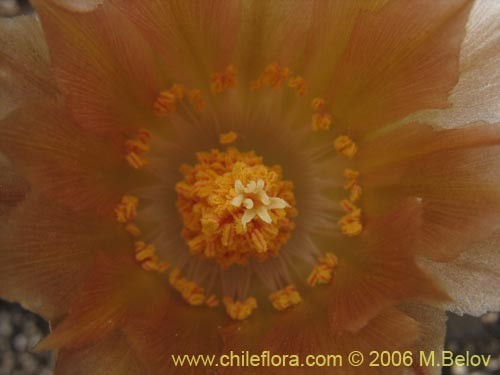
种子全部按最适条件存放。用灭菌器和天平测种子含水量,再调到各个物种各自的最适水平。储藏用两台冰箱,一台 440 升、一台 180 升,温度保持在 +5℃ 到 +3℃。包装用精密电子秤和脉冲封口机。实验室这边设备齐全:pH 计、60 升和 2 立方米两台带温控的培养箱(18–40℃)、显微镜、300 套培养皿、试管等等,工作服在 120℃ 高压蒸汽灭菌器里消毒。
靠这套设备能维持很高的消毒标准,能做组培、能做无菌菌丝生产(平菇和香菇)、能做食品品质检测(含水率、pH、细菌污染等),也能测出种子的发芽率。育苗方面有一块 7 平方米的电加热苗床,带数字温控和自动灌溉,另有 900 个育苗盘,多数是 112 孔、每孔 15 厘米规格,用于实验苗床和按订单培育的植物。
种子的去向也有一套规矩。非营利性质的用途——植物园、大学的实验园、科研人员、可食用产品分析机构等——只要声明用于研究、教育、繁殖、推广或其他非商业目的,就能参与其中;例外是外国种子经销商,他们在本国传播分发智利种子的效率更高,可以自行转售获利,但须同意最终买家遵守非商业条款。种子分发不是免费的,参与方要付费;确有经费困难又在做研究的,可以申请免收。种子销售的收入主要用于支持网站本身不靠任何智利或外国机构资助的这些工作:在线活体标本库的建设、实验植物园的落地,以及本土智利植物商品苗圃的设立。
种子商店和徒步采集
商店里在售的智利原生植物种子约七百种,比数据库收录数少。商品按用途分(观赏、食用、药用、稀有),也按生长型分(乔木、灌木、多年生、一年生、球茎、蕨类、迷你植物等),另有新上架品种、返场品种、热卖款、组合包和特价包。下单可选按拉丁名、英文名、西班牙名、商品类别或价格排序,币种可选美元、欧元、日元或智利比索。站内语言提供英、西、德、俄、日、中、韩七种。
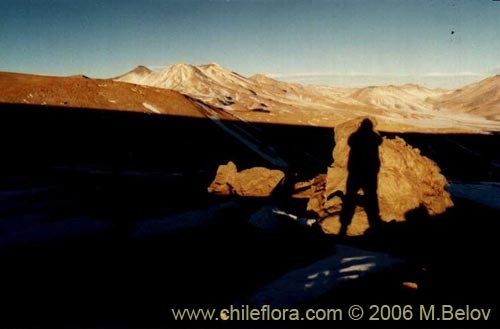
种子的来源是作者自己开车跑出来的。采集的路线从北到南按行政区排列:第二大区 El Medano 的上下两段,之后是 Paposo 沙漠植物区、Inca de Oro 的两处绿洲、Llanos de Challe 国家公园的海岸荒漠植物、上 Huasco 谷、第四大区 Las Hediondas 温泉和 Agua Negra 隘口,接着是圣地亚哥一带的 Termas del Plomo、Embalse Yeso、El Morado 冰川谷地,再到第七大区 Maule 湖、Cari-Launa 湖、Vilches 地区,第十大区 Choshuenco 火山和 Huerquehue 国家公园,最后是 Huicolla 的海岸雨林。高山植物采集要上到四千米以上,Belov 在自述里写过一次在 4300 米陷在泥里、附近既没有援兵也没有可挂绞盘的岩石的经历。
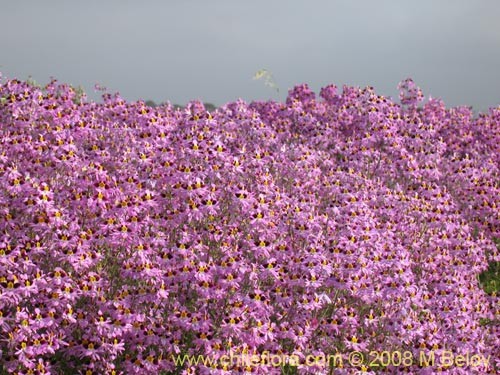
这一路也被写成了按地点分篇的旅行文章,配有各地植物名录。沙漠开花是其中被反复记录的现象:智利北部偶遇降雨,荒漠会在一两个月里短暂地开满花。他另有一篇专写那次没有开花的荒漠,反思花期不来的原因。
和植物打交道的那些年
站上关于种子的文章之外,还有一整套发种手册,按属分篇讲怎么把智利植物种出来:Alstroemerias、石蒜科、Araucaria、马兜铃科、Calceolaria、Chiliotrichum、Fitzroya、Fuchsia、Haplopappus、Jubae、Lobelia、Mutisia、Puya、Trichopetalum 各一篇。另有专题介绍,比如智利仙人掌那一章就写了约一百八十个种和亚种,集中在北部干旱的各大区,但一直到第十一大区都有分布;Austrocactus phillippi 住在第七大区海拔二千二百米处,冬季积雪四五个月、气温零下十度左右,低时可到零下十五度,却扛不住超过二十五度的高温,是当地已知仅存的一处。
兰花的章节能看出另一层讲究:智利兰属种数并无定论,有说多达一百五十种的,实际算来约五十种是同物异名,约一半为特有种。与热带兰花不同,智利兰花全是地生,根茎耐寒又好养,约一半生长在有降雪的中高海拔带。
这个网站也一直在为智利植物争取更明确的保护。Belov 在声明里写道,唯一有效的保护办法是让更多人主动关心环境,智利在这方面的民间力量几乎空白,而畜牧、林业、采矿、水电这些经济部门的话语权要大得多。他举的例子包括一处水电项目要移走全世界已知的一半 Austrocactus philippi 数量,还有 Paposo 当地山羊把 Dalea azurea 仅存的一百二十个个体啃光的事实。他的做法是把这个网站做起来,把智利植物的基础和普及信息放到智利国内外普通人手上,同时向公众发放种子,让人能动手参与。
A one-person database of Chilean plants
Chileflora is a one-person seed business out of Chile. Its founder, Michail Belov, is an Austrian of Russian origin who moved around the world for years, including a prolonged stay in South Korea and other Asian countries, before settling in Chile in 1995. He holds a Ph.D. in the history of East Asian countries, has lectured on East Asian culture and world history at the University of Talca, ran his own translation agency working in six languages including Chinese and Korean, and kept a bee-keeping venture going with intensive queen and nucleus production. He says his heart belongs to the Chilean Andes in every respect.
Everything on the site, the photographs, the plant identifications, the page design, the HTML generation, the database design and management, the data entry and the Visual Basic programming, was done by him. Professor Jos SanMartin of the University of Talca helped in the first stages of the site, generously supplying botanic literature from his private library, identifying some species and pointing out promising places to look for plants. Steffen Hahn of the Botanical Garden of the University of Talca is also thanked. Belov loves nature and landscape photography and won first prize at Turistel 2003.
A living herbarium of more than two thousand Chilean species
The heart of the site is a database and on-line herbarium of living plants, currently presenting more than 2202 species with over twenty thousand photos, each with a description, photographs, habitat, growing conditions and cultivation advice. The internal database behind it is larger still, with over thirty-eight thousand photos and 2500 species, and the long-term aim is to cover most of the Chilean flora, around 5000 species. The database can also be browsed by text indexes.
What distinguishes Chilean plants is not the number of species. Chile is estimated to have only about 5000 to 6000 different species, which looks poor beside tropical countries such as Brazil, but the adaptability, uniqueness and usefulness of the plants set them apart. Chile’s climate runs from absolutely dry, with less than 1 or 2 mm of rain a year, to soaking wet with 3000 to 4000 mm; altitude runs from 0 to 6900 m, temperature from -30 C to +35 C, humidity from 30% to 100%, and daylight from 18 to 55 degrees of latitude, which in summer means seventeen or eighteen hours of daylight at the southern tip of the continent and only five or six in winter.
Geographic isolation is what makes them unique. Chile is not merely a South American country but one separated from the rest of the continent by high mountain ranges, very dry deserts and glaciers, which makes the penetration and spread of species that much harder. The proportion of endemic plants is therefore probably the highest anywhere. The genus Alstroemeria is exclusively South American and has about 100 species, 49 of them in Chile, and of those 49 about 40 are endemic and found nowhere else in the wild; Argentina, Bolivia and Peru have one endemic species each. According to one study, 2561 of 5082 different Chilean species are endemic.
Not all of those 2202 records are identified to species: 1365 are identified species, 443 are known only to genus, for instance Haploppapus sp., 151 only to family, and 244 are still in the process of identification. There is also an interactive query tool for putting questions to the database directly.
A second layer of the database is a set of lists for looking things up the way you need to. There are complete lists sorted by family and species, and by order, family and species. For cultivation there are separate lists by several criteria. The hardiness list sorts plants by their resistance to cold. The ornamentality list assigns an index to most species, on criteria that are admittedly somewhat subjective but generally take in the aesthetic value of the plant, the ease of germinating the seed and keeping the plant, and how well it adapts to adverse conditions when grown as an ornament. The drought resistance list also gives an indication of how much water a plant needs. The sunlight list separates species that do well in direct sun from those that cope with very low light, indoors for instance. Altitude is sorted into five categories. Growth forms are listed as trees, shrubs over 60 cm, perennials, annuals, bulbous plants, climbers, ferns, mushrooms, pygmy plants up to 20 cm and small plants from 20 to 60 cm.
There are also sets of identification keys for people who need to identify plants in the field: one sorted by plant type, petal colour, petal number and height, and another by location, height and light requirement, so that standing somewhere in Chile you can work back through the species that might occur there. Growth forms are further divided into medium size plants of 60 to 300 cm, suited to entrances and patios, and large plants over 3 m, useful for reforestation and green areas. There are further lists by origin, splitting the flora into endemic, native and foreign plants; the foreign list exists as a warning, because one in five species growing wild in Chile is of foreign origin and most of those are invasive. The special habitats have their own lists too, for high mountain plants, desert plants, fog desert plants, the Lomas of the northern coast which draw their water from the humid air, plants of wet places, and the flora of northern, central and southern Chile and of Patagonia.
The use-based lists are finer still. Edible plants include those giving edible fruit and those whose parts, dried leaves or roots for instance, are used to prepare aromatic drinks. Medicinal plants are those mentioned in literature as having medicinal properties. The Mapuche and Aymara peoples used many of these to treat different illnesses, though that knowledge was largely lost and only in the last few decades has a new interest in these plants and their chemical compounds begun to reappear. Industrial use covers plants with applications such as venom, colouring chemicals, leather tanning with tannins, and ropes. The timber list is trees whose wood can serve as construction timber, and also those used for furniture, tool parts such as wooden handles, and parts of carriages. There is a list of poisonous plants, and the site warns that a species missing from it is not thereby safe to eat; only species on the edible list can safely be eaten. Orchids, cacti, Alstroemerias, Iridaceae, Bromeliaceae and Loasaceae each have their own pages.
Seed storage, laboratory and nursery
All the seeds are stored under optimum conditions. A sterilizer and a scale are used to check the moisture content of the seed and adjust it to the optimum level for each species. Storage is in two refrigerators, one of 440 litres and one of 180 litres, at temperatures between +5 C and +3 C, and packaging is done with a precision digital scale and an impulse sealer. The laboratory side is fully equipped: a pH meter, a 60-litre and a 2-cubic-metre growing box with temperature control, both at 18 to 40 C, a microscope, a set of 300 petri dishes, culture tubes and the rest, with working gowns sterilized in an autoclave at 120 C.
That equipment allows a high standard of disinfection to be maintained in the room, in vitro propagation to be carried out, sterile mycelium to be produced for Pleurotus ostreatus and shiitake, quality control of food products to be done, covering moisture content, pH and bacterial contamination, and germination percentages to be obtained. On the nursery side there is a 7 square metre electrically heated bed with digital temperature control and automatic watering, along with 900 speedling trays, most of them 112 cells of 15 cm, for the experimental nursery and for growing plants to order.
There is a set of rules about who receives the seeds. Non-commercial users, botanical gardens, university experimental gardens, scientific researchers, analysts of edible products and so on, can take part provided they declare an intent to use the seeds for investigation, education, propagation, promotion of use or any other non-commercial purpose. The exception is foreign seed distributors, who can spread Chilean seeds far more efficiently in their own countries and are therefore permitted to resell at a profit, provided they agree that the final buyer will keep to the non-commercial clause. Distribution is not free and participants are charged a fee, though in justified cases a researcher without funding may have it waived. The returns from selling seed are used mainly to finance work that receives no funding from any Chilean or foreign body: the development of the on-line live herbarium, the implementation of an experimental botanical garden, and the establishment of a commercial nursery for native Chilean plants.
The seed shop and the collecting trips
The shop offers about 700 species of Chilean native seed, fewer than the database holds. Items are sorted by usage, ornamental, edible, medicinal and rare, and by growth form, trees, shrubs, perennials, annuals, bulbous plants, ferns, pygmy plants and the rest. There are new species, recently restocked species, top sellers, combo packs and discounted seeds. Orders can be sorted by Latin name, English name, Spanish name, product category or price, and paid for in American dollars, euros, Japanese yen or Chilean pesos. The site is available in English, Spanish, German, Russian, Japanese, Chinese and Korean.
The seed is collected by the author himself, driving the routes that the travel articles follow from north to south by region. In the second region, the lower and upper sections of El Medano, then the desert flora of Paposo, the two oases of the Inca de Oro area, the coastal desert flora of Llanos de Challe National Park, the upper Huasco Valley, the Las Hediondas hot springs and the Agua Negra pass in the fourth region, then around Santiago the Termas del Plomo, Embalse Yeso and El Morado glacier valley, and on to the Maule Lake, Cari-Launa Lake and Vilches area in the seventh, the volcano of Mocho-Choshuenco and Huerquehue National Park in the tenth, and finally the coastal cold jungle at Hueicolla. Collecting high-altitude plants means going above 4000 m, and Belov writes of one occasion bogged down at 4300 m with no help and no rocks in sight for a winch.
The same journeys are written up as travel articles arranged by location, each with a list of the plants found. The flowering of the desert is a theme that comes up repeatedly: occasional rain in northern Chile brings the desert into bloom for a couple of months. There is also a piece on the desert that did not bloom, and on why the flowering season did not come.
Years spent among the plants
Alongside the articles on seed there is a series of manuals on germinating Chilean plants, one for each genus: Alstroemerias, Amaryllidaceae, Araucaria, Aristolochia, Calceolaria, Chiliotrichum, Fitzroya, Fuchsia, Haplopappus, Jubae, Lobelia, Mutisia, Puya and Trichopetalum. There are thematic introductions as well. The chapter on Chilean cacti records about 180 species and subspecies, concentrated in the dry northern regions between the 1st and 6th Region but reaching as far as the 11th. Austrocactus phillippi lives at 2200 m in the 7th Region, where snow lies for four or five months of winter and temperatures sit around -10 C, dropping to -15 C at the lowest, yet it will not tolerate temperatures above 25 C; it is also one of the rarest, currently known from a single location where just 15 to 20 groups remain, each an agglomeration of six to twenty bodies joined at the root.
The chapter on orchids shows a different concern. There is no consensus on how many orchid species Chile has, and as many as 150 are sometimes quoted; in reality many are synonyms and the real number is around 50, about half of them endemic. Unlike their tropical counterparts, the Chilean orchids are all geophytes, hardy both in temperature and in their demands on water and soil, and roughly half grow in areas with snowfall at medium and high elevations.
The site has also argued for clearer protection of Chilean plants. Belov writes in the declaration of objectives that the only effective way to assure protection of in-situ populations is to create parties interested in actively protecting the environment, and that in Chile there is almost complete lack of interest in the issue while the existing environmental pressure groups are extremely weak, against economic groups based on livestock grazing, forestry, mining and hydroelectric power that have a much stronger say. The examples he gives include a hydroelectric project intending to replant half of all known Austrocactus philippi individuals in existence, and the goats of Paposo finishing off the last 120 known individuals of Dalea azurea. His method is to build the website, put basic and popularized information about Chilean plants in front of ordinary people in Chile and abroad, and hand out seed so that people can take part in it hands-on.
相关文章:
 德国树木图像画廊 Dendroimage – 个人网站德国植物图像资料库
 捷克 Rock Garden 植物数据库 – 35 年高山植物数据查询门户
 捷克 Vojtěch Holubec 高山植物摄影个人网站 – 捷克欧亚植物资源
 加拿大 FOIBIS 植物信息系统 – 加拿大安大略植物档案库
 法国 B&T世界种子 – 覆盖物种数与目录细致度在独立目录商里属于第一梯队
 美国 西南部植物苗圃 – 适应北美西南干旱与半干旱气候的本土及沙漠适配植物
 美国 植物保护中心 CPC – 拯救美国及加拿大境内最濒危的野生植物
 未来植物 PFAF Plants For A Future – 英国食用植物研究与食物森林
发表回复