

起点是一处废弃的消防塘
彼得·汉森花园在丹麦洛兰岛西侧,站上给自己起的名字是西洛兰植物园,园子和苗圃由同一位主人经营。1980 年,宅前一处废弃的消防塘被改造成园中的水塘,塘里填进约 3000 立方米土料,其中一片没有填平,而是挖深成潭,成为今天园里的三处水塘之一。洛兰靠海,风大,园子先种下一圈宽树篱挡风,之后才动土造园。
此后几番扩建,2017 年新辟一处 2.5 万平方米的树木园,全园面积如今是 5.5 万平方米,收藏量在北欧私人植物收藏里排在前列。造园的思路主要来自英国名园,主人曾多次赴英实地参观各地。
五个分区
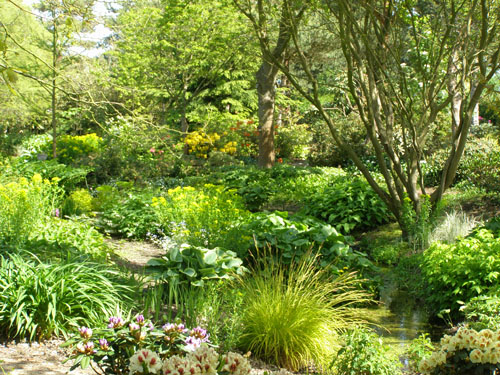
全园分成老园区、山湖、树木园、山茶园和杜鹃林。老园区以一口水塘为中心,园路跨过木桥才进得去;塘边长满喜湿的植物,曲折小径两侧的花床密得像丛林,一处收杜鹃原种,另一处收杂交杜鹃。
山湖是地势起伏最深的一片,谷底的大湖分成两半,湖里生着数种蔷薇,四周坡上种着不少珍稀树种,其中有些是日本樱桃的新品种,还辟出一片牡丹,以黄牡丹杂交种为主,另有各类观赏草。杜鹃林用 1989 年种下的本地橡树作上层树冠,树下是全园最大的一批杂交杜鹃,此外还收山茱萸、冬青、竹、玉簪和延龄草等林下植物,走在草径上,鸟鸣不断。山茶园是园中最新的分区,山茶之外还种着山月桂、木兰、牡丹和杜鹃,全园最大的一片铁筷子也在那里。
收藏的数量
园子最出名的还是收藏本身。按站方给出的约数:杜鹃花及其杂交种约 1300 种,木兰约 280 株,竹子约 40 株,玉簪约 1000 株,萱草约 700 株,芍药约 500 株,铁筷子约 500 株;绣球、槭树、冬青、苹果等属也各有大批品种。这些数字是站方的估算,不同属之间的计数口径并不完全一致。
园里的青蛙与鸟也是常被提到的看头。三处水塘里绿蛙成片,园子坐落在平坦的洛兰农田之间,像一块绿洲。
树木园与几处可以停留的地方
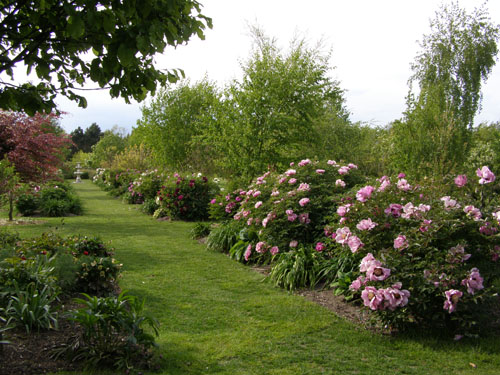
树木园占了全园近一半面积。园门先过一座仿英式石桥,桥下是水沟,与老园区一样连着一口小水塘。园内种下大量珍稀乔灌木,又添了牡丹、树牡丹和各类牡丹组,还有萱草、铁筷子、仙客来和成百上千种球根。角落里立着一座亭子,越过长长草径望出去,视线尽头是一方喷泉;草径两侧的花床里种着洛西牡丹的杂交种。
主人在园中各处安了长椅,逛累了可以坐下吃自己带的东西,亭子里也留了位置,最多容十二人。
苗圃与四季的花期
花园同时做苗圃生意。常规花木之外,店里更多是稀少和抢手的品种:新育的杜鹃杂交种、槭树、刚竹、玉簪(超过一百个品种)、萱草、松果菊、矾根、铁筷子都在其中。苗圃里一部分苗直接由园中大收藏自繁,理由是这些品种在市场上本就难寻;大批量植物和泥炭藓也接受报价。
花历按月排:三月番红花先动,四月茶花、马醉木、连香花、杜鹃原种、延龄草、铁筷子和水仙同开,五月杂交杜鹃、洛西牡丹杂交种、苹果属与木兰的花接上,六月转入木本牡丹、黄牡丹杂交种、鸢尾和玉簪的新叶,七月是宿根牡丹、萱草、玫瑰、落新妇与耐寒月季,八月绣球、萱草、百合和玫瑰接力,九月圆锥绣球、醉鱼草、花楸的果子、观赏草和秋水仙收尾,十月起是苹果的果子与秋色,直到十二月才又回到树皮特别的乔灌木。
It Began with a Disused Fire Pond
Peter Hansens Have lies on the western side of the Danish island of Lolland, and the site gives itself a second name, the West Lolland Botanical Garden. The garden and its nursery are run by the same owner. The project started in 1980, when a disused fire pond in front of the house was turned into the garden’s first water feature: roughly 3,000 cubic metres of soil went in, and one section was deliberately left out and dug deeper, becoming the pond that is still there today. Lolland is a windy, coastal spot, so a wide shelter hedge was planted before any real landscaping began.
Expansion followed over the years, the largest being a new arboretum of 25,000 square metres opened in 2017. The garden now covers 55,000 square metres and holds one of the largest privately owned plant collections in northern Europe. The layout is modelled on English gardens, which the owner has visited repeatedly.
Five Sections
The garden is divided into the old section, the hill lake, the arboretum, the camellia garden and the rhododendron wood. The old section centres on a pond reached over a wooden bridge; moisture-loving plants crowd its edge and the beds between the winding paths grow so dense they look almost like jungle, one bed holding rhododendron species and another holding hybrids.
The hill lake is the most uneven ground on the site, its valley holding a large pond in two halves, with several roses growing in the water and rare trees on the slopes, among them some newer varieties of Japanese cherry. A big patch of paeonies, mainly yellow hybrids, and various ornamental grasses fills the rest. The rhododendron wood was planted over native oaks in 1989, which now form the canopy above the largest group of hybrids in the garden, with dogwood, holly, bamboo, hosta and trillium in the shade below. The camellia garden is the newest section, holding mountain laurel, magnolias, paeonies and rhododendrons beside the camellias themselves, and the largest patch of hellebores in the garden.
What the Collection Adds Up To
The collection is the garden’s main claim. The site’s own approximate figures are 1,300 rhododendron species and hybrids, 280 magnolias, 40 bamboos, 1,000 hostas, 700 daylilies, 500 paeonies and 500 hellebores, with large numbers of hydrangeas, maples, hollies and crab apples on top. These are the site’s estimates, and the counting is not necessarily consistent from one genus to the next.
Frogs and birds are the other things visitors mention. The ponds hold plenty of green frogs, and the garden sits in the middle of Lolland’s flat farmland like a green island.
The Arboretum and a Few Places to Sit
The arboretum takes up almost half the ground. You enter over an English-style stone bridge, with a ditch and a small pond below it, much like the old section. Rare trees and shrubs were planted first, then tree paeonies, herbaceous paeonies and section paeonies, along with daylilies, hellebores, cyclamen and hundreds of bulb plants. A pavilion stands in one corner, looking out over a long grass path to a fountain at the far end; the beds along that path hold Rockii tree paeony hybrids.
Benches are placed in several parts of the garden, so you can sit down and eat what you brought with you, and the pavilion seats up to twelve people.

The Nursery and the Flowering Year
The nursery sells plants as well as growing them. Beyond the usual range there are rarer and sought-after varieties: new rhododendron hybrids, maples, running bamboo, hostas of more than a hundred varieties, daylilies, coneflowers, heucheras and hellebores. Some of the stock is propagated from the garden’s own collection, simply because these varieties are hard to find on the open market. Larger batches of plants and sphagnum moss can be quoted on.
The flowering year is set out month by month: crocus in March, then camellias, pieris, corylopsis, rhododendron species, trilliums, hellebores and narcissus in April, hybrid rhododendrons and paeonies in May, tree paeonies and iris in June, herbaceous paeonies, daylilies, roses and astilbes in July, hydrangeas and lilies in August, panicle hydrangeas, buddleias and colchicums in September, and fruit and autumn colour through October and November.








发表回复