

站点背景
龙胆研究网络(Gentian Research Network,简称 GRN)由美国罗格斯大学(Rutgers University)植物学家 Lena Struwe 主持建设,是龙胆科 Gentianaceae 全球研究的免费、非营利学术资源站点。该站点最早以拉特格斯大学校园网络为依托,逐步发展为面向国际研究社区的开放式资料平台;站点目前在主页明确标注「网站已归档,停止主动更新」,仍以现有资源形式持续为研究社区服务。
GRN 由美国国家科学基金会(NSF)以及罗格斯大学库克学院(Cook College)资助,主要承载的研究方向覆盖系统学、进化、分子系统学、分类、生态、生物地理、濒危物种、生物多样性、分布、解剖、形态、孢粉、民族植物学以及命名法等十多个学科领域,是龙胆科研究者查找项目、合作者与参考文献的入口型站点。
研究主题
龙胆科是被子植物目 Gentianales 的成员之一,整体归入 Asterid I 分支与菊亚纲(Asteridae)。GRN 收录的典型形态特征包括:植株无毛或无腺毛、叶对生单叶全缘、花辐射对称且两性、萼片与花瓣基部合生、花瓣裂片在芽中右旋覆盖、雄蕊着生于花冠筒、子房上位且由两个心皮构成;龙胆科还含有 seco-iridoids 与 xanthones 两类特征性化合物,不含生物碱。
站点把研究项目按族(tribe)组织,覆盖 Chironieae、Exaceae、Gentianeae、Helieae、Potalieae、Saccifolieae 等核心族;同时按主题(topic)维度提供解剖与形态、生态、民族植物与经济用途、植物志项目、花解剖与发育、染色体核型、孢粉、系统发育生物地理与分类八大主题入口,便于研究者从分类学或专题任一角度切入项目目录。
研究人员网络
GRN 在「People」页面公开维护一份全球龙胆科研究者名录,名录字段包括姓名、个人主页、单位地址、电子邮箱、电话传真以及研究关键词。收录的研究者来自多个国家与机构,例如美国纽约州立大学布法罗分校的 Victor A. Albert 从事龙胆目系统发育与木材解剖;秘鲁利马自然历史博物馆的 Susy Castillo 专研安第斯山脉的龙胆科;中国科学院华南植物园的葛学军从事保护遗传学与东喜马拉雅龙胆属研究;新西兰土地保护研究所的 David Glenny 负责新西兰 Gentianella 的系统学。
名录中还可检索到来自印度喀拉拉热带植物园、瑞士纳沙泰尔大学、巴西圣保罗大学、英国爱丁堡皇家植物园等地的龙胆科专家。研究者可以通过该页面建立直接通信,也可以通过 GRN 的摄影师名录获取物种生境、标本与野外照片的高质量版权来源,所有图像都标注作者姓名,学术与教育使用需直接联系摄影师取得授权。
濒危物种
GRN 在濒危物种页面解释了三种国际通用的濒危等级:vulnerable(易危,指中期内野外面临高度灭绝风险)、threatened(受威胁,指近期内可能在分布区内大部分地区濒危)、endangered(濒危,指当下在分布区内大部分地区面临灭绝)。该页面承认各机构与国家的定义存在差异,因此使用术语时需要核对 IUCN 与各国红皮书的最新版本。
GRN 指出生境丧失是龙胆面临的最大威胁:北欧牧场持续消失,热带雨林被砍伐,城市与郊区扩张侵占原生境;此外野外过度采集(多用于药理研究)也让部分物种陷入困境。GRN 明确建议读者不要采挖野生龙胆或试图移栽到花园,因为许多龙胆仅一两年生并依赖土壤菌根共生。站点按地区与国家列出受威胁种清单,并欢迎研究者补充新的濒危种记录。
民族植物与文化
龙胆科被人类用于多种用途。GRN 在民族植物学页面指出,龙胆含 seco-iridoids 与 xanthones 的独特化合物组合,前者带来强烈苦味,使龙胆成为已知最苦化合物的来源;龙胆普遍无毒但因苦味极少被动物食用。茎less 龙胆(Gentiana acaulis)的深蓝色喇叭花是阿尔卑斯山的标志物种之一,瑞士、奥地利、德国常见以其装饰纹样。
龙胆在药物上提供抗真菌、抗炎、退热、消化等用途,在饮料中是苦味开胃酒与苏打的主要来源,在香水与护肤品工业中提供苦味与草本气息,在园艺与切花产业中是著名的岩生园与高山花卉材料。Fagraea 属部分种提供耐腐木材用于建筑。此外,龙胆还出现在邮票、硬币、明信片、漫画、诗歌与地名中,部分国家或组织以龙胆作为官方象征或标志。
GRN 设有专门的园艺页面介绍龙胆的栽培、繁殖与品种选育,并提供园艺与花卉研究者的联系入口。站点还支持英、法、葡萄牙、瑞典四种语言版本,便于全球研究者按母语浏览基础资料。
Background
The Gentian Research Network (GRN) is a free, not-for-profit, web-based forum for worldwide research on the natural history and evolution of the flowering plant family Gentianaceae. It is hosted by Dr. Lena Struwe at Rutgers University in the United States, and funded by the U.S. National Science Foundation (NSF) and the Rutgers University Cook College. The site now carries an explicit archive notice and is no longer actively updated, yet it remains available to the international research community as a long-term reference.
The network covers systematics, evolution, molecular systematics, classification, ecology, biogeography, endangered species, biodiversity, distribution, anatomy, morphology, palynology, ethnobotany, and nomenclature, and links out to floristic works, photographic galleries, research projects, and researcher contact pages. It is supported by an international community of contributors who provide taxonomic revisions, regional floras, and field images under individually credited copyright terms.
Research Topics
The gentian family contains about 87 genera and over 1,600 species, classified in the angiosperm order Gentianales, within the Asterid I clade and the subclass Asteridae. Typical characteristics of gentians include glabrous plants with opposite, simple, entire leaves, actinomorphic bisexual flowers with fused sepals and petals, contorted petal lobes in bud, stamens inserted in the corolla tube, a superior bicarpellate ovary, and the presence of seco-iridoids and xanthones rather than alkaloids.
GRN organises ongoing research by taxonomic tribe (Chironieae, Exaceae, Gentianeae, Helieae, Potalieae, Saccifolieae, and the family-wide grade) and by research topic (anatomy, comparative morphology, ecology, ethnobotany, floristic projects, flower anatomy and development, karyology, palynology, phylogeny, biogeography, evolution, and classification). Each entry lists the principal investigator, the institutional host, and the geographic scope, allowing visitors to navigate the discipline either from a taxon or from a methodology.
Researchers Network
The People directory of GRN lists researchers across the world with their institutional addresses, email addresses, phone and fax numbers, and a concise list of research keywords. Contributors include Victor A. Albert (University at Buffalo, SUNY) on phylogeny and wood anatomy of Gentianales, Susy Castillo (Museo de Historia Natural, Lima) on Andean Gentianaceae, Xue-Jun Ge (South China Botanical Garden, CAS) on conservation genetics and East Himalayan Gentiana, and David Glenny (Landcare Research, New Zealand) on systematics of Gentianella in New Zealand.
Further contributors are based in institutions such as the University of Neuchatel in Switzerland, the Universidade de Sao Paulo in Brazil, the Royal Botanic Garden Edinburgh in the United Kingdom, the Tropical Botanic Garden and Research Institute in Kerala, and the University of Neuchatel. The companion Photographers page provides credited contact information for the field photographers whose images illustrate the site, with all images licensed for educational and research use only when the photographer is cited and permission is obtained.
Endangered Species
GRN explains the three commonly used conservation categories: vulnerable (facing a high risk of extinction in the wild in the medium-term future), threatened (likely to become endangered in the foreseeable future throughout all or a significant portion of its range), and endangered (in danger of extinction throughout all or a significant portion of its range). The page notes that criteria and definitions differ between authorities and countries, and recommends consulting the current IUCN Red List and national red data books for any specific assessment.
Habitat loss is identified as the principal threat to gentians, driven by the disappearance of grazed meadows in northern Europe, logging in tropical rainforests, and the spread of cities and suburbs into native habitats. Over-collection from the wild, often for pharmacological purposes, adds pressure on certain species. The site advises against digging up or transplanting wild gentians into gardens because many species are annual or biennial and depend on soil mycorrhizae. A regional list of threatened species is maintained and contributors are invited to extend it.
Ethnobotany and Culture
Gentians are used by humans worldwide. Their beauty has inspired authors, poets, artists, and gardeners for centuries; the chemicals they contain are also valued in medicine, timber, and other useful products. The combination of seco-iridoids and xanthones is unique to the family; the seco-iridoids are intensely bitter, and gentians are the source of one of the most bitter compounds known. Gentians are not significantly poisonous but their bitterness keeps them from being eaten by most animals.
The stemless gentian (Gentiana acaulis) is well known as one of the symbolic flowers of the Alps, and its deep-blue trumpet-shaped flowers appear on items from Switzerland, Austria, and Germany. Other gentians are used as ornamental and cut flowers, as sources of anti-fungal, anti-inflammatory, digestive, and antipyretic medicines, as bittering agents in aperitifs and digestifs, in perfumery and skincare, as rot-resistant timber (notably Fagraea), and as motifs on stamps, coins, postcards, comics, poetry, and place names. Several places and organisations have adopted gentians as official symbols or logos.
相关文章:
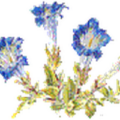 比利时 Gentians.be 龙胆资源网 – 个人维护龙胆资源在线图鉴
 美国 儿童与自然网络Children & Nature Network – 专业园艺服务机构
 日本 盆栽网 BONSAI NETWORK JAPAN – 日本传统盆栽艺术结合跨境电商服务
 欧洲堆肥网络 EUROPEAN COMPOST NETWORK – 专业园艺服务机构
 美国 苏铁协会 Cycad Society – 国际苏铁保护学术团体
 美国 国家洁净植物网络 National Clean Plant Network Roses – 是一个专注于保护美国特色农作物免受病虫害侵袭的非营利合作组织
 美国 俄勒冈州原生植物协会 – 致力于本土植物观赏、保育和研究
 美国 国家植物诊断网络 National Plant Diagnostic Network 作物病虫害诊断协作网络 – 是首屈一指的诊断系统,在
发表回复