

在英国注册,从荷兰球茎区发货
Farmer Gracy 是一家在英国注册的球茎公司,站上写着商标归它所有,标志里是一位戴头巾的农妇头像。背后是荷兰球茎产区几代人做下来的种植传统,总部设在南荷兰省的诺德韦克豪特,英国皇家园艺学会的苗圃名录里也能查到它,登记的专长是花球和裸根植物,注明只做邮购。
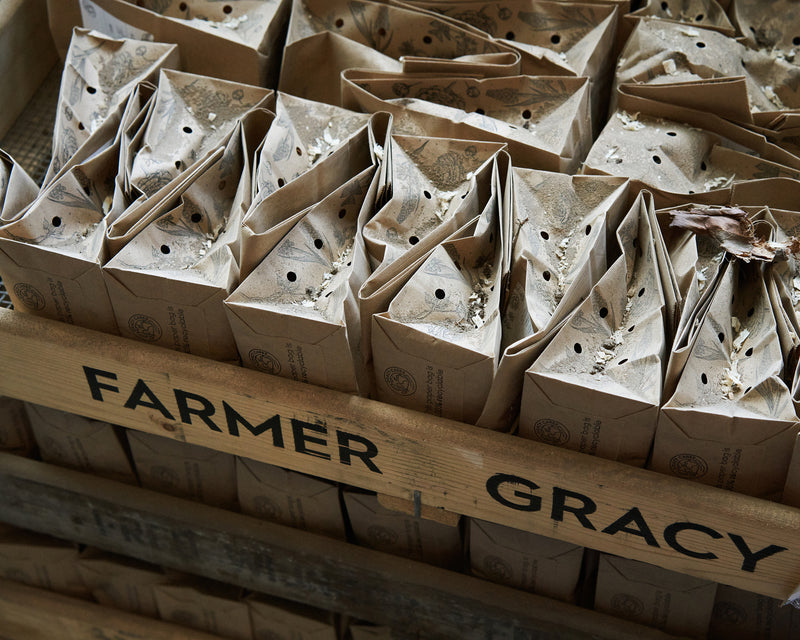
货并不从英国发出。打包场地在荷兰南部的球茎产区内,球从地里挖出来、分级、存放、打包都在这一片完成,订单直接寄出,中间不经过别的批发环节。买家多数在英国,也往欧盟其他国家和美国发货。
卖的东西分两拨:春天开花的球茎,和秋天下地、来年春天才开花的球茎与裸根宿根植物。大丽花的块茎、秋天栽种的多年生草本,也摆在同一间店里。站上挂着 4.7 分的评分,满分五分;园艺建议既可以在线上问,也可以打电话。客服大多是园艺师、种植者和爱植物的人。
目录里到底有多少种
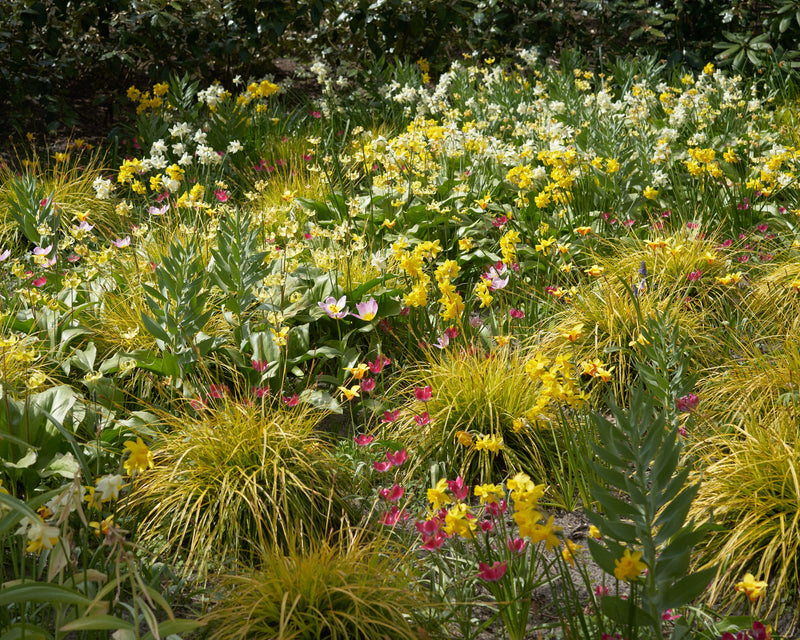
站点地图里的集合页有四百一十三个,商品页两千五百八十九个。光春季球茎和植物这一栏,站方自己标的是一千一百八十七项,其中郁金香三百二十六、黄水仙一百七十五、葱属六十、多年生二百八十一。
这两套数字口径不同。站点地图把夏植的球茎、大丽花块茎和各类混合套装都算了进去,导航里的分类数字只算当季在售的那一层。两套各自成立,只是不能混着看。
数字之外,站方还按颜色、光照、用途、花期和植物特性做了筛选:想要切花材料、要招蜂蝶、适合盆栽、耐阴、能年年自己扩繁、不含泥炭包装,各有各的入口,找起来不费劲。
挑球、分级和存放
球的大小是分出来的,不是论个数卖。开花球和球根类挑最大的能开花的规格,每个品种按自己的用途定级,一把尺子不管全部。站上同时也写明:植物是活物,光照、土壤和水分不同,长势难免有差别,标注的花色和株高只是参考。
供货的种植户筛过一遍,从球茎产区一直延伸到世界各地的专业种植者,其中不少是做了几代人的家族生意,一年只打磨少数几个品种。站方每年跟着种植户和育种方到田里看长势,挑哪些进目录,货品的说明也从种球、块茎一路写到花期和花色。
挖出来的球不能随便堆着。存放点用恒温设施,让球一直睡在休眠里,把能量攒着留给来年开花。新出的郁金香品种从培育到能买到要二十年,站方靠着老关系能先拿到一批。哪些品种收进目录,靠的是专家的眼光和品味。
库肯霍夫的春天
每年三月到五月,库肯霍夫开园。园子占地三十多公顷,地下埋了约七百万枚球茎,四月中旬通常最热闹。站方每年在这儿有自家的展示区,另有一批专门为这座花园挑出来的品种,单独叫库肯霍夫系列。
二〇二六年秋天,站方请日本画家 Takeru Amano 合作了一幅画,画的是秋天把球埋进土里、等它来年开花的那个过程。同一时期站方也换了新的品牌样子,网站跟着重做一遍,导航和筛选做得更细,园艺建议仍旧放在手边。
送货与为碳移除出钱
发货按季节分两拨。秋天栽种的球从八月下旬开始发,一直发到十二月;夏天栽的球从三月一号发到五月中。英国境内满 50 英镑免运费,不满收 3.99 英镑;北爱尔兰不满 50 英镑收 6.99 英镑;泽西、根西和马恩岛满 100 英镑免运费,否则收 7.99 英镑。付款方式列得很细,下单前可以先看清楚。
每笔订单都会按配送产生的碳排放量折算出一笔钱,交给碳移除服务商,投到从大气里移除并封存二氧化碳的项目上。包装尽量用可回收、可再生的材料,仓储走节能设备,员工通勤也提倡拼车、坐公交和骑车。这些做法写在他们自己的环保承诺里。
A UK Company Shipping From The Dutch Bulb District
Farmer Gracy is a flower bulb company registered in the UK, with the trademark and the logo to match, the mark showing a woman in a headscarf. Behind it is generations of Dutch growing tradition in the bulb district, and the headquarters sit in the South Holland area around Noordwijkerhout. It is listed in the Royal Horticultural Society’s nursery register as a mail-order nursery specialising in flower bulbs and bare-root plants.
The goods do not ship from Britain. The packing facilities are in the bulb district of the south Netherlands, so bulbs are lifted, graded, stored and packed in one place and go straight out to the customer without another wholesale step in between. Most buyers are in the UK, and the shop also ships to other EU countries and to the United States.
The range falls into two halves: bulbs that flower in spring, and bulbs and bare-root perennials that go in the ground in autumn and bloom the following spring. Dahlia tubers and perennials planted in autumn sit on the same shelves. The shop carries a rating of 4.7 out of 5, and growing advice is available online or by phone from a team of gardeners, growers and plant lovers.
How Many Kinds Are Actually On Offer
The sitemap lists four hundred and thirteen collection pages and two thousand five hundred and eighty-nine product pages. For the spring bulbs and plants shelf alone the shop’s own figure is one thousand one hundred and eighty-seven items, made up of three hundred and twenty-six tulips, one hundred and seventy-five daffodils, sixty alliums and two hundred and eighty-one perennials.
The two sets of numbers are counted differently. The sitemap takes in summer-planted bulbs, dahlia tubers and the mixed collections, while the navigation numbers cover only the layer on sale in the current season. Both are fair figures on their own terms, but they are not the same measure.
Beyond the counts, the shop filters by colour, light, use, flowering time and plant characteristics, so gardeners can narrow the list down by what they want cut flowers, by whether they attract pollinators, by suitability for pots, shade, naturalising, or peat-free packing.
Grading, Sizing And Storage
Bulbs are graded, not simply counted. Flowering bulbs and tubers are taken at the largest sizes that will bloom, and each variety is graded on its own terms rather than by a single measure. The shop also notes that plants are living things: light, soil and moisture all shift how they grow, so the colour and height on the page are a guide rather than a promise.
The growers are vetted, from the bulb district out to specialists further afield, many of them family businesses several generations old that refine only a handful of varieties each year. The shop spends the year in the fields alongside growers and breeding partners, watching how the crops develop and deciding what enters the collection, with the listings running from bulbs and tubers all the way to flowering time and colour.
After lifting, bulbs are not simply piled up. They are held in temperature-controlled storage that keeps them dormant and holds their reserves for the following spring. A new tulip variety can take twenty years to develop before it can be bought, and long relationships with breeders mean the shop gets first pick of new introductions. Which varieties enter the collection is decided by experts with an eye for quality and taste.
Spring At Keukenhof
Keukenhof opens from March to May. The garden covers thirty-odd hectares and holds roughly seven million flower bulbs, with mid-April usually the busiest moment. The shop has its own displays there each year, plus a separate run of varieties chosen for that garden, sold as the Keukenhof collection.
In autumn 2026 the shop brought Japanese artist Takeru Amano in to make a piece of artwork about the moment a bulb goes into the ground in autumn and waits for spring. Around the same time the shop gave its brand a new look and rebuilt the website, with clearer navigation and filtering while keeping the growing advice close at hand.
Shipping And Paying For Carbon Removal
Dispatch runs in two seasons. Autumn-planted bulbs go out from late August through December, and summer-planted bulbs from the first of March until mid-May. Within the UK, orders over 50 pounds ship free and smaller orders cost 3.99 pounds; Northern Ireland orders under 50 pounds cost 6.99 pounds, and orders over 100 pounds to Jersey, Guernsey and the Isle of Man are free, otherwise 7.99 pounds. Payment options are set out in detail for checking before the order goes in.
Every order turns the carbon emitted by the delivery into a contribution, handed to a carbon removal service and directed at projects that take carbon dioxide out of the atmosphere and store it. Packaging is kept to recyclable and recycled materials wherever possible, storage runs on energy-efficient systems, and staff are encouraged to share journeys, use public transport and cycle. The commitments are written down in the company’s own environmental scheme.
相关文章:
 美国 荷兰球根农场Holland Bulb Farms – 是一家美国在线花卉球根和园艺产品零售商,网站域名带有”Holland”字样表明其产
 美国 容易种植的鳞茎植物苗圃 – 种苗生产与销售
 荷兰 CSW 园林绿化公司 CSW Landscaping – 数百种球茎认证供应商
 荷兰 罗特费尔父子球茎出口公司 L. Rotteveel & Zonen Export B.V. – 南荷兰球茎出口遍及欧美
 英国 Sienna玉簪苗圃 – 种苗生产与销售
 荷兰 韦耶尔斯父子球茎 C.S. Weijers & Zonen – 上千种球根认证批发商
 荷兰 扬森海外有限公司 Jansen’s Overseas B.V. – 北荷兰球茎盆栽全球供应商
 美国 Easy to Grow Bulbs – 专注于花卉球茎、宿根植物与盆栽园艺植物销售
发表回复