

写铁线莲的个人博客,园子在施瓦本山北缘
站名铁线莲世界,站方自己写的是“给所有铁线莲爱好者的网站”,副标题只有三个词:种植、养护、修剪。写这个站的是园丁布里吉特,一个人在自家园子里边种边记,写的都是她那个园子里的事。她的园子在巴登-符腾堡州的泰克山麓比辛根,位置在施瓦本山北缘,海拔接近 800 米。冬天长、多雨,常常盖着雪,土质黏重、含钙量不低,生长季比德国大多数地方短。这样的条件决定了她的写法:讲的不是通用手册,而是这种条件下怎么把铁线莲养活的经验。
六十多篇文章,二十五个栏目
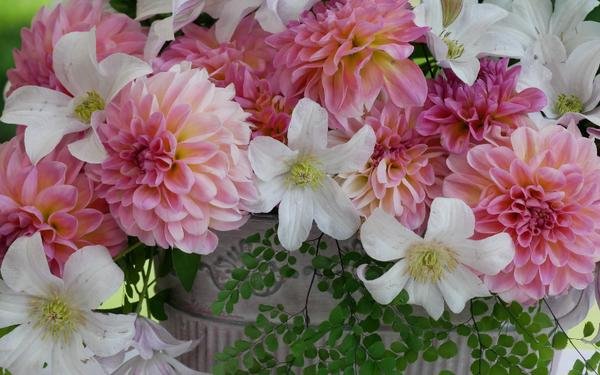
站上一共 64 篇文章,最早两篇发在 2017 年 10 月,最近一篇是 2023 年 3 月。栏目有 25 个,篇数最多的是球根与块茎 10 篇、早春开花类 7 篇、随笔 6 篇,铁线莲品种、修剪、花园参访、月季各 5 篇上下。栏目数字加起来是 77,比文章总数多,因为同一篇常常同时归进几个栏目。种球根那 10 篇里有一篇细列她自己种的大丽花,按小花型、装饰型、睡莲型和球状型分组,每种记下株高和花径的大致数值,从 60 厘米高、7 厘米花径的小花型,到 100 厘米高、25 厘米花径的大花型都有。
三个修剪分组
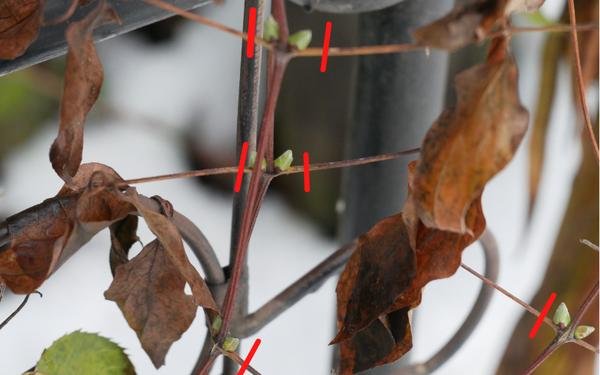
站上把铁线莲按开花时间分成三个修剪组。第一组是早春开花的,常绿、变叶和山地种都在里面,通常不剪,因为花芽在头一年就定下了,冬末一剪当年的花就没了。第二组是初夏开花的大花杂交种,平时轻剪三分之一就够,想更新植株可以每三四年重剪一次,时间挑 11 月到 3 月里没有霜的日子;等到雪莲花开,新梢已经看得清楚,也是动手的时机。第三组是夏花型和多年生草本铁线莲,每年都要下狠手,只留一到三对芽眼,夏花型当年生的枝条能拉到 4 米长。新栽的苗第一年 11 月或 12 月先剪到 20 到 30 厘米,这一剪决定后面的骨架。
栽种与养护的十条要点
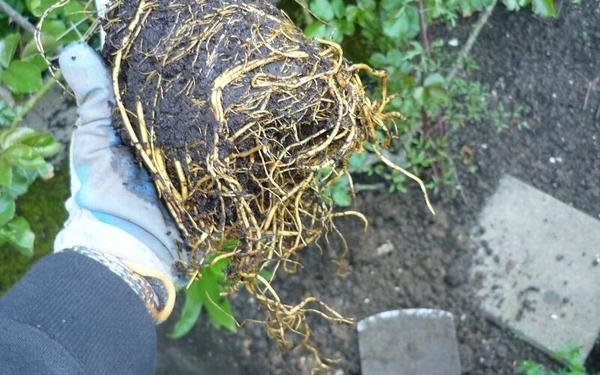
栽种那篇把 10 条要点列成一条条的小节,其中最要紧的几条是:挖穴时用撬土叉再往下松 10 厘米并拌进排水料,穴底的土用堆肥、浮石粒和砂改良,避免出现“浴缸效应”;不同种类栽的深度不一样,地上留多少要按种类定;地下部分的绑扎材料要拿掉;搬苗时抓花盆不要抓支架,伤到基部就麻烦;最后记得浇透水。养护上她只浇根周围的土,不浇植株,土里不能积水,头两年要保证水;4 月和 5 月是旺长期,枝条要随时绑到支撑上,断掉的枝在断口下方剪掉,断口是病菌进来的门。蚜虫来了不用急着治,瓢虫通常两周左右自己就到。萎蔫病主要找早春的大花杂交种,栽种时留两对芽眼在土下,病过之后还能从基部重新冒芽;把苗养壮比事后补救管用。
两种近些年才注意到的害虫
站上近些年记了两种以前没留意的害虫。一种连作者自己也说不准究竟是什么,只泛泛地叫它铁线莲蝇,2018 年夏天她第一次明确遇上:幼虫在花蕾里吃,花开的时候花瓣已经残缺,五月起就能在受害的植株上看到;它尤其爱啃一向被认为很皮实的夏花型铁线莲,2019 年 5 月起她每隔两周用一次针对咀嚼和刺吸类昆虫的系统用药,收到了效果。另一种是加州花蓟马,原产美国西部,1980 年代以来随全球贸易扩散,在德国主要出现在温室里,能不能在露地活下来还有争议,作者却在露地连续第三年看到危害。她自己的判断是,问题未必出在哪一类铁线莲身上,而是出在花期上:夏花型铁线莲七月才开,恰好赶上年中的高温,而花蓟马的繁殖速度随温度上升,气温一过 20 度就明显加快;它藏在花里,接触类药剂打不着,只在表面吸食,系统用药同样不管用。
A Personal Clematis Blog and the Garden Behind It
The site calls itself the website for all clematis fans, and its subtitle is three words: planting, care, pruning. It is written by one person, the gardener Brigitte Niemela, who records what happens in her own garden. Her garden lies in Bissingen an der Teck in Baden-Württemberg, on the scenic northern edge of the Swabian Alb, at almost 800 metres above sea level. Winters there are long and mostly rainy, snow cover is common, the soil is heavy with a high lime content, and the growing season is shorter than in most other parts of Germany. Those conditions shape the writing: what she offers is not a general manual but experience from growing clematis under them.
Sixty-Four Posts Across Twenty-Five Categories
The site carries 64 articles in all, the first two published in October 2017 and the most recent in March 2023. There are 25 categories. Bulbs and tubers lead with 10 articles, early spring flowering types with 7 and blog posts with 6, while clematis varieties, pruning, garden visits and roses each hold around five. The category counts add up to 77, more than the number of articles, because one piece often sits in several categories at once. Among the bulb articles, one sets out the dahlia varieties she grows, sorted into small, decorative, water-lily and ball types, each with an approximate height and flower size, from small-flowered plants 60 cm tall with 7 cm blooms to large ones 100 cm tall with 25 cm blooms.
Three Pruning Groups
Clematis on the site are sorted into three pruning groups according to when they flower. The first group, which flowers in early spring and includes the evergreens, the atragenes and the montanas, is usually left unpruned, because the flower buds were formed the year before and a cut in late winter costs that year’s display. The second group, the large-flowered hybrids that bloom in early summer, need only a light cut by about a third, though every three or four years they can be cut back hard to renew the plant, on a frost-free day between November and March; by the time the snowdrops flower the new shoots are easy to see, and that is the moment to work. The third group, the summer-flowering types and the herbaceous clematis, is cut hard every year, leaving one to three pairs of buds, and the shoots of summer types can run to 4 metres in a season. Newly planted specimens are first cut back to 20 to 30 cm in November or December of their first year, and that cut decides the framework of the plant.
Planting, Tying and Watering
The planting section sets out ten points: loosen the soil in the planting hole a further 10 cm with a digging fork and mix in drainage material, improve the soil in the hole with compost, lava granules and sand so that the so-called bathtub effect does not occur; different types go in at different depths, and how far the plant sits above the soil depends on the type; remove any binding material below ground; never lift a clematis by its support stakes when moving it, since that damages the base, but by the pot instead; and do not forget to water at the end. In daily care she waters the soil around the plant rather than the plant itself, waterlogging is the worst enemy, and the first years need a steady supply. April and May are the peak of growth, when shoots must be tied to their support as they lengthen, and broken stems are cut back below the break, since an open wound is a door for fungal disease. Light aphid infestations need no treatment, because ladybirds usually arrive within about two weeks. Wilt is a problem mainly with early large-flowered hybrids, and if two pairs of buds are planted below ground the plant can shoot again from the base after an attack; growing the plant strongly is more use than trying to rescue it afterwards.
Two Pests Noticed in Recent Years
Two pests the author had not paid attention to before are recorded in recent years. The first is the clematis fly, though she admits even she does not know exactly what the insect is and calls it that only in general terms; she met it consciously for the first time in the summer of 2018. The larvae eat inside the buds, so the flowers are already damaged when they open, and infested plants can be seen from May onwards. It attacks in particular the summer-flowering clematis that had always been considered very robust, and from May 2019 she treated them every two weeks with a systemic product against biting and sucking insects, with good results. The second is the Californian flower thrips, a species from the western United States that has spread through world trade since the 1980s; in Germany it had so far turned up mainly in greenhouse crops and whether it can survive outdoors is still debated, yet the author has seen damage in the open garden for a third year running. Her own reading is that the problem lies less in any one group of clematis than in the flowering season: the summer-flowering types open only from July, which coincides with the heat of midsummer, and the thrips multiply faster as the temperature rises, clearly increasing above 20 degrees. The pest hides inside the flowers, so contact sprays cannot reach it, and it feeds only on the surface, so systemic products do not work either.
相关文章:
 英国马库斯舞者植物 Marcus Dancer Plants – 铁线莲小型家庭苗圃
 比利时 Van Nuffelen 苗圃 – 家族式铁线莲专营苗圃品种超过680个
 德国户外耐寒铁线莲苗圃 W. Kruse – 户外露地栽培铁线莲与攀缘植物
 德国 赫里安铁线莲苗圃 Clematis Herian – 巴伐利亚州三百余种铁线莲
 荷兰 范·佐斯特铁线莲苗圃 J. van Zoest BV – 家族式铁线莲育种苗圃
 乌克兰 Lozinka 铁线莲苗圃 – 乌东家庭苗圃主打铁线莲、绣球与菊花
 美国 西雅图铁线莲博客 Clematis in Seattle – 华盛顿州个人铁线莲博客
 比利时 Willy Böttcher 铁线莲基金会苗圃 – 比利时家族纪念苗圃
发表回复