

马焦雷湖畔的苗圃
苗圃在提契诺州甘巴罗尼奥的圣纳扎罗,园子从皮亚佐尼亚往瓦伊拉诺之间的坡地上展开,正对着马焦雷湖。创始人奥托·艾森胡特最初种的是露地切花和灌木,做了十年左右才转行做苗木,园里的苗子一直由他自己繁殖。1959 年他结婚,妻子也一直搭把手。今天对外经营的是雷托·艾森胡特;旁边的植物园自 2000 年初起交给甘巴罗尼奥植物园基金会,基金会的任务是让这片景观园和园里的收藏延续下去。
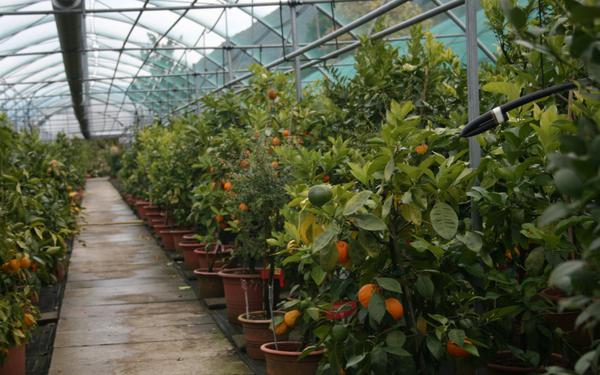
温和的霜期和大田里的收藏
这里的冬天不算太冷。十二月中旬到三月初是霜期,通常要持续三十天以上,但最低温只到零下 1 到 4 度,偶尔才落到零下 9 度;冬天日照少,夏天坡地却从早到晚晒得到太阳。地块夹在两条溪流之间,浇水不愁。1980 年修好园路,从 1989 年起这片展示园对谁都开放,走一圈大概要一个钟头。收藏的规模也不小:坡上有四百五十多个玉兰母株品种,站方德文页写有几株已长到 8 到 10 米以上,英文页则写成 15 米以上;另有九百五十个山茶品种,杜鹃花和杜鹃属各约四百个,还有些少见的针叶树、木牡丹、山茱萸和紫藤。植物占地约 1.7 万平方米,植物园页面写的园子面积则是两万平方米以上。
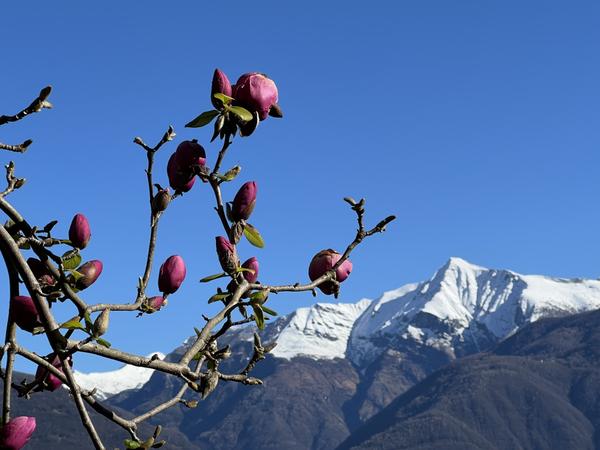
从史密斯斯爵士的园子到玉兰
玉兰这条路是偶然走出来的。奥托·艾森胡特拜访英国园艺家彼得·史密斯斯爵士的花园,看到人家品种之丰,自知手上的东西寒酸,便从美国和英国买回新种,替爵士繁殖了不少植物。爵士花园里一株康贝尔木兰“玛格丽特公主”生了病,请他用最好的材料做嫁接,他拿望春玉兰的实生苗去试,结果多数都活了下来,其中一株后来由玛格丽特公主本人种在蒂森别墅的园子里。爵士鼓励他继续嫁接,他原本没想过做全世界的生意,后来世界各地的朋友把接穗寄来给他嫁接,买苗的人一直不断。
目录、手册与一本专著
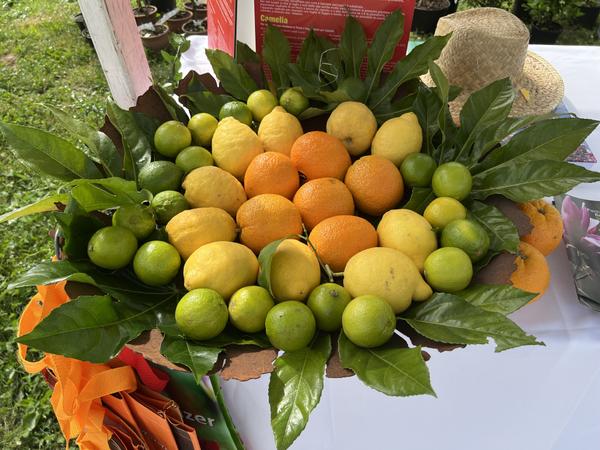
站上的商店栏目按站方自己的计数是「共找到 7115 条」,这个数字把植物、园艺配件和自产的蜂蜜果酱一起算在内,不能当成品种数。植物部分的清单另有文件:常规苗木是一份七十页的清单文件,木兰、柑橘、紫藤各有单独的表格文件。另有二十多份种植手册可以下载,从玉兰、黄玉兰、山茶、盆栽柑橘一直到竹子、树莓、草莓。站上没有传统意义上的网店,看好品种约到园里取货时附上养护要点,也可以要求包裹寄送或送货上门。除苗子以外,店里还卖自产的蜂蜜、果酱和气泡水,以及凉亭、桌子、玫瑰花架、高床、金属花架、瑞士花岗岩制品、礼券这类园子用具。2020 年 2 月起,这家苗圃与比特·希尔德根合著的《玉兰与鹅掌楸》(木兰科)在书店上市,全书 320 页,其中 277 页是彩页,用了八百多幅彩色插图,介绍近一千个玉兰品种,售价 69.50 欧元。

开放时间与春季的展会
植物园春秋季周一到周六 7:30 到 19:00,周日 8:30 到 19:00,冬季每天 10:00 到 17:00;门票 8 瑞郎,十人以上的团体每人 5 瑞郎。苗圃的营业时间分季节,夏冬两季只在电话预约时开放,12 月 25 日到 1 月中旬整段休息。除了自家园子,这家苗圃每年还带着自育品种出去摆摊:韦登斯维尔的苏黎世应用科技大学专业品种市集,五月在沃马库斯城堡举办的非常规植物日,以及洛迦诺山茶展。第三场在洛迦诺山茶公园举行,园里养着近一千株山茶,品种数也差不多,已被国际山茶协会收进它的园地名录,展会期间还会摆出两百多个山茶品种的切花。
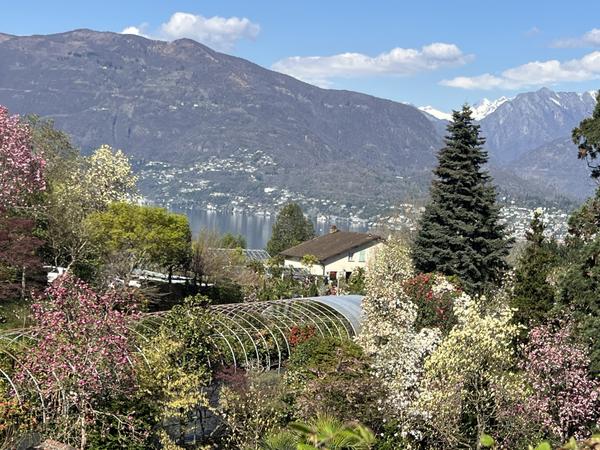
A nursery above Lake Maggiore
The nursery sits in San Nazzaro, part of Gambarogno in the canton of Ticino, on the slope between Piazzogna and Vairano, with Lake Maggiore below. Its founder Otto Eisenhut started out with outdoor cut flowers and shrubs, and after about ten years turned to tree nursery work; he has always done his own propagation. He married in 1959, and his wife helped in the business from the start. Reto Eisenhut runs the nursery today. Next door, the botanical garden has been managed by the Parco botanico del Gambarogno Foundation since the beginning of 2000, its task being to keep this landscape garden and its collection going.
Mild frosts and a large collection
Winters here are not severe. The frosty season runs from mid-December to the beginning of March and usually holds on for thirty days or more, but the minimum temperatures only reach -1 to -4 degrees Celsius, with the occasional dip to -9. Sunshine is scarce in winter and abundant in summer, when the slope basks in it from early morning until late evening. The plot sits in the fork between two streams, so water is never a problem. Paths were laid in 1980, and the show garden has been open to the public since 1989; a visit takes about an hour. The collection is considerable: more than 450 varieties of magnolia mother plants grow on the slope, some over 8 to 10 metres according to the German page and over 15 metres according to the English one, together with 950 camellia varieties, roughly 400 each of azalea and rhododendron, and some rare conifers, tree peonies, cornel and wisteria. The plants cover about 17,000 square metres, while the botanical garden page gives the garden itself as more than 20,000 square metres.
From Sir Peter Smithers’s garden to magnolias
Magnolias came about by chance. Visiting the garden of the British plantsman Sir Peter Smithers, Otto Eisenhut saw how poor his own selection was in comparison, so he bought new varieties from America and England and propagated many of Sir Peter’s plants for him. When a Magnolia campbellii “Princess Margaret” in that garden fell ill, Smithers asked him to try grafting from the best material available; he used kobus seedlings and was sceptical, but most of them took. One of those plants was later planted at the Villa Thyssen by Princess Margaret herself. Encouraged by Smithers to keep improving the cultivars, he set out without any ambition to trade worldwide, and the unlikely happened: he grew to love magnolias, and today friends from many countries send him scion wood for grafting, while customers keep coming for the young plants.
Lists, care sheets and a magnolia book
The shop counts “7115 entries found”, which is the site’s own figure and covers plants, garden accessories and the honey and jam made on the premises, so it is not a variety count. The plant side has its own documents: the standard assortment is a seventy-page PDF list, and magnolia, citrus and wisteria each have a separate spreadsheet. More than twenty planting guides can be downloaded, running from magnolia, yellow magnolia and camellia to potted citrus, bamboo, raspberries and strawberries. There is no online shop in the usual sense; you look through the varieties and then pick them up at the nursery with a few care tips, or ask for parcel delivery or a delivery to the door. Besides young plants, the shop sells honey, jam and soft drinks made on site, along with garden houses, tables, rose arches, raised beds, metal frames and Swiss-made granite items. Since February 2020 the magnolia book the nursery wrote with Beat Heerdegen, “Magnolien und Tulpenbäume” (Magnoliaceae), has been on sale in bookshops: 320 pages, 277 of them in colour, more than 800 colour illustrations and close to 1000 magnolia varieties, for 69.50 euros.
Opening hours and the spring shows
The botanical garden opens from 7.30 to 19.00 Monday to Saturday in spring and autumn, from 8.30 to 19.00 on Sundays, and daily from 10.00 to 17.00 in winter. Admission is 8 Swiss francs, or 5 francs each for groups of ten or more. Nursery opening hours vary by season; in summer and winter it opens only by appointment, and the whole place shuts from 25 December to the middle of January. As well as its own garden, the nursery takes its own selections to the spring specialty plant market of the Zurich University of Applied Sciences in Wädenswil, to the days of unusual plants held at Vaumarcus castle in May, and to the Camellia show in Locarno. The last takes place in the Camellia Park of Locarno, which holds close to a thousand camellia plants in nearly as many varieties and has been taken into the International Camellia Society’s Gardens of Excellence; the show also displays cut flowers from more than 200 camellia varieties.
相关文章:
 德国 桑德曼苗圃和玫瑰学校 Baumschule Sandmann – 上巴伐利亚 500 余种月季
 德国 海尔曼斯霍夫树木苗圃 Baumschule Heilmannshof – 北威州 70 种耐寒竹
 美国 Camellia Forest Nursery 茶花林苗圃 – 北卡罗来纳州专业山茶属植物苗圃
 法国 Stervinou 苗圃 – 法国西部山茶杜鹃专类苗圃
 德国 Böklund 玫瑰与树木苗圃 Baumschule Clausen – 提供从选苗到养护的全套服务
 法国 康沃尔植物园 – 英式自然林地风格的活体植物博物馆
 瑞士 霍马特文化苗圃 Homatt Kulturgärtnerei – 稀有传统品种植物家庭苗圃
 英国 Mickfield玉簪苗圃 – 种苗生产与销售
发表回复