

从苗圃长出来的花园设计事务所
Kramer und Kramer 在下奥地利州 Tulln 附近的 Zöfing,全称是 Kramer und Kramer Gartengestaltungs Ges.m.b.H.,登记的经营人是 Bernhard Kramer。公司自己说得更准确:它是花园建筑师的事务所,做的是从私家花园到酒店设施再到公共空间的室外工程,从景观设计、技术构造一直做到实际施工。
「已经存在七十多年」这个说法指的是它的根。公司 1949 年开张时只是一家传统苗圃,做苗木培育和零售。要到 2002 年才开始承接花园和屋顶露台的规划与建造。创始人 Bernhard Kramer 的说法是:传统是好事,前提是你能从里面做出点东西来。现在由他和表亲 Joachim Hirzi 一起打理,两人都是花园建筑师。这家公司现在对外用的介绍是「超过七十年」,指的是苗圃那边的年份。
两个人的分工在他们自己的访谈里说得很清楚。Bernhard Kramer 讲的是设计要服务于建筑:「我们负责房子与花园之间的过渡。把建筑上某些线条接到外面来,整体感觉才成立,而不是在立面处就停住。」Joachim Hirzi 补的是另一面:一个园子要同时是景观、建筑和使用的地方,缺一样都不成立。
需要说明的是,站上把完整街道地址、电话、传真、邮箱、税号和工商登记号都公开列出。本站不转录这些内容,想联系请直接访问公司站。
两个地方:Zöfing 的基地和维也纳的宫殿
公司在 Zöfing 的大本营是一片连起来的场地,面积分几块:5,000 平方米展示园、500 平方米屋顶露台景观、1,000 平方米室内店、40 公顷苗圃,外加 360 平方米的 Werkhalle 工作展厅。树公园叫 Garden of uniqueTrees®,是这家公司的自有品牌名。
这个品牌的作用写在站上:让自家苗圃培育的特色单株树、稀有苗木和抗气候树种,能在一个公园式的环境里被看到、摸到、买走。它同时是展示园、展览空间和设计工具——景观设计师、园艺规划师、客户和合作方在这里能看到真实的种植密度和树形尺度,再把这种感觉带回项目里。负责人 Joachim Hirzi 的话是:我们好奇,所以一直在找新的苗木稀有品种和有性格的树,每一棵都按要种的地方的具体情况单独配。
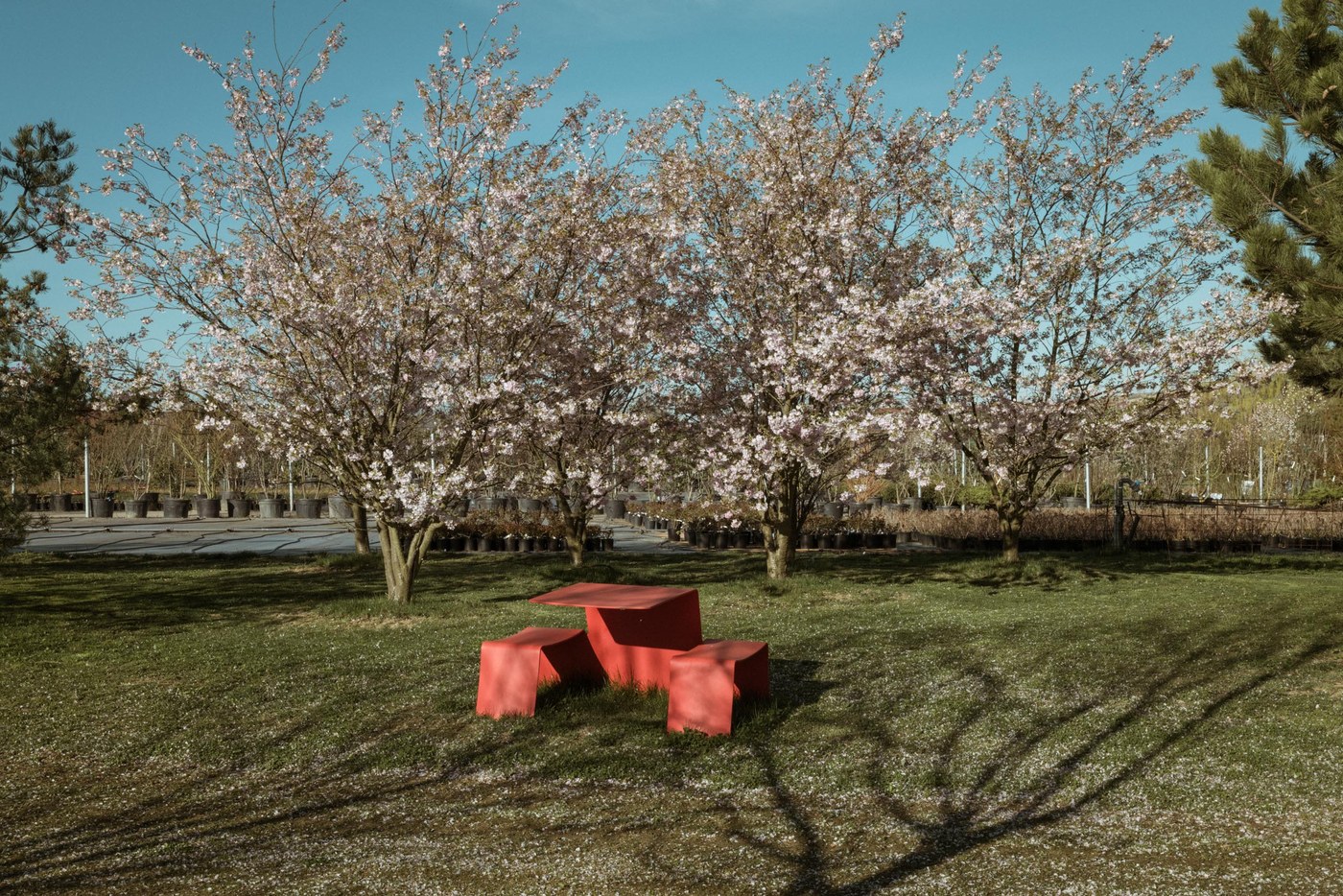
2023 年公司给这个树公园加了一座 Werkhalle:一年一换的展览,让自然、建筑和当代艺术彼此对话。这座 360 平方米的工作厅是公司的第三个对外场所——第三个是维也纳 Freyung 街上的 Palais Harrach,那是一座建于 17 世纪末的宫殿,意大利建筑师 Domenico Martinelli 参与设计。公司在那里做的是 750 平方米的展陈,把 Paola Lenti 和 Domani 的户外家具、陶器与自有的鲜花编排放在一个由内院串联起来的空间里。
Palais Harrach 的意义在于它把苗圃这件事接到了维也纳市中心。公司自己在站上把它总结成一句话:历史建筑和当代形式语言的结合,正是他们想做的事——设计不寻常的生活空间。
那几样非要自己解决的事
站在关于公司的那一页上,有一句话概括了他们对「什么才算做好」的理解:他们为那些要紧的细节和特殊要求提供定制方案——天然泳池、户外厨房、遮阳、照明和家具配置。这一句本身就说明了他们的客户是谁:不是那种只要草地绿起来就满意的人。
这个判断在项目页上能核到具体参数。以一个维也纳 18 区、屋顶分两层的露台项目为例,园子面积 115 平方米,六处露台分两层,家具是 Paola Lenti、Living Divani、Roda、Expormim 和 Verde Profilo,照明是 Davide Groppi 和 Bega,花盆是 Atelier Vierkant、Domani 和 Verde Profilo。种植名单写得很具体:日本枫的单株树、岩石山茱萸、欧洲卫矛的单株、南欧紫荆,配多年生植物、观赏草和绣球林。屋顶用的是粗放型屋顶绿化。
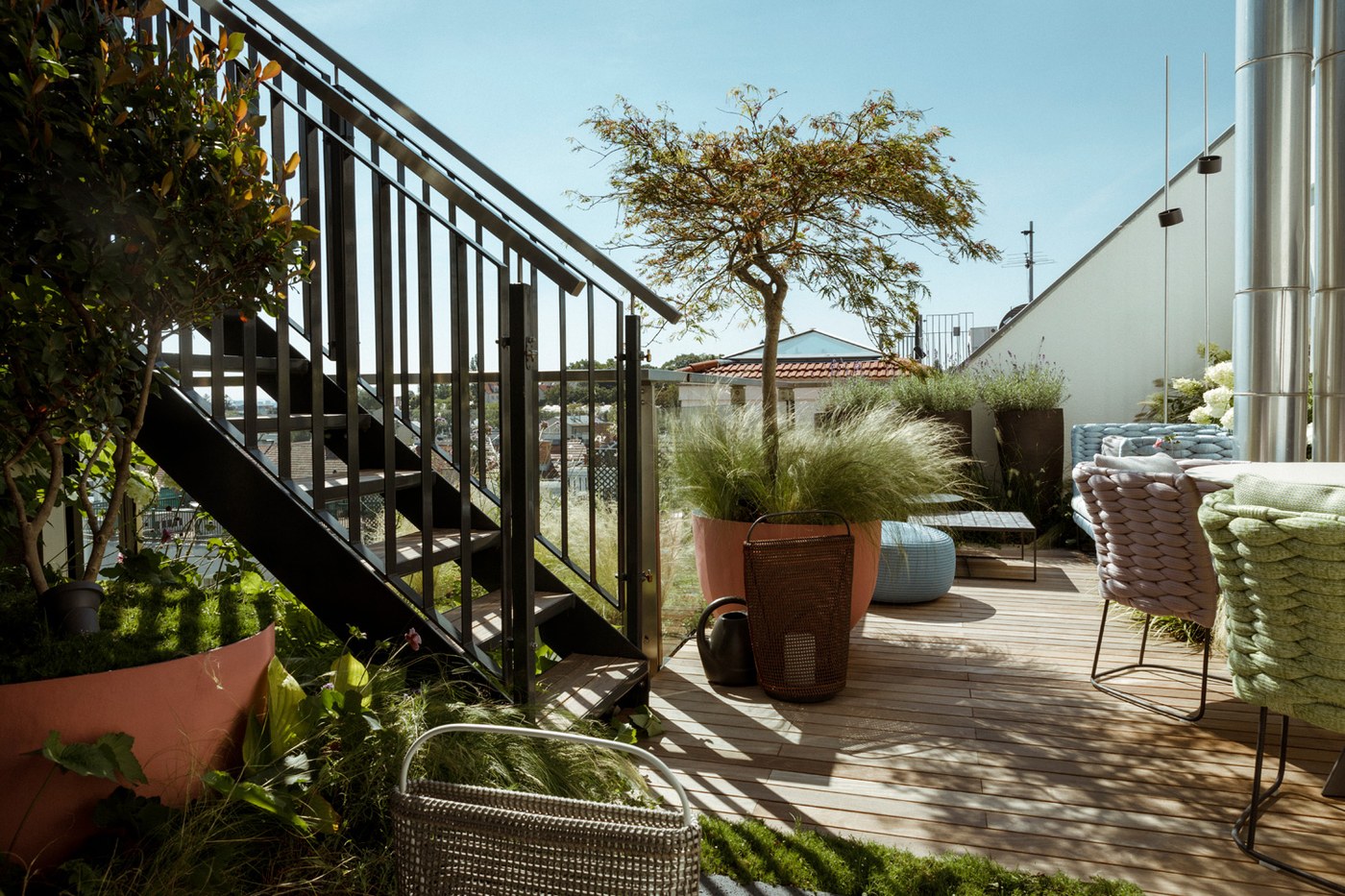
这类 Factsheet 是他们每个项目的标准格式:面积、配套、种植、花盆、照明一项不漏,还有合作建筑师的名字。合作名单在站上单列一页,二十九家事务所,从 A01 Architects 到 Wehdorn Arch,包括 Zoran Bodrozic 的 AZB、Pacher Architekt、Steininger Arch. 等奥地利本土团队。
项目分布也说明了他们的活动范围:奥地利、德国、瑞士、意大利、克罗地亚、斯洛伐克、西班牙、捷克、匈牙利。站上的说法是「以及任何树能长的地方」。但他们自己列的顾问式项目其实集中在维也纳——1180 的几处屋顶露台和池屋、1160 和 1230 的住宅、1010 的室内绿化和商店、酒店项目,以及奥地利境内的庄园宅院。
一个花园要走的四个步骤
站上把服务流程写成四个动作,顺序很实在:先看和谈,再计划和算,然后建,最后照顾。
先看和谈。第一次面谈会到客户现有的花园或露台实地看,不是坐办公室听描述。谈的是想法和愿望,同时要看现场的既有状况和地形。
计划和算。设计团队拿出第一版概念,从格局、材料选择到种植配置,配上草图和种植建议。概念说服人之后,再深化成完整的施工图,并附上成本估算表——这个表是要和客户一起优化、按预算调整的。
建。施工和收尾由内部团队做,保证进度。这部分要单独提一下的是技术理解:他们把对构造的理解当作核心竞争力之一,因为园子里最难的东西往往不是种什么,而是泳池的循环系统、屋顶的承重和防水、照明和灌溉怎么走线。
照顾。站上关于养护那一段的写法很坦白:园子想要长得好,需要施肥、修剪、补种、清扫、浇水、覆草、越冬管理,「所以要不断照顾」。他们提供季节性养护和全年定期维护,包括屋顶花园、天井和池塘系统这些不好管的场地,并给每个园子单独做养护方案。
配套品牌:家具与花器
因为自己不做家具,公司转而在选型和代理上花力气。站上 Brands 页列的都是国际牌子:意大利的 Paola Lenti、Roda、Minotti、Living Divani、Moroso,比利时的 Extremis,Steininger Designers,Stefan Knopp,还有德国的 RS Barcelona。
户外家具之外还有两块的定位很清楚。一块是天然石材,Bertwieser 展出的「Stone World」是自有的石材库;另一块是花器,Atelier Vierkant 是德国陶艺、Domani 是比利时陶作,两者在维也纳都设了旗舰店。
Concept Store 卖的东西杂但不杂:1,000 平方米里有当季切花——每天新进,用于婚礼和各种场合的插花编排,花盆、花器、家居饰品,以及设计师的户外家具。Zöfing 的概念店还承担规划办公室的功能,客户在那里就能看到设计、材料和种植的实际效果。
A garden design practice that grew out of a tree nursery
Kramer und Kramer is based in Zöfing near Tulln in Lower Austria, registered as Kramer und Kramer Gartengestaltungs Ges.m.b.H. with Bernhard Kramer as the named proprietor. The company describes itself more precisely as a practice of garden architects, taking on outdoor works from private gardens through hotel grounds to public spaces, and carrying them from landscape design through technical construction to actual building.
“Existing for more than seventy years” refers to its roots. The company opened in 1949 as a traditional tree nursery growing and selling plants. It only began taking on the planning and building of gardens and rooftop terraces in 2002. Bernhard Kramer puts it this way: tradition is fine provided you make something of it. He and his cousin Joachim Hirzi, both garden architects, run it today. The company’s current blurb says “more than seventy years”, which refers to the nursery side.
The two of them are unusually clear about their respective concerns in an interview of their own. Bernhard Kramer’s line is that they handle the transitions between house and garden: by carrying certain architectural lines outside, an overall impression emerges rather than one that stops at the facade. Joachim Hirzi adds the other side, that a garden has to be landscape, architecture and place of use at once, and fails without any one of them.
The site publishes the full postal address, telephone, fax, email, tax number and register number. None of that is reproduced here; the company’s site is the place to reach them.
Two places: the Zöfing base and a Vienna palace
The company’s base in Zöfing is one connected site made up of several parts: a 5,000 square metre show garden, a 500 square metre rooftop landscape, a 1,000 square metre indoor store, 40 hectares of nursery, plus a 360 square metre Werkhalle. The tree park is called Garden of uniqueTrees®, which is also the company’s own-brand name.
What the brand does is written on the site: it makes the specimen trees, rare woody plants and climate-resilient species grown in the firm’s own nursery something you can see, touch and buy in a park-like setting. It is show garden, exhibition space and design instrument in one. Landscape architects, garden planners, clients and partners see real planting density and real tree scale there and carry that sense back to their projects. Joachim Hirzi’s line is that they are curious, so they are always after new woody rarities and trees with personality, each one matched to the specific conditions of where it is going.
In 2023 the company added the Werkhalle to the tree park: annually changing exhibitions putting nature, architecture and contemporary art into dialogue. This 360 square metre hall is the company’s second public venue — the third is the Palais Harrach on the Freyung in Vienna, a palace built at the end of the 17th century with the Italian architect Domenico Martinelli among those involved. What the company does there occupies 750 square metres, setting Paola Lenti and Domani outdoor furniture and ceramics alongside its own floral work, connected through a courtyard.
The significance of the Palais Harrach is that it connects the nursery business to the centre of Vienna. The company summarises it on the site as the meeting of historic fabric and contemporary form, which is exactly what they say they are about: designing extraordinary places to live.
Details that cannot be left out
On the page about the company there is one sentence that sets out what they think good means: they offer made-to-measure solutions for the significant details and special requirements — natural pools, outdoor kitchens, sun protection, lighting and furnishing. That sentence alone says who their clients are: not people content with green grass.
That claim checks out against specific parameters on the project pages. Take a Vienna 18th-district rooftop spread over two levels: 115 square metres of garden, six terraces across two floors, furniture from Paola Lenti, Living Divani, Roda, Expormim and Verde Profilo, lighting from Davide Groppi and Bega, planters from Atelier Vierkant, Domani and Verde Profilo. The planting list is precise — Japanese maple specimens, Amelanchier, European spindle specimens, Judas tree, with perennials, grasses and hydrangea drifts. Extensive green roofing was used on the roof.
That factsheet format is standard for every project: area, fittings, planting, planters and lighting all listed, plus the name of the collaborating architect. Their collaborators have a page of their own, twenty-nine practices, from A01 Architects to Wehdorn Arch., including Austrian names such as Zoran Bodrozic’s AZB, Pacher Architekt and Steininger Arch.
The project spread also shows the reach: Austria, Germany, Switzerland, Italy, Croatia, Slovakia, Spain, the Czech Republic and Hungary — the site puts it as “everywhere trees grow”. Their consulting projects, though, cluster in Vienna: several rooftops and pool houses in the 18th, 16th and 23rd districts, interior planting and a shop in the 1st, hotels, and estate courtyards within Austria.
The four steps of a garden
The site sets out how the work runs in four actions, in an order that is refreshingly concrete: look and talk, plan and calculate, build, and care.
Look and talk. The first meeting takes place on site, in the client’s existing garden or on the terrace — not in an office listening to a description. What they want to talk about is the idea and the wishes, and what they want to see is the existing plantings and the shape of the ground.
Plan and calculate. The design team develops a first concept covering layout, materials and planting, with sketches and planting suggestions. If the first drawings convince, the idea is worked up into a detailed overall plan with a cost breakdown — and that breakdown is meant to be optimised jointly with the client and adjusted to what the budget allows.
Build. Construction and finishing are done by their own teams so that schedules hold. What is worth singling out here is their technical understanding, which they count among their central strengths, because the hardest part of a garden is rarely what you plant but how pool circulation, roof loading and waterproofing, lighting and irrigation are actually run.
Care. The site is frank about the maintenance section: a garden only grows well if it gets fed, pruned, replanted, cleared, watered, mulched and put to bed for winter — so it wants constant attention. They offer seasonal care and year-round regular maintenance, including the demanding cases of roof gardens, courtyards and pond systems, with an individual care concept for each garden.
Brands: furniture and vessels
Because they do not make furniture themselves, they put the effort into selection and representation instead. The Brands page is all international names: Italy’s Paola Lenti, Roda, Minotti, Living Divani and Moroso, Belgium’s Extremis, Steininger Designers, Stefan Knopp, and Germany’s RS Barcelona.
Beyond outdoor furniture there are two clearly positioned categories. One is natural stone, where Bertwieser presents its own “Stone World” library. The other is planters: Atelier Vierkant, German ceramic work, and Domani, Belgian pottery — both with flagship stores in Vienna.
The Concept Store sells a mixed but not miscellaneous range: across 1,000 square metres there is cut flowers brought in fresh daily, arrangements made for weddings and every kind of occasion that calls for floral work, planters, vases, home accessories and designers’ outdoor furniture. The store in Zöfing also functions as the planning office, so clients can see design, materials and planting take effect on the spot.








发表回复