

荷兰的家族苗圃,三个基地
范登贝克苗圃是荷兰北布拉班特的家族苗圃,如今经营到第三代,总部在辛特-奥登罗德。除了主基地,集团在德国盖尔登还有一处苗圃,德国拉斯特德另有一处专种杜鹃花的苗圃;行业资料说后者 2006 年被接手,如今扩到约 50 公顷。关于起始年份,站上的说法是 2015 年庆祝 75 周年,倒推约在 1940 年;另有两家荷兰行业媒体写的是 1939 年起步,两者差一年,站方没有解释。苗圃从一开始就认准了中大型到超大型的乔木和灌木这个方向:行道树、针叶树、造型树、独株树都在册,树木统一养到中等乃至超大的规格。
面积、种类与出口的两个口径
规模上,站方自述约有 450 公顷基地、1600 余种树种和品种、一百多人的团队,产品发往 35 个国家。行业展会与商业目录的资料则给出另一个口径:三处基地合计 500 公顷,其中荷兰 380 公顷、德国 120 公顷,站方没有交代两个数字的差别。出口范围站上也有两种说法:首页写的是供货 35 个国家,运输页写的是出口欧洲 25 个国家。目录本身另是一套数:德语站地址表里的树木页面有 1745 条,去重后 1740 条;按地址首词粗分,杜鹃属最多,有 193 页,其后是槭属 137 页、栎属 126 页、李属 105 页、苹果属 85 页。员工人数上,站方写一百多人,大学与行业资料写九十多人,数目接近。
选苗工具与那本树书
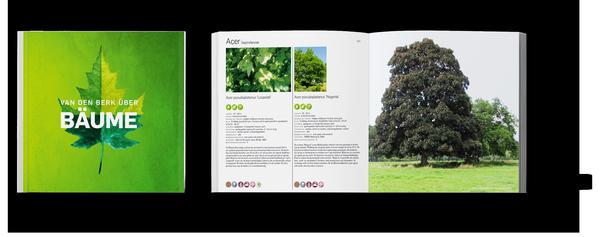
选苗靠站上的检索工具,可按用途、土壤类型、土壤湿度、抗寒区、光照、树高冠幅、冠形逐项筛选,另有按场景整理的方案页,比如耐旱、屋顶花园、窄街、沿海地带和小庭院等。配套的还有一本树书,德语版第二版于 2015 年 1 月出版,第一版是 2002 年;第二版比初版多收了 383 个树种品种,全书 1032 页,写了 1101 个树种品种的图文说明,配 1700 多张照片,还按每棵树给出耐寒区并附欧洲与北美耐寒区地图,售价 90 欧元,有荷、英、德、法四种语言。品种部分由西斯·范卡斯特伦负责,树木学编辑是罗纳德·豪特曼,终审由约翰·范登贝克和安妮克·德容完成,英国皇家植物园邱园的托尼·柯克姆作序。
树书之外,站方还提供一对一咨询,从树冠体积、树种选择、栽植浇水,到立地准备、大树卸车、根球规格、夏季栽植和冬季抗寒都设有专页,顾问自称在树木这件事上有八十来年的经验。选树也按用途分开做方案,例如要耐旱的、要适应屋顶绿化的、给窄街用的、沿海用的、小庭院用的,还有滴灌不滴水的椴树等。
质量要求与生态种植
对根球的要求写得很具体:树木要定期起苗移植,逼出新的须根,长成细密分枝的根系;为起挖大规格苗木,苗圃自己造了一台挖掘机,能做出横截面 250 厘米的根球。苗圃持有两项国际认证,一项针对环境与可持续,一项针对质量管理,后者 1997 年取得;生态方面的指标也写明,每公顷的植保用药量只有法定上限的三分之一,属于用量最低的一批苗圃,地块里有大量昆虫,还给不少鸟种留了筑巢与觅食的地方。栽培上,轮作间隙播绿肥,施肥基本靠牛羊厩肥和堆肥,修剪下的枝条碎掉后还回地里;苗木按固定株距栽种,行间种草,让天敌自己压住虫害;水沟两侧留出不喷药的草带。包装用黄麻和椰壳纤维,印刷用通过森林认证的纸,2016 年起还开始做有机树苗,并提供不少带本地环保标签的产品。
项目案例、获奖与私人客户
项目页按国家和类别筛选,列了约 100 个案例,有牛津大学、莱斯特的橄榄球场、巴黎的共和国广场与圣尤斯塔歇教堂、蒂尔堡市中心、亨戈洛集市广场、安特卫普的植物园、费尔德霍芬的一处林地,还有英国东区的运动员村和比利时热迪讷的一座私人花园。获奖方面:2009 年拿到荷兰园艺企业家奖,由农业与食品部长格尔达·弗尔堡颁发,安索斯皇家苗圃与球茎贸易协会推荐;同年在西班牙萨拉戈萨办的国际年度种植者评比中得第三名,拿到铜玫瑰奖,评委会看的是商业表现、可持续的经营策略、创新和企业形象;2019 年又获荷英商会中小企业奖,评委会看重它在脱欧上的应对,以及在可持续和减碳上的投入。私人客户也可以约时间看苗,树价从 500 欧元起,生长慢的老树一棵能到几千欧元。
A Dutch Family Business with Three Sites
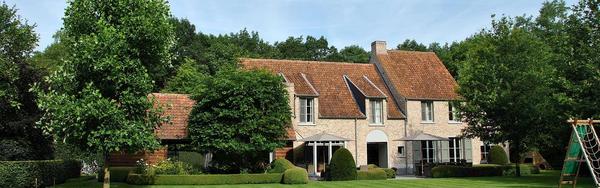
Van den Berk Baumschulen is a family business from the Dutch province of North Brabant, now in its third generation, with its head office in Sint-Oedenrode. Alongside the main site the group runs a further nursery in Geldern in Germany, and a separate rhododendron nursery in Rastede in Germany, which trade profiles say was taken over in 2006 and has since grown to about 50 hectares. On its starting year the site says it marked its 75th anniversary in 2015, which points to a start around 1940; two Dutch trade publications give 1939 instead, a one-year difference the company does not explain. From the beginning the nursery has aimed at medium to very large trees and shrubs: avenue trees, conifers, shaped trees and specimen trees are all in the range, and everything is grown on to medium or extremely large sizes.
Two Counts for Land, Species and Exports
On scale the company reports about 450 hectares of land, more than 1600 tree species and cultivars, and a team of more than 100 people, with trees going to 35 countries. Trade profiles give a second count: 500 hectares across the three sites, of which 380 hectares in the Netherlands and 120 in Germany, and the site does not account for the difference. The export reach also comes in two versions on the site: the home page says trees are supplied to 35 countries, while the transport page says exports go to 25 countries in Europe. The catalogue itself is a third count: the German site’s address table holds 1745 tree pages, 1740 after removing duplicates. Grouped roughly by the first word of the address, rhododendron leads with 193 pages, followed by maple with 137, oak with 126, plum with 105 and apple with 85. On staff, the site says more than 100 while university and trade sources say ninety-plus, which is close enough.
A Tree Finder and a Book of Trees
Tree picking runs through the site’s own search tool, which filters by use, soil type, soil moisture, hardiness zone, light, height and spread, and crown shape; there are also ready-made solutions pages for particular situations, such as drought tolerance, roof gardens, narrow streets, coastal sites and small gardens. A book of trees comes with it. The second German edition appeared in January 2015, following a first edition in 2002; the new edition added 383 tree species and cultivars, runs to 1032 pages, describes 1101 species and cultivars with more than 1700 photographs, gives a hardiness zone for every tree and includes hardiness maps of Europe and North America. It costs 90 euros and appears in Dutch, English, German and French. Cees van Casteren looks after the range, Ronald Houtman edited it dendrologically, Johan van den Berk and Anneke de Jong did the final edit, and Tony Kirkham of Kew Gardens in London wrote the foreword.
Beyond the book, the site offers one-to-one advice, with separate pages on crown volume, species choice, planting and watering, site preparation, unloading large trees, root ball specifications, planting in summer and winter hardiness; the advisers say they have around eighty years of experience with trees. Trees are also sorted by situation, including trees that take drought, trees for roof gardens, for narrow streets, for coastal sites, for small gardens, and limes that need no dripping irrigation.
Quality Demands and Ecological Growing
The quality requirements are spelled out in detail: trees are lifted and replanted regularly, which forces new fine roots and produces finely branched root systems; for digging up large specimens the nursery built a lifting machine of its own, capable of root balls with a cross-section of up to 250 centimetres. The company holds two international certificates, one covering environment and sustainability and one covering quality management, the latter held since 1997. The ecological figure is given plainly: the use of crop protection per hectare is down to a third of the legal limit, placing the nursery among the lowest users, and the plots harbour plenty of insects and offer nesting and feeding places for many bird species. In growing, green manure is sown between production periods, fertilising relies almost entirely on cow and goat manure or compost, and shredded prunings are worked back into the soil; trees are planted at a fixed distance apart with grass between the rows, so natural enemies hold the pests down; unsprayed grass strips run along the water ditches. Trees are wrapped in jute and coir, printing uses FSC-certified paper, organic tree growing began in 2016, and a good part of the range carries a Dutch environmental label.
Projects, Awards and Garden Customers
The project pages can be filtered by country and category and list around 100 examples, among them Oxford University, the Tigers rugby stadium in Leicester, the Place de la Republique and the church of Saint-Eustache in Paris, the centre of Tilburg, the market square in Hengelo, a botanical sanctuary in Antwerp, a woodland site in Veldhoven, the athletes’ village in East Village and a private garden in Gedinne. On awards: in 2009 the company took the Dutch gardening entrepreneur prize, handed over by Minister of Agriculture and Food Gerda Verburg and proposed by the Anthos trade association for nurseries and bulb products; the same year it came third in the international Grower of the Year contest held in Zaragoza in Spain and won the bronze rose, the jury weighing commercial presence, a sustainable business strategy, innovation and company image. In 2019 it received the NBCC award for small and medium-sized businesses, the jury being won over by its approach to Brexit and by its investment in sustainability and cutting carbon emissions. Private customers are welcome by appointment as well, with trees priced from 500 euros and slow-growing old specimens running into thousands of euros each.
相关文章:
 德国 明斯特苗圃 Münster Baumschulen – 露地栽培铁线莲300多品种
 美国 Brooks Tree Farm – 为圣诞树、林业用材和观赏苗圃行业提供种苗
 美国 Hash树木公司 – 爱达荷州普林斯顿批发针叶树苗圃
 德国 Bruns 苗木出口公司 – 建成收集逾 1000 个杜鹃花品种的格里斯泰德杜鹃花植物园
 英国 树木商店 Tree Shop – 覆盖九大类的树木灌木在线供应商
 德国 猛犸花园 Mammutgarten – 萨克森州苗圃与濒危树种
 荷兰 De Vossenberg苗圃 – 超过四十五年历史的造型树与日本花园植物专业苗圃
 德国 Baumschulen Eilers苗圃 – 是德国苗圃协会会员
发表回复