
苗圃概况
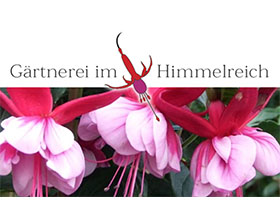
天堂苗圃(Gärtnerei im Himmelreich)是德国巴伐利亚州西部阿尔高地区(Westallgäu)的一家家庭经营小苗圃,坐落在施蒂芬霍芬(Stiefenhofen)村辖区,海拔 800 余米,主营倒挂金钟(fuchsia)栽培与零售,并兼顾香叶天竺葵、野生天竺葵与部分植物稀有品种的繁殖。苗圃由英格丽特·科勒(Ingrid Kohler)创办,2001 年开始建园,2002 年 4 月正式对外开放。园名「Himmelreich」即德语「天国」「极乐之地」之意,与苗圃位于山坡高处的清幽环境相呼应。
历史由来
苗圃所在的阿尔高地区位于博登湖以东,是巴伐利亚州与巴登-符腾堡州、奥地利交界的丘陵乡村带,冬冷夏凉,湿润的丘陵环境尤其适合倒挂金钟这类喜凉爽湿润气候的高山花卉。2001 年,科勒在一片名为「Himmelreich」的草地上搭起一座薄膜温室开始起步;2002 年 4 月对外开放时,苗圃已有约 400 个倒挂金钟品种,外加香叶、野生和优良天竺葵若干品种。后来她又添置了一座二手温室,紧邻原址搭建,倒挂金钟品种迅速扩张至 2000 余个。园区面积也随之通过逐步租赁相邻地块而扩展,种植空间年年增大。最初计划把全部大型盆栽摆到户外花园里,但现实往往是植物太多、花园太小,于是苗圃本身的户外花园就成了这些大型盆栽倒挂金钟的归宿——也成了整座苗圃最具特色的部分。
植物收藏与品种规模
苗圃目前的核心收藏是倒挂金钟,常年维持大约 800 个栽培品种(sauer aktuell sind etwa 800 Sorten),含野生种、园艺栽培种及耐寒品种三大类。其中既有常见的杂交栽培种,也有原产中南美的野生原种,如短叶倒挂金钟(F. brevilobis)、丛生倒挂金钟(F. magellanica)及其多个变种(包括 ‘Riccartonii’、’Aurea’、’Gracilis’、’Tricolor’ 等)、玻利维亚倒挂金钟(F. boliviana)及其变种、智利倒挂金钟(F. lycioides)、伞花倒挂金钟(F. procumbens,新西兰原种)等十余种野生种。除了倒挂金钟,苗圃还栽培香叶天竺葵(Duft-Popf)、野生天竺葵(Wild-Popf)和优良天竺葵(Edelpopf),以及其他若干植物稀有品种(Pflanzenraritäten)。苗圃官网提供了一份可下载的完整倒挂金钟品种清单(Fuchsienliste),逐条标注花色、花型、株高、育种人和育种年份。
经营理念与服务
苗圃明确说明不提供邮寄服务(keinen Versand),所有销售与咨询仅在苗圃现场进行。这种近距离、自取式的销售方式让经营者可以与每一位到访者面对面交流,并针对具体的倒挂金钟和其他盆栽植物问题提供咨询建议。苗圃主英格丽特·科勒常年亲自接待,熟悉自家植物的栽培细节。苗圃没有正式的奖项或机构评级,规模很小,但作为德国倒挂金钟专门苗圃之一,长期被德国大丽花、倒挂金钟和唐菖蒲协会(DDFGG)列为可循环购苗来源之一。
开放时间与到访
苗圃的年度开放时段为 4 月至 9 月。每年 4 月中旬前后开始新一季开放,开放日一般为周一、周二、周四、周五的 10:00 至 16:00,周六 10:00 至 13:00,周三休息。7 月至 8 月旺季调整为周二、周五、周六开放,周一、周三休息(仅在电话预约后开放)。每年 10 月至次年 3 月闭园,但访客如确需到访,提前电话联系后仍可接待。由于苗圃地处阿尔高乡村地带,建议远道而来的访客出发前先电话联系确认当日是否开放。苗圃官网公布的最新季节开放开始日为每年 4 月中下旬的一个周五;具体日期以官网 Aktuelles(最新动态)页面公布为准。
Nursery Overview
Gärtnerei im Himmelreich is a small family-run nursery in the Westallgäu region of Bavaria, southern Germany, at about 800 m elevation in the village of Stiefenhofen. Founded by Ingrid Kohler in 2001 and opened to the public in April 2002, the nursery specialises in fuchsias (Fuchsia cultivars) and also grows scented, wild and select pelargoniums alongside a small range of other plant rarities. The name “Himmelreich” means “kingdom of heaven” in German and matches the site’s quiet, hillside setting.
History
The Westallgäu lies east of Lake Constance on the Bavarian side of the hilly borderlands with Baden-Württemberg and Austria. Its cool, humid summers and cold winters are well suited to fuchsias, which prefer mild, moist conditions. In 2001, Ingrid Kohler built the first polytunnel on a meadow named Himmelreich; when the nursery opened in April 2002 it already held about 400 fuchsia cultivars plus scented, wild and select pelargoniums. A second-hand polytunnel was added next to the first, and the fuchsia collection grew quickly to more than 2,000 cultivars. The nursery also expanded by renting neighbouring parcels of the same hillside meadow. The original plan had been to place all the large potted fuchsias in the open garden, but the plants always outgrew the space, so the surrounding display garden itself became the visual heart of the nursery.
Plant Collection and Cultivar Range
Around 800 fuchsia cultivars are maintained at any one time (ca. 800 Sorten), spanning hybrid garden cultivars, hardy selections and wild-collected species. Wild species in the collection include F. brevilobis, F. magellanica and several of its varieties (such as ‘Riccartonii’, ‘Aurea’, ‘Gracilis’, ‘Tricolor’), F. boliviana and its varieties, F. lycioides from Chile and F. procumbens from New Zealand, among others. Alongside fuchsias, the nursery grows scented pelargoniums (Duftpelargonien), wild pelargoniums (Wildpelargonien) and a small number of other Pflanzenraritäten (plant rarities). A full downloadable cultivar list (Fuchsienliste) on the website lists each fuchsia with flower colour, flower form, growth habit, breeder and year of introduction.
Approach and Services
The nursery does not offer mail order (keinen Versand): all sales and advice are conducted in person at the site. This hands-on, on-site-only approach lets Ingrid Kohler talk directly with each visitor and give tailored advice on fuchsia cultivation and other container-plant questions. The nursery is small and has no formal awards or institutional ratings, but it has long been listed by the Deutsche Dahlien-, Fuchsien- und Gladiolen-Gesellschaft (DDFGG) as one of its recommended fuchsia sources in Germany.
Opening Hours and Visiting
The nursery is open from mid-April to the end of September each year. The new season usually opens on a Friday in mid- to late April; standard opening hours are Monday, Tuesday, Thursday and Friday 10:00-16:00, Saturday 10:00-13:00, closed on Wednesdays. From July to August the schedule is reduced to Tuesday, Thursday and Friday 10:00-16:00 and Saturday 10:00-13:00, and Mondays and Wednesdays are closed (open by telephone appointment only). From October to March the nursery is closed, but visits can still be arranged by phone. Because the nursery is in a rural part of the Allgäu, visitors travelling from further away are advised to call ahead to confirm opening on the day. The exact opening date for the new season is published each year on the Aktuelles (Latest) page of the official website.
相关文章:
 美国 西北倒挂金钟协会 Northwest Fuchsia Society – 西雅图倒挂金钟专类学术团体
 爱尔兰 Irish Fuchsia苗圃 – 威克斯福德郡专注宿根花卉与花园植物的专业苗圃
 英国 佛利山苗圃 MOUNT FOLLY NURSERIES – 倒挂金钟和球根秋海棠特色
 德国 倒挂金钟协会 – 德国倒挂金钟交流与品种资料
 荷兰 Irene’s Website 倒挂金钟网站 – 个人园艺爱好站
 南非 西开普省倒挂金钟协会 WCFS – 协会体系内唯一仍持续举办公开展览的分支
 瑞士 Karrer Gärtnerei AG – 苏黎世湖畔的五代传承苗圃
 美国 加州新月城吊钟海棠和昙花协会 – 推动吊钟海棠与昙花的栽培与景观应用
发表回复