
从家庭爱好到耐寒试验园
Hillside Desert Botanical Gardens(山坡沙漠植物园)位于美国华盛顿州中部雅基玛(Yakima),由Ron McKitrick于1981年从个人园艺爱好起步。他在太平洋西北地区持续测试仙人掌、多肉植物及其他旱生植物,观察哪些种类能够经受当地干燥炎热的夏季与严寒冬季。经过数十年的筛选、记录和养护,这座家庭花园逐步扩展为约半英亩、20多个分区组成的旱生植物展示与适应性试验园。
极端气候中的植物筛选
园址处在喀斯喀特山脉雨影区,官方资料称年降水量通常不超过6英寸,夏季高温可达华氏90至100度,冬季低温则可能降至华氏0度或更低。这种同时具备干旱、高温与严寒压力的环境,为检验植物耐旱性、耐寒性和长期生长表现提供了鲜明条件。花园的价值不只在于观赏,也在于展示哪些沙漠植物能够适应华盛顿州中部的内陆气候。
仙人掌与多肉植物收藏
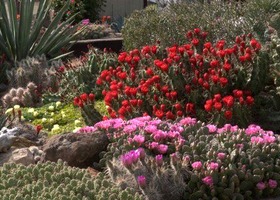
花园集中展示来自不同干旱地区的仙人掌、多肉植物与结构性旱生植物。官方网站介绍其拥有大量不同品种,2026年当地报道则记录了13座高床花园、两座温室以及约500个品种;这些植物包括适合露地越冬的耐寒类型,也包括需要温室保护的收藏。花期里,红、橙、黄、粉等色彩的仙人掌花与龙舌兰、丝兰等大型植物共同形成层次丰富的家庭沙漠景观。
家族传承与公众开放
Ron McKitrick在长期建园过程中乐于接待访客,并分享仙人掌和多肉植物的养护经验。Ron于2020年去世后,家人Bryan McKitrick继续承担园区维护与收藏延续工作。当地媒体在2026年报道花园重新接待访客,强调这仍是一座位于住宅环境中的家庭花园,而不是拥有全职园艺团队的大型公共机构;其特色恰恰来自个人长期实验、家族传承以及与来访者面对面的交流。
参观方式与信息核实
官方页面提供联系与到访信息,并表示欢迎访客参观、了解植物和养护方法。由于这是家庭经营的私人花园,开放安排可能随季节、维护工作与家庭日程变化;计划前往者应以网站的实时营业状态为参考,并在出发前通过页面联系渠道确认。该站还链接到2012年的Danger Garden实地访问记录,可作为了解Ron McKitrick早期建园成果与耐寒植物试验的补充资料。
From a Backyard Hobby to a Hardiness Trial Garden
Hillside Desert Botanical Gardens is a family garden in Yakima, central Washington, founded by Ron McKitrick as a personal horticultural hobby in 1981. Over decades, he tested cacti, succulents, and other arid-region plants to learn which could tolerate the demanding conditions of the Pacific Northwest interior. The project gradually expanded into roughly half an acre with more than 20 garden areas, combining ornamental display with practical observation of long-term plant performance.
Plant Selection under an Extreme Climate
The garden lies in the rain shadow of the Cascade Range. According to its official website, annual precipitation seldom exceeds six inches, summer temperatures reach the 90–100°F range, and winter lows can fall to 0°F or below. This unusual combination of drought, heat, and cold makes the site a valuable demonstration of drought tolerance, cold hardiness, and optimum growth. Its significance comes not only from visual impact, but also from showing which desert plants can survive central Washington’s inland climate.
Cactus and Succulent Collections
The collection brings together cacti, succulents, and architectural plants from arid regions. The current official site describes hundreds of varieties, while a 2026 local report documents 13 raised beds, two greenhouses, and an estimated 500 varieties. Hardy plants grow outdoors, while more tender specimens receive greenhouse protection. In flowering season, red, orange, yellow, and pink cactus blooms appear among agaves, yuccas, and other sculptural plants, producing a richly layered backyard desert landscape.
Family Stewardship and Public Welcome
Ron McKitrick welcomed visitors and shared practical knowledge about growing cacti and succulents. After his death in 2020, his son Bryan McKitrick took on responsibility for maintaining the collection and preserving its welcoming spirit. Local reporting in 2026 described the garden’s return to visitor access and emphasized that it remains a family-run garden in a residential setting rather than a large institution with a professional horticultural staff. Its character rests on decades of personal experimentation, family continuity, and direct exchange with visitors.
Planning a Visit
The official website provides current contact and visiting information and invites people to see the plants and discuss their care. Because this is a private family garden, access can vary with season, maintenance demands, and household schedules. Prospective visitors should consult the live status on the official site and confirm arrangements through its official contact channel before traveling. The site also links to a detailed 2012 Danger Garden visit, which offers useful historical context on Ron McKitrick’s early plant trials and the garden’s development.








发表回复