

战时停摆与战后的重建
苗圃位于德国下萨克森州 Westerstede 镇。它的生意在一九四六年被打断:当年四月,盟军当局要求所有苗圃用地腾出来,改成种粮和养牲畜,留在地里的苗木因此损失惨重。第二年限制解除,栽培重新恢复;一九四八年苗木销售仍然吃力,战后别的物资更紧俏。往前推,一九〇六年苗圃放弃了果树培育,改为专做耐寒的落叶乔木与针叶树,在种面积约十八公顷,品种记作一百三十六个,同一年开始往奥地利和瑞士发货。
目录分成十二个门类
站点的在线目录按十二个门类铺开:杜鹃花、杜鹃花科植物(石南类)、落叶乔灌木、针叶树、攀援藤本、竹、露地蕨类、果树、玫瑰、宿根花卉、观赏草,以及造型修剪。带计数的门类页上标着条目数:落叶乔灌木八百八十六条、针叶树三百六十九条、杜鹃花三百九十五条、杜鹃花科植物一百六十一条。杜鹃花再分六个小组,野生种一百二十条、杂交种一百二十四条、日本杜鹃四十九条、屋久岛杜鹃四十四条、落叶杜鹃四十九条、威廉姆斯氏杂交种九条。藤本攀援一类里,铁线莲杂交种二十二条、野铁线莲十六条、意大利铁线莲杂交种二十条。目录按字母另做了一套索引,站内还有产品查询页,可先按类别过滤,再按名字去找;价格表按每种植物当时能供应的规格分列。
修剪造型的老手艺
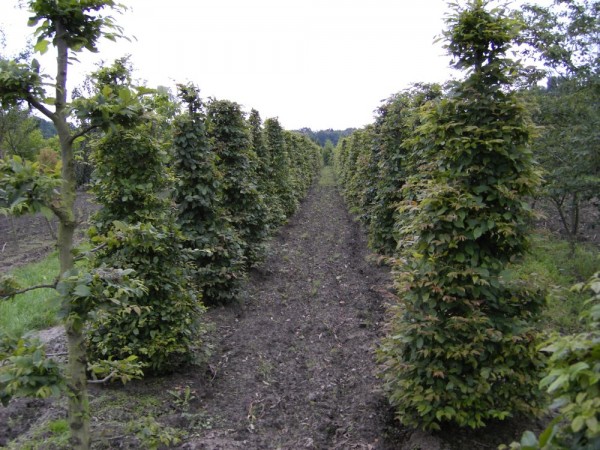
造型修剪在木本植物上有很长的传统,站内专门辟了一栏介绍能做到什么形状。最常用的材料是钝叶冬青和红豆杉,鹅耳枥、山毛榉等落叶树同样可以整枝;修好的植株种在盆里,摆出来也好看。这一栏给出四件成品,分别以鹅耳枥、山毛榉、一种钝叶冬青栽培品种和红豆杉为材,每件都能点开看细节。
学徒在这里学什么
苗圃常年招园艺学徒,专业方向是树木栽培。培训分四块:繁殖,包括播种、扦插和嫁接;容器生产,从最小的花盆一直做到能装下一株大树的大盆;露地生产,靠移栽把幼苗养成大规格的独株苗;发货,从接单到发运,包裹、零担和卡车都能走,可送欧洲各地。另外还要学病虫害防治、日常养护和机器操作。
发货方式与一批往来机构
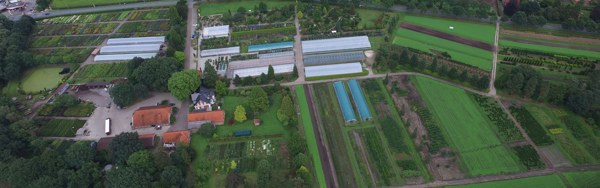
批发面向其他苗圃和花园中心,页面上提示可下载一份品种清单。供货可以整单配齐,也可以约时自提;送货交给货运公司,包装按需要选一次性或可回收的。零售端设在苗圃门口的展示园,连着直销区,价格表按现有规格列出;发货路线始终在卡车、货运和邮局包裹之间挑最省钱的一种。页脚标明苗圃是多个协会的会员,并挂上德国苗木协会的标志;链接页上还列着下萨克森农业学院的观赏植物基因库、德国杜鹃花学会、下萨克森州的花园公园网络等机构,另有一家专做杜鹃花野生种与伴生植物的独立店铺。
Wartime Halt and the Rebuild Afterwards
The nursery sits in the Lower Saxony town of Westerstede. Its business was interrupted in 1946: in April of that year the Allied military authorities ordered all nursery land to be cleared and turned over to arable farming and livestock, and the stock standing there was lost. The restrictions were lifted the following year and cultivation was rebuilt; in 1948 sales of woody plants stayed difficult, because other goods came first after the war. Further back, in 1906 the nursery gave up growing fruit trees and turned to hardy deciduous trees and conifers, with about eighteen hectares in cultivation, an assortment of a hundred and thirty-six varieties, and the first exports to Austria and Switzerland.
Twelve Groups in the Catalogue
The online catalogue is laid out in twelve groups: rhododendrons, heather plants, deciduous trees and shrubs, conifers, climbing plants, bamboo, hardy ferns, fruit trees, roses, perennials, ornamental grasses and shaped topiary. Counts are given group by group: 886 entries for deciduous trees and shrubs, 369 for conifers, 395 for rhododendrons and 161 for heather plants. Rhododendrons are split into six sections — 120 wild species, 124 hybrids, 49 Japanese azaleas, 44 yakushimanum, 49 deciduous azaleas and 9 williamsianum hybrids. Within the climbing plants, clematis hybrids account for 22 entries, clematis wild species for 16 and clematis viticella hybrids for 20. There is a separate alphabetical index as well, and a product search that filters by group first and by name afterwards; the price list sets out the sizes each plant was available in.
An Old Craft of Shaping Plants
Shaping woody plants has a long tradition, and the site gives it a section of its own. Japanese holly and yew are the materials best suited to it; deciduous trees such as hornbeam and beech can be shaped too, and a shaped plant in a pot makes a good display. Four finished examples are shown there: hornbeam, beech, a cultivar of Japanese holly and yew, each of which opens for detail.
What the Apprentices Learn
The nursery takes on gardening apprentices year after year, in the tree nursery trade. The training falls into four parts: propagation, covering sowing, cuttings and grafting; container production, from the smallest pot up to a large container that holds a specimen tree; field production, where young plants are lifted and shifted on until they become large specimen plants; and dispatch, from taking the order through to shipment by parcel, part-load or truck, with delivery across Europe. Plant protection, routine care and handling machinery are part of it as well.
Shipping and a Network of Contacts
Wholesale is aimed at other nurseries and garden centres, and the page points to a downloadable assortment list. Orders can be filled complete from one source or collected by arrangement; forwarding takes the consignment in disposable or reusable packaging as required. The retail side sits in the show garden at the entrance to the nursery, with an attached sales area, and the price list sets out the sizes available; outgoing plants always take the cheapest route between truck, forwarder and parcel post. The site footer records membership of several associations and carries the mark of the German nursery association; the links page lists bodies such as the ornamental plant gene bank of the Lower Saxony chamber of agriculture, the German Rhododendron Society and the garden parks network of Lower Saxony, along with a separate shop for rhododendron wild species and companion plants.
相关文章:
 德国 G. D. Böhlje 苗圃 – 主营杜鹃花以及常绿阔叶和针叶树
 德国 明斯特苗圃 Münster Baumschulen – 露地栽培铁线莲300多品种
 德国 Nielsen 苗圃 (Baumschule Nielsen) – 主营日本红枫与杜鹃花属
 德国 猛犸花园 Mammutgarten – 萨克森州苗圃与濒危树种
 德国 Ernst Stöckmann 杜鹃苗圃 – 专供杜鹃花特色苗圃
 新西兰 蓝色山脉苗圃 – 南岛西奥塔哥花园苗圃
 德国 Bruns 苗木出口公司 – 建成收集逾 1000 个杜鹃花品种的格里斯泰德杜鹃花植物园
 加拿大葡萄地苗圃 Vineland Nurseries – 主营矮生与稀有常绿植物、日本枫、杜鹃花
发表回复