

一九〇五年在这里开张的家族苗圃
胡本苗圃在德国南部的拉登堡,一九〇五年就在这块地开张,如今轮到家族第四代。站内自称「拉登堡老字号」,说四代人做的是同一件事:种苗、养苗,再把苗送到园子里去,苗子好不好靠的是手艺、经验和对植物的喜欢。
起步那会儿种的是菜。德国一家园艺博客二零一八年的记述里提到,二战结束后一段时间,苗圃给整个海德堡地区供菜;后来果树苗木的培育和嫁接成了主业,六十年代起种菜的位置让给了木本植物。
今天的苗圃在拉登堡城南,五号高速公路边上,离海德堡和曼海姆都不远。站内还留着一段年表般的说法:这一带是德国最晒、雨最少的地方之一,冬天能到零下十五度,夏天三十五度往上走。
八十公顷生产基地,和它的一套种植规矩
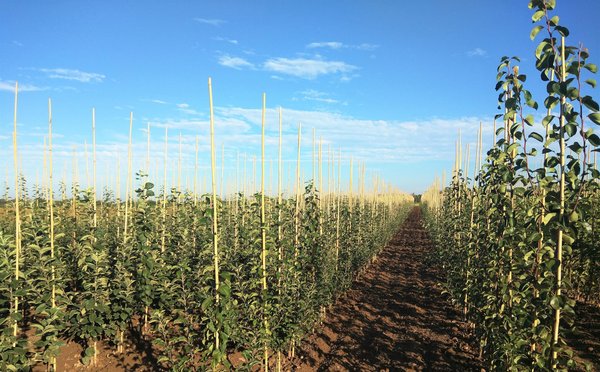
苗圃在拉登堡的生产面积约八十公顷。比面积更要紧的是位置:其中约八成落在水源保护区的范围内,受这个规定约束,氮肥要减着施,农药也要减着用。
所以他们走的是综合病虫害防治这条线:化学药剂要等到病虫害压力到了一定程度才动,能用机械解决的就先用机械,翻土、旋耕、覆盖、锄地都是常规动作。站内把这段写得很直白,说这是为了少伤土壤、地下水和这块地本身。
上面那段气候也解释了另一个选择。苗圃多年前就转做耐候品种,城市用树是重点方向;站内另有一页专门谈城市树木,说路边和广场上的树因为根系空间小、几乎接不到雨水,还要扛住更高的温度和更强的风,往往比林子里的同类活得短,街上很少有树能活过八十岁。
目录里到底有多少植物
在线目录按类别分组,并给出每一类的条目数:宿根 772 条、落叶乔灌木 682 条、果树 176 条、针叶树 84 条、藤本 75 条,此外还有浆果与野生果实、蜜源灌木、常绿植物,以及按阳光和水分分出的几个小类。把这些类别加起来是 2450 条,但像「适合干燥朝阳地块」「蜜源灌木」这类是交叉分类,同一株会被数进好几类,所以这个和并不是植物总数。
目录背后的清单实际列出 2103 条,其中状态为已发布、可以对外查到的是 1937 条;按德语常用属名去重是 567 个属,按拉丁学名去重是 453 个。目录页自称提供一百多年的植物经验。
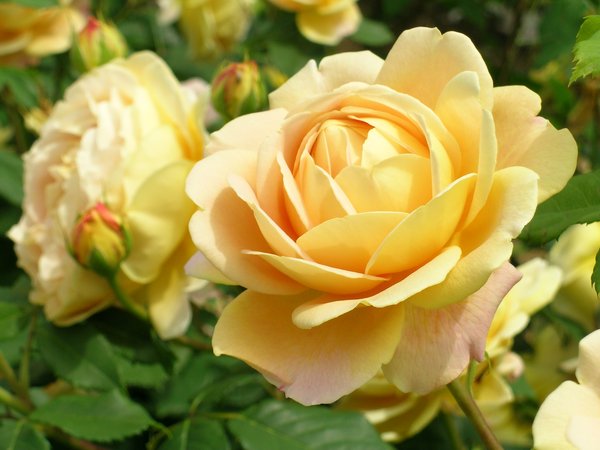
页面文字里的数字又是另一套口径:月季那页写的是约二百个品种,园艺中心现场摆出的月季也是二百余种;宿根温室那页写的是约四千个种与品种。三套数字互不相等,站方没有解释差额在哪里。
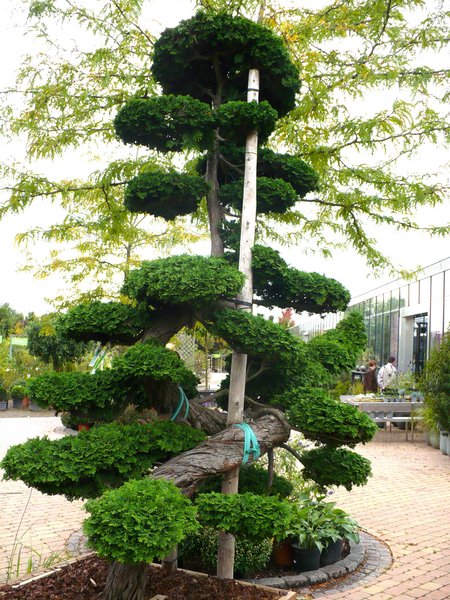
分类本身也能看出这家的偏好:本地树种、蜜源灌木、按光照与水分分的组合、专门给蜜蜂留食源的月季,以及做造型盆栽用的老枝条材料。
三处基地,一个家族
站上把三处基地并排列出:拉登堡的植物贸易公司、施泰斯林根的阿曼园艺公司,还有法国鲁法赫的吉辛格苗圃。法国那家的网站同样把另外两家列在自己的伙伴名单里。
家族之间的联系在别处也能对上。行业杂志报道,施泰斯林根的阿曼园艺由苏珊娜·胡本-罗斯瓦格和弟弟安德烈亚斯·胡本兄妹在第三代接手经营;拉登堡这边的两位负责人是尤利安·胡本和马克西米利安·罗斯瓦格。
三家各有分工。批发、目录报价、进货、发货、自提开票各有专人负责,客户从目录下单之后,到发货大厅按营业时间取货。目录还能直接装到手机主屏上,当成一个应用来用。
二〇二六年的变化:零售改成预约
苗圃服务私人客户的方式从二〇二六年四月起变了。露天销售园不再接受即兴选购,咨询和购买都要先约时间,由园艺规划师按立地条件、长势、用途一起挑苗。官方社交账号的简介里也写着,私人客户的来访和销售只接受预约。
过渡安排是一场三月的促销:三月四日至二十八日办「绿周」,部分商品最高五折,礼券可以用到三月底;从四月起,礼券也只能在预约咨询里使用。
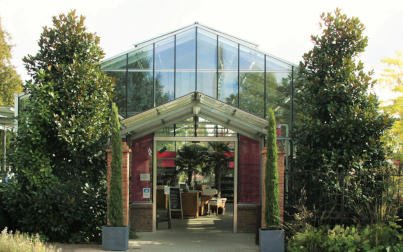
不受影响的是咖啡厅,照常开门。规划服务也有固定价目:园艺灵感 50 欧元,园艺愿景 150 欧元,园艺方案 400 欧元起,面积越大越贵;「田间选树」每小时 50 欧元,购物满 300 欧元这项免掉;还可以约人上门踏勘花园。
A family nursery that started here in 1905
Baumschule Huben stands on the same ground in Ladenburg, in southern Germany, where it opened in 1905; the family is now in its fourth generation. The site calls itself a Ladenburg institution: four generations of growing, training and selling young plants, with quality resting on craft, experience and a real liking for plants.
It began with vegetables. A German gardening blog that visited the nursery in 2018 noted that for a while after the Second World War it grew produce for the whole Heidelberg region, before the training and grafting of fruit trees became the real business; from the 1960s the vegetables gave way to woody plants.
Today the nursery lies south of Ladenburg, right by the A5 motorway and not far from Heidelberg or Mannheim. The site keeps a sort of chronicle: this is one of the sunniest and driest parts of Germany, with winter temperatures down to minus fifteen degrees and summer ones above thirty-five.
Eighty hectares of production and a set of rules
The production area in Ladenburg covers about eighty hectares. Where it sits matters more than how big it is: roughly eighty per cent of it lies inside a drinking-water protection area, which caps both nitrogen fertilisation and the use of plant protection products.
The answer is integrated plant management. Chemical sprays wait until a pest or disease has built up real pressure, and the ground is worked mechanically wherever that is possible – grubbing, cultivating, mulching and hoeing. The site puts it plainly: the aim is to spare the soil, the groundwater and the plot itself.
The climate explains another choice. The nursery turned to climate-resilient plants early, with city planting a particular focus; a separate page on the site looks at street trees and notes that trees on roads and squares, with little rooting room and hardly any rainwater, have to take higher temperatures and stronger wind, so they generally live shorter lives than their relations in woodland, and few street trees reach eighty.
How many plants the catalogue really holds
The online catalogue groups plants by category and prints a count for each: 772 herbaceous plants, 682 deciduous trees and shrubs, 176 fruit plants, 84 conifers and 75 climbers, plus categories for berries and wild fruit, bee-friendly shrubs, evergreens and several smaller groupings by light and moisture. Adding those counts gives 2450, but categories such as sunny, dry position or bee-friendly shrubs overlap, so one plant is counted more than once and that sum is not a plant total.
The list behind the catalogue holds 2103 entries, of which 1937 are published and visible; by German common name those work out to 567 genera, by botanical name 453. The catalogue page offers more than a hundred years of plant knowledge.
The written pages quote yet another set of numbers: around two hundred rose varieties in the garden centre, and about four thousand species and cultivars in the perennial nursery. The three sets do not match, and the nursery does not say why.
The categories still show what the place leans towards: native woody plants, shrubs that feed insects, combinations sorted by light and water, roses chosen to leave nectar for bees, and older material for training.
Three sites, one family
The site lists three locations side by side: Pflanzenhandel Huben in Ladenburg, Ammann Gartenkultur in Steißlingen, and Pépinières Gissinger in Rouffach in France. The French nursery lists the other two among its own partners.
The family connection shows up elsewhere too. A trade magazine reports that Ammann Gartenkultur is now run in its third generation by Susanne Huben-Rosswag and her brother Andreas Huben; on the Ladenburg side the two managing directors are Julian Huben and Maximilian Rosswag.
Each site has its own part in the work. Selling, quoting, buying, shipping and pick-up with invoicing are handled by separate people, and once an order is placed through the catalogue it can be collected from the dispatch hall during opening hours. The catalogue also installs on a phone’s home screen like an app.
What changed in 2026: retail by appointment
The way the nursery serves private customers changed in April 2026. The open sales garden no longer takes walk-in shoppers; advice and buying now happen by appointment, with the garden planners choosing plants against the site, the growth habit and the purpose. The official social account says as much in its profile: visits and sales for private customers are by appointment only.
The transition was marked by a sale in March: Grüne Wochen from 4 to 28 March, up to fifty per cent off selected goods, with vouchers valid to the end of March and, from April, usable only within an appointment.
The cafe is unaffected and opens as usual. Planning is priced too: a compact consultation at fifty euros, an extended one with a planting sketch at a hundred and fifty, and a full plan from four hundred euros upwards, rising with the size of the area. A field appointment for choosing a tree costs fifty euros an hour and comes free with a purchase of three hundred euros or more; a garden survey can also be booked.
相关文章:
 德国 桑德曼苗圃和玫瑰学校 Baumschule Sandmann – 上巴伐利亚 500 余种月季
 德国 Wüstemeyer 苗圃 Baumschule Wüstemeyer – 威斯特法伦开放花园
 德国 Böklund 玫瑰与树木苗圃 Baumschule Clausen – 提供从选苗到养护的全套服务
 加拿大 鹰湖苗圃 Eagle Lake Nurseries – 加拿大草原耐寒苗圃批发商
 瑞士 艾森胡特苗圃与植物园 Eisenhut Vivaio Baumschule – 提契诺州 450 余种玉兰
 德国 Nielsen 苗圃 (Baumschule Nielsen) – 主营日本红枫与杜鹃花属
 德国 海尔曼斯霍夫树木苗圃 Baumschule Heilmannshof – 北威州 70 种耐寒竹
 加拿大 Canning Perennials 苗圃 – 安大略省家族多年生植物园
发表回复