

特伦斯村的一座私家花园
特伦斯花园在丹麦菲英岛南端的措辛厄岛上,坐落在特伦斯村。花园设计师海勒·特罗尔森 2012 年买下这处房产,整座花园由她设计并营建,占地三千二百平方米,其中约二百平方米是厨房菜园。
她自己住的房子是 1750 年的半木结构茅草屋,2006 年加建了一侧木结构厢房。村子里的老屋大多是当年为瓦尔德马城堡的佃农所建的,住在这里的人多在船上讨生活,造船匠、船长和水手南下航行时把带回的种子和苗木种在园子里,于是外来植物和果树成了这一带花园的老传统。
老菜园与院落的格局
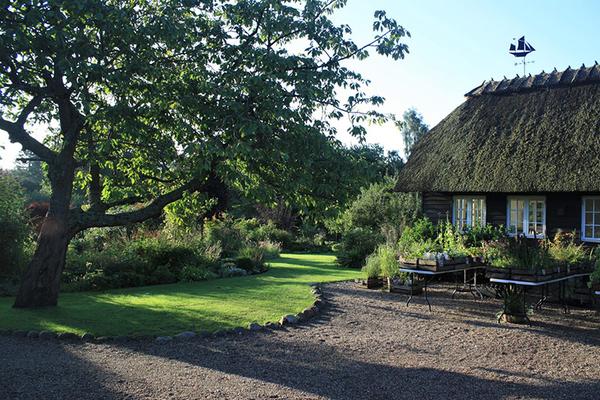
园子分成几个性格不同的小区。靠屋前的一块是十九世纪式的老菜园,如今与邻居共享,各人种各人爱种的作物:甘蓝、亚麻、马铃薯和各式浆果灌木,番茄和红醋栗攀在天然篱笆上。主屋西侧种着绣球,园子其余部分用篱笆围住,只留前院让鹿进出。
碎石铺就的院落是老屋的入口,一棵老桑树立在门前标记着园子的起点,开放日时这里摆临时植物摊。屋旁是低矮黄杨篱围出的方床,床里种蔓生玫瑰和薰衣草,正对屋子的东墙种着高杆月季。
多年生、玫瑰与南面的方形园
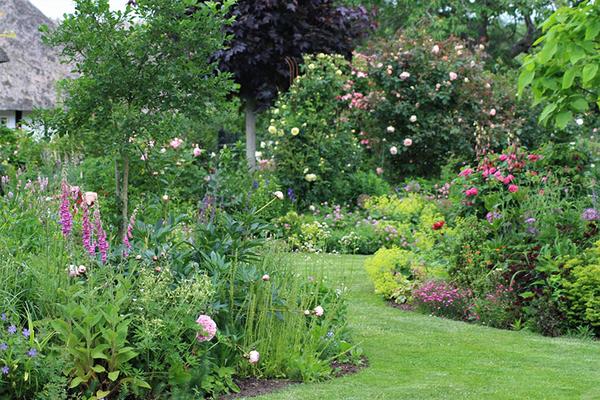
多年生与玫瑰园里的花床是有机的形状,看不全整个园子,只能顺着几处标记出来的线索走。向阳处是一块深色花境,种深紫红的景天、深色叶的升麻和堇菜;背阴处一块冷色花境,以雾蓝的宿根花和蔷薇为主;两者之间过渡到一片以白色为主的花境。中央的大玫瑰床种着攀在架上的英国玫瑰,一株挺拔的枫树在中间作焦点。
2016 年秋天,园子最暗的角落辟出林下花境,那株倒伏后长满苔藓的老樱桃树干留在原地,给昆虫和两栖动物留了住处。南面是方正的花园,2018 年干旱之后从月季和香草园改成耐旱的多年生与香草,地上种下观赏用的苹果树,等树冠长成好遮阴。菜园后面是那间不大的温室,屋里试种辣椒、番茄、黄瓜和甜瓜;再往里是野趣的一角,一百年的老苹果树、养鸡棚和堆肥区都在那里。
同一名字下的造园业务
特伦斯花园既是这座园子的名字,也是海勒·特罗尔森的设计事务所名字。私人业主可以约一场灵感参观,一路走一路口头商量怎么改;也可以约一场三小时的参观,当场画出草图。往下还有按比例绘制的花园草图,以及包含地被、花篱、菜园、廊架与座位的完整规划。企业客户请她做外围空间的整体规划,她也可以负责项目管理,联系施工方跟进落实。
公共机构找她做的是感官花园,让看、听、闻、尝、触都有东西可感觉,冷热、明暗、软硬、酸甜形成对比。她本人受过社会教育的训练并有领导力硕士学历,因此懂得教育机构怎么运作,能和园长、教师与治疗师商量着把需求落到种植上;她做过儿童机构的感官庭院、图书馆旁的学习花园,也做过临终关怀机构的庭院。
开放日、工作坊与两本书
花园每年有两个周末对外开放,2027 年定在 6 月 11 至 13 日和 8 月 20 至 22 日。门票 50 丹麦克朗,孩子免费,园里供应咖啡和蛋糕,院落里摆植物摊,开放日还出售经过挑选的多年生植物。附近村里有民宿、露营地和野营木屋可供选择。
丹麦园艺协会的会刊曾为这座园子做过专篇介绍,她也为这家杂志写稿。活动不止开放日:花园设计工作坊每期收 12 人,上课 4 小时,用她自己参与开发的应用配植物清单;她还在各地做讲座,题目从花境设计和配色,到菜园轮作、温室经营和以可食植物为主的花园。著书方面,与记者卡伦·赛伯格合作的《特伦斯花园》记录了这座园子从春到冬的样子,摄影师斯图尔特·麦金泰尔拍了两百多张照片;新出的《海边的花园》讲的是海岸气候下怎么造园。
A private garden in the village of Troense
Troensehaven sits in the village of Troense on Tåsinge, an island off the southern tip of Funen in Denmark. Garden designer Helle Troelsen bought the property in 2012 and has designed and built the whole garden since. It covers 3,200 square metres, of which roughly 200 square metres is kitchen garden.
The house she lives in is a half-timbered thatched cottage from 1750, with a timber extension added in 2006. Most of the old houses in the village were built as timber-framed cottages for tenant farmers under Valdemars Slot in the 1700s. The people who lived here worked at sea, and shipbuilders, captains and sailors brought seeds and cuttings home from voyages to the south, so exotic plants and fruit trees became a long-standing tradition in the gardens of the street.
The old kitchen garden and the courtyard
The garden is divided into rooms with quite different characters. Along the front of the house lies a kitchen garden in the manner of the 1800s, now shared with the neighbours, each of them growing what interests them: cabbages, flax, potatoes and berry bushes, with outdoor tomatoes and redcurrants trained up on natural hedges. Hydrangeas line the west side of the main house, and most of the garden is fenced off, leaving only the front yard open to deer.
The courtyard is gravel, and an old mulberry tree marks the entrance to the garden; on open days a pop-up plant shop sets up here. Low box hedges edge two square beds of ground-cover roses and lavender by the entrance, and tall standard roses stand against the east wall of the house.
Perennials, roses and the square garden to the south
The beds of the perennial and rose garden are organically shaped, and the whole garden cannot be seen at once; a few marked lines lead the visitor around. One bed in the sun is dark, planted with deep purple sedums, dark-leaved actea and violas. Opposite is a cool, shady bed of misty blue perennials and roses, and between them runs a border of whites. The large rose bed in the middle is dominated by English roses trained on trellises, with a single maple as the focal point.
In autumn 2016 the darkest corner of the flower garden was turned into a woodland border; the fallen trunk of an old cherry, covered in moss, was left where it lay as a home for insects and amphibians. The square garden to the south was a rose and herb garden until the drought of 2018 forced a change, and now holds drought-tolerant perennials and herbs, with apple trees planted for future shade. Behind the kitchen garden stands a small greenhouse where chillies, tomatoes, cucumbers and melons are tried out, and beyond that lies the wilder end of the garden, with hundred-year-old apple trees, a hen house and a compost area.
A design practice under the same name
Troensehaven is both the name of the garden and the name of Helle Troelsen’s design practice. Private owners can book an inspiration visit, an hour and a half of walking and talking about changes, or a three-hour visit that produces a sketch on site. Further along there is a scaled garden drawing and a full garden plan with beds, hedges, a kitchen garden, pergolas and seating. Companies ask her to plan their outdoor space, and she can also run the project, bringing in the landscape contractor and other craftspeople.
Public institutions come to her for sensory gardens, where sight, sound, smell, taste and touch all have something to work on, and warmth and cool, light and shade, soft and hard, sharp and sweet are set against each other. She trained as a social educator and holds a master’s degree in leadership, so she knows how institutions work and can work with head teachers, therapists and other staff on what to plant. She has designed a sensory garden for a children’s centre, a learning garden beside a library, and a garden for a hospice.
Open days, workshops and two books
The garden opens to the public two weekends a year; in 2027 the dates are 11 to 13 June and 20 to 22 August. Admission is 50 Danish kroner and children are free. Coffee and cake are served, the courtyard turns into a plant shop, and selected perennials from the garden are for sale. There are guesthouses, campsites and simple shelters in the village for those who make a longer trip.
The magazine of the Danish Horticultural Society has devoted a long article to the garden, and she writes for that magazine herself. There is more than open days: the garden design workshop takes twelve people for four hours and uses an app she helped develop to build the plant list. She gives talks around the country as well, on bed design and colour, on rotation in the kitchen garden, on getting the most out of a greenhouse, and on gardens planted mainly with edible plants. Two books have appeared: one about this garden through the year, written with the journalist Karen Syberg and photographed by Stuart McIntyre over two hundred pictures, and a newer one on making gardens in coastal climates.
相关文章:
 法国 羽毛花园 LE JARDIN PLUME – 以宿根花草与观赏草为主角的私家花园
 英国 伍德福尔花园 Woodfall Gardens – 百万砖墙的 18 世纪围墙花园
 英国 卡利花园 Cally Garden – 围墙内庇护着 5000 余种稀有耐寒植物
 丹麦 Lille Malunds Have 花园 – 欧洲日德兰中部典型的英式家庭花园
 丹麦 日本庭园 De Japanske Haver – 从京都带回日本的造园师
 英国 春天到达苗圃 Spring Reach Nursery – 种苗生产与销售
 丹麦 佩德森夫人花园 Fru Pedersens Have – 一万多平方米的英式乡村花园
 苏格兰 卡罗赛德花园 Carolside Gardens – 玫瑰名园苏格兰最浪漫的花园之一
发表回复