

从面包房学徒到大丽花生意
苗圃的创办人弗兰斯·斯图姆生于 1954 年。15 岁那年他在米德尔堡一家面包房当学徒,周六收工回家路上经过一家花店,总要给母亲买上一束花。祖父让他这些花干脆自己种,还把自家吃不完的块根给了他。块根种在屋后的菜园里,夏天剪下来插在母亲的花瓶中,省下的工钱在周六晚上喝上一杯啤酒。按他自己的说法,他跟大丽花的关系就是这样开始的。
后来他在斯海尔托亨博斯的布兰班特展馆逛花园展,一次带回二三十个品种;又通过邮件认识乌得勒支的花艺师卢克·鲍曼,从他那里拿到扦插苗和不要的母株。他把这称作自己「大丽花世界」的开端。乌得勒支的大丽花协会正缺人手,他随即入会,参加了协会办的评比,起初拿的多是六七分;后来他把分数稳定在九分以上,2007 年第一次拿下全国冠军时手里只有十株苗,评委问这花他有几株,他说十株,没人信。2008 年他更是一口气拿下 9.4、9.3、9.2 三个成绩,在全国大赛里占了前三名,其中一株以他们女儿的名字命名。

把全国大丽花大赛办到泽兰
2009 年,全国大丽花栽培大赛第一次来到泽兰举办,赛期是 9 月 4 号到 6 号,地点在 Heinkenszand 村。荷兰大丽花协会年初派人来勘察场地,看中了村里一家花店的院子;斯图姆是这届赛事的组织者。开幕那天由皇家专员卡拉·佩伊斯主持,她的名字后来成了一个品种的名字。到 4 月底,预算已经收进三分之二,5 月初他还在米德尔堡修道院旁的省立庭园里种下块根,算作对赞助方的回报。那一届他们还拿了第一和第三,第一那株的评委评语是去侧芽做得漂亮。
那之后家里遇上难事,他自己的健康也受了影响,大丽花一度退到后面,协会理事的职务也只能辞掉。慢慢熬过那几年,花才又回到生活里。2015 年,他在幼苗组又拿到第一和第三。
开放日、参观和一群帮手
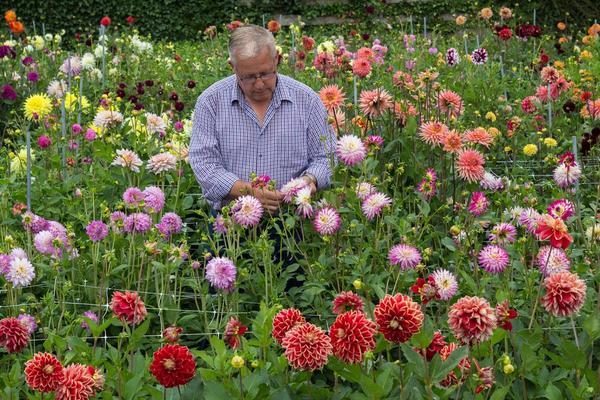
苗圃在泽兰省的 Heinkenszand 村。展示园每年 8 月最后一个周末开放,从上午 10 点到下午 5 点;花开的那阵子,每周六上午 10 点左右到中午也开门,不收门票。来的人可以自己在一片片畦里挑,看中的花当场剪走;10 月起可以直接从园里买切花,不过要提前约好。团体参观同样要预约,每人 4 欧元,团费不低于 20 欧元,结束之后可以在他们家喝杯茶吃块点心。给协会做的讲座站上还留着题目,从扦插苗讲到切花,约一个半小时,只是页面顶上写明已经停办。
一个季节下来大约有 600 位访客。2010 年起,他们有一支固定的帮手队伍,种植和起收都靠这些志愿者;社交账号上的大丽花群组也攒到近 200 名成员,他们自己的页面有 550 多个关注者,还帮着打理荷兰大丽花协会的页面,那边有 60 多名成员。
块根商店里的十六个自家名字
2021 年,管理上的杂事越积越多,他们决定开一家网店 dahliawebshop.nl,块根只在自家网店订,每年 11 月开卖。店里现有 146 件商品,分在 18 个类目下,其中两个类目暂时空着;各类目的件数加起来是 151,比商品总数多,是因为有几件商品同时归在两个类目里。数量最多的几类是小型装饰型 50 件、球型 36 件、餐盘型装饰 13 件、中型装饰 13 件、睡莲型 12 件、半仙人掌 8 件、绒球型 5 件、盆栽与花坛型 3 件。单价多在 3.50 到 3.95 欧元之间,起订金额 27.50 欧元。霜期过去之后块根才发出,斯堪的纳维亚的订单还要多等一次天气判断,增值税按买家所在国家算,旧站上的入口列了八种语言。
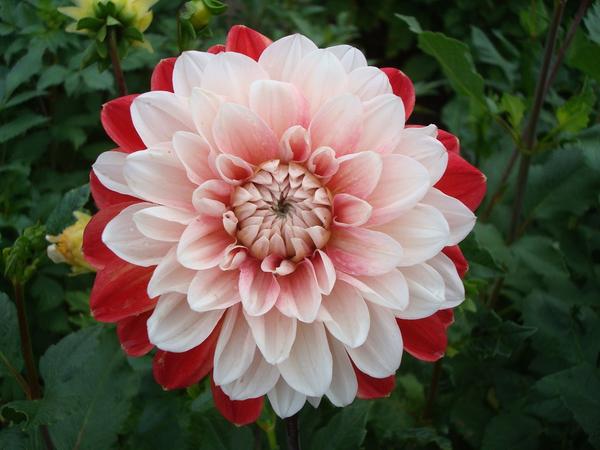
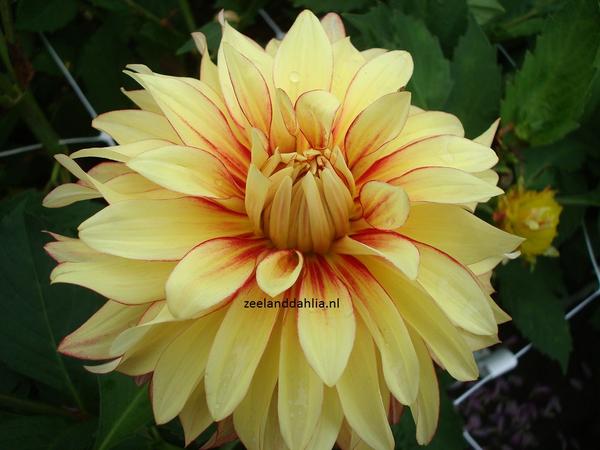
有一件事在目录里很显眼:16 件商品的名字里带着家族姓氏,那是他们自己选育出来的品种。2019 年是家里收集的巅峰,站上写的是超过 700 个品种;同一段里还有一个一万以上的数字,跟前面的说法对不上,站上没有解释差在哪里。
从一月到十二月的苗圃活计
一月查块根,挑出坏的和受潮的,怕放久了失水就翻个身;二月挑出要扦插的母株,插条先种在花盆里,盆土五份沙一份土,过了 5 月中旬再下地;三月把过大的块根分开,每一块留一个芽眼,切开后两周内下地就不会霉;四月挂牌栽种,他自己的经验是这个月最好,怕蛞蝓的可以先装进合适的花盆里养着,等根扎稳了再移出去;五月插条下地,注意防霜;六月除草,氮肥少放,氮多了只长叶子不结花球;七月继续摘侧芽;8 月至 10 月采花插瓶,停止施肥,在离地半米处剪断,让块根开始进储藏;11 月霜降之前把最后的块根起出来;12 月再查一遍,把霉点和腐烂的地方剜掉。存放要干燥避光,剪下的茎倒着放,装在敞口箱里,5 到 10 度之间为宜,每月检查一次。
育种也在同步做。秋天收下的种子要先把壳和籽分开,播在小盆里;上千粒种子里大约百分之五能长出好苗,一年也就指望挑出两三个新品种,苗子要到 9 月才见花。写这份工作笔记的时候他说,没有哪一年是一样的,每一年都不一样。
A baker’s apprentice who ended up with dahlias
The nursery was started by Frans H. Sturm, born in 1954. At fifteen he worked Saturdays in a bakery in Middelburg and on the way home would always buy his mother a bunch of flowers. His grandfather told him to grow them himself and handed over tubers he had no use for. They went into the vegetable plot behind the house; in summer he cut the flowers for his mother and spent the money saved on a beer on Saturday evening. That, he says, is how his love affair with dahlias began.
Later he came across a garden fair in the Brabanthallen halls at ‘s-Hertogenbosch and brought home twenty to thirty varieties at a time. Through a website he got in touch with Luuk Bouman in Utrecht, who made flower arrangements and was willing to part with his cuttings and mother plants; he calls that the real beginning of the big dahlia world. The Utrecht dahlia association needed members, so he joined and took part in its shows, scoring mostly sixes and sevens at first; later he pulled out nines regularly, and in 2008 he took first, second and third place at the national championship with scores of 9.4, 9.3 and 9.2, one of them named after their daughter.
Bringing the national championship to Zeeland
In 2009 the Dutch national dahlia growing championship was held in Zeeland for the first time, at Heinkenszand, from 4 to 6 September. A delegation of the Dutch Dahlia Association came in January to look over the site and settled on the yard of a flower shop in the village; Sturm was the organiser of the championship. The opening was done by the Queen’s Commissioner Carla Peijs, and a dahlia was later named after her. By the end of April two thirds of the budget was in, and in early May he planted tubers in the province’s Statentuin by the abbey at Middelburg as a token of thanks to the sponsors. That year they also took first and third place, the jury praising the way the side shoots had been removed.
Hard times followed for the family, and his own health was affected as well; dahlias slipped into the background and he had to give up his seat on the association board. Slowly the family won the struggle back, and the flowers returned to daily life. When he took his first national title in 2007 he had only ten plants of the variety, and nobody believed him when he said so. In 2015 he took first and third place again, this time in the seedling class.
Open days, visits and a helping crowd
The nursery sits in the province of Zeeland. The show garden opens on the last weekend of August from ten in the morning until five in the afternoon, and while the flowers are in bloom it is open on Saturday mornings from around ten until noon, free of charge. Visitors can pick their way through the beds and cut out what they fancy; from October cut flowers are sold straight from the garden, by appointment. Group visits need booking as well, four euro a person with a minimum of twenty euro, and afterwards there is coffee or tea with something to eat at their house. The site still keeps the outline of the lecture they give to associations, from cutting to show flower, about an hour and a half, though a note at the top says they have stopped giving it.
Around six hundred people come in a season. Since 2010 a standing team of volunteers helps with planting and lifting the tubers. The dahlia group on their social media account has grown to nearly two hundred members, their own page has more than five hundred and fifty followers, and they also look after the page of the Dutch Dahlia Association, which has over sixty members.
Sixteen family names in the tuber shop
In 2021, with the paperwork piling up, they decided to open a webshop, and tubers are ordered only there, with the season opening in November. It now lists 146 items in 18 categories, two of them still empty; the category counts add up to 151 because a few items sit in two categories at once. The largest groups are small decorative at 50, ball at 36, dinnerplate decorative at 13, medium decorative at 13, waterlily at 12, semi cactus at 8, pompom at 5, and pot and bedding dahlias at 3. Prices run mostly between 3.50 and 3.95 euro, and the minimum order is 27.50 euro. Shipping starts once the frost has passed, orders for Scandinavia wait on a weather check in March, VAT is charged at the rate of the buyer’s own country, and the old site’s front page lists eight languages.
One thing stands out in the list: sixteen items carry the family name, and those are the varieties they have bred themselves. 2019 was the high point of the collection, with more than 700 varieties; the same passage also gives a figure of over ten thousand, which does not match the first number, and the site does not explain the difference.
The nursery year, month by month
In January the tubers are checked over, the bad and the damp ones sorted out, and the crate turned over so they do not dry out too fast; in February mother tubers for cuttings are chosen, cuttings are started in pots with five parts sand to one part soil and go out after the middle of May; in March the oversized tubers are split, each piece keeping one eye, and planted within a fortnight so that rot does not get in; in April they are labelled and planted, and their own advice is that April is best, with a snug pot for anyone worried about slugs; in May the cuttings go in and need protection from frost; in June the beds are weeded and given little nitrogen, since too much makes leaves instead of flowers and tubers; in July the side shoots are removed; from August to October flowers are cut and vases filled, feeding stops, and stems are cut back half a metre above the ground so the tubers can start their winter storage; in November the last tubers are lifted before the frost; in December they are checked again and any mould or rot cut out. Storage is dry and out of the sun, stems upside down in open crates, five to ten degrees is best, and a monthly look is enough.
Breeding runs alongside. Seed collected in autumn has to be separated from the chaff and sown in small trays; of a thousand seeds perhaps five per cent come out worth keeping, which means two or three new varieties a year at best, and the seedlings only flower in September. Writing up this year of work he notes that no two years are the same and that he is still learning every season.
相关文章:
 美国 Connell 大丽花 Connell’s Dahlias – 华盛顿州塔科马家族三代苗圃
 美国 老屋大丽花 Old House Dahlias – 俄勒冈州小型家庭经营大丽花农场
 荷兰 赫尔林斯大丽花 Geerlings Dahlia – 英国荣誉会员创办的苗圃
 美国 Big Dahlias 大丽花苗圃 – 华盛顿州小型家族大丽花球根专营苗圃
 荷兰 大丽花协会 Nederlandse Dahlia Vereniging – 在库肯霍夫办全国花展的团体
 英国 戈特大丽花苗圃 JRG Dahlias – 坎布里亚郡50余年育种与参展
 美国 德尔大丽花 Dahlia Del – 明尼苏达小型个人大丽花苗圃
 美国 朱莉大丽花 Dahlias by Julie – 小型家庭式大丽花球根专营苗圃
发表回复