

英格兰西北部的一间大丽花苗圃
在英格兰西北部的坎布里亚郡,有一处只做一样生意的苗圃,站名就是戈特大丽花,经营者是杰克·戈特。站方自述已经种了大丽花 52 年,也参加了同样多的年头花展,如今经营的地块是 12 米乘 45 米。苗圃的主打产出是大丽花块茎:春天扦插的枝条先养成小个的块茎,等到第二年才拿出去卖。想在花期到园子里看花,得先联系站方确认那天是否开门。
站方把品种分成十一个类型页,逐条列出在售条目,每条都标着花色和株高,株高同时给英尺和厘米两种单位,方便对照自家的花坛。最矮的矮生型株高 8 英寸,原生种里最高的一株能长到 14 英尺。同一个页面里还写着花期、种植建议和订购方式,看完一条就知道这株适合摆在哪儿。
站方的科普文章从块茎的来历讲起:十八世纪末块茎从墨西哥经西班牙人运到马德里,最初被当成蔬菜而不是观赏花,直到 1815 年前后比利时育出第一批重瓣品种,园艺界才把注意力转向花朵本身。同一篇文章里也讲了土壤准备、栽种深度、存放和浇水这些基本功。站方另外单独写了取插条、留种子和记录花色突变的做法,都是自己多年摸索出来的经验。
十一个类型与一百五十五条目录条目
逐页数下来,菊型 7 条、装饰型 10 条、球型 7 条、星型 6 条、绒球型 6 条、睡莲型 28 条、深叶型 19 条、领饰型 39 条、仙人掌型 17 条、矮生型 14 条、原种 2 条,合计 155 条。这 155 条是站内目录页面上实际列出的条目数,属于按页面条目数统计的口径;站主在自己的社交账号简介里另称手上超过 300 个大丽花类型、并且深叶大丽花收藏最多,两个数字不是同一个口径,站方没有解释差额在哪。
条目最密的是领饰型和睡莲型。前者的花心是一块敞开的黄色花盘,外圈是单层花瓣,最招蜜蜂;后者花形像睡莲,一层层花瓣向内卷,是花展里做大型展台和花篮的常用材料。深叶型是这家的看家类别,叶片颜色深到近黑,配上红、橙、黄、紫各色花,十九个条目里矮的到 15 英寸、高的到 4 英尺,矮种不用搭支架就能直接种进花坛。
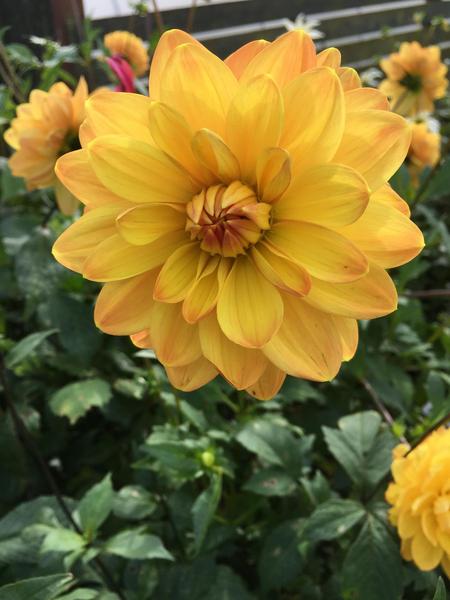
自育品种与花色突变的保留
除了种和卖,站方也自己出品种。自推的一个深叶系列有红、橙、紫、丁香紫四个花色,另外还有一个单瓣的深叶品种是站方自己引进的。站方在自己的种植手记里提到,卖得最好的一款是红黄双色花的深叶品种;被问到时会直接说是自己种的,没有绕开。
花色突变的保留是另一条路子。站方发现某个枝条上的花色跑偏后,会在变色部位的叶节处取插条,等插条整个冬天生根、长成小个的块茎,第二年再下地试种。有一次一个橙色品种旁边长出粉色变体,站方当年取了 6 根插条,第二年 4 根保持了粉色、另外 2 根变回橙色,保住彩变的那几株后来才积攒到能卖的量。站方说四十年里这样保下来的变色品种大概 5 个,这个数字不大,但每一个都要靠时间和位置去试。
留种子是第三条路。四月一日把种子播进苗盘,七月底开花,花盘是敞开的,蜜蜂在花盘之间来回传粉,种子因此不会跟母本完全一样。想挑出好苗,就得等它开完花再挑,挑中的那株留下块茎来年再种。站方把这条写得很直白:留种子不能保证开出跟原来一样的花,这正是新品种来的方式。
从催芽到起挖的一年
催芽用浅口的塑料箱,箱底铺堆肥并扎好排水孔,块茎摆在上面再覆一层堆肥,土温保持 20 摄氏度上下,放在明亮通风的地方,一周左右就见芽。为了早点拿到插条,站方在日光灯下给种苗补光,每天下午 4 点照到午夜。嫩梢长到 3 到 4 英寸高时剪下来,剪口落在叶节下方,去掉底下两片叶,插进一半堆肥配一半粗砂的介质里,上面罩一层育苗箱,20 摄氏度左右,两三周生根,再分到 4 英寸见方的花盆里单独养。
5 月底之前把苗搬到避风处练苗,6 月上旬下地定植,下地前把地翻两遍,掺足腐熟堆肥,一袋 25 公斤的过磷酸钙撒在 12 米乘 45 米的地块上。定植时挖 5 到 6 英寸深的穴,块茎芽眼朝上,穴边先插好支撑杆,免得后补时扎到块茎。秋天把块茎起挖,存进低温、避光、湿度高的地方,每周检查一次有没有腐烂。园子里对付蚜虫和蛞蝓是最费心的一环,站方在多处提到要常备杀虫剂和专门对付蛞蝓的药剂。
盆养是另一套打法。矮生型的株高多在 8 到 15 英寸,容器里种也开花;站方还写过把品种种在吊篮里当中心株的经验。种在盆或槽里要注意排水,先用多用途堆肥兑上粗砂垫底,块茎覆土后浇透水,放进温室或暖房,等霜期过去再搬到外面。
展台成绩、下单方式与蜂友
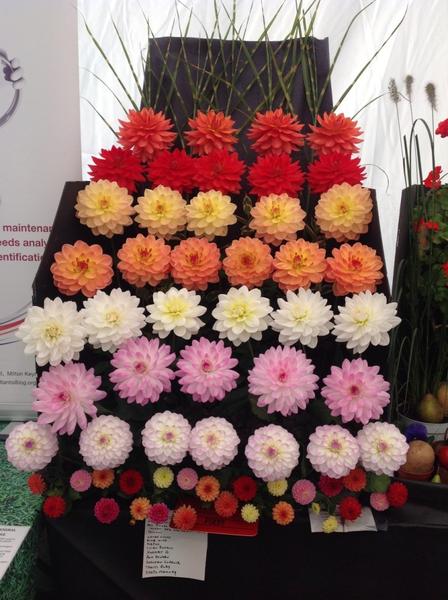
站方把历年的获奖展台整理成图册:2015 年马尔文秋季展上的获奖展台,2011 年马尔文秋季展的水莲型展台,2011 年谢普顿马莱特全国展的大花篮和同年的小花篮,2011 年苏格兰全国展的小花篮,2011 年南波特花卉展的仙人掌、睡莲与小型绒球组合,2010 年威尔士全国展的花篮与碗类,2010 年哈罗盖特展的碗类,以及 2009 年马尔文展上的方形大型展台。2016 年英国广播公司的园艺世界节目第六集来这里拍过大丽花。
下单走站点的订单表单,可以先索取价目表,再填写想要的品种和数量,站方回邮件告知价格与配送方式。想参加大丽花协会的,站方也建议加入本地或全国的协会,每年能拿到两期通讯,上面有各地获奖品种的资料。站方的园艺文章里提到过已故全国大丽花协会主席推荐的施肥做法,也提到过堆肥在黏土地块里的用量建议。
2015 年马尔文秋季花展
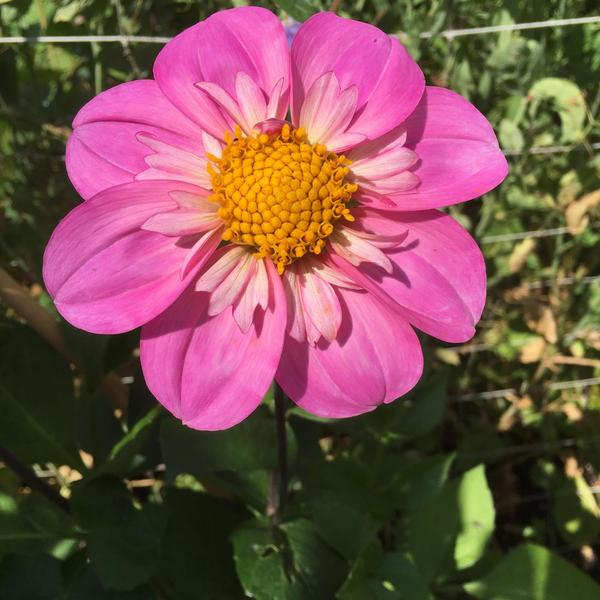
站方也写传粉昆虫的事。领饰型大丽花中央那块敞开的黄花盘很招蜂,2022 年在坎布里亚郡西洛斯绿地做的一个花园里,这类花从夏天连续开了三个月,先后招来熊蜂、蜜蜂、蝴蝶、食蚜蝇和银夜蛾。站方由此提到自己另一处做法:开放花心的类型对蜂群友好,种在园子里不只好看,还能给传粉昆虫添一把食粮。
A Dahlia Nursery in North West England
In the north-west of England, in the county of Cumbria, there is a nursery that grows one thing and one thing only. It is called JRG Dahlias, it is run by Jack Gott, and it is based in Milnthorpe. The site says it has been growing and showing dahlias for 52 years and that the plot it works now measures 12 metres by 45 metres. Its main output is dahlia tubers: cuttings taken in spring are grown on into small tubers and sold the following year. Anyone wanting to visit the dahlias in flower is asked to get in touch first to check whether they are open that day.
Varieties are sorted into eleven type pages, following the way the National Dahlia Society groups them. Every entry lists the colour, the height in both feet and centimetres, a note on flowering and growing, and how to order. Heights run from 8 inches for the smallest patio types up to 14 feet for the tallest species dahlia. A separate growing guide explains where the plant came from: tubers reached Madrid from Mexico with Spanish settlers at the end of the eighteenth century and were treated as a vegetable until heavy double blooms bred in Belgium around 1815 turned attention to the flowers. Further pages cover starting tubers, taking cuttings, saving seed and keeping colour sports.
Eleven Types and One Hundred and Fifty-Five Entries
Counting the pages, the catalogue lists 7 anemone, 10 decorative, 7 ball, 6 star, 6 pompon, 28 waterlily, 19 dark leaf, 39 collerette, 17 cactus, 14 patio and 2 species dahlias, 155 entries in all. That 155 is the number of entries actually shown on the pages, counted by catalogue entry; the owner writes on a social media profile that he holds more than 300 dahlia types and the largest collection of dark leaf dahlias, so the two numbers are not the same measure and the site does not explain the difference.
Collerette and waterlily dahlias are the most heavily represented. A collerette has an open yellow disc in the centre ringed by a single row of petals, and bees like it; a waterlily dahlia has petals curling inwards like the flower it is named after, which makes it a standard choice for large show exhibits and baskets. Dark leaf types are the speciality here, with near-black foliage carrying red, orange, yellow and purple flowers, from 15 inches to 4 feet tall, the shortest needing no staking.
Varieties Raised Here and Sports Kept Alive
Besides growing and selling, the nursery raises its own dahlias. One dark leaf series it introduces comes in red, orange, purple and lilac, and there is also a single dark leaf variety the site says it introduced itself. In his own growing notes the owner mentions that the best seller of the year was a dark leaf dahlia with red and yellow flowers, and answers directly when asked whether he grows it himself.
Keeping a colour sport alive is the second way new stock appears. When a shoot throws a flower of a different colour, cuttings are taken at a leaf joint on the changed part, rooted over winter into small tubers, and planted out the following year to see whether the colour holds. In one case an orange variety sported pink beside it; six cuttings were taken and rooted, and the next year four kept the pink while two reverted to orange, so the sport had to be built up slowly before it could be sold. The owner counts roughly five sports kept over about forty years, few in number, but each one cost time and space to test.
Saving seed is the third route. Seed is sown in trays on the first of April and flowers by the end of July; the open flower discs let bees carry pollen from plant to plant, so seed does not come true to its parent. Good seedlings are selected only once they have flowered, and the chosen plant is kept as a tuber for the following year. The site puts it plainly: seed saved from a dahlia will not come true to the flower it came from, and that is how new types are found.
The Year from Chitting to Lifting
Tubers are chitted in shallow plastic boxes, the base lined with compost and drainage holes punched in the bottom, the tubers laid on top and covered again with the crown just showing, kept at around 20 degrees Celsius in a bright, airy place. Shoots appear within a week or so. To get cuttings early, the plants are given extra light under fluorescent tubes, switched on from four in the afternoon until midnight. When a shoot reaches 3 to 4 inches it is cut just below a leaf joint, the lowest leaves removed, and the cutting set into a mix of half compost and half sharp grit under a propagator at 20 degrees Celsius. Roots form in two to three weeks, after which each is potted on individually into 4 inch square pots.
Plants are hardened off in a sheltered place before the end of May and planted out in the first week of June. The ground is rotavated twice and given plenty of rotted manure; a 25 kg bag of superphosphate is spread over the 12 metre by 45 metre plot. Holes are dug 5 to 6 inches deep, the tuber laid on its side with the eye upward, and a stake put in beside it before planting rather than afterwards. Tubers are lifted in autumn and stored somewhere cold, dark and humid, checked weekly for rot or mould. Keeping slugs and greenfly in check is the constant battle of the season, and the site mentions both a systemic insecticide and a dedicated slug treatment more than once.
Tubs work for the shorter types as well. Most patio dahlias stand between 8 and 15 inches and flower happily in a container, and the site also describes growing a variety as the centre plant of a hanging basket. Drainage matters: containers are filled half way with multipurpose compost mixed with sharp sand, the tuber set on top, covered, watered well and kept in a greenhouse or conservatory until the frosts are over.
Show Records, Ordering and the Pollinators
The site keeps a gallery of winning exhibits: a winning display at the Malvern Autumn Show in 2015, a waterlily exhibit at Malvern in 2011, a large basket and a small basket at the Shepton Mallet National Show in 2011, a small basket at the Scottish National Show in 2011, a basket of cactus, waterlily and small pompom dahlias at Southport in 2011, basket and bowl classes at the Welsh National Show in 2010, a bowl class won on public vote at Harrogate in 2010, and a large three foot square display at Malvern in 2009. The BBC’s Gardeners’ World programme filmed the dahlias for its sixth episode in 2016.
Orders go through the site’s own form: request a price list, list the varieties wanted, and the owner replies by email with prices and delivery details. Visitors interested in the flower are pointed towards the local and national dahlia societies, whose twice yearly bulletins carry details of the varieties that have won shows around the country. The growing notes also record the advice of a late president of the National Dahlia Society on manure, and how much compost a heavy clay plot needs.
Malvern Autumn Show 2015
Pollinators get their own page. The open yellow disc in the centre of a collerette dahlia is attractive to bees, and in a garden made at Silloth Green in Cumbria in 2022, collerettes flowering for three whole months through the summer drew bumblebees, honeybees, butterflies, hoverflies and the silver Y moth. The site draws the wider lesson from that: open centred dahlias are good for bee populations, so a dahlia patch in a garden is not only decorative but puts food on the table for pollinating insects.
相关文章:
 加拿大橡树岭大丽花 Oakridge Dahlias – 安大略小型家庭式大丽花球根苗圃
 美国 Big Dahlias 大丽花苗圃 – 华盛顿州小型家族大丽花球根专营苗圃
 美国 Connell 大丽花 Connell’s Dahlias – 华盛顿州塔科马家族三代苗圃
 美国 疯狂大丽花苗圃 Crazy 4 Dahlias – 马里兰耐热大丽花苗圃
 美国 老屋大丽花 Old House Dahlias – 俄勒冈州小型家庭经营大丽花农场
 美国 Frey 的大丽花 Frey’s Dahlias – 家族经营大丽菊 (dahlia) 专精商业苗圃
 美国 天鹅岛大丽花 Swan Island Dahlias – 美国最大最具影响力的大丽花种植商之一
 英国 大丽花世界 The Growing World of Dahlias – 世界大丽花目录收录68500余个大丽花变种
发表回复