

下奥地利州的一家花园设计作坊
Johannes Schawerda Gartengestaltung 是奥地利下奥地利州 Baden 县 Sooß 镇的一家花园设计作坊。经营者是 Johannes Schawerda,Impressum 上登记为个体经营,行业是花园设计,职业资格为花园设计师(Gartengestalter),主管机关是 Baden 县区行政署。规模很小——一个人带着一个团队,主要做私人住宅的花园设计,2021 年改版后的站上写「快二十年了」。
这家作坊的来历有点特别。Schawerda 在一个葡萄园里长大,那个葡萄园如今是「Natur im Garten」活动的示范园之一,对 natur 运动的园丁来说是个公开场合。他因为喜欢自然去读植物学,但很快就想自己动手,于是放弃理论训练,转去读园艺师傅课程,拿到了从事花园设计的资格。奥地利园丁师傅的学徒制培训本来是给那些要自己开店的人准备的——他拿了这个资格,方向却和一般师傅相反:不带徒弟,只做设计。
他和 Gabi Burger 是长期搭档。两人一起在 Tulln 的 DIE GARTEN TULLN 做了两个展示花园,都是住宅性质的,室内和室外连成一个整体。在他的设计里,材料的选择和植物的选择一样重要——这是那一类花园的做法:房子盖完,花园不是「再种点什么」,而是整个空间的一部分。
需要说明的是,站上把完整街道地址、电话、邮箱和税号都公开列出。本站不转录这些内容,想联系请直接访问作坊站。
五种园子:一套按人的需求分的分类法
站上最显眼的位置不是项目展示,而是五段说明文字,分别讲五种园子。这套分类不是按植物种类分的,是按住进去的人分的——每一种都先说明「这是给谁的」。
野园(Der wilde Garten)是给好奇的人和观察者的。在这样的园子里,人是客人。园子属于世界的一部分,事情在发生,而人不在完全掌控。它被称为「对天堂最接近的一次靠岸」,写这段话的人说,人在这里还没有被愧疚缠住,灵魂自然就找到了位置。
自然园(Der Naturgarten)是给爱好者,也给肯下功夫的人。这里种、试、栽、管,四季各有事做:春天心情好,夏天吊床招人,秋天忙得团团转,冬天开始盘算新一年的打算。
菜园(Der Gemüsegarten)是给那些「在园子里开始做饭」的人。写的人说,所有园子里大概第一个都是菜园——没有哪种园子能让人从发芽到收成这么紧地连在一起,也顺便说一句,没有别处能吃到这么好的菜。
居住的园子(Der Garten zum Wohnen)是给时间不多的人,给那些把房子和园子当成一个整体来看的人——建筑上的眼光不在露台门口就结束,把园子当成扩大了的起居空间。
花园作坊(Die Gartenwerkstatt)是第五种,也是作坊名字的来源:在这里让想象力放开手脚,盖、刻、塑,做出来的家具、物件和雕塑从这里走进园子里。
这五段里有一段解释了一件小事:讲「园丁和花园设计师」的时候,站上原文全用了阳性形式,因为写的人、他的同事和员工都是男的。

他说得最长的,是关于失控的那一篇
站上「Gedanken」栏目里的文章大多是关于想法的,其中最完整的一篇讲的是野园。写法的立场很明确:一个花园设计师,在野园里其实没什么可做的。
野园只有在人和自然的交替作用中才能存在。要让它出现,就必须不去打扰它,把干预降到最低。在野园里,「是什么就是什么」是被允许的,而「是什么」从来不会长久。文章说,野园照出了我们私下里感觉到、却又不太愿意承认的事:没有什么是长久的。
接着是一个关于「控制欲」的观察。渴望一切都能留在自己创造的样子里,为此要付出的精力,恰恰阻止了野园的出现。在有灌溉系统和割草机器的时代,野园日子不好过。之所以会让人害怕,是因为它不受控;但也正因为不受控,它又能带来满足——当我们意识到自己可以什么都不必掌控的时候,就可以交给一个既不需要我们、又能填满我们的东西。
文章在这里用了两个比喻:森林,和大海。
另一篇讲自然园,立场正好相反,同样写得完整。自然园里人们不是客人,而是既是行动者也是学徒,一直在寻找自己的设想和园子的设想之间的平衡。他说得比谁都清楚:越是想把自己的想法强加给园子,就得投入越多精力,最后高兴的其实只是自己从自然那里硬夺下来的那点成果,而不是园子本身能给出的美和惊讶。自然园做的事情,就是尽量把自己的设计和园子里的工作与自然过程和既有条件对上。这要求不断学习、观察和尝试,也要求愿意让自然过程继续走它自己的路。
还有一篇讲作坊,题目是「让想象力放开手脚在这里意味着什么」。开头是一句反问:想做什么就做什么,这种对工作的理想化想象,总是在和日常打架。靠激情去做一件事、又想靠它谋生,里面装着不少让人倒霉的潜质。摆脱倒霉只有靠拉开距离,可拉开距离意味着失去激情。往下写的是设计师和园丁的两种工作状态——设计师靠想法和心里构想过的图像活着,园丁面对的是活物,能大致理解但永远掌握不了全部细节。最后一句自嘲很实在:「我不知道」是个很好的回答。
另有一篇讲草与杂草丛的区分,用词很直率:伴生草是长在那里、也不真的碍事的草;杂草不一样,它蔓延、它逼迫。
项目:材料被当材料来动手做
站上「Projekte」栏的六个项目,都是把材料做出非标准处理的作品。挑几件说。
泳池边的天然石板。场地在公路上方,几乎进了林子和岩石里,写的人说这个地方不该被毁掉。泳池的两侧用了 Magarethen 砂岩的粗面不规则板岩,他们把这些板一直加工到看起来像被海磨过——而很久以前,海岸线恰好就在这个位置。
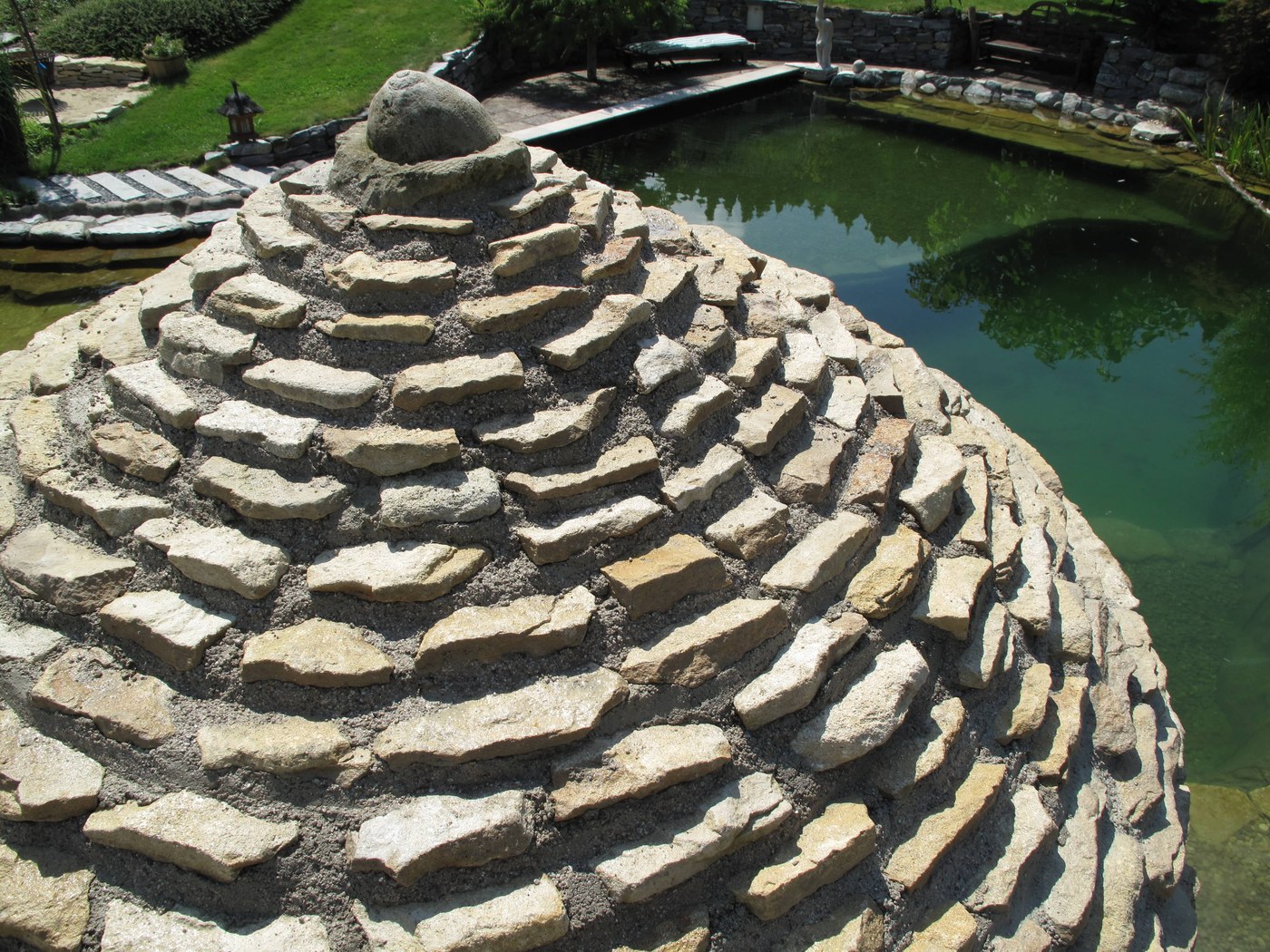
石造园中小屋。灵感来自普利亚的 trulli(那类圆锥形干砌石屋)。这个项目就是照着这个形制,用石头盖了一座园中小屋。
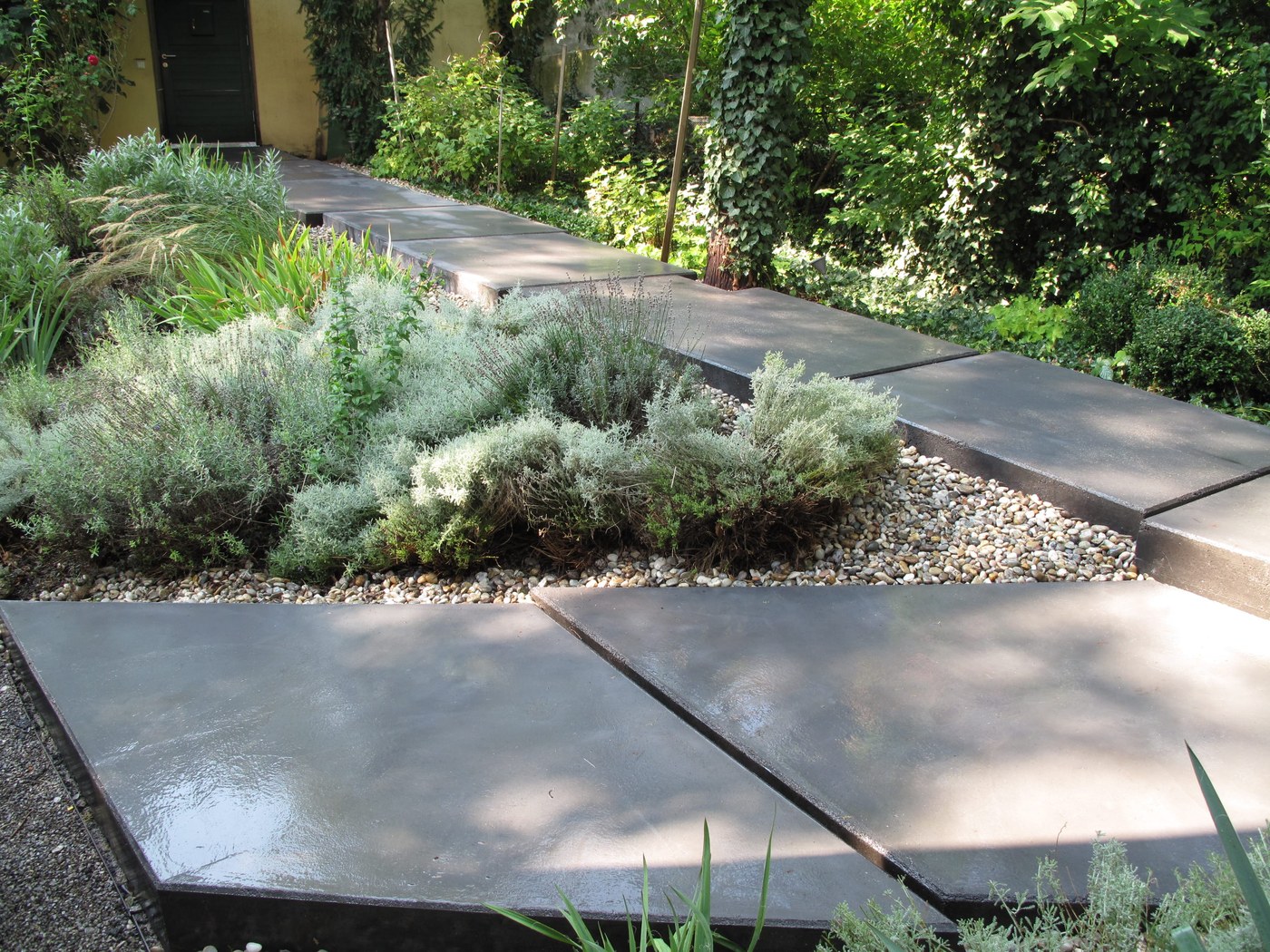
混凝土园路。用大块染色混凝土板铺成,模板在施工现场搭好、就地浇筑。浇筑的东西和模板位置关系很近,做成别的形状不靠后期加工。
鸡舍。这个项目的来历有点好笑:Schawerda 多次听到有人问他为什么园子里没有鸡,心里想的是你要鸡可以,活还是我的。后来他在作坊里说了这件事,团队就有了鸡舍。鸡蛋进了作坊的冰箱,到现在大家分得挺和平。文章最后说,鸡是有趣的动物,社会行为很特别,有明确的偏好,现在占领的地盘比园子还多。
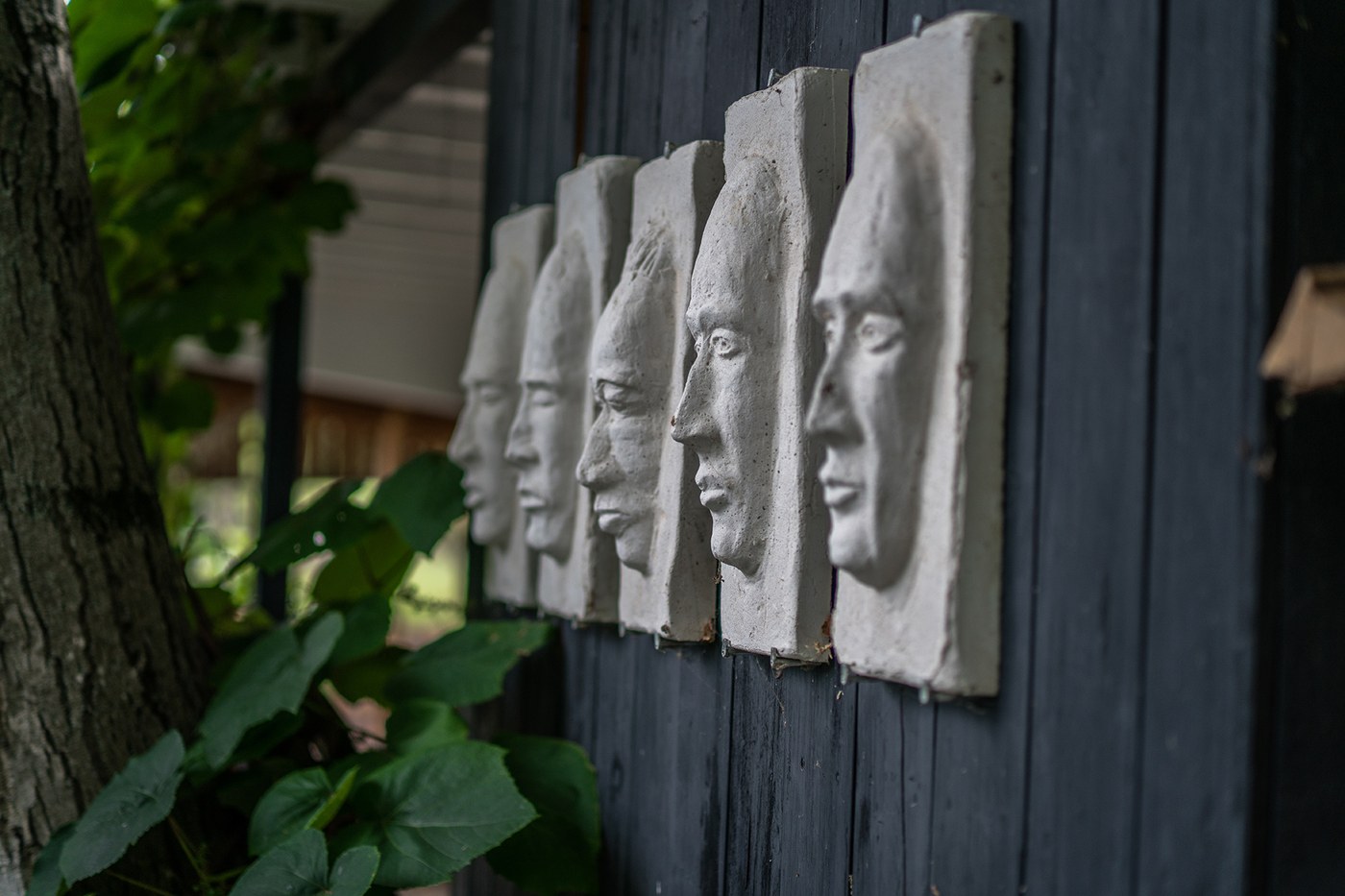
花园工作室里的作品。作坊那组照片挂在深色木墙上,是六块风化的浅色浮雕板,每块都刻出一个朝左的人脸侧影。表面上木纹粗糙、有开裂和斑驳,边上还留着挂件。这些不是装饰品,是作坊的产出——家具、物件和雕塑从这里走进园子里。
配色是他自己说的手法
Schawerda 在「Natur im Garten」的合作商户介绍里被描述为「有点不一样的」园丁。那篇介绍写得比他自己站上的还直接:几乎每年他和团队都会去追艺术上和手艺上的想法,再在实际项目里试,这些经验之后反复流进设计委托里。他自己给出的概括是:「我们给花园带来颜色。」
关于颜色他的说法很具体:墙和水盆通过颜色可以完全做出不一样的重点。这条原则在项目介绍里能看到落点——那个泳池项目的砂岩板被处理到像海磨过,那是质感;而可见的水盆则用鲜明颜色,是另一路做法。合作商户介绍里列出的材料清单也支持这一点:水渠、经过雕塑处理的墙、天然石园中小屋、蔬菜水果香草种在木、铁或混凝土雕塑之间、柳条躺椅、墨西哥色系的清水混凝土水盆。
文章里也写了他为什么把新站做出来:二十年是很长一段时间,重心、兴趣和看法都会变,所以他不想把做过的事列一遍,而是想说明他们怎么想、怎么感觉、什么对他们重要。
A garden design workshop in Lower Austria
Johannes Schawerda Gartengestaltung is a small garden design workshop in Sooß, in the Baden district of Lower Austria. Johannes Schawerda is the owner, registered as a sole proprietor with garden design as his trade and Gartengestalter as his professional title, supervised by the Baden district authority. It is a one-person business with a small team, working mainly on private residential gardens; the site, redesigned in 2021, says they have been at it for almost twenty years.
The backstory is unusual. Schawerda grew up in a vineyard, which is now one of the demonstration gardens of the Natur im Garten programme — a public venue for gardeners involved in that movement. His love of nature took him to study botany, but he soon wanted to work with his hands, so he turned away from the theoretical training and took a master gardener’s course, which qualified him to design gardens. The Austrian master gardener apprenticeship exists to prepare people who will run their own businesses; he took the qualification and then went the opposite way, taking no apprentices and designing gardens instead.
His long-standing collaborator is Gabi Burger. Together they have designed two residential show gardens at DIE GARTEN TULLN, where interior and exterior form one whole. In his work the choice of material matters as much as the choice of plants, which is what gardens of that kind are about: once the house is built, the garden is not something more to plant but part of the same space.
The site publishes the full postal address, telephone number, email and tax number. None of that is reproduced here; the workshop’s site is the place to reach them.
Five kinds of garden, sorted by who lives there
The most prominent part of the site is not the project gallery but five short texts describing five kinds of garden. The classification is not by type of plant but by the kind of person the garden is for, and each one opens by saying who that is.
The wild garden is for the curious and the observant. In such a garden you are a guest. The garden belongs to the world, things are happening, and you are not in full control of them. It is described as the closest possible approach to paradise; the writer adds that here, not yet burdened by guilt, the soul finds its place on its own.
The nature garden is for enthusiasts and for those willing to work. Here you garden and experiment, plant and tend. Spring lifts the heart, summer beckons from the hammock, autumn keeps everyone busy, and winter is when new plans begin to be made.
The vegetable garden is for those whose cooking begins in the garden. The writer observes that the first of all gardens must have been a vegetable garden: no other garden makes the experience of growing quite so intense, and nowhere else are you so connected from germination to harvest. And, he adds, nowhere else do you get such good vegetables.
The garden to live in is for people with little time who see house and garden as a single unit, for those whose understanding of architecture does not stop at the terrace door and who treat the garden as an extension of their living space.
The garden workshop is the fifth, and the source of the business’s name: imagination is let loose here, things are built, carved and modelled, and the furniture, objects and sculptures made here find their way into the garden.
One of those five passages explains a small thing: when the site writes about gardeners and garden designers, it uses the masculine form throughout, because its author, his colleagues and his staff are all men.
The longest piece is about losing control
Most of the writing in the site’s ideas section is about thought rather than work, and the most complete of them is on the wild garden. The position is stated plainly: in a wild garden, as a designer, we have little to do.
A wild garden can exist only in the alternation between its inhabitants and nature. It can arise only if it is left alone, if intervention is reduced to a minimum. In a wild garden, whatever is may be, and whatever is never lasts. The wild garden shows what we sense privately and are reluctant to accept: that nothing is permanent.
What follows is an observation about the urge to control. Wanting everything to stay as we made it, and the effort that demands, is precisely what prevents a wild garden. In an age of irrigation systems and robotic mowers, the wild has a hard time of it. It can be unsettling, exactly because it escapes control. For the same reason it can also be blissful: when we feel that we do not have to control anything for once, we can give ourselves to something that does not need us but fills us. Like the forest. Or the sea.
The article ends on those two comparisons.
Another piece argues the opposite case just as fully. In the nature garden, people are not merely visitors but both actors and apprentices, constantly searching for a balance between their own ideas and the garden’s. The writer puts it more plainly than anyone: the harder you try to impose your vision on a garden, the more energy you have to put in, and in the end you are glad mostly about the work you have wrested from nature, and rather less about the beauty and surprises the garden can offer. What the nature garden attempts is to bring its own design and the work done in it into the best possible accord with natural processes and given conditions. That requires constant learning, observation and trying things out, and also a willingness to let natural processes take their own course.
There is also a piece on the workshop, titled on what it means to let imagination run free here. It opens with a question: doing whatever you like is an idealised picture of work that is constantly in conflict with everyday life. Running something with passion and wanting to earn your living from it contains a fair amount of potential for misfortune. The only way out of the misfortune is distance, and distance means losing the passion. What follows sets out two working states, the designer’s and the gardener’s: designers live on ideas and imagined images turned real by their doing, while gardeners deal with living things they grasp in outline but can never grasp in every detail. The last line is a wry one: “I don’t know” is a wonderful answer.
Another piece draws a plain distinction between grass and weeds: an accompanying plant is a plant that is simply there and does not really get in the way. A weed is not like that; it spreads and it crowds.
Projects: materials worked rather than left alone
The six projects in the site gallery are all works where the material itself is worked. A few are worth picking out.
Sandstone around a pool. The site is high above the road, already close to woodland and rock, and the writer says it should not be lost. On two sides of the pool they worked rough, irregular slabs of Magarethen sandstone until they looked as though the sea had worn them down, back when the coastline was exactly here.
A garden house in stone. Inspired by the trulli of Apulia, this project is a garden house built of stone in that form.
A concrete garden path. Made of large dyed concrete slabs, with the shuttering assembled and cast on site. What was cast sits very close to the position of its formwork, so the unusual shapes are not achieved by later working.
The chicken coop. The story of this project is mildly funny: Schawerda had repeatedly been asked why his garden had no chickens, while thinking to himself that if you want chickens, fine, the work is still his. He mentioned it in the workshop, and the team then had a coop built. The eggs go into the workshop fridge, and so far everyone divides them peacefully. He ends by noting that chickens are funny birds with a very particular social behaviour, clear preferences of their own, and that they now occupy more of the surroundings than of the garden.
Work from the workshop. This group of photographs hangs on a dark wooden wall: six weathered pale relief panels, each carved with a human face in left-facing profile. The timber is rough, cracked and stained, and mounting hooks are still visible at some edges. These are not decoration but the workshop’s output, which is furniture, objects and sculptures that find their way into the garden.
Colour, described as his own signature
In the Natur im Garten partner listing Schawerda is described as a somewhat different kind of gardener. That write-up is more direct than his own site: almost every year he and his team chase artistic and craft ideas and try them out in practice, and such experience later flows repeatedly into the design commissions. His own summary is that they bring colour into the gardens they design.
On colour he is specific: walls and water basins can set completely different accents through colour. The principle shows up in the project descriptions — in the pool project, the sandstone slabs were worked to look sea-worn, which is about texture, while visible water basins take strong colours, which is the other route. The list of materials in the partner profile supports it: water courses, sculpturally worked walls, garden houses in natural stone, vegetables, fruit and herbs among climbers and sculptures in wood, iron or concrete, willow loungers, and board-formed concrete water basins in Mexican colours.
His own site also explains why he built the new one: twenty years is a long time, and emphases, interests and ways of seeing all change, so instead of listing everything he has done he would rather convey how they think and feel and what matters to them.
相关文章:
 奥地利 格罗绍尔 Grossauer 景观规划事务所 – 20 余年景观与开放空间规划
 德国 约翰内斯·古腾堡大学美因茨植物园 – 致力于保护莱茵兰-普法尔茨
 英国 牛津花园设计公司 Oxford Garden Design 牛津郡专业花园设计与维护服务 – 以及优质的服务方面享有盛誉,并提供花园维护
 英国 Mark Lane 花园和景观设计事务所 – 花园与景观的总体规划与实施
 奥地利 LuxuryTrees – 欧洲日式庭园设计与建造企业
 瑞士 Notter 日本花园 – 欧洲盆栽艺术的重要开创者之一
 英国 Jane Harries 花园设计 – 独立花园设计师远程园艺设计方案
 奥地利 花园中的自然运动 Natur im Garten – 25 余年生态园艺推广与认证
发表回复